Home Blog

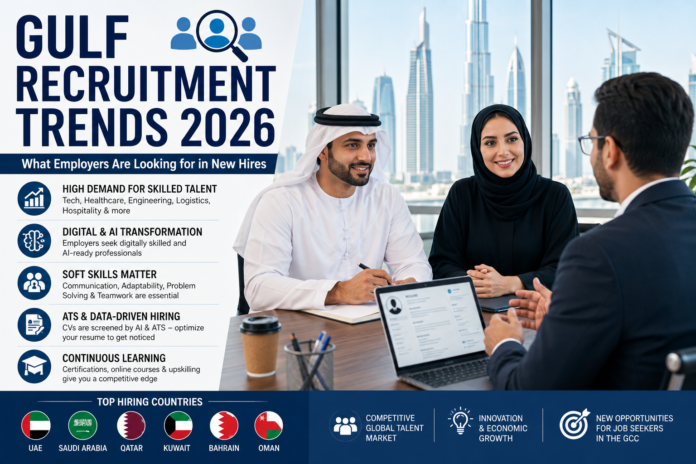
Gulf Recruitment Trends 2026: What Employers Are Looking for in New Hires

HR manager interviewing a job applicant in a modern Gulf office
Recruitment professionals interviewing candidates in a modern GCC workplace.

Introduction

Gulf Recruitment Trends 2026 are reshaping how companies hire talent across the UAE, Saudi Arabia, Qatar, Kuwait, Bahrain, and Oman. As businesses embrace digital transformation, artificial intelligence, and economic diversification, employers are looking beyond academic qualifications and years of experience. They want professionals who are adaptable, digitally skilled, customer-focused, and capable of working in multicultural environments.

For job seekers, understanding these recruitment trends is essential. Whether you are applying for your first Gulf job or seeking a better opportunity, knowing what recruiters expect can significantly improve your chances of success. This guide explores the latest hiring practices, high-demand industries, and the key skills employers value most in 2026.


Table of Contents

  1. Why Recruitment Is Changing in the Gulf
  2. Industries Hiring the Most in 2026
  3. Top Skills Employers Want
  4. The Role of AI in Recruitment
  5. How ATS Is Changing CV Screening
  6. Common Recruitment Mistakes to Avoid
  7. Tips to Stand Out in the Gulf Job Market
  8. Conclusion

Why Recruitment Is Changing in the Gulf

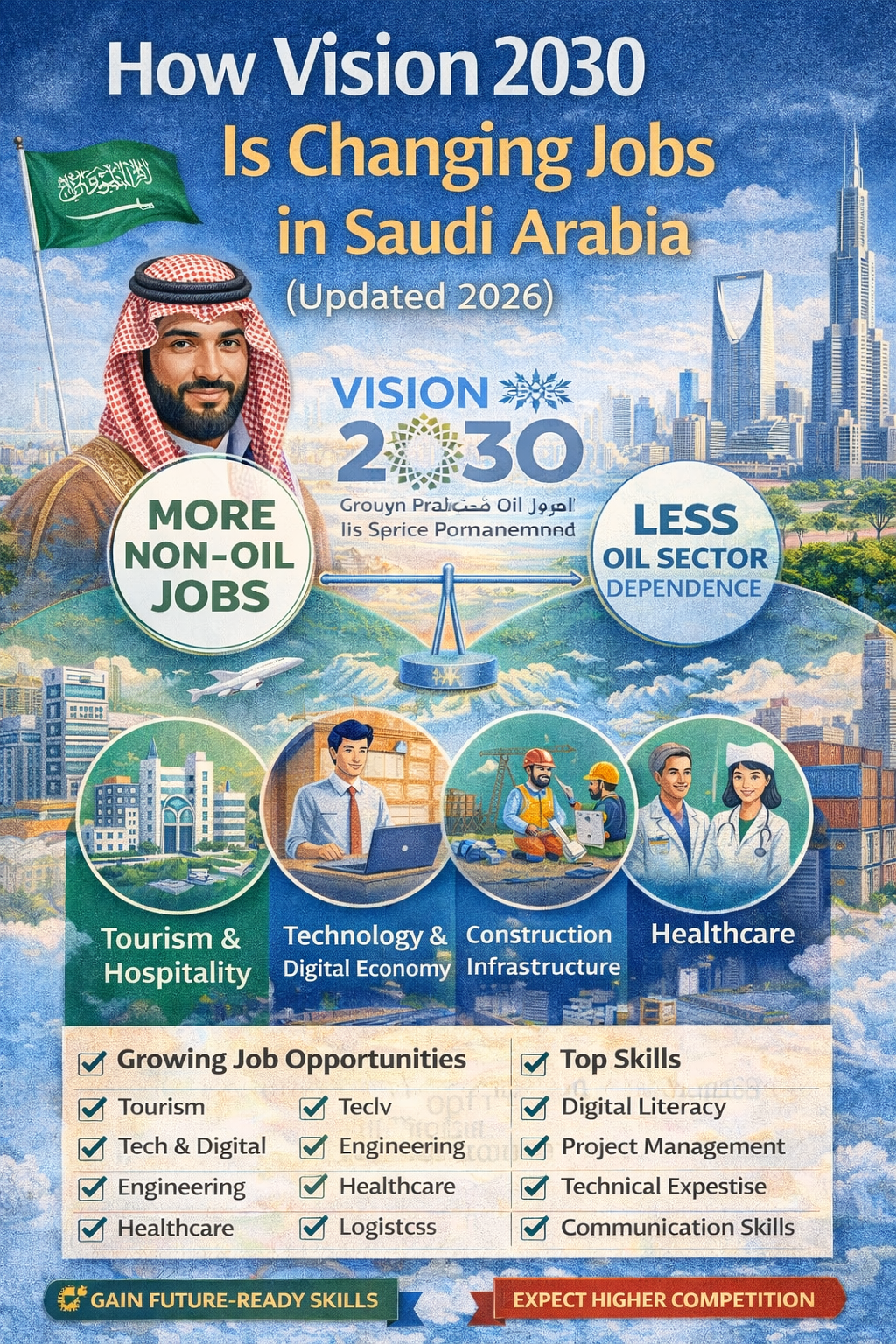
The Gulf region is undergoing rapid economic transformation. National development plans such as Saudi Vision 2030, the UAE’s long-term economic strategies, and Qatar’s National Vision 2030 are creating new opportunities in technology, healthcare, renewable energy, tourism, logistics, finance, and education.

These developments have changed employer expectations. Organizations now prioritize practical skills, adaptability, and continuous learning over traditional hiring methods.

Some major factors influencing recruitment include:

  • Digital transformation across industries.
  • Increased investment in AI and automation.
  • Expansion of tourism and hospitality.
  • Growth of renewable energy projects.
  • Rising demand for cybersecurity professionals.
  • Increased competition for skilled international talent.
  • Greater focus on employee productivity and innovation.

Industries Hiring the Most in 2026

Information Technology

Technology remains one of the fastest-growing sectors across the GCC.

High-demand roles include:

  • Software Developers
  • Cybersecurity Specialists
  • Cloud Engineers
  • AI Engineers
  • Data Analysts
  • IT Support Engineers

Why It Matters

Companies continue investing in digital infrastructure, making technology professionals among the highest-demand employees.


Healthcare

Healthcare expansion continues because of population growth and increased investment in medical facilities.

Employers are actively recruiting:

  • Doctors
  • Registered Nurses
  • Pharmacists
  • Medical Laboratory Technicians
  • Healthcare Administrators

Healthcare professionals with international certifications and Gulf experience often enjoy better employment opportunities.


Construction and Engineering

Large infrastructure projects continue throughout the GCC.

Popular positions include:

  • Civil Engineers
  • Mechanical Engineers
  • Electrical Engineers
  • Quantity Surveyors
  • Site Engineers
  • Safety Officers
  • Project Managers

Professionals with experience managing large commercial or infrastructure projects remain highly sought after.


Hospitality and Tourism

Tourism continues to grow across Dubai, Abu Dhabi, Doha, Riyadh, and other major cities.

Common vacancies include:

  • Hotel Receptionists
  • Front Office Supervisors
  • Guest Relations Officers
  • Restaurant Managers
  • Chefs
  • Customer Service Representatives

Excellent communication skills and multilingual abilities provide a competitive advantage.


Logistics and Supply Chain

Growing e-commerce and international trade have created significant demand for logistics professionals.

Employers are hiring:

  • Warehouse Supervisors
  • Logistics Coordinators
  • Procurement Officers
  • Fleet Managers
  • Supply Chain Analysts

Knowledge of ERP systems and inventory management software is increasingly valuable.


Top Skills Employers Want

Modern employers evaluate candidates based on both technical expertise and workplace behavior.

1. Communication Skills

Strong verbal and written communication remains one of the most important qualities recruiters assess.

Candidates who communicate professionally during interviews often create a stronger first impression.

100 Essential English Phrases for Gulf Workplace Communication Part 2


2. Digital Literacy

Most organizations expect employees to use:

  • Microsoft Office
  • Google Workspace
  • CRM software
  • ERP systems
  • Microsoft Teams
  • Zoom

Basic digital competence is now considered an essential workplace skill.


3. Problem-Solving

Employers appreciate candidates who can identify problems, analyze situations, and recommend practical solutions without constant supervision.


4. Adaptability

Business environments continue changing rapidly.

Employees who quickly learn new software, processes, and technologies are more valuable to employers.


5. Teamwork

Multinational workplaces require excellent collaboration.

Successful employees respect different cultures, communicate effectively, and contribute positively to team goals.


6. Customer Service

Even technical positions often involve interaction with clients or colleagues.

Professional customer service skills improve company reputation and customer satisfaction.


7. Leadership Potential

Recruiters increasingly seek candidates who demonstrate initiative, accountability, and decision-making abilities.

Leadership is not limited to management positions.


8. Time Management

Meeting deadlines and prioritizing work effectively helps improve productivity and overall business performance.


The Role of AI in Recruitment

Artificial Intelligence has become an important part of recruitment across the Gulf.

Many organizations now use AI to:

  • Screen CVs
  • Rank applicants
  • Match skills with vacancies
  • Schedule interviews
  • Reduce recruitment time

Although AI helps employers process thousands of applications efficiently, final hiring decisions still involve human recruiters.

Applicants should optimize their CVs using keywords from the job description while maintaining clear, professional formatting.


How ATS Is Changing CV Screening

Applicant Tracking Systems (ATS) are widely used by employers before a recruiter reviews a CV.

Tips for ATS-Friendly CVs

  • Use a simple layout.
  • Avoid tables and text boxes.
  • Include job-related keywords naturally.
  • Use standard section headings.
  • Save your CV as PDF unless another format is requested.
  • Highlight measurable achievements rather than listing duties only.

An ATS-friendly CV significantly increases the chances of reaching the interview stage.

Jobs That AI Cannot Easily Replace in the Gulf: Future-Proof Careers for 2026


Common Recruitment Mistakes to Avoid

Many qualified candidates miss opportunities because of avoidable mistakes.

Avoid these common errors:

  • Applying without reading the job description.
  • Sending the same CV for every vacancy.
  • Using an unprofessional email address.
  • Including outdated contact information.
  • Arriving late for interviews.
  • Speaking negatively about previous employers.
  • Failing to research the company.
  • Ignoring follow-up emails from recruiters.
  • Providing inaccurate employment information.
  • Poor communication during interviews.

Correcting these mistakes can improve your chances of securing interviews and receiving job offers.


Tips to Stand Out in the Gulf Job Market

Competition is increasing every year. To improve your chances:

  • Customize your CV for every application.
  • Build a complete LinkedIn profile.
  • Obtain relevant certifications.
  • Improve your English communication skills.
  • Learn basic Arabic phrases if possible.
  • Practice common interview questions.
  • Develop digital skills.
  • Expand your professional network.
  • Stay informed about industry trends.
  • Continue learning through online courses.

Candidates who consistently invest in professional development are more likely to secure better career opportunities.


Conclusion

The Gulf job market continues to evolve, creating exciting opportunities for skilled professionals while increasing competition for top positions. Understanding Gulf Recruitment Trends 2026 allows job seekers to prepare effectively by developing the right technical skills, improving communication abilities, and adapting to modern recruitment practices.

Success is no longer determined solely by qualifications or experience. Employers across the UAE, Saudi Arabia, Qatar, Kuwait, Bahrain, and Oman increasingly value adaptability, continuous learning, digital competence, and strong interpersonal skills. Candidates who tailor their CVs, prepare thoroughly for interviews, and stay informed about changing hiring trends will be better positioned to secure rewarding careers in the GCC.

As recruitment continues to evolve with AI, automation, and digital transformation, the best investment you can make is in your own professional growth. By continuously upgrading your skills and understanding employer expectations, you can confidently navigate the Gulf job market and build a successful long-term career.

https://www.ilo.org

https://ae.indeed.com

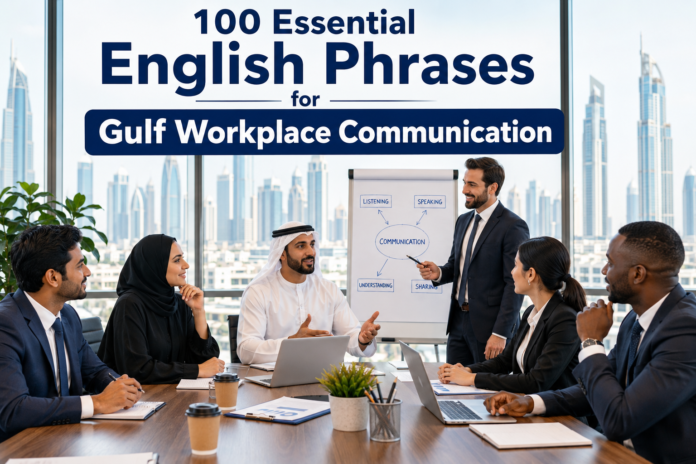
100 Essential English Phrases for Gulf Workplace Communication Part 2

English Phrases for Gulf Workplace Communication used by professionals working in UAE, Qatar, Saudi Arabia, and GCC offices
Improve your workplace communication with 100 essential English phrases commonly used in Gulf offices and multinational companies.

Introduction

English Phrases for Gulf Workplace Communication are essential for professionals, job seekers, and expatriates working in the UAE, Saudi Arabia, Qatar, Kuwait, Bahrain, and Oman. In today’s multicultural Gulf workplaces, English serves as the common language for communication between colleagues, managers, customers, and clients from diverse nationalities and backgrounds. Whether you work in an office, hotel, hospital, retail store, construction company, school, or customer service center, strong English communication skills can help you perform your job more effectively and advance your career.

Learning English Phrases for Gulf Workplace Communication is more than memorizing vocabulary. It involves understanding how to greet colleagues professionally, participate in meetings, answer phone calls, write clear emails, assist customers, and communicate confidently in everyday workplace situations. Employers across the GCC highly value employees who can express themselves clearly, solve problems through effective communication, and maintain professional relationships with international teams.

This comprehensive guide features 100 Essential English Phrases for Gulf Workplace Communication, carefully selected for real-life workplace scenarios. Each phrase includes a simple explanation and practical example to help you build confidence and improve your spoken and written English. Whether you are preparing for your first job in the Gulf or looking to strengthen your communication skills for career growth, this article will provide practical expressions you can start using immediately in your daily work.

Customer Service English Phrases

Excellent customer service is one of the most valued skills in Gulf workplaces. Whether you work in retail, hospitality, healthcare, banking, or telecommunications, these phrases will help you communicate professionally with customers.

Employee Rights in GCC Countries (2026 Guide for Expats & Workers)

51. How may I help you?

Example: Good morning. How may I help you today?

52. Thank you for waiting.

Example: Thank you for waiting. Your request has been processed.

53. I’m sorry for the inconvenience.

Example: I’m sorry for the inconvenience caused.

54. Let me check that for you.

Example: Let me check that information for you.

55. I’ll be happy to assist you.

Jobs That AI Cannot Easily Replace in the Gulf: Future-Proof Careers for 2026

Example: I’ll be happy to assist you with your application.

56. Could you please provide your ID?

Example: Could you please provide your Emirates ID?

57. Thank you for your patience.

Example: Thank you for your patience while we resolve the issue.

58. Your request has been approved.

Example: Your request has been approved successfully.

59. Please complete this form.

Example: Please complete this form before meeting the manager.

60. Have a wonderful day.

Example: Thank you for visiting us. Have a wonderful day.


Office Communication Phrases

Professional communication helps teams work efficiently and build stronger relationships.

61. I’ll send you the report.

Example: I’ll send you the report this afternoon.

62. Let’s work together.

Example: Let’s work together to finish this project.

63. Could you review this document?

Example: Could you review this document before submission?

64. We need to meet the deadline.

Example: We need to meet the deadline by Friday.

65. I’ll update you tomorrow.

Example: I’ll update you tomorrow after speaking with the client.

66. That’s a good suggestion.

Example: That’s a good suggestion. Let’s consider it.

67. Please keep me informed.

Example: Please keep me informed about any changes.

68. I’ll handle this task.

Example: Don’t worry. I’ll handle this task.

69. Everything is under control.

Example: Everything is under control now.

70. Thank you for your cooperation.

Example: Thank you for your cooperation throughout the project.


Hospitality English

Hotels, restaurants, and tourism companies across the Gulf rely heavily on professional English communication.

71. Welcome to our hotel.

Example: Welcome to our hotel. How may I assist you?

72. Your room is ready.

Example: Your room is ready. Here is your key card.

73. Enjoy your stay.

Example: We hope you enjoy your stay with us.

74. Breakfast is served from 6 a.m.

Example: Breakfast is served from 6 a.m. to 10 a.m.

75. Is there anything else I can help you with?

Example: Is there anything else I can help you with today?


Healthcare English

Healthcare professionals communicate with patients from many different countries. Clear English builds trust and improves patient care.

76. How are you feeling today?

Example: Good morning. How are you feeling today?

77. Please take a seat.

Example: Please take a seat while you wait.

78. The doctor will see you shortly.

Example: The doctor will see you shortly.

79. Please follow the instructions carefully.

Example: Please follow the instructions carefully after taking the medicine.

80. I hope you recover soon.

Example: Thank you for visiting. I hope you recover soon.


Construction and Engineering English

Construction sites in the GCC employ people from many nationalities. Simple English phrases improve safety and teamwork.

81. Please wear your safety helmet.

Example: Please wear your safety helmet before entering the site.

82. Safety comes first.

Example: Remember, safety comes first.

83. Be careful.

Example: Be careful while operating the machinery.

84. Let’s inspect the site.

Example: Let’s inspect the site before starting work.

85. Report any problem immediately.

Example: Report any safety problem immediately.


Retail English

Retail employees use these expressions every day while assisting customers.

86. May I help you find something?

Example: May I help you find something today?

87. This item is on sale.

Example: This item is on sale this week.

88. Would you like a receipt?

Example: Would you like a printed receipt?

89. Your total is…

Example: Your total is 125 dirhams.

90. Thank you for shopping with us.

Example: Thank you for shopping with us. Have a great day.


Professional Email Phrases

Writing professional emails is an important workplace skill.

91. I hope this email finds you well.

Example: I hope this email finds you well.

92. Please find the attached document.

Example: Please find the attached report for your review.

93. Kindly review the attached file.

Example: Kindly review the attached file before tomorrow.

94. Thank you for your prompt response.

Example: Thank you for your prompt response.

95. Please let me know if you have any questions.

Example: Please let me know if you have any questions regarding the proposal.


Interview English

These phrases are commonly used during job interviews in Gulf countries.

96. Thank you for inviting me.

Example: Thank you for inviting me to this interview.

97. I have five years of experience.

Example: I have five years of experience in customer service.

98. I’m a quick learner.

Example: I’m a quick learner and enjoy new challenges.

99. I work well in a team.

Example: I work well in multicultural teams.

100. Thank you for your time.

Example: Thank you for your time. I look forward to hearing from you.

https://www.oxfordlearnersdictionaries.com

https://www.bbc.co.uk/learningenglish

100 Essential English Phrases for Gulf Workplace Communication

English Phrases for Gulf Workplace Communication used by professionals in UAE Qatar and Saudi Arabia
Learning professional English phrases helps employees communicate confidently in Gulf workplaces.

Introduction

Gulf Workplace English is an essential skill for anyone working or planning to work in the UAE, Qatar, Saudi Arabia, Bahrain, Kuwait, or Oman. Strong Gulf Workplace English skills help professionals communicate confidently with colleagues, managers, customers, and clients in multinational workplaces. This guide teaches 100 practical phrases that will improve your Gulf Workplace English and help you succeed in your career across the GCC.

Table of Contents

  1. Greeting Colleagues
  2. Introducing Yourself
  3. Asking for Help
  4. Telephone Communication
  5. Email Communication
  6. Meeting

Greeting Colleagues

1. Good morning.

Example: Good morning, everyone.

2. How are you today?

Example: How are you today? I hope you’re doing well.

3. Nice to meet you.

Example: Nice to meet you. I’m Ahmed from the HR department.

4. Welcome to the team.

Example: Welcome to the team. We are happy to have you here.

5. Have a great day.

Example: Thank you. Have a great day.

6. See you tomorrow.

Example: See you tomorrow at the morning meeting.

7. Take care.

Example: Take care while traveling home.

8. It’s good to see you.

Example: It’s good to see you again after the holidays.

9. How was your weekend?

Example: How was your weekend?

10. Have a safe trip.

Example: Have a safe trip back to Dubai.

UAE Jobs Guide 2025–2026: Complete Expat Career Roadmap


Introducing Yourself

11. My name is…

Example: My name is Ali. I’m the new accountant.

12. I work in…

Example: I work in the sales department.

13. I’m responsible for…

Example: I’m responsible for customer support.

14. I joined the company last month.

Example: I joined the company last month as a project engineer.

15. Please let me know if you need anything.

Example: Please let me know if you need anything.

16. I’m happy to help.

Example: I’m happy to help with the report.

17. It’s a pleasure to work with you.

Example: It’s a pleasure to work with you.

18. Thank you for your support.

Example: Thank you for your support during the project.

19. I appreciate your help.

Example: I appreciate your help today.

20. Looking forward to working with you.

Example: I’m looking forward to working with you.

Qatar Working Hours, Public Holidays and Leave Entitlements in 2026: Complete Guide for Expats


Asking for Help

21. Could you help me?

Example: Could you help me with this document?

22. Can you explain this?

Example: Can you explain this procedure?

23. I don’t understand.

Example: Sorry, I don’t understand.

24. Could you repeat that?

Example: Could you repeat that, please?

25. Could you speak more slowly?

Example: Could you speak more slowly, please?

26. Can you show me?

Example: Can you show me how to use this software?

27. What does this mean?

Example: What does this mean?

28. Can you guide me?

Example: Can you guide me through the process?

29. Could you check this?

Example: Could you check this report before I send it?

30. Thank you for explaining.

Example: Thank you for explaining everything clearly.


Telephone Communication

31. May I speak to…?

Example: May I speak to Mr. Khalid?

32. Please hold for a moment.

Example: Please hold for a moment while I transfer your call.

33. I’ll call you back.

Example: I’ll call you back after the meeting.

34. The line is busy.

Example: Sorry, the line is busy.

35. Can I take a message?

Example: Can I take a message for the manager?

36. Thank you for calling.

Example: Thank you for calling our office.

37. Have a nice day.

Example: Thank you for calling. Have a nice day.

38. Sorry, I missed your call.

Example: Sorry, I missed your call this morning.

39. I’ll transfer your call.

Example: I’ll transfer your call to the HR department.

40. Please call again later.

Example: The manager is in a meeting. Please call again later.


Meeting Communication

41. Let’s begin the meeting.

Example: Let’s begin the meeting on time.

42. What’s on today’s agenda?

Example: What’s on today’s agenda?

43. I agree with you.

Example: I agree with your suggestion.

44. I have another idea.

Example: I have another idea that may help.

45. Could you clarify that?

Example: Could you clarify that point?

46. Let’s discuss this later.

Example: Let’s discuss this later after lunch.

47. Thank you for your input.

Example: Thank you for your input during today’s meeting.

48. Let’s make a decision.

Example: Let’s make a decision before the deadline.

49. We’ll follow up.

Example: We’ll follow up next week.

50. The meeting is adjourned.

Example: Thank you, everyone. The meeting is adjourned.


Why English Communication Matters in Gulf Jobs

Strong English communication skills can help you:

  • Perform better in job interviews.
  • Communicate confidently with international colleagues.
  • Deliver excellent customer service.
  • Write professional emails.
  • Participate effectively in meetings.
  • Improve promotion opportunities.
  • Build strong workplace relationships.
  • Increase confidence in multinational environments.

Whether you work in hospitality, healthcare, education, construction, retail, banking, logistics, or information technology, improving your workplace English is one of the best investments you can make in your career.

How to Message Gulf Recruiters on LinkedIn – 2026 Guide

https://www.cambridge.org/core/journals/english-today/article/abs/local-flavour-of-english-in-the-gulf/D23BC207CC429DF90170E7C3BD811C74

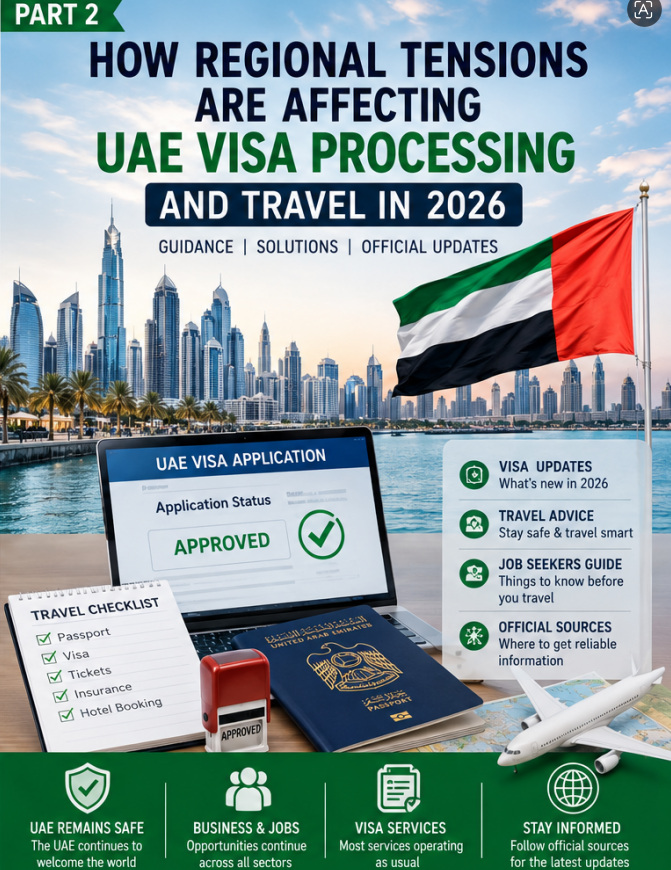
How Travelers Can Prepare Before Visiting the UAE

UAE Travel Updates 2026 showing passengers at Dubai International Airport
UAE Travel Updates 2026 help travelers stay informed about flights and airport operations.

UAE Travel Updates 2026 are important for tourists, business travelers, expatriates, and job seekers planning to visit the United Arab Emirates. Following recent regional tensions in the Middle East, many travelers are looking for reliable UAE Travel Updates 2026 regarding flights, airport operations, tourism, safety, and travel requirements. This guide explains the latest developments, what has changed, and what visitors should know before traveling to Dubai, Abu Dhabi, Sharjah, and the other Emirates.


1. Check Official Visa Requirements

Before applying for a visa, verify the latest entry requirements through the official UAE government portals or your airline. Requirements may vary depending on your nationality and the purpose of your visit.

2. Monitor Flight Updates

Airlines may adjust routes or schedules due to changing airspace conditions. Check your flight status regularly before departure and allow extra time for connections if necessary.

3. Keep Your Documents Ready

Ensure you have:

  • A passport valid for at least six months.
  • An approved UAE visa (if required).
  • Return or onward travel tickets.
  • Hotel booking or accommodation details.
  • Travel insurance documents.
  • Employment offer letter (for work visa holders).

Having complete documentation helps reduce delays during immigration checks.


Advice for Job Seekers Traveling to the UAE

The UAE remains one of the most attractive employment destinations in the Gulf. Companies across Dubai, Abu Dhabi, Sharjah, and other emirates continue recruiting professionals in sectors such as healthcare, engineering, hospitality, logistics, education, finance, and information technology.

If you are traveling for employment:

  • Confirm your work visa has been approved before booking flights.
  • Verify your employment contract carefully.
  • Stay in regular contact with your employer or recruitment agency.
  • Avoid unofficial visa agents or offers that seem too good to be true.
  • Keep digital and printed copies of all important documents.

Recruitment continues despite regional uncertainty, but processing times may occasionally vary depending on administrative workload and travel logistics.


Impact on Businesses and Employers

Businesses operating in the UAE continue to benefit from the country’s strong infrastructure, modern airports, and stable regulatory environment. However, companies involved in international trade or global supply chains may experience:

  • Higher transportation costs.
  • Longer shipping times.
  • Changes in flight availability for business travelers.
  • Increased demand for contingency planning.

Many organizations have responded by improving digital operations, expanding remote collaboration, and diversifying supply routes.


The UAE’s Commitment to Stability

One reason the UAE continues to attract tourists, investors, and skilled professionals is its commitment to maintaining a secure and business-friendly environment.

Authorities continue to invest in:

  • Advanced airport security.
  • Digital immigration systems.
  • Smart border management.
  • Emergency response planning.
  • Tourism safety initiatives.

These measures help ensure that travel and immigration services remain efficient even during periods of regional uncertainty.


What Has Not Changed?

Despite regional tensions, several important aspects remain unchanged:

  • UAE airports continue to receive international flights.
  • Tourist visas remain available for eligible travelers.
  • Employment visas continue to be processed.
  • Hotels, attractions, shopping malls, and restaurants remain open.
  • Business conferences and exhibitions continue across the country.
  • Daily life for residents remains largely unaffected.

This distinction is important because media coverage of regional events can sometimes create the impression that the entire Gulf region is experiencing the same conditions, which is not necessarily the case.


Common Misconceptions

“The UAE has closed its borders.”

This is incorrect. The UAE continues to welcome international visitors through its airports and ports, subject to normal immigration procedures.

“All UAE visas have been suspended.”

No. Most visa categories continue to be processed through official channels.

“Travel to the UAE is unsafe.”

The UAE remains one of the safest countries in the region. Travelers should follow official travel advisories and airline updates rather than relying on rumors shared on social media.


Official Sources for Updates

When planning your journey, always rely on official information instead of unofficial social media posts or unverified websites.

Useful sources include:

  • UAE Government Portal
  • Federal Authority for Identity, Citizenship, Customs and Port Security (ICP)
  • General Directorate of Residency and Foreigners Affairs (GDRFA)
  • UAE Ministry of Foreign Affairs
  • Your airline’s official website

These organizations provide the most accurate information.

Public Holidays in UAE 2026: Complete Guide


Frequently Asked Questions

Is the UAE still issuing tourist visas in 2026?

Yes. Tourist visas continue to be issued through the normal application process for eligible travelers. Applicants should check the latest requirements before applying.

http://How to Find a Job in Dubai Without a Recruitment Agency

Are work visas being delayed?

Most employment visas continue to be processed normally. However, some applicants may experience temporary delays due to administrative procedures or travel disruptions.

Can tourists still visit Dubai and Abu Dhabi?

Yes. Tourism remains open, and major attractions, hotels, shopping malls, and entertainment venues continue operating.

Should travelers postpone their UAE trips?

There is no general requirement to postpone travel. However, travelers should monitor official government announcements and airline notifications before departure.

Will regional tensions affect job opportunities?

The UAE job market remains active. Employers continue hiring across healthcare, engineering, construction, education, IT, logistics, hospitality, and finance.


Final Thoughts

Regional tensions in the Middle East have understandably raised concerns among travelers, expatriates, and job seekers. However, it is important to separate geopolitical developments from the day-to-day functioning of the United Arab Emirates.

As of 2026, the UAE continues to maintain its position as one of the region’s leading destinations for tourism, employment, investment, and international business. While temporary flight adjustments and operational changes may occur, visa processing and immigration services continue to operate through official procedures.

The best approach for travelers is to stay informed, use official government sources, confirm airline schedules, and prepare all required travel documents before departure.

For professionals considering career opportunities in the Gulf, the UAE remains one of the strongest job markets in the region, supported by continued investment, economic diversification, and world-class infrastructure.

By planning carefully and relying on verified information, visitors and workers can continue to travel to the UAE with confidence.


Call to Action

Planning to work or travel in the Gulf?

Visit Career Route Gulf for the latest updates on Gulf jobs, visa guides, labour laws, salary insights, interview tips, and career advice to help you build a successful future in the UAE, Saudi Arabia, Qatar, and across the GCC.

https://www.emirates.com

https://www.mofa.gov.ae


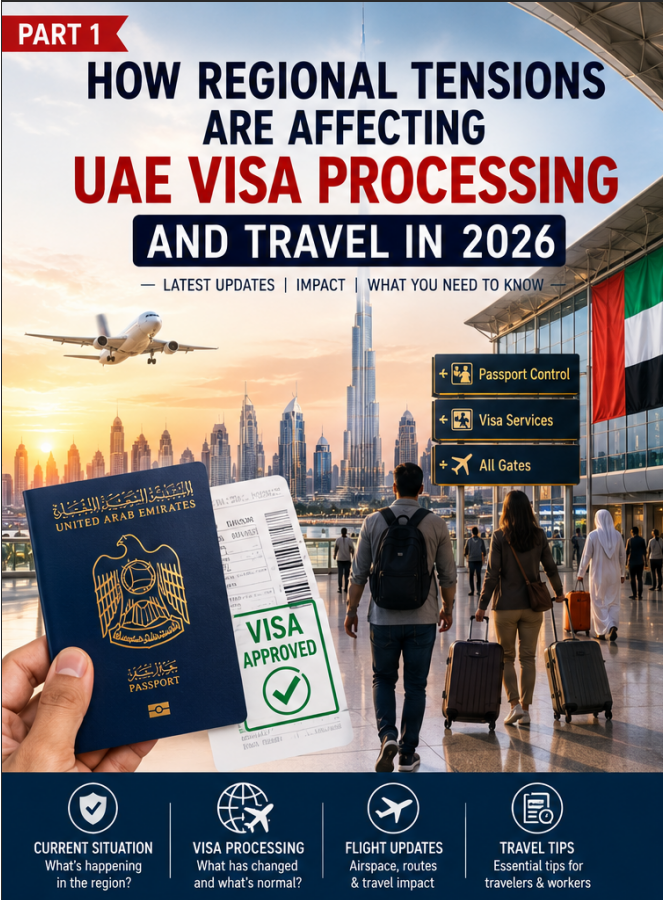
How Regional Tensions Are Affecting UAE Visa Processing and Travel in 2026

UAE Visa Processing 2026 at Dubai International Airport with international travelers
UAE Visa Processing 2026 continues through official immigration services despite regional tensions.

Introduction

UAE Visa Processing 2026 has become one of the most searched topics among tourists, expatriates, job seekers, and business travelers following recent geopolitical developments in the Middle East. The conflict involving Iran, Israel, and the United States has raised questions about travel safety, flight schedules, visa approvals, and business operations across the Gulf region.

Although the United Arab Emirates remains one of the safest and most stable destinations for international visitors and foreign workers, regional tensions have created temporary disruptions in aviation, logistics, and travel planning. Many people planning to visit Dubai, Abu Dhabi, Sharjah, or other Emirates are asking whether UAE visa processing has changed and whether travel plans should be adjusted.

The good news is that the UAE continues to welcome tourists, investors, skilled professionals, and business travelers. Government authorities have maintained immigration services while monitoring regional developments closely. However, travelers should stay informed about flight schedules, official advisories, and visa requirements before making travel arrangements.

This guide explains how regional tensions are affecting UAE visa processing and travel in 2026, what remains unchanged, and the practical steps visitors and expatriates should take before entering the UAE.


Understanding the Current Regional Situation

The Middle East remains one of the world’s most strategically important regions. During 2025 and 2026, heightened tensions involving Iran, Israel, and the United States affected regional airspace, commercial aviation routes, shipping lanes, and diplomatic relations.

While these developments received significant international media attention, it is important to distinguish between regional geopolitical events and the UAE’s domestic immigration policies.

The UAE has continued operating its airports, immigration systems, tourism sector, and business environment with minimal interruption compared to conflict zones.

Government agencies have focused on:

  • Maintaining border security
  • Protecting international travelers
  • Supporting airlines
  • Monitoring regional airspace
  • Ensuring public safety

For most visitors, the impact has been indirect rather than direct.


Has UAE Visa Processing Changed?

One of the biggest concerns among job seekers and tourists is whether the UAE has suspended or restricted visas.

As of 2026, the UAE continues issuing most categories of visas through normal procedures. These include:

  • Tourist Visas
  • Employment Visas
  • Residence Visas
  • Investor Visas
  • Family Sponsorship Visas
  • Golden Visas
  • Transit Visas

Applicants should, however, expect occasional administrative delays if flight disruptions or increased security measures affect travel logistics.

Visa applications continue to be processed through the UAE’s official immigration authorities and approved channels.


Impact on International Flights

The most visible impact of regional tensions has been on aviation.

Several international airlines temporarily adjusted flight paths to avoid restricted airspace.

This has resulted in:

  • Longer flight durations
  • Schedule adjustments
  • Flight cancellations on selected routes
  • Delays in connecting flights

Major UAE airports including Dubai International Airport, Abu Dhabi’s Zayed International Airport, and Sharjah International Airport have continued normal operations, although some airlines have revised schedules depending on regional security assessments.

Passengers are advised to check their airline’s latest updates before departure.


Effect on Tourism

Tourism remains one of the UAE’s strongest economic sectors.

Hotels, shopping malls, tourist attractions, museums, beaches, and entertainment venues continue operating normally.

Popular destinations such as:

  • Dubai
  • Abu Dhabi
  • Sharjah
  • Ras Al Khaimah
  • Fujairah

continue receiving millions of visitors each year.

Although some travelers postponed trips because of uncertainty, tourism authorities continue promoting the UAE as a safe international destination.

Public Holidays in UAE 2026: Complete Guide


Impact on Job Seekers

Thousands of professionals travel to the UAE every month for employment opportunities.

Current regional tensions have not stopped recruitment across major industries.

Companies continue hiring in sectors including:

  • Healthcare
  • Construction
  • Information Technology
  • Hospitality
  • Logistics
  • Education
  • Finance
  • Engineering
  • Retail

However, international recruitment timelines may occasionally be affected by travel disruptions, document courier delays, or flight availability.

Job seekers should remain in close contact with employers throughout the visa process.

How to Write a Resume That Gets You Hired in Qatar (2026)


Business Travel Continues

The UAE remains one of the world’s leading business hubs.

International conferences, exhibitions, investment forums, and trade events continue attracting global participants.

Business travelers should simply monitor airline schedules and official travel advisories before departure.

Major free zones and business centers continue welcoming international investors.


Travel Insurance Is More Important Than Ever

One important lesson from recent regional events is the importance of comprehensive travel insurance.

Good travel insurance should cover:

  • Flight cancellations
  • Medical emergencies
  • Trip interruptions
  • Lost baggage
  • Emergency evacuation where applicable

Travelers should carefully review policy coverage before purchasing tickets.

https://icp.gov.ae

Public Holidays in UAE 2026: Complete Guide

2
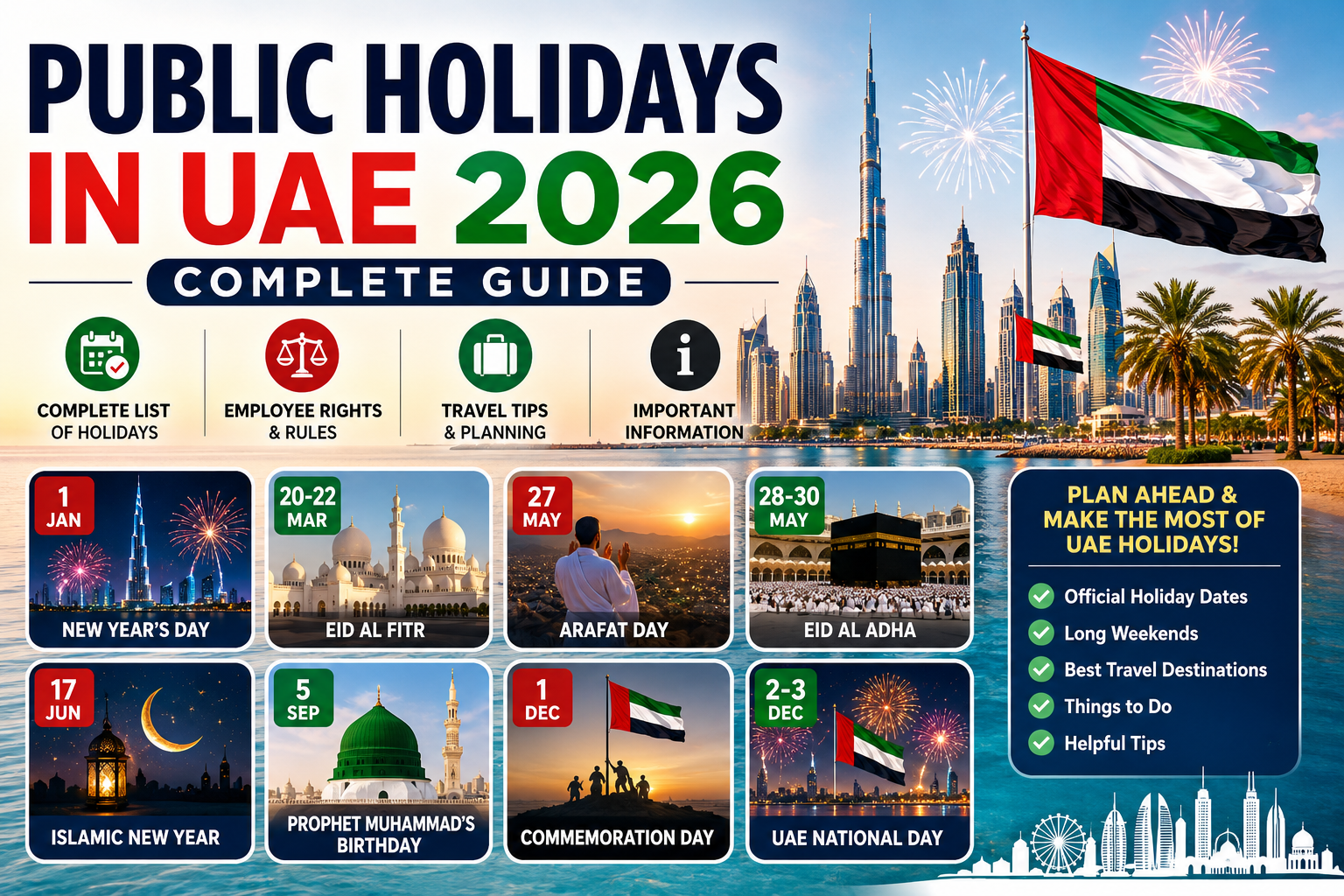
UAE skyline during public holiday celebrations
UAE Public Holidays 2026 calendar showing Eid holidays, National Day celebrations, and official public holiday dates
Abu Dhabi with skyscrapers against fireworks in United Arab Emirates

Introduction

UAE Public Holidays 2026 are important for residents, employees, employers, and visitors planning their schedules throughout the year. The UAE Public Holidays 2026 calendar includes New Year’s Day, Eid Al Fitr, Arafat Day, Eid Al Adha, Islamic New Year, Prophet Muhammad’s Birthday, Commemoration Day, and UAE National Day. Understanding UAE Public Holidays 2026 helps individuals plan vacations, business activities, travel arrangements, and family celebrations more effectively.

Expected UAE Public Holidays in 2026

The UAE government announces official public holiday dates through federal authorities. Islamic holidays are based on moon sightings, so some dates may change by one day.

HolidayExpected DateDuration
New Year’s Day1 January 20261 day
Eid Al FitrExpected around 20–22 March 20263 days
Arafat DayExpected around 27 May 20261 day
Eid Al AdhaExpected around 28–30 May 20263 days
Islamic New YearExpected around 17 June 20261 day
Prophet Muhammad’s BirthdayExpected around 5 September 20261 day
UAE Commemoration Day1 December 20261 day
UAE National Day2–3 December 20262 days

Note: Islamic holiday dates are approximate until officially confirmed.

Understanding the UAE Holiday Calendar

The UAE uses both the Gregorian calendar and the Islamic Hijri calendar for official holidays.

Gregorian-Based Holidays

These holidays occur on fixed dates each year:

  • New Year’s Day (1 January)
  • Commemoration Day (1 December)
  • National Day (2–3 December)

Hijri-Based Holidays

These holidays depend on the lunar Islamic calendar:

  • Eid Al Fitr
  • Arafat Day
  • Eid Al Adha
  • Islamic New Year
  • Prophet Muhammad’s Birthday

Because the lunar year is shorter than the Gregorian year, Islamic holidays move approximately 10–11 days earlier each year.

Holiday-by-Holiday Guide

New Year’s Day

Expected date: Thursday, 1 January 2026

New Year’s Day marks the beginning of the Gregorian calendar year and is celebrated across the UAE with fireworks, concerts, family gatherings, and special events in cities such as Dubai and Abu Dhabi.

Popular activities

  1. Watch fireworks at major landmarks.
  2. Attend New Year celebrations and concerts.
  3. Take short domestic trips during the long weekend.

Eid Al Fitr

Expected date: Around 20–22 March 2026

Eid Al Fitr marks the end of the holy month of Ramadan. It is one of the most important Islamic holidays in the UAE.

What happens during Eid Al Fitr?

  1. Families gather for prayers and celebrations.
  2. Shopping malls offer promotions and events.
  3. Many residents travel locally or internationally.
  4. Government and private-sector offices close for the holiday period.

Travel tip

Book flights and hotels early because demand increases significantly during Eid.

Arafat Day

Expected date: Around 27 May 2026

Arafat Day is observed during the Hajj pilgrimage period. It is a public holiday across the UAE and precedes Eid Al Adha.

Significance

For Muslims, it is considered one of the most spiritually significant days of the year.

Eid Al Adha

Expected date: Around 28–30 May 2026

Eid Al Adha, also known as the Festival of Sacrifice, is another major Islamic holiday in the UAE.

Common activities

  1. Family visits and gatherings.
  2. Charitable donations.
  3. Community celebrations.
  4. Travel and leisure activities.

Business impact

Many businesses, government offices, and schools close during the holiday period.

Islamic New Year

Expected date: Around 17 June 2026

The Islamic New Year marks the beginning of the Hijri calendar. It is generally a quieter holiday focused on reflection rather than large public celebrations.

Prophet Muhammad’s Birthday

Expected date: Around 5 September 2026

This holiday commemorates the birth of Prophet Muhammad. Religious programs and community events are commonly organized.

Commemoration Day

Expected date: Tuesday, 1 December 2026

Commemoration Day honors Emirati martyrs who sacrificed their lives in service to the nation.

UAE National Day

Expected date: Wednesday–Thursday, 2–3 December 2026

National Day celebrates the formation of the United Arab Emirates in 1971.

Celebrations include

  1. Fireworks displays.
  2. Parades and cultural performances.
  3. Decorated streets and landmarks.
  4. Special events across all emirates.

This is often one of the busiest and most festive periods of the year.

Employee Rights During UAE Public Holidays

Under UAE labor regulations, public holidays apply to both public-sector and private-sector employees unless specific exceptions are announced.

Key Points

  1. Employees are generally entitled to paid public holidays.
  2. If an employee is required to work on a public holiday, compensation rules may apply according to labor laws and company policy.
  3. Overtime or compensatory leave may be provided depending on the employment contract and applicable regulations.

Employees should check their contracts and official labor guidance for detailed rights and obligations.

Planning Travel Around UAE Public Holidays

Public holidays often create peak travel periods in the UAE.

Best times to book

  • Eid holidays: Book flights and hotels several weeks in advance.
  • National Day: Demand increases for domestic tourism and staycations.
  • New Year’s Day: Prices for Dubai and Abu Dhabi accommodations can rise significantly.

Popular destinations during holidays

Impact on Schools and Businesses

Schools

Most schools close during public holidays, although academic calendars may vary by institution.

Businesses

Retail malls, restaurants, and tourism attractions usually remain open and may extend operating hours during major holidays. Government services may have reduced schedules.

Tips for Residents and Visitors

Monitor official announcements

Islamic holiday dates can change based on moon sightings.

Book travel early

Flights and hotels can become expensive during Eid and National Day periods.

Expect heavier traffic

Popular destinations and shopping areas can become crowded.

Plan business activities

Government offices and some companies may close during extended holiday periods.

Frequently Asked Questions

Are public holidays the same for public and private sectors?

In most cases, yes. The UAE government generally aligns public holiday dates for both sectors.

Can holiday dates change?

Yes. Islamic holidays depend on moon sightings and may shift by one day.

Do businesses close completely during holidays?

Many government offices close, but retail, hospitality, and tourism businesses often remain open.

What is the longest public holiday in the UAE?

Eid holidays often create the longest official holiday periods, especially when combined with weekends.

Conclusion

The UAE public holidays in 2026 offer numerous opportunities for rest, celebration, travel, and family time. Major holidays such as Eid Al Fitr, Eid Al Adha, and UAE National Day are especially important cultural events across the country.

Because several holidays follow the Islamic lunar calendar, residents and visitors should watch for official announcements regarding final dates. Planning ahead for travel, business activities, and family events can help you make the most of the UAE’s public holiday calendar in 2026.

https://www.adro.gov.ae

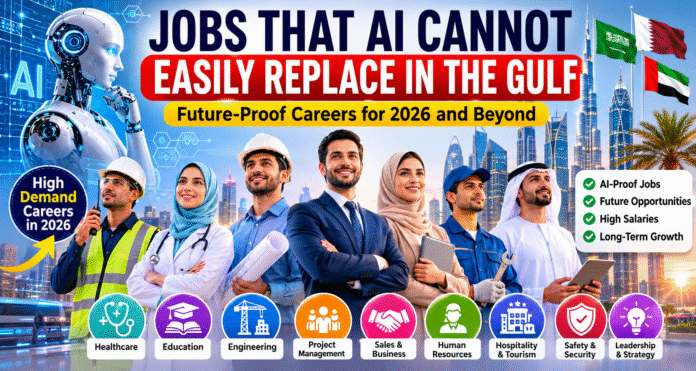
Jobs That AI Cannot Easily Replace in the Gulf: Future-Proof Careers for 2026

0
AI-Proof Jobs in the Gulf including healthcare, education, engineering, and management careers
AI-Proof Jobs continue to offer strong career opportunities across Gulf countries.

AI-Proof Jobs are becoming a major focus for professionals across Saudi Arabia, Qatar, the UAE, and other Gulf countries. As artificial intelligence continues to transform workplaces, many workers are looking for careers that offer long-term stability. Fortunately, several AI-Proof Jobs still rely on human creativity, emotional intelligence, leadership, and practical expertise. Understanding these AI-Proof Jobs can help job seekers prepare for future opportunities and build successful careers in the evolving Gulf job market.

Why AI Cannot Replace Every Job

Artificial intelligence excels at analyzing large datasets, identifying patterns, and performing routine activities. However, AI struggles with:

  • Emotional intelligence
  • Human relationships
  • Creative thinking
  • Leadership
  • Ethical decision-making
  • Complex problem-solving
  • Physical adaptability

These limitations create opportunities for workers who possess uniquely human skills.

In-Demand Skills in Saudi Arabia (2026): What Employers Are Looking For
You can also explore official information about AI development through:
https://www.weforum.org
https://www.oecd.org
https://www.ilo.org

1. Healthcare Professionals

Healthcare remains one of the safest industries from automation. Although AI can assist doctors with diagnosis and medical imaging, it cannot replace human compassion, bedside care, and professional judgment.

In-Demand Healthcare Roles

  • Doctors
  • Nurses
  • Physiotherapists
  • Medical Technologists
  • Healthcare Administrators

The Gulf region continues to invest heavily in healthcare infrastructure, creating strong demand for qualified professionals.

Why AI Cannot Replace Them

Patients need emotional support and trust. Medical decisions often involve complex ethical considerations that require human judgment.

2. Teachers and Education Professionals

Education is another sector where human interaction remains essential.

AI tools can help with lesson planning and personalized learning, but they cannot replace the mentorship and motivation provided by teachers.

High-Demand Education Careers

  • School Teachers
  • University Lecturers
  • Corporate Trainers
  • Educational Consultants
  • Special Education Specialists

Countries such as Saudi Arabia and Qatar are investing in education as part of their long-term development strategies.

3. Skilled Trade Workers

One of the most overlooked AI-proof career categories is skilled trades.

Construction sites, industrial facilities, and maintenance operations present unpredictable challenges that machines struggle to manage independently.

Examples

  • Electricians
  • Plumbers
  • Welders
  • HVAC Technicians
  • Industrial Maintenance Specialists

Major projects such as NEOM, The Red Sea Project, and Qiddiya continue creating demand for skilled technical workers.

4. Project Managers

Project managers coordinate teams, budgets, schedules, and stakeholders.

Although AI can help generate reports and forecasts, successful project delivery requires leadership and decision-making.

Common Roles

  • Construction Project Managers
  • IT Project Managers
  • Engineering Managers
  • Operations Managers

Large-scale Gulf development projects require experienced managers who can navigate complex situations.

5. Human Resource Professionals

Recruitment is becoming more automated, but people still hire people.

HR professionals evaluate cultural fit, manage employee relations, and address workplace concerns.

Growing HR Positions

  • Talent Acquisition Specialists
  • HR Managers
  • Learning and Development Officers
  • Employee Relations Specialists

AI may assist HR teams, but it cannot replace human understanding and interpersonal skills.

6. Sales and Business Development Professionals

Successful sales depend on trust and relationship-building.

AI can analyze customer data and recommend products, but closing deals often requires human communication and negotiation.

Popular Gulf Sales Careers

  • Sales Executives
  • Account Managers
  • Business Development Managers
  • Relationship Managers

Professionals who combine technology knowledge with strong communication skills will remain highly valuable.

7. Creative and Marketing Professionals

Creativity remains one of the hardest human capabilities to automate.

AI can generate content and design concepts, but strategic thinking and brand storytelling still require human expertise.

Creative Careers

  • Content Writers
  • Digital Marketers
  • Graphic Designers
  • Brand Managers
  • Video Producers

Businesses throughout the Gulf increasingly need creative professionals to compete in digital markets.

8. Hospitality and Tourism Professionals

The Gulf region continues expanding tourism through luxury hotels, entertainment venues, and cultural attractions.

Visitors value personalized experiences that cannot be fully delivered by machines.

Examples

  • Hotel Managers
  • Guest Relations Officers
  • Event Coordinators
  • Tourism Consultants

Human interaction remains central to hospitality success.

9. Safety and Security Professionals

Security roles often involve unpredictable situations requiring quick judgment and responsibility.

Key Careers

  • Safety Officers
  • Security Managers
  • Compliance Specialists
  • Risk Assessment Professionals

These positions are particularly important in construction, oil and gas, aviation, and manufacturing sectors.

10. Executive Leadership Roles

AI can provide data-driven recommendations, but organizations still need leaders to set direction and make strategic decisions.

Leadership Positions

  • CEOs
  • Directors
  • Department Heads
  • Entrepreneurs

Vision, accountability, and leadership remain fundamentally human strengths.

Skills That Will Remain Valuable in the AI Era

Regardless of industry, professionals should focus on developing:

  • Communication Skills
  • Critical Thinking
  • Leadership
  • Emotional Intelligence
  • Creativity
  • Adaptability
  • Team Collaboration
  • Problem Solving

These abilities will help workers remain competitive in an increasingly automated world.

How Gulf Job Seekers Can Prepare for the Future

Instead of fearing AI, job seekers should learn how to use it effectively.

Practical steps include:

  1. Learn AI tools relevant to your profession.
  2. Improve communication and leadership skills.
  3. Invest in continuous learning.
  4. Obtain industry certifications.
  5. Build a strong professional network.

The most successful professionals will be those who combine human expertise with technological knowledge.

Final Thoughts

Artificial intelligence will continue transforming workplaces across Saudi Arabia, Qatar, UAE, and the wider Gulf region. However, many careers remain resistant to automation because they rely on uniquely human abilities.

Healthcare professionals, teachers, skilled trades workers, project managers, HR specialists, sales professionals, creative experts, hospitality staff, safety officers, and business leaders are likely to remain in demand for years to come.

Rather than viewing AI as a threat, workers should see it as a tool that can enhance productivity while allowing them to focus on the skills that machines cannot easily replicate. Those who adapt and continue learning will be best positioned to thrive in the future Gulf job market.

Qatar Working Hours, Public Holidays and Leave Entitlements in 2026: Complete Guide for Expats

1
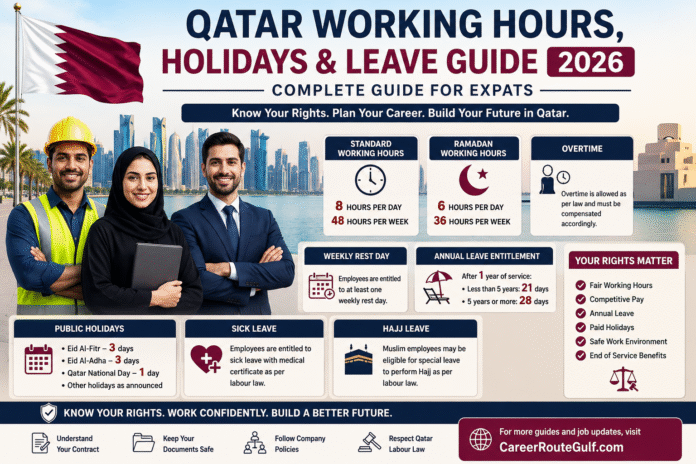
Qatar working hours and leave guide for expat employees in 2026
Learn about working hours, annual leave, public holidays, and employee rights in Qatar.

Introduction

Understanding Qatar working hours and leave policies is essential for every expat planning to work in the country. Before accepting a job offer, employees should know their legal rights regarding working hours, annual leave, public holidays, overtime compensation, and sick leave.

Qatar has established labor laws that protect employees while ensuring businesses can operate efficiently. Whether you work in construction, hospitality, healthcare, retail, education, or corporate sectors, understanding these regulations can help you avoid misunderstandings and plan your work-life balance effectively.

This guide explains Qatar working hours and leave entitlements in 2026 in simple terms.


Standard Working Hours in Qatar

According to Qatar Labour Law, standard working hours must not exceed:

  • 8 hours per day
  • 48 hours per week

These limits apply to most private-sector employees across Qatar. Employers may schedule shifts differently depending on operational requirements, but the weekly maximum generally remains 48 hours.


Working Hours During Ramadan

During the holy month of Ramadan, working hours are reduced.

Employees generally work:

  • 6 hours per day
  • 36 hours per week

This reduction applies under Qatar labor regulations to accommodate fasting and religious observance.


Overtime Rules in Qatar

Many industries require employees to work additional hours during busy periods.

If an employee works beyond standard working hours, overtime compensation may apply.

Important points include:

  • Overtime should be compensated according to labor regulations.
  • Daytime overtime is generally paid at a higher rate than regular wages.
  • Night work receives additional compensation.
  • Employers cannot require unlimited overtime.

Always review your employment contract for company-specific overtime policies.


Weekly Rest Day

Employees are generally entitled to at least one weekly rest day.

For many workers, Friday remains the traditional weekly holiday, although some companies operate different schedules depending on industry requirements.


Annual Leave Entitlement in Qatar

Annual leave is one of the most important employee benefits.

After completing one year of continuous service, employees become eligible for paid annual leave.

Employees with Less Than 5 Years of Service

  • Minimum 21 days (3 weeks) paid annual leave

Employees with 5 Years or More of Service

  • Minimum 28 days (4 weeks) paid annual leave

Annual leave helps employees rest, travel, spend time with family, and maintain productivity.

Salary Guides for Gulf Countries: A Practical Guide for Expats 2025–2026


Who Decides Annual Leave Dates?

Many employees ask whether they can choose their own vacation dates.

Under Qatar labor regulations, employers generally have authority to determine annual leave schedules based on business needs, although many companies coordinate dates with employees whenever possible.


Public Holidays in Qatar

Employees are entitled to paid public holidays each year.

The main holidays include:

Eid Al-Fitr

  • 3 working days

Eid Al-Adha

  • 3 working days

Qatar National Day

  • 1 day

Additional Holidays


Qatar Public Holidays 2026

Major public holidays scheduled for 2026 include:

HolidayExpected Date
National Sports Day10 February 2026
Eid Al-Fitr HolidayMarch 2026
Eid Al-Adha HolidayMay 2026
Qatar National Day18 December 2026

Holiday dates may vary slightly depending on official announcements and moon sightings.


Sick Leave in Qatar

Employees who complete the required service period may be eligible for sick leave benefits.

A medical certificate is usually required when taking extended sick leave.

Employers may request documentation from approved healthcare providers before approving paid sick leave.


Hajj Leave for Muslim Employees

Muslim employees may be eligible for special leave to perform Hajj pilgrimage.

Under Qatar labor regulations, qualifying employees may receive leave for pilgrimage according to applicable legal requirements.


Important Rights Every Expat Should Know

Before signing a contract, verify:

  • Working hours
  • Weekly days off
  • Annual leave entitlement
  • Overtime policy
  • Accommodation arrangements
  • Transportation benefits
  • Medical insurance coverage
  • End-of-service benefits

Understanding these details helps prevent disputes later.


Tips for New Expats Working in Qatar

Read Your Contract Carefully

Never rely solely on verbal promises.

Keep Copies of Documents

Maintain copies of:

  • Employment contract
  • Visa documents
  • Salary records
  • Leave approvals

Understand Company Policies

Many organizations provide benefits beyond legal minimum requirements.

Know Your Rights

Awareness of labor regulations helps protect both employees and employers.


Conclusion

Qatar continues to attract professionals from around the world due to its strong economy and career opportunities. Understanding Qatar working hours and leave entitlements is essential for every expat planning to work in the country.

Most employees work up to 48 hours per week, receive annual leave after completing one year of service, and enjoy paid public holidays throughout the year. By understanding your rights and responsibilities, you can build a successful and rewarding career in Qatar.

https://www.gov.qa?utm_source=chatgpt.com


Frequently Asked Questions

How many hours can employees work in Qatar?

The standard limit is generally 8 hours per day and 48 hours per week.

How much annual leave is allowed in Qatar?

Employees with less than five years of service receive at least 21 days, while employees with five years or more receive at least 28 days.

Are public holidays paid in Qatar?

Yes, employees are generally entitled to paid public holidays recognized under labor regulations.

Are working hours reduced during Ramadan?

Yes. Working hours are generally reduced to 6 hours per day and 36 hours per week during Ramadan.

https://www.mol.gov.qa?utm_source=chatgpt.com

AI and Automation in the Gulf: Which Jobs Are Growing and Which Are Disappearing?

0
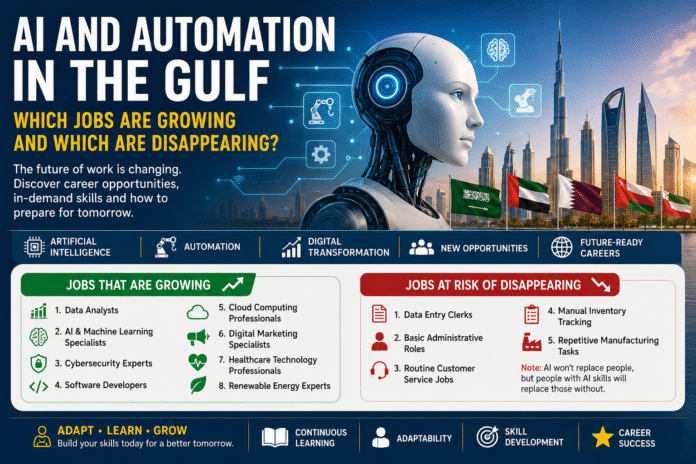
AI and automation in Gulf jobs showing future careers and digital transformation
Artificial intelligence is transforming Gulf careers and creating new job opportunities.

Introduction

AI and automation are reshaping industries across the Gulf region faster than ever before. Governments and businesses in Saudi Arabia, UAE, Qatar, Oman, Bahrain, and Kuwait are investing heavily in digital transformation, smart technologies, robotics, and artificial intelligence.

As companies adopt new technologies, some traditional jobs are becoming less common, while entirely new career opportunities are emerging. For job seekers and professionals, understanding these changes is essential for long-term career success.

This article explores how AI and automation are affecting Gulf jobs, which professions are growing, which roles face decline, and how workers can adapt to remain competitive in the future workforce.


Why the Gulf Is Investing Heavily in AI

The Gulf region is actively pursuing economic diversification and digital transformation.

Major initiatives include:

  • Saudi Vision 2030
  • UAE Artificial Intelligence Strategy
  • Smart City Development Projects
  • NEOM Digital Infrastructure
  • Advanced Healthcare Technologies
  • Smart Logistics and Transportation Systems

Governments see AI as a key driver of economic growth, productivity, and innovation.

As a result, businesses are increasing their demand for technology-skilled professionals while automating repetitive tasks.


Industries Being Transformed by AI

Healthcare

AI is helping hospitals improve diagnostics, patient monitoring, scheduling, and healthcare management.

Growing roles include:

  • Healthcare Data Analysts
  • Medical Technology Specialists
  • Digital Health Coordinators
  • AI Healthcare Consultants

Banking and Finance

Financial institutions are increasingly using AI for fraud detection, customer service, risk assessment, and financial analysis.

Growing opportunities include:

  • Financial Data Analysts
  • AI Risk Specialists
  • Digital Banking Professionals
  • Cybersecurity Experts

Construction and Engineering

Large projects such as NEOM, The Red Sea Project, and Qiddiya are incorporating smart technologies and digital systems.

Demand is increasing for:

  • BIM Specialists
  • Digital Construction Managers
  • Smart Infrastructure Engineers
  • Project Technology Coordinators

Retail and E-Commerce

AI-powered systems are changing inventory management, customer support, and online sales.

Growing roles include:

  • E-Commerce Specialists
  • Digital Marketing Experts
  • Customer Experience Managers
  • Data Analysts

Logistics and Transportation

Smart logistics systems are improving efficiency in warehouses, ports, airports, and transportation networks.

High-demand roles include:

  • Supply Chain Analysts
  • Logistics Technology Specialists
  • Fleet Optimization Managers
  • Data-Driven Operations Managers

Jobs That Are Growing in the Gulf

The following careers are expected to see strong demand over the coming years.

1. Data Analysts

Organizations increasingly rely on data-driven decision-making.

Professionals who can collect, analyze, and interpret data are becoming highly valuable.


2. Cybersecurity Specialists

As digital systems expand, protecting sensitive information becomes critical.

Cybersecurity remains one of the fastest-growing career fields across the Gulf.


3. Artificial Intelligence Specialists

Companies need professionals who can develop, manage, and implement AI systems.


4. Digital Marketing Professionals

Businesses continue shifting toward online platforms, creating strong demand for digital marketing skills.


5. Software Developers

Technology development remains central to Gulf digital transformation projects.


6. Cloud Computing Professionals

Organizations increasingly use cloud platforms to manage operations efficiently.


7. Renewable Energy Experts

The Gulf is investing heavily in renewable energy and sustainability projects.


8. Healthcare Technology Professionals

The combination of healthcare and technology is creating new specialized roles.


Jobs Most Vulnerable to Automation

Automation does not eliminate all jobs, but it changes how work is performed.

Some routine and repetitive roles face greater risk.

Data Entry Clerks

Many data processing tasks can now be completed automatically.


Basic Administrative Roles

Scheduling, document processing, and repetitive office functions are increasingly automated.


Routine Customer Service Positions

AI-powered chatbots and virtual assistants can handle many basic inquiries.


Manual Inventory Tracking

Smart systems can now monitor inventory automatically.


Repetitive Manufacturing Tasks

Robotics continues to replace predictable and repetitive production activities.


Will AI Replace Human Workers Completely?

The short answer is no.

AI is more likely to change jobs than eliminate them entirely.

Human skills remain critical in areas such as:

  • Leadership
  • Creativity
  • Communication
  • Problem Solving
  • Relationship Building
  • Strategic Decision Making

Workers who combine technical knowledge with strong interpersonal skills will remain highly valuable.


Skills Needed for the Future Gulf Workforce

To remain competitive, professionals should focus on developing:

Technical Skills

  • Data Analysis
  • Cybersecurity
  • Cloud Computing
  • AI Fundamentals
  • Digital Tools

Human Skills

  • Communication
  • Leadership
  • Adaptability
  • Critical Thinking
  • Emotional Intelligence

Employers increasingly seek professionals who can work effectively alongside technology.

http://Impact of Middle East Tensions on Gulf Jobs 2026


How Job Seekers Can Prepare

Practical steps include:

Continue Learning

Invest in online courses and professional certifications.

Improve English Communication

Strong communication remains essential across Gulf workplaces.

English Learning & Skill Improvement: A Practical Guide for Career Growth in 2026

Develop Digital Skills

Learn tools and technologies used in your industry.

Stay Updated

Follow industry developments and emerging career trends.

Build a Professional Network

Networking remains one of the most effective ways to discover opportunities.

https://www.weforum.org/reports/the-future-of-jobs-report-2025?utm_source=chatgpt.com


What This Means for Gulf Job Seekers in 2026

The future Gulf workforce will increasingly combine technology with human expertise.

Professionals who adapt, learn new skills, and embrace innovation will benefit from growing opportunities in technology, healthcare, renewable energy, finance, logistics, and digital services.

Rather than fearing automation, workers should focus on becoming more valuable through continuous learning and skill development.


Conclusion

AI and automation are transforming Gulf jobs across every major industry. While some routine roles may decline, many new opportunities are emerging for professionals who develop the right skills.

The future belongs to adaptable individuals who combine technical expertise with communication, leadership, and problem-solving abilities.

For job seekers planning a career in Saudi Arabia, UAE, Qatar, and across the Gulf region, now is the ideal time to invest in future-ready skills and prepare for the next generation of opportunities.

https://www.vision2030.gov.sa?utm_source=chatgpt.com


Frequently Asked Questions

Will AI reduce jobs in the Gulf?

AI may reduce some repetitive jobs, but it is also creating many new opportunities in technology, healthcare, finance, and digital services.

Which Gulf country is investing most in AI?

Saudi Arabia and UAE are among the largest investors in artificial intelligence and digital transformation projects.

What skills are most important for future Gulf jobs?

Communication, digital literacy, cybersecurity, data analysis, adaptability, and leadership are among the most valuable skills.

Can non-technical professionals benefit from AI?

Yes. Understanding AI basics and improving digital skills can help professionals in almost every industry.

Written by Shahid Ramzan
Founder of CareerRouteGulf with professional experience in accounting, education, sales, and Gulf business environments. He shares practical career guidance, Gulf job insights, English learning resources, and workplace success strategies for expats and professionals.

English Learning for Gulf Jobs – Day 1: Basic Words & Greetings

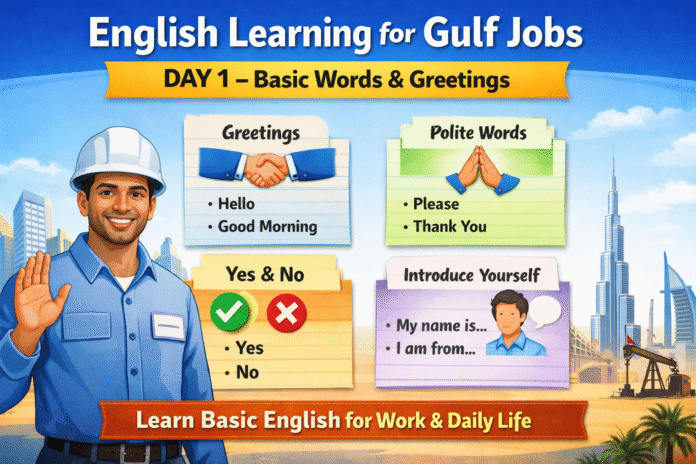
English learning for Gulf jobs basic words and greetings
Start learning basic English for Gulf jobs with simple words and greetings

Introduction

English learning for Gulf jobs starts with simple steps, and Day 1 is all about building a strong foundation. If you are planning to work in countries like Saudi Arabia, United Arab Emirates, or Qatar, learning basic English words and greetings will help you communicate confidently from your very first day.

Many people think English is difficult, but in reality, you only need simple, practical English to start working and living comfortably. This lesson focuses on the most commonly used words and phrases that you will hear every day at work and in daily life.


Why Basic English is Important

In Gulf countries, people from different nationalities work together. English is the most commonly used language for communication, even if it is not everyone’s first language.

English learning for Gulf jobs will help you:

  • Understand instructions at work
  • Talk to your supervisor and coworkers
  • Handle daily activities like shopping and travel
  • Build confidence in a new environment

Even a few simple words can make a big difference in your job performance and daily life.


English learning for Gulf jobs : Basic Greetings You Must Know

Greetings are the first step in communication. They help you create a good impression and show respect.

Common Greetings:

EnglishUsage
HelloGeneral greeting
HiInformal greeting
Good MorningBefore 12 PM
Good Afternoon12 PM – 5 PM
Good EveningAfter 5 PM

Example:

  • “Hello, how are you?”
  • “Good morning, sir.”

Using greetings daily will help you become more comfortable speaking English.


Polite Words for Daily Use

Politeness is very important in Gulf workplaces. Simple polite words can improve your relationships with others.

Must-Know Polite Words:

WordMeaning
PleaseRequest politely
Thank YouShow gratitude
SorryApologize
Excuse MeGet attention

Example Sentences:

  • “Please help me.”
  • “Thank you very much.”
  • “Sorry, I am late.”

These words are small but very powerful.


Yes / No – Basic Communication

Understanding “Yes” and “No” is essential.

WordMeaning
YesAgreement
NoDisagreement

Examples:

  • “Do you understand?” → “Yes”
  • “Are you finished?” → “No”

This helps you respond quickly at work.


Simple Self-Introduction

You should be able to introduce yourself in English. This is important for interviews and workplace communication.

Basic Structure:

  • My name is ______
  • I am from ______
  • I work as ______

Example:
“My name is Ali. I am from Pakistan. I work as a technician.”

Practice this daily until you feel confident.


Daily Use Sentences for Work

Here are simple sentences you will use at work:

  • I understand
  • I don’t understand
  • Please repeat
  • I will do it
  • I finished my work

Example:
“Please repeat, I don’t understand.”

These sentences are extremely useful in real situations.


English for Daily Life

You will also use English outside your job.

At a Shop:

  • “How much?”
  • “Give me this.”

In Transport:

  • “Stop here.”
  • “Go straight.”

In Emergency:

  • “I need help.”

Learning these phrases will make your daily life much easier.


Basic Arabic Words (Bonus)

In Gulf countries, Arabic is the local language. Learning a few words helps you connect with people.

EnglishArabicMeaning
HelloSalamGreeting
Thank YouShukranThanks
YesNaamYes
NoLaNo

Even basic Arabic shows respect and improves communication.


How to Practice Daily

Learning English requires practice. Follow these simple steps:

Listen

  • Watch English videos
  • Listen to simple conversations

Speak

  • Practice in front of a mirror
  • Speak with friends

Write

  • Write simple sentences
  • Practice daily

Use Apps

You can use:

  • Duolingo
  • HelloTalk

These apps are very helpful for beginners.


Common Mistakes to Avoid

  • Being afraid to speak
  • Thinking English must be perfect
  • Not practicing daily

Remember: Simple English is enough to start.


Daily Practice Task (Day 1)

Do these exercises:

✔ Say 5 greetings
✔ Use “please” and “thank you”
✔ Introduce yourself
✔ Speak 3 sentences aloud

Repeat this every day for better results.


Conclusion

English learning for Gulf jobs begins with simple words, greetings, and basic sentences. You do not need advanced English to succeed. With daily practice and confidence, you can improve step by step.

Day 1 is your starting point. Keep learning, keep practicing, and you will soon be able to communicate effectively at work and in daily life.

https://learnenglish.britishcouncil.org

https://www.cambridgeenglish.org