
Home Blog Page 8

Legal Rights and Labor Laws for Expats in the Gulf: A Complete Guide

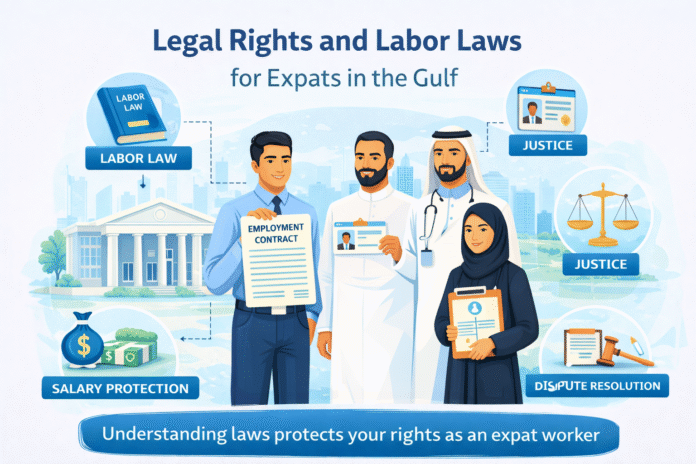
Illustration showing expat workers learning about legal rights and labor laws in Gulf countries.
Understanding expat legal rights and labor laws ensures safe and secure employment in the Gulf.

Introduction

Expat labor laws Gulf protect foreign workers in UAE, Saudi Arabia, Qatar, Oman, Bahrain, and Kuwait. Understanding rights, contracts, hours, and disputes is essential for a fair career.

Understanding expat labor laws in the Gulf is crucial for every foreign worker in UAE, Saudi Arabia, Qatar, Oman, Kuwait, and Bahrain. While the region offers tax-free salaries, career growth, and modern living, understanding legal rights and labor laws is essential for every expat.

Labor laws in the Gulf are structured, strictly enforced, and designed to regulate employer-employee relationships. However, they differ significantly from Western or Asian systems. Knowing your rights can protect you from disputes, contract violations, and unexpected legal issues.

This guide explains the key legal rights, employment laws, and protections for expats working in the Gulf, helping you stay informed and confident.


Understanding the Gulf Labor Law System

Each Gulf country has its own labor law, but they share common principles:

  • Employment is contract-based
  • Residency is linked to employment
  • Laws protect both employer and employee
  • Government ministries regulate labor disputes

Labor laws typically apply to private-sector employees, while government employees follow separate regulations.

Tip: Always keep a copy of your signed employment contract.


Expat Labor Laws Gulf: Employment Contracts Explained

Your employment contract is the most important legal document in the Gulf.

Common Contract Types

  • Limited (Fixed-Term) Contract
  • Unlimited (Open-Ended) Contract (in some countries)

Key Contract Elements

  • Job title and responsibilities
  • Salary and allowances
  • Working hours
  • Leave entitlement
  • Notice period
  • End-of-service benefits

Any work outside your contract scope may be illegal unless approved.


Working Hours Under Expat Labor Laws in the Gulf

Most Gulf labor laws regulate working hours to protect employees.

Standard Rules

  • 8–9 hours per day
  • 48 hours per week
  • Reduced hours during Ramadan

Overtime Pay

  • Extra hours must be compensated
  • Rates are usually higher for night or holiday work

Employers cannot force unpaid overtime.


Salary Protection and Wage Laws

Gulf countries have strict salary protection systems.

Key Protections

  • Salaries must be paid on time
  • Payments tracked through government systems (WPS)
  • Delayed or unpaid wages are punishable

If salary issues arise, expats can file complaints with the labor ministry.


Leave Entitlements for Expats

Labor laws ensure paid leave for employees.

Common Leave Types

  • Annual leave (21–30 days)
  • Sick leave
  • Maternity leave
  • Public holidays

Leave policies may vary by country and employer but must meet legal minimums.


Termination, Resignation, and Notice Periods

Understanding termination laws is crucial.

Legal Termination

  • Requires valid reason
  • Notice period must be served
  • Compensation may apply

Resignation

  • Must follow notice period
  • Early exit may require penalties in some cases

Unlawful termination can be challenged legally.


End-of-Service Gratuity: Expat Labor Laws Gulf

Most Gulf countries offer end-of-service gratuity.

How It Works

  • Paid after contract completion
  • Calculated based on basic salary
  • Depends on years of service

This is a major financial benefit for long-term expats.


Workplace Rights and Protections

Expats are legally protected against:

  • Harassment or abuse
  • Unsafe working conditions
  • Discrimination (within legal frameworks)
  • Forced labor

Employers must provide safe workplaces and respect labor regulations.


Filing Complaints: Expat Rights Under Gulf Labor Laws

If disputes arise:

  1. Attempt internal resolution
  2. File complaint with labor ministry
  3. Case reviewed legally
  4. Court involvement if needed

Most Gulf countries offer free labor dispute services.

External Resource

  • Qatar Ministry of Labour
  • UAE Ministry of Human Resources
  • Saudi Ministry of Human Resources

Residency and Legal Compliance

Legal residency depends on employment status.

Important Rules

  • Valid ID and residency permit required
  • Job changes must follow legal transfer procedures
  • Overstaying visas leads to fines

Always renew documents on time.

Work visa and residency rules in gulf


Cultural and Legal Awareness

Some actions legal elsewhere may be illegal in the Gulf.

Examples

  • Public arguments
  • Offensive language
  • Social media misuse
  • Alcohol violations

Respecting laws ensures a trouble-free stay.

Conclusion

“Master expat labor laws in the Gulf for a safe and fair career.” The Gulf offers outstanding opportunities for expatriates, but success depends on understanding legal rights and labor laws.“Knowing your rights under expat labor laws Gulf protects you from tension and issues, salary protections, working hours, and dispute processes empowers you to work confidently and securely.

For expats, knowledge is protection. Stay informed, stay compliant, and your Gulf journey can be both rewarding and legally secure
https://www.mohre.gov.ae/en/home.aspx

https://www.mol.gov.qa/en/Pages/default.aspx

Work Visas and Residency Rules in the Gulf: A Complete Guide for Expats

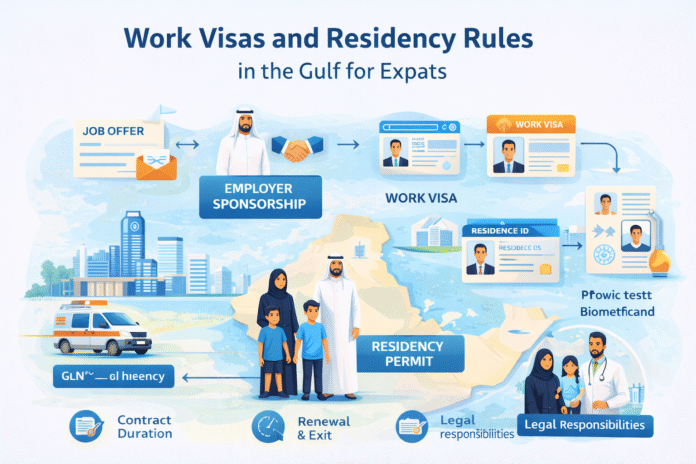
Understanding work visas and residency rules is essential for expatriates in the Gulf.
Work visa and residency process in Gulf countries for expatriates

Introduction: Why Understanding Gulf Work Visas and Residency is Essential for Expats

Navigating Gulf work visas and residency rules is crucial for every expat planning to live and work in UAE, Saudi Arabia, Qatar, Oman, or Kuwait. Unlike many Western countries, Gulf nations operate under a sponsorship-based immigration system where employment and residency are closely linked.

Countries such as Qatar, the UAE, Saudi Arabia, Oman, and Kuwait welcome millions of expatriates, but residency is strictly regulated. Knowing how visas work, what your rights are, and how to maintain legal status will help you avoid serious complications.

This guide explains the work visa process, residency requirements, sponsorship rules, family visas, and key legal points every expat must know before and after moving to the Gulf.


1. Gulf Work Visas: Understanding the Sponsorship (Kafala) System

Most Gulf countries follow a sponsorship system, where your employer acts as your legal sponsor.

Key points:

• You cannot legally work without a sponsor
• Your residency is tied to your employment
• Changing jobs requires proper transfer procedures
• Sponsors handle visa processing and renewals

Although reforms have been introduced in some countries, sponsorship still plays a central role in residency status.


2. Types of Gulf Work Visas and Residency Permits

Work Visa Requirements and Process

Issued to expats who have secured a job offer.

Requirements usually include:

• Valid job contract
• Passport with sufficient validity
• Medical fitness test
• Police clearance certificate
• Educational attestation (for some roles)

The work visa allows entry, after which residency formalities are completed.


Residency Permit (Residence ID): Rights and Benefits

Once inside the country, your work visa is converted into a residency permit.

This allows you to:

• Live legally in the country
• Open a bank account
• Rent accommodation
• Obtain a driving license
• Sponsor family members (if eligible)

Residency permits are typically valid for 1–3 years and must be renewed.


Family Residence Visa: Sponsoring Dependents

Expats earning above a certain salary threshold can sponsor immediate family members.

Common requirements:

• Minimum salary (varies by country)
• Suitable accommodation
• Marriage and birth certificates (attested)
• Health insurance for dependents

Family visas do not allow dependents to work unless they obtain separate work permits.


Mandatory Medical Tests and Biometrics for Gulf Visas

All Gulf countries require medical screening.

This includes:

• Blood tests
• Chest X-rays
• Fingerprints and biometrics

Failing a medical test can lead to visa rejection or cancellation, especially for certain infectious diseases.


Contract Duration and Visa Validity: What Happens When Employment Ends

Work visas and residency permits are usually linked to the employment contract.

Important points:

• Contract length often matches visa validity
• Early termination may cancel residency
• Notice periods must be respected
• Exit procedures are required upon leaving

Always keep copies of your contract and visa documents.


Changing Jobs with Gulf Work Visas: Rules and Reforms

Changing employers is possible but regulated.

General rules:

• Completion of notice period
• Employer approval or legal transfer process
• New contract and sponsor required
• Updated residency permit

Some countries now allow job changes without employer consent under specific conditions, but rules vary.


Exit, Re-entry, and Travel Rules for Gulf Residents

Residency permits allow multiple exits and entries, but rules apply.

Key things to remember:

• Do not stay outside the country beyond allowed duration
• Exit permits may be required in some cases
• Visa cancellation required when leaving permanently

Overstaying can result in fines or travel bans.

Top In-Demand Jobs in the Gulf 2025

Legal Responsibilities of Expats Holding a Gulf Residency Permit

Holding a residency permit comes with responsibilities.

Expats must:

• Carry valid ID
• Follow local laws and cultural norms
• Avoid working outside visa terms
• Renew residency on time

Violations can lead to fines, detention, deportation, or blacklisting.


Legal Responsibilities of Expats Holding a Gulf Residency Permit

Golden Visas and Investor Programs in UAE and Saudi Arabia

Most Gulf countries do not offer citizenship, but long-term residency options are increasing.

Examples include:

• Golden Visas (UAE, Saudi Arabia)
• Long-term investor visas
• Special residency programs

These are usually based on profession, investment, or exceptional skills.


Practical Tips for a Smooth Gulf Visa and Residency Experience

• Never enter on a tourist visa for work
• Ensure documents are properly attested
• Track visa expiry dates
• Keep digital and physical copies
• Clarify sponsorship terms before signing

Being informed protects your legal status.

Conclusion

Key Takeaways for Successful Expat Life in the Gulf

Work visas and residency rules in the Gulf are structured, strict, and highly regulated. While the system may seem complex at first, it offers stability and security for expatriates who follow the rules.

By understanding sponsorship, visa types, family residency, and legal obligations, you can build a smooth and successful life in the Gulf. Preparation, transparency, and compliance are the keys to long-term success in the region.

http://Ministry of Interior Qatar

http://Federal Authority for Identity and Citizenship

http://Saudi Ministry of Human Resources

Healthcare in the Gulf: What Expats Need to Know Before Moving

3
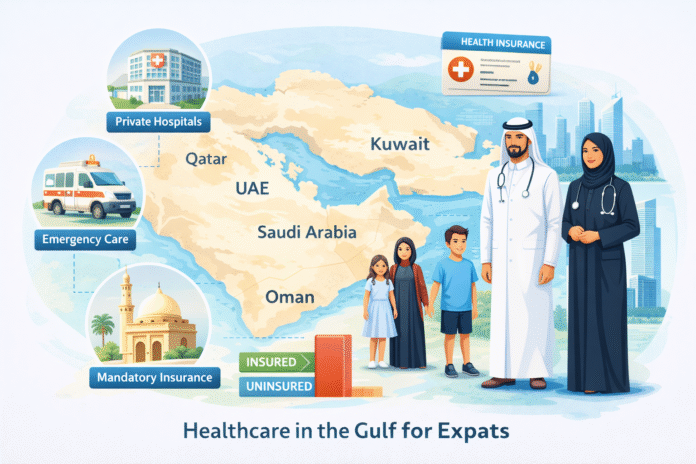
Healthcare system in the Gulf countries for expatriates and families
Healthcare in the Gulf provides world-class medical services for expatriates and families.

Introduction

Healthcare in the Gulf is modern and high-quality for expats in UAE, Saudi Arabia, Qatar, Oman, and Kuwait. Private insurance is mandatory, with employer coverage common.

Countries like Qatar, the UAE, Saudi Arabia, Oman, and Kuwait offer modern, well-regulated healthcare systems supported by strong government investment. From internationally accredited hospitals to highly qualified medical professionals, the Gulf provides reliable medical care for residents.

However, healthcare access, costs, and insurance regulations vary by country. This guide explains everything expats need to know about healthcare in the Gulf, helping you prepare confidently before moving.


Overview of Healthcare Systems in the Gulf

Healthcare in the Gulf generally operates through two main sectors: public and private healthcare.

Public Healthcare

  • Primarily designed for citizens
  • Available to expats with residency permits
  • Lower cost but longer waiting times
  • Limited access to specialists

Private Healthcare

  • Most popular choice among expats
  • Short waiting times and advanced facilities
  • English-speaking doctors widely available
  • Higher costs without insurance

Most expatriates rely on private hospitals, supported by employer provided or personal health insurance.


Health Insurance for Expats in the Gulf

Health insurance is mandatory for expatriates in most Gulf countries.

Employer-Provided Insurance

Employers in Qatar, UAE, and Saudi Arabia are legally required to provide health insurance for employees.

Typical coverage includes:

  • Doctor consultations
  • Emergency treatment
  • Hospitalization
  • Diagnostic tests
  • Essential medication

Some employers extend coverage to family members, while others offer employee-only plans.

Private Health Insurance

Self-sponsored expats, freelancers, or dependents may need private insurance.

Insurance costs depend on:

  • Age
  • Medical history
  • Coverage level
  • Country of residence
  • Family size

Tip: Always review exclusions, co-payments, and network hospitals before choosing a plan.


Quality of Hospitals and Medical Facilities

The Gulf is home to internationally accredited hospitals and specialist medical centers.

What to Expect

  • Modern equipment and technology
  • Highly qualified doctors trained in Europe, Asia, and North America
  • Clean and well-organized facilities
  • Multilingual staff

Popular healthcare providers include:

  • Hamad Medical Corporation (Qatar)
  • Cleveland Clinic Abu Dhabi
  • King Faisal Specialist Hospital (Saudi Arabia)
  • Royal Hospital (Oman)

Cost of Healthcare Without Insurance

Healthcare costs can be high without insurance.

Approximate costs:

  • GP consultation: USD 40–120
  • Specialist visit: USD 100–300
  • Emergency treatment: USD 300+
  • Hospital admission: Thousands of dollars

This makes health insurance essential for every expat living in the Gulf.


Emergency and Ambulance Services

Emergency medical services in the Gulf are efficient and well-coordinated.

Key points:

  • Ambulance services are available nationwide
  • Emergency numbers differ by country
  • Government hospitals handle emergencies effectively
  • Emergency care is provided regardless of insurance status

Always save local emergency numbers on your phone immediately after arrival.


Healthcare for Families and Children

Healthcare for families is one of the strongest advantages of living in the Gulf.

Pediatric Care

  • Specialized children’s hospitals
  • Vaccination programs aligned with international standards
  • Well-equipped neonatal and maternity units

Maternity Care

  • High-quality prenatal and postnatal care
  • Private maternity hospitals widely available
  • Insurance coverage varies by employer

Parents should confirm maternity and pediatric coverage in advance.


Mental Health and Wellness Services

Mental health awareness is growing rapidly in the Gulf.

Available services include:

  • Counseling and therapy
  • Psychiatry services
  • Stress management programs
  • Wellness clinics

While mental health is still a sensitive topic culturally, access to professional support has improved significantly in recent years.


Pharmacies and Medication Access

Pharmacies are easily accessible across the Gulf.

Important notes:

  • Prescription medications require doctor approval
  • Some medicines available elsewhere may be restricted
  • Pharmacies are regulated and professionally managed
  • Many operate 24/7

Always carry prescriptions and check regulations before bringing medication from abroad.


Healthcare Regulations and Residency

Healthcare access is linked to residency status.

You will need:

  • Valid residency permit
  • Health card (in some countries)
  • Active insurance policy

Failure to maintain valid insurance can result in fines or visa issues.

family-life-in-the-gulf


Tips for Expats to Navigate Healthcare Smoothly

  • Choose housing near quality hospitals
  • Keep insurance documents accessible
  • Register with a family doctor
  • Maintain digital copies of medical records
  • Understand coverage limits and exclusions

Preparation reduces stress and unexpected expenses.


Conclusion

Healthcare in the Gulf is modern, reliable, and expat-friendly when approached correctly. With mandatory insurance, world-class hospitals, and skilled medical professionals, the region offers excellent medical care for individuals and families alike.

Success depends on understanding insurance requirements, choosing the right providers, and staying informed about local regulations. For expats who plan ahead, healthcare in the Gulf can be one of the most reassuring aspects of life in the region.

http://Ministry of Public Health Qatar

http://Dubai Health Authority

http://Saudi Ministry of Health

Culture in the Gulf: A Complete Guide for Expats and Newcomers

0
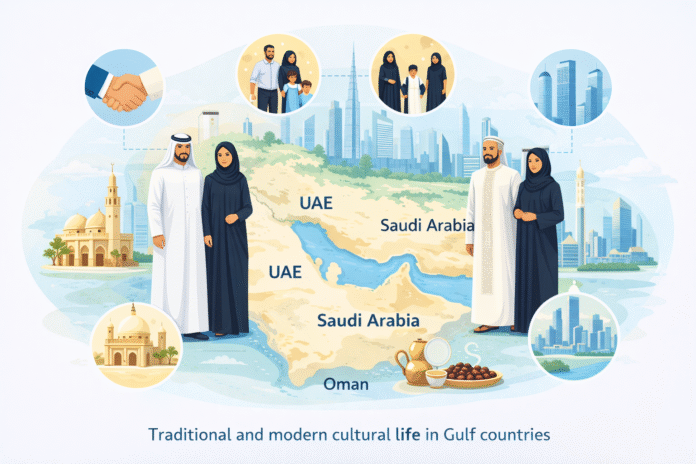
Culture in the Gulf showing traditional dress, hospitality, and modern city life
Traditional and modern cultural life in Gulf countries

Culture in the Gulf: Traditions & Customs for Expats

Introduction

The Gulf region is known for its modern cities, strong economies, and diverse expatriate population. However, beneath the skyscrapers and luxury malls lies a rich cultural heritage shaped by centuries of tradition, religion, and community values. For new expats, understanding the culture in the Gulf is essential for smooth integration, professional success, and respectful daily living.

Countries such as Qatar, the UAE, Saudi Arabia, Oman, Kuwait, and Bahrain share many cultural similarities, yet each has its own identity. This guide explains the key cultural aspects of the Gulf, helping newcomers adapt confidently while appreciating local traditions.


Understanding the Foundations of Gulf Culture

Islamic Influence on Daily Life

Islam plays a central role in shaping Gulf culture. It influences laws, work schedules, social behavior, and public etiquette.

Key points to understand:

  • Daily life revolves around five prayer times

  • Friday is the main religious day

  • Ramadan is the most significant month of the year

  • Respect for religious practices is expected from everyone

Even non Muslims are expected to observe public etiquette, especially during religious occasions.


Hospitality: A Core Gulf Value

Hospitality is one of the most admired aspects of Gulf culture. Guests are treated with respect, generosity, and warmth.

Common hospitality traditions include:

  • Offering Arabic coffee (Gahwa) and dates

  • Welcoming guests warmly, even strangers

  • Polite and respectful conversation

  • Sharing meals as a sign of goodwill

As an expat, showing appreciation for hospitality goes a long way in building trust and relationships.


Dress Code and Modesty

While the Gulf is modern and diverse, modest dressing remains important, especially in public spaces.

General Dress Guidelines

  • Shoulders and knees should be covered in public

  • Avoid tight or revealing clothing

  • Swimwear is acceptable only at beaches or pools

  • Traditional clothing such as thobes and abayas are common

In workplaces, formal and conservative attire is usually expected.


Social Etiquette in Culture in the Gulf

“Understanding culture in the Gulf involves..

Important Cultural Etiquette

  • Public displays of affection are discouraged

  • Use polite language and calm tone

  • Avoid pointing soles of shoes at others

  • Handshakes are common, but wait for women to initiate

  • “Respect is central to culture in the Gulf…”

Simple gestures like greeting people respectfully make a strong positive impression.


Language and Communication Style

Arabic is the official language, but English is widely spoken, especially in workplaces and urban areas.

Communication style in the Gulf tends to be:

  • Polite and indirect

  • Respectful rather than confrontational

  • Relationship-focused before business-focused

Learning basic Arabic greetings shows respect and cultural awareness.


Work Culture in the Gulf

The workplace culture reflects hierarchy, professionalism, and respect.

What Expats Should Know

  • Decision-making often comes from senior management

  • Punctuality is valued, but flexibility exists

  • Relationships matter in business

  • Respect for authority is essential

During Ramadan, working hours are reduced, and productivity expectations adjust accordingly.


Family Values and Community Life

Family is central to Gulf culture. Strong family bonds influence social structure, decision-making, and priorities.

Key family-related values:

  • Respect for parents and elders

  • Strong community ties

  • Family gatherings are common

  • Privacy and honor are important

Understanding this helps expats navigate social interactions more respectfully. 

Family Life in the Gulf: What Expat Families Need to Know Before Moving


Food Culture and Dining Etiquette

Food plays a major role in Gulf social life.

Dining Customs

  • Meals are often shared

  • Eating with the right hand is traditional

  • Refusing food politely is acceptable

  • Hosts insist guests eat generously

Traditional dishes include rice, lamb, seafood, and regional spices.


Religious Aspects of Culture in the Gulf

Ramadan is a unique cultural experience in the Gulf.

During Ramadan:

  • Eating and drinking in public during daylight is restricted

  • Work hours are reduced

  • Social gatherings increase at night

  • Charity and kindness are emphasized

Expats are not expected to fast but should show respect in public spaces.


Cultural Diversity in the Gulf

The Gulf hosts millions of expatriates from Asia, Europe, Africa, and the Americas.

This creates:

  • Multicultural workplaces

  • Diverse communities

  • International schools and restaurants

  • Blended traditions

Despite diversity, local culture remains the foundation of society.


Laws and Cultural Sensitivity

Many laws in the Gulf are closely linked to cultural and religious values.

Important reminders:

  • Avoid offensive language or gestures

  • Alcohol is regulated

  • Social media use is monitored

  • Privacy is respected seriously

When unsure, choosing caution is always best.


Integration Tips for Culture in the Gulf

  • Learn basic cultural rules before arrival

  • Observe before reacting

  • Dress modestly

  • Be patient and respectful

  • Build relationships gradually

Adaptability and openness are key to a positive experience.


Conclusion

Understanding the culture in the Gulf is essential for anyone planning to live or work in the region. While modern lifestyles are widely embraced, tradition, respect, and community values remain deeply rooted.

For expats, cultural awareness leads to better relationships, career growth, and a more fulfilling life. When you respect local customs and remain open to learning, the Gulf becomes not just a workplace, but a place to truly belong.

https://www.qatartourism.com/en

https://www.moet.gov.ae/en/explore-the-uae

Family Life in the Gulf: What Expat Families Need to Know Before Moving

1
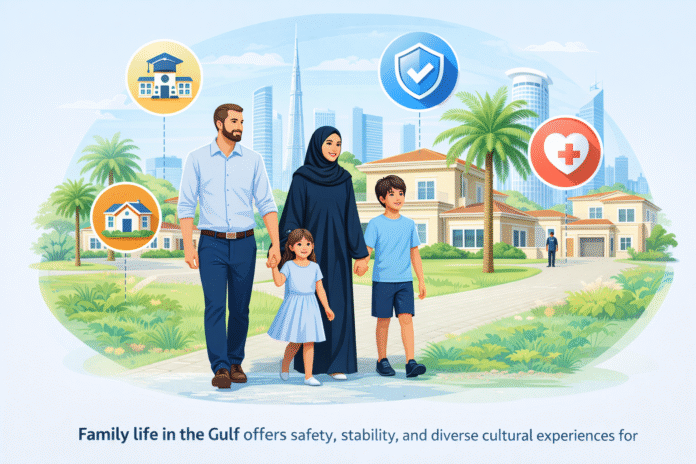
Happy expatriate family living in Gulf countries
Family life in the Gulf offers safety, stability, and diverse cultural experiences for expatriates

Introduction

Gulf family life offers excellent opportunities for expats relocating with children to UAE, Saudi Arabia, Qatar, Oman, or Kuwait. From top schools to safe communities, this guide covers everything.

Family life in the Gulf is often misunderstood. While the region is known for strict laws and conservative values, it also offers world class healthcare, excellent schools, low crime rates, and family friendly communities. This guide explores what expat families can realistically expect when building a life in the Gulf.

Is the Gulf a Good Place for Families?

Yes when planned properly, the Gulf can be an excellent place to raise a family.

Key advantages include:

  • High safety standards
  • Modern infrastructure
  • Strong education systems
  • Family oriented communities
  • Tax free income

However, success depends on understanding cultural norms, managing costs, and choosing the right location.


Housing Options in Gulf Family Life

Housing is a major factor in family life.

Common housing options:

  • Apartments in gated communities
  • Compounds with shared facilities
  • Villas for larger families

Family compounds often include:

  • Playgrounds
  • Swimming pools
  • Gyms
  • Community events

Popular family areas are usually close to schools, healthcare facilities, and shopping centers.


http://Accommodation in the Gulf: What Expats Should Know


Education and Schooling Options

Education is one of the biggest priorities for expat families.

Popular international curricula:

  • British
  • American
  • Indian (CBSE)
  • IB and Cambridge

Important points:

  • Schools are private and fee based
  • Waiting lists are common
  • School quality varies by location

Tip: Always confirm education allowance in your employment contract.


Education in Gulf Family Life

Healthcare standards in the Gulf are high and well-regulated.

What families can expect:

  • Modern hospitals and clinics
  • Mandatory health insurance
  • Pediatric and maternity services
  • Emergency care availability

Most employers provide health insurance for dependents, but coverage details vary.


Healthcare for Gulf Family Life

One of the biggest strengths of the Gulf is safety.

  • Low crime rates
  • Strong law enforcement
  • Safe public spaces
  • Secure residential communities

Children can attend school, parks, and activities with minimal risk compared to many other regions.


Cultural Values and Family Etiquette

The Gulf is deeply rooted in Islamic culture, which places strong emphasis on family values.

What expat families should respect:

  • Modest dress in public
  • Respect for prayer times
  • Cultural sensitivity during Ramadan
  • Public behavior norms

Children often benefit from exposure to multicultural environments and respectful values.


Daily Life and Family Activities

Family life in the Gulf blends modern living with tradition.

Family-friendly activities include:

  • Shopping malls with play areas
  • Beaches and parks
  • Desert safaris
  • Museums and cultural festivals
  • Sports clubs and academies

While nightlife is limited, family entertainment options are extensive and well organized.


Work-Life Balance for Parents

Work culture in the Gulf can be demanding, but many employers now support family balance.

Key aspects:

  • Fixed working hours
  • Reduced hours during Ramadan
  • Annual leave benefits
  • Paid holidays

Choosing the right employer plays a major role in maintaining healthy family life.


Cost of Living for Families

Family expenses are higher than for single expats.

Major costs include:

  • Housing
  • School fees
  • Healthcare
  • Transportation
  • Childcare

However, tax-free income and allowances often balance these costs.

https://careerroutegulf.com/how-much-does-it-really-cost-to-live-in-the-gulf-full-breakdown-for-expats/

🔗 https://www.internations.org/expat-insider/


Social Life and Community Support

Expat families benefit from strong community networks.

  • School parent groups
  • Cultural associations
  • Sports clubs
  • Religious centers

These communities help families adjust faster and reduce feelings of isolation.


Challenges Expat Families May Face

Despite many advantages, challenges exist:

  • High education costs
  • Limited citizenship pathways
  • Hot climate
  • Dependence on employer sponsorship

Planning ahead helps families overcome these challenges smoothly.


Conclusion

Family life in the Gulf can be safe, fulfilling, and rewarding for expatriates who prepare well. From quality education and healthcare to strong community support and career growth, the region offers a stable environment for families.

Success lies in understanding local culture, managing finances wisely, choosing the right employer, and staying adaptable. For families willing to embrace a new way of life, the Gulf can become not just a workplace but a true home.


Accommodation in the Gulf: A Complete Guide for Expats Moving to the Middle East

0
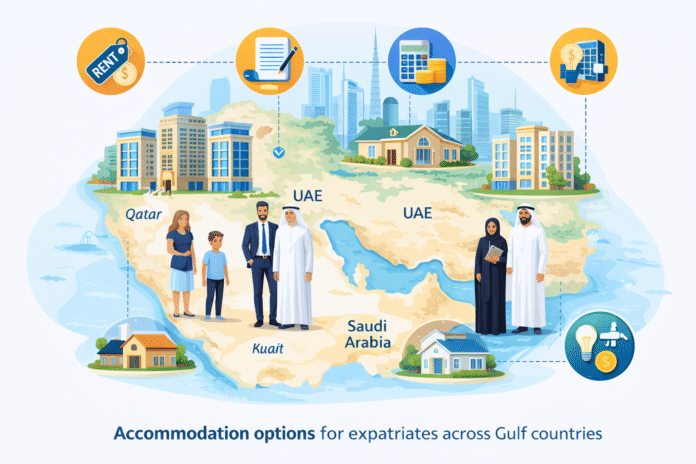
Cost of living comparison for expatriates in Gulf countries
Understanding living expenses helps expats plan better and save more in the Gulf.

Introduction: Finding Accommodation in the Gulf as an Expat

Finding the right accommodation in the Gulf is one of the most important steps for anyone moving to Middle Eastern countries like Qatar, the UAE, Saudi Arabia, Kuwait, or Oman. For many expatriates, housing is also the biggest monthly expense, and making the wrong choice can quickly affect both comfort and finances.

The Gulf offers a wide range of housing options, from shared apartments and family flats to luxury villas and employer-provided accommodation. However, rental systems, payment methods, and legal rules are often very different from what expats are used to in their home countries.

This guide explains everything you need to know about accommodation in the Gulf, including rental costs, housing types, popular expat areas, legal requirements, and smart tips to help you choose the right home with confidence.

family-life-in-the-gulf


Accommodation in the Gulf: Housing Types

Apartments

Apartments are the most common housing option for expats in the Gulf. They are available as studio, one-bedroom, two-bedroom, and family-sized units.

Key features:

  • Available furnished or unfurnished
  • Located in residential buildings or compounds
  • Suitable for singles, couples, and small families

In cities like Doha and Dubai, apartments near business districts and metro lines are more expensive, while suburban areas offer better value.


Villas and Townhouses

Villas are popular among families and senior professionals. These are usually located in gated communities or residential suburbs.

Key features:

  • More space and privacy
  • Often include parking, gardens, or shared pools
  • Higher rent and utility costs

Villas are common in Saudi Arabia and suburban areas of Qatar and the UAE.


Shared Accommodation

Many new expats choose shared accommodation to reduce costs.

Key features:

  • Renting a room in a shared apartment
  • Lower rent and utility expenses
  • Common for single professionals

Always ensure shared housing is legally permitted, as some Gulf countries have strict occupancy rules.


Employer-Provided Housing

Some employers offer accommodation as part of the salary package.

Advantages:

  • Lower upfront costs
  • Close to workplace
  • Less paperwork

Disadvantages:

  • Limited choice
  • Less flexibility if you change jobs

Rent Costs for Accommodation in the Gulf

Average Rental Costs (Approximate)

Rental costs vary by country, city, and location:

  • Qatar (Doha):
    Studio: Moderate to high
    1–2 bedroom: Mid to high range
  • UAE (Dubai):
    Studio: Medium to expensive
    Family apartments: High
  • Saudi Arabia (Riyadh/Jeddah):
    Generally more affordable than UAE and Qatar
  • Kuwait & Oman:
    Moderate rental costs

Luxury locations and city centers always cost more.


Additional Housing Expenses

Apart from rent, expats should budget for:

  • Utilities (electricity, water, cooling)
  • Internet and TV
  • Maintenance (if not included)
  • Municipality or housing fees

Tip: Always ask what is included in the rent before signing.


Rental Payment System in the Gulf

One major difference in accommodation in the Gulf is payment structure.

Cheque or Advance Payments

  • Rent is often paid yearly or quarterly
  • Post-dated cheques are common
  • Monthly payments are rare but increasing

This system requires good financial planning, especially for new arrivals.


Legal Rules for Accommodation in the Gulf

Tenancy Agreements

A valid rental contract is mandatory.

Important points to check:

  • Rent amount and payment schedule
  • Contract duration
  • Maintenance responsibility
  • Notice period
  • Penalties for early termination

In Qatar and the UAE, contracts are often registered with government systems.


Residency and ID

To rent legally, expats usually need:

  • Residence permit
  • National ID or passport
  • Employer letter (sometimes)

Never rent without proper documentation.


Best Expat Areas for Accommodation in the Gulf

Qatar (Doha)

  • West Bay
  • The Pearl
  • Al Wakrah
  • Al Sadd

UAE (Dubai)

  • Dubai Marina
  • JLT
  • Business Bay
  • Al Barsha

Saudi Arabia

  • Diplomatic Quarter
  • North Riyadh
  • Gated compounds

Choosing the right area depends on work location, budget, and family needs.


Furnished vs Unfurnished Accommodation

Furnished Homes

Pros:

  • Move-in ready
  • Ideal for short-term stays

Cons:

  • Higher rent
  • Limited customization

Unfurnished Homes

Pros:

  • Lower rent
  • Personal customization

Cons:

  • Initial setup cost

Long-term expats usually prefer unfurnished housing.


Smart Tips for Finding Accommodation in the Gulf

  • Visit the property before signing
  • Check commute time
  • Ask about maintenance response time
  • Avoid paying cash without receipts
  • Use licensed real estate agents
  • Read reviews of buildings and areas

Internal Link Suggestion:
Link to your blog post: “Cost of Living in the Gulf: A Realistic Breakdown”

External Link Suggestion:
Government housing portals or major real estate platforms in Qatar or UAE.


Common Mistakes New Expats Make

  • Renting without a contract
  • Choosing location without considering traffic
  • Ignoring utility costs
  • Not understanding payment terms
  • Overpaying due to urgency

Avoiding these mistakes can save thousands over time.


Conclusion: Secure Your Ideal Accommodation in the Gulf

Accommodation in the Gulf plays a major role in your overall expat experience. While the region offers modern housing and excellent facilities, understanding rental systems, legal rules, and cost structures is essential.

By researching well, budgeting smartly, and choosing the right location, expats can enjoy comfortable and secure living while focusing on career growth and personal goals. Whether you are single or moving with family, the Gulf has housing options to suit every lifestyle — if you know how to choose wisely.

http://: https://www.bayut.sa

https://www.propertyfinder.ae

Gulf Job Market 2025: In-Demand Jobs, Salaries & Career Opportunities for Expats

3
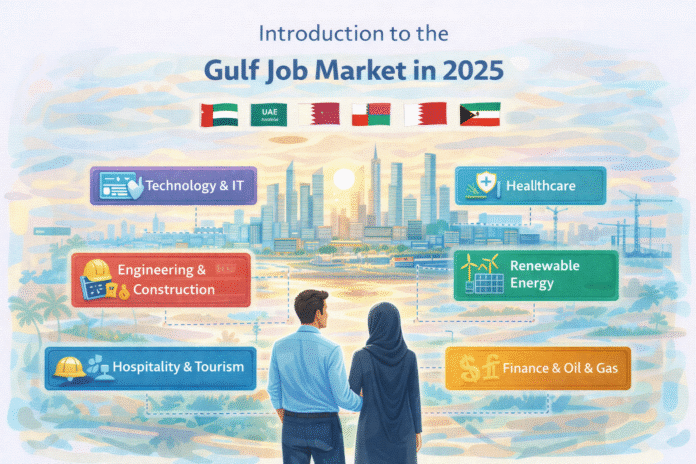
Gulf job market 2025 infographic: In-demand sectors like technology, healthcare, engineering, renewable energy, hospitality, finance, and oil & gas for expats in UAE, Saudi Arabia, Qatar, Oman, Kuwait, and Bahrain
The booming Gulf job market 2025 – explore high-demand sectors, salaries, and career opportunities for expats across UAE, Saudi Arabia, Qatar, and more.

Introduction to the Gulf Job Market 2025

The Gulf job market 2025 offers exciting opportunities for expats in UAE, Saudi Arabia, Qatar, Oman, Bahrain, and Kuwait. With Vision 2030, digital transformation, and mega-projects, demand for skilled professionals is high.

The Gulf job market 2025 continues to attract professionals from around the world due to tax-free salaries, modern infrastructure, and ambitious economic reforms. GCC countries including the UAE, Saudi Arabia, Qatar, Oman, Bahrain, and Kuwait are actively recruiting skilled expatriates across multiple sectors.

Economic diversification initiatives such as Saudi Vision 2030, mega-projects like NEOM, renewable energy investments, and post-pandemic recovery have fueled strong job creation. By 2025, Saudi Arabia alone is expected to generate over one million new jobs, while the UAE and Qatar remain stable hubs for international talent.

High-demand sectors include technology, healthcare, engineering, renewable energy, hospitality, and finance. While nationalization programs like Emiratization and Saudization prioritize local hiring, expats with specialized skills continue to enjoy strong opportunities.

The Gulf job market 2025 is booming with high-demand roles across UAE, Saudi Arabia, Qatar, Oman, Bahrain, and Kuwait. This guide explores salaries, skills, and expat opportunities in the GCC.n-demand Gulf jobs for 2025, salary expectations, essential skills, and practical tips to succeed.
http://Cost of Living in the Gulf


Gulf Job Market 2025: Key Trends and Drivers

The Gulf job market 2025 is driven by., driven by infrastructure expansion and digital transformation.

UAE (Dubai & Abu Dhabi)

The UAE offers the most diverse job market in the region, with strong demand in technology, finance, hospitality, and logistics.

Saudi Arabia

Saudi Arabia leads in large-scale projects under Vision 2030, driving hiring in construction, renewable energy, tourism, and technology.

Qatar

Post-World Cup development continues to support roles in energy, infrastructure, education, and healthcare.

Oman, Bahrain & Kuwait

These markets are smaller but growing steadily in healthcare, logistics, sustainability, and government projects.


Gulf Job Market 2025 Top Roles

1. Technology & IT Jobs in the Gulf market 2025

In the Gulf job market 2025, tech roles lead

Popular Roles

  • Software Engineers
  • AI & Machine Learning Specialists
  • Cybersecurity Experts
  • Data Scientists
  • Cloud Architects

Salary Range
AED 20,000–60,000+ per month (UAE)

Key Skills
Python, Java, AI frameworks, AWS, Azure, cybersecurity tools

Top Locations
Dubai, Abu Dhabi, Riyadh


2. Healthcare Careers in the Gulf

Expanding healthcare systems and medical tourism continue to fuel demand.

Popular Roles

  • Specialist Doctors
  • Registered Nurses
  • Medical Technologists
  • Healthcare Administrators

Salary Range
QAR 45,000–80,000+ for specialists

Key Skills
Medical certifications, clinical experience, patient care expertise

Top Locations
Doha, Dubai, Riyadh


3. Engineering & Construction Jobs in gulf market 2025

Mega-projects such as NEOM, Red Sea Project, and metro expansions drive recruitment.

Popular Roles

  • Civil & Mechanical Engineers
  • Project Managers
  • Architects
  • HSE Officers

Salary Range
AED 15,000–40,000+

Key Skills
PMP certification, project planning, safety compliance


4. Renewable Energy & Sustainability Jobs

The Gulf’s shift toward clean energy has opened new career paths.

Popular Roles

  • Renewable Energy Engineers
  • Sustainability Consultants
  • Environmental Analysts

Salary Range
AED/SAR 30,000+

Key Skills
Solar & wind technologies, ESG frameworks

Key Locations
NEOM, Masdar City (Abu Dhabi)


5. Hospitality & Tourism Careers

Tourism growth following Expo Dubai and the Qatar World Cup continues strongly.

Popular Roles

  • Hotel Managers
  • Chefs
  • Event Planners
  • Tourism Executives

Salary Range
AED 10,000–30,000+ plus benefits


6. Finance & Oil and Gas (Traditional High Earners)

Oil remains critical while finance supports regional expansion.

Popular Roles

  • Financial Analysts
  • Petroleum Engineers
  • Senior Executives

Salary Range
AED 50,000+ for senior professionals


Essential Skills for Gulf Job Market 2025

To remain competitive in the Gulf job market 2025:

  • Technical Skills: AI, cybersecurity, cloud computing, data analytics
  • Soft Skills: Leadership, adaptability, communication
  • Certifications: PMP, AWS, CISSP, medical boards
  • Languages: English essential; Arabic is a strong advantage

Online platforms like Coursera and LinkedIn Learning help with upskilling.


Salaries in Gulf Job Market 2025

One of the biggest advantages of working in the Gulf is tax-free income.

Average Monthly Salaries

  • Technology: AED 20,000–50,000
  • Healthcare: AED/QAR 15,000–80,000+
  • Engineering: AED 15,000–40,000

Common Benefits

  • Housing allowance
  • Annual air tickets
  • Health insurance
  • Education allowance for children

Tips for Expats Applying for Gulf Job market 2025

  • Tailor your CV for GCC roles
  • Highlight achievements, not job duties
  • Use trusted platforms like Bayt and GulfTalent
  • Network actively on LinkedIn
  • Never pay recruitment fees
  • Career Growth and Job Switching in the Gulf

Conclusion for Gulf Job market 2025

The Gulf job market in 2025 offers exceptional opportunities for skilled expatriates, especially in technology, healthcare, engineering, and renewable energy. With Saudi Arabia’s Vision 2030 and the UAE’s innovation-driven economy, professionals who upgrade skills and apply strategically can build successful long-term careers.

Start early, research well, and focus on high-demand skills to maximize your success.

https://www.gulftalent.com

https://www.bayt.com

How Much Does It Really Cost to Live in the Gulf?

2
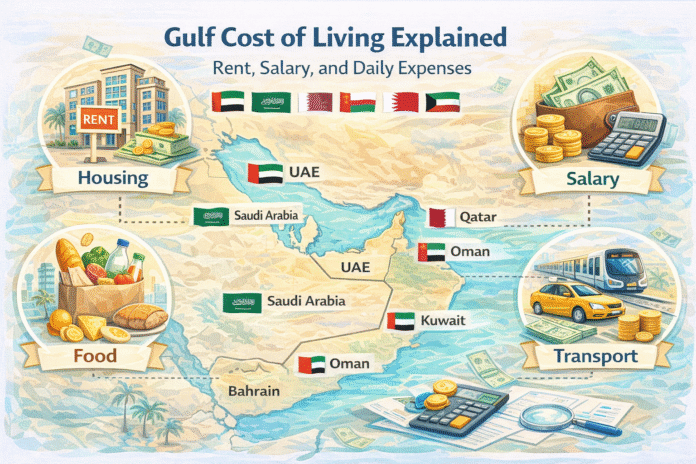
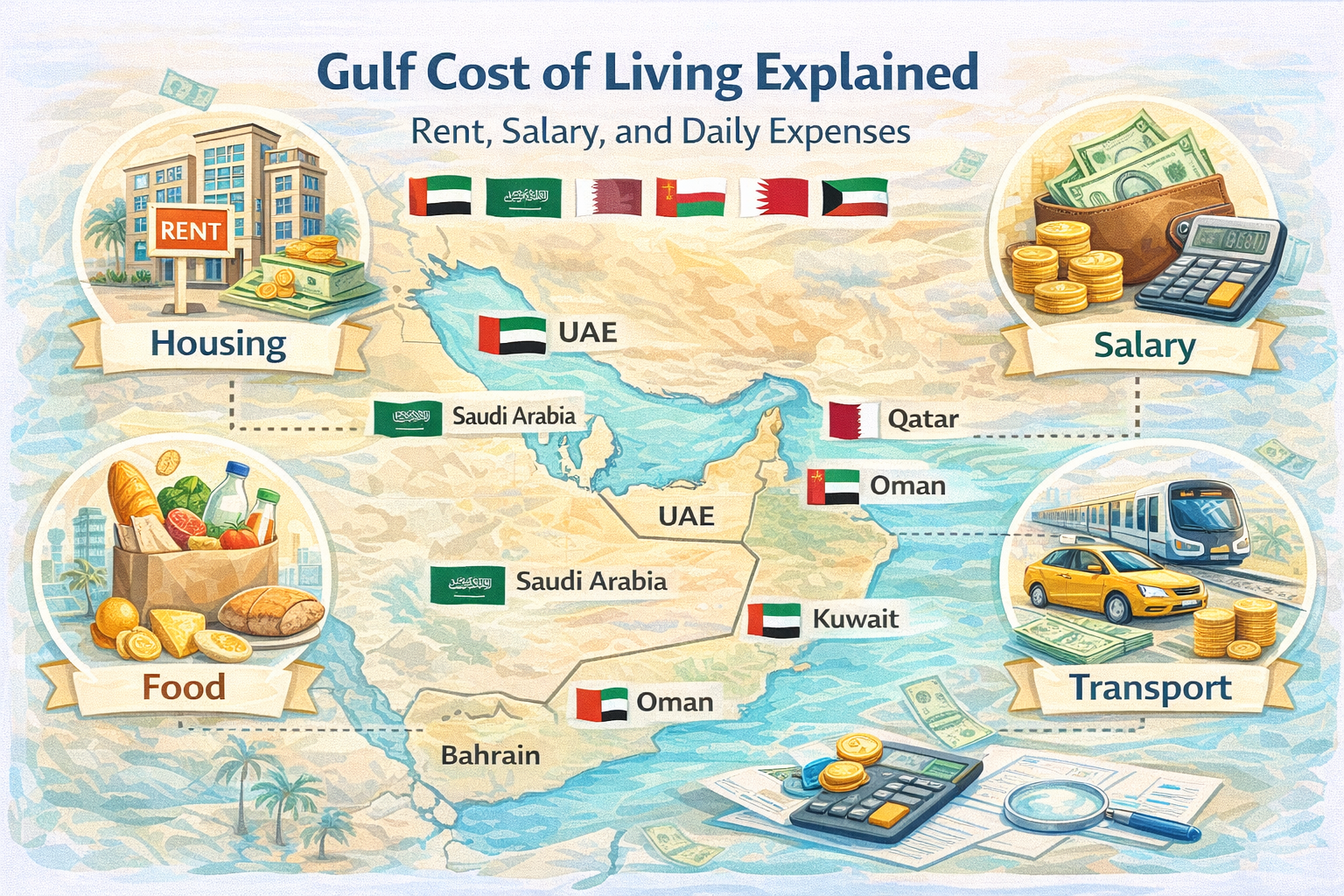
Gulf cost of living 2025–2026 explained: Rent, salary, food, transport, and daily expenses comparison map for expats in UAE, Saudi Arabia, Qatar, Oman, Kuwait, and Bahrain
Visual breakdown of the Gulf cost of living in 2025–2026: Rent, salaries, food, transport, and daily expenses across UAE, Saudi Arabia, Qatar, Oman, Kuwait, and Bahrain.

Full Cost of Living Breakdown for Expats (2025–2026)

Introduction: Understanding the Real Cost of Living in the Gulf

Understanding the Gulf cost of living before moving helps expats avoid financial stress and plan long-term savings effectively. While the region is known for tax-free salaries and modern lifestyles, actual expenses can vary significantly depending on the country, city, and lifestyle choices.

The Gulf Cooperation Council (GCC) includes the United Arab Emirates (UAE), Saudi Arabia, Qatar, Oman, Bahrain, and Kuwait. Each offers different salary levels, housing options, and living standards. Some cities provide luxury-driven lifestyles, while others focus on affordability and long-term stability.

This guide provides a realistic, experience-based breakdown of housing, food, transport, education, healthcare, and daily expenses to help expats plan smarter and avoid financial surprises.


Gulf Cost of Living by Country (2025–2026)

Living expenses across GCC countries differ due to government subsidies, import reliance, and urban development levels.

Gulf Cost of Living for Expats: Monthly Expenses Breakdown

  • UAE (Dubai / Abu Dhabi): High cost, premium lifestyle
  • Qatar (Doha): Comparable to UAE, slightly lower utilities
  • Saudi Arabia (Riyadh): Moderate and improving affordability
  • Bahrain (Manama): Balanced cost, suitable for families
  • Kuwait (Kuwait City): Low utility costs, limited housing options
  • Oman (Muscat): Most affordable overall

Oman consistently ranks as one of the most cost-effective GCC countries, making it attractive for entry-level professionals and families.


Housing Costs and Rent in the Gulf Cost of Living

Housing is the largest expense for expats across all Gulf countries.

Average Monthly Rent (1-Bedroom Apartment, City Center)

  • Dubai: High, especially in business districts
  • Abu Dhabi: Slightly lower than Dubai
  • Riyadh: Reasonable and improving quality
  • Doha: Mid to high range
  • Manama: Affordable with good amenities
  • Kuwait City: Stable pricing due to regulation
  • Muscat: Most affordable option

Many employers offer housing allowances or company accommodation, which can significantly reduce expenses. Always clarify this before accepting a job offer.

English Learning & Skill Improvement: A Practical Guide for Career Growth in 2026


Food and Daily Living Expenses

Understanding the Gulf cost of living before moving helps expats avoid financial stress and plan long-term savings effectively.

Monthly Grocery Costs (Single Person)

  • UAE & Qatar: Moderate to high
  • Saudi Arabia & Bahrain: Moderate
  • Oman & Kuwait: Lower

Dining out is widely available, with options ranging from affordable local eateries to premium restaurants. Cooking at home significantly reduces monthly expenses.


Transportation and Utilities

Transportation

  • Public transport is well-developed in Dubai, Doha, and Riyadh
  • Fuel prices remain low across the Gulf
  • Ride-hailing services are widely used

Utilities (Electricity, Water, Internet)

  • Subsidized in Kuwait and Saudi Arabia
  • Higher in UAE and Qatar due to air-conditioning use
  • Internet costs are consistent across the region

Education and Healthcare Costs for Expats

Education

International schools are common but expensive in some countries.

  • UAE & Qatar: High school fees
  • Saudi Arabia & Bahrain: Moderate
  • Oman: More affordable options

Education allowances are a major negotiation point for families.

Healthcare

  • Employer-provided health insurance is common
  • Private healthcare is modern and regulated
  • Emergency services are reliable across GCC

Entertainment, Lifestyle, and Social Life

Expats enjoy:

  • Shopping malls and dining venues
  • Gyms and fitness clubs
  • Beaches, desert activities, and travel access

While nightlife is regulated, social life is active through community groups and professional networks.


Cost of Living Trends in 2025–2026

  • UAE costs increased slightly due to tourism growth
  • Saudi Arabia stabilized costs under Vision 2030
  • Oman remains the most budget-friendly GCC country
  • Salaries continue to offset expenses in major cities

Tips to Manage Living Costs in the Gulf

  • Choose suburban housing
  • Use public transport where possible
  • Negotiate total compensation, not just salary
  • Track expenses during the first 3 months

Conclusion: Is the Gulf Affordable for Expats?

The cost of living in the Gulf depends heavily on location and lifestyle. While cities like Dubai and Doha are expensive, countries such as Oman and Bahrain offer excellent value.

With smart planning, employer benefits, and realistic budgeting, expats can enjoy a high quality of life while saving money.

https://www.numbeo.com/cost-of-living/

Life in the Gulf: What New Expats Must Know Before Moving (2026 Guide)

3
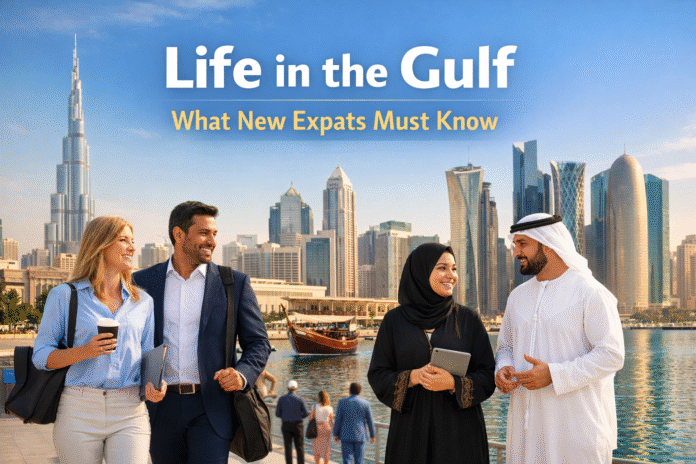
Life in the Gulf for new expats: Diverse group enjoying Dubai skyline and waterfront lifestyle in UAE with Burj Khalifa
Discover life in the Gulf – vibrant expat experiences, modern cities, and cultural blend in UAE, Saudi Arabia, Qatar, and beyond.

Introduction: Embracing Life in the Gulf as a New Expat

Life in the Gulf has become increasingly attractive for expatriates seeking career growth, financial stability, and international exposure. Countries like the UAE, Saudi Arabia, Qatar, Oman, Bahrain, and Kuwait offer tax-free income, modern infrastructure, and diverse job opportunities across multiple industries.

Every year, thousands of professionals relocate to the Gulf with high expectations. While the region offers excellent earning potential and a high standard of living, success as an expat depends on understanding the realities of daily life, local culture, laws, and long-term planning.

This comprehensive guide explains everything new expats must know about life in the Gulf before moving, helping you settle confidently and avoid common mistakes.


1. Work Culture in the Gulf: What Expats Should Expect

Most expatriates move to the Gulf primarily for employment. Jobs are usually contract-based and linked to employer sponsorship, which means your legal status is closely tied to your job.

Key Features of Gulf Work Culture

  • Formal and structured workplace environments
  • Clear hierarchy and respect for senior management
  • Strong focus on punctuality and professional conduct
  • Performance-based evaluations rather than job tenure
  • Multicultural teams with diverse nationalities

The typical workweek runs from Sunday to Thursday, with working hours ranging from 8 to 9 hours per day. During Ramadan, working hours are reduced across most sectors.

Important Tip:
Always review your employment contract carefully. Pay special attention to:


2. Cost of Living in the Gulf: Salary vs Reality

Tax-free income is one of the biggest benefits of life in the Gulf. However, the cost of living varies significantly by country and city.

Common Benefits Included in Expat Packages

  • Free or subsidized accommodation
  • Transportation allowance
  • Health insurance
  • Annual return air ticket
  • End-of-service benefits

Major Monthly Expenses

  • Rent (especially high in central city areas)
  • Utilities and internet
  • School fees for children
  • Transportation and fuel
  • Dining, shopping, and lifestyle spending

Cost of Living Comparison (2026)

Expense CategoryRiyadh (Saudi Arabia)Dubai (UAE)Doha (Qatar)Muscat (Oman)Kuwait CityManama (Bahrain)
Rent (2BR apt)SAR 3,500–5,000AED 6,000–9,000QAR 5,000–7,500OMR 350–500KWD 400–600BHD 400–550
UtilitiesSAR 400–600AED 600–800QAR 500–700OMR 40–60KWD 50–70BHD 40–60
GroceriesSAR 1,200–1,600AED 1,800–2,200QAR 1,500–2,000OMR 120–160KWD 150–200BHD 140–180
School FeesSAR 20k–40k/yearAED 30k–60k/yearQAR 25k–50k/yearOMR 2k–5k/yearKWD 3k–6k/yearBHD 2.5k–5k/year

(Figures are indicative ranges for 2026; actual costs vary by lifestyle and location.)

Smart Advice:
When negotiating a job offer, focus on the total compensation package, not just the basic salary.


3. Housing and Accommodation Options

Housing in the Gulf ranges from shared apartments to luxury villas and company-provided accommodation.

What Expats Should Know About Renting

  • Rent is often paid yearly or via post-dated cheques
  • Furnished and unfurnished options are available
  • Family compounds offer shared facilities like pools and gyms
  • Popular expat areas are close to offices and schools

Before signing a lease, confirm:

  • Maintenance responsibilities
  • Utility costs
  • Commute time
  • Building and community rules

4. Cultural Awareness and Social Etiquette

The Gulf region is deeply rooted in Islamic traditions, and respecting local customs is essential for a positive expat experience.

Key Cultural Guidelines

  • Dress modestly in public places
  • Avoid public displays of affection
  • Respect prayer times and religious events
  • Be especially mindful during Ramadan
  • Friday is a religious day

Learning basic Arabic greetings and showing cultural sensitivity helps build trust and strong relationships.


5. Life in the Gulf; Laws and Regulations Every Expat Must Know

Gulf countries have strict laws, and ignorance is not an excuse.

Important Legal Considerations

  • Alcohol consumption is regulated and licensed
  • Offensive language or gestures can lead to fines or arrest
  • Social media misuse may result in legal consequences
  • Drugs carry severe penalties
  • Carry valid ID and residency documents at all times

Reminder:
Behaviors acceptable in other countries may be illegal in the Gulf. Always stay cautious and informed.


6. Life in the Gulf; Lifestyle and Daily

Life in the Gulf combines modern comfort with traditional values.

Highlights of Expat Life

  • World-class shopping malls and dining
  • Clean beaches and desert experiences
  • Gyms, sports clubs, and wellness centers
  • Family-friendly entertainment
  • Safe cities with low crime rates

While nightlife is more restricted than in Western countries, social life remains active through community events and private gatherings.


7. Life in the Gulf; Healthcare System

Healthcare services in the Gulf are modern, efficient, and well-regulated.

  • Most employers provide mandatory health insurance
  • Public and private hospitals are widely available
  • Emergency services are reliable and fast
  • English-speaking medical staff are common

Always verify:

  • Insurance coverage
  • Approved hospitals
  • Dependents’ medical inclusion

8. Life in the Gulf; Education and Schooling Options for Expat Children

For expat families, education is one of the most important considerations.

Popular International School Curricula

  • British
  • American
  • Indian (CBSE)
  • IB and Cambridge

School fees can be high, especially in major cities, so education allowance is a crucial part of salary negotiations.

Early admission planning is recommended, as top schools often have waiting lists.


9. Life in the Gulf; Climate Challenges and Daily Adjustments

The Gulf climate is hot, particularly from May to September.

What Expats Should Prepare For

  • Extremely high summer temperatures
  • Heavy reliance on air-conditioning
  • Outdoor activities mainly in winter months

Staying hydrated, dressing appropriately, and planning activities wisely helps adjust comfortably.


10. Life in the Gulf; Long-Term Planning and Career Growth

Many expats initially move for short-term goals but stay longer due to career opportunities.

Tips for Long-Term Success

  • Continuously upgrade skills
  • Build professional and social networks
  • Save and invest wisely
  • Understand residency and exit policies
  • Plan career progression proactively

The Gulf rewards adaptability, performance, and professionalism.


Conclusion: Thriving in Your New Life in the Gulf

Life in the Gulf can be incredibly rewarding when approached with preparation and realistic expectations. From tax-free income and global exposure to cultural enrichment and career growth, the region offers unique opportunities for expatriates.

Success depends on understanding local laws, respecting traditions, managing finances wisely, and staying professionally disciplined.

For new expats, the formula is simple: arrive informed, remain adaptable, and plan ahead. When you do, life in the Gulf can become one of the most valuable chapters of your personal and professional journey.

https://www.internations.org/

https://www.expat.com/