Home Blog Page 3

Walk-In Interviews in GCC: Where They Still Work and Where They Don’t (2026)

0
Infographic showing where walk-in interviews work and where they don’t in GCC countries
Industries in GCC where walk-in interviews still succeed in 2026

Introduction

walk-in interviews in GCC were once one of the fastest ways to get a job in the Gulf. Many job seekers still rely on them in 2026, hoping for instant hiring. However, the reality has changed.

This guide explains where walk-in interviews in GCC still work, where they no longer make sense, and how to use them strategically without wasting time.


What Is a Walk-In Interview?

A walk-in interview is when candidates visit a company location without a scheduled appointment to apply and interview directly.

In GCC countries, this hiring method was common in:

  • Construction
  • Hospitality
  • Retail
  • Manpower agencies

Where Walk-In Interviews Still Work in GCC (2026)

1. Construction & Contracting Companies

Walk-ins are still effective for:

  • Site engineers
  • Safety officers
  • Technicians
  • Skilled labor

Especially in Saudi Arabia mega projects, on-site hiring is still common.

📍 Best locations:
Industrial zones, project sites, manpower camps


2. Hospitality & Service Industry

Hotels, restaurants, and catering companies still accept walk-ins for:

  • Waiters
  • Housekeeping staff
  • Front desk roles
  • Kitchen helpers

📍 Best time:
Early morning (9–11 AM)


3. Security, Cleaning & Facility Management

Outsourced service companies regularly hire through walk-ins due to high turnover.

Documents usually required:

  • CV
  • Passport copy
  • Visa copy

4. Manpower & Recruitment Agencies (Limited Roles)

Some licensed agencies accept walk-ins for bulk hiring, but caution is required.


Where Walk-In Interviews Do NOT Work Anymore

1. Corporate & Office Jobs

Walk-ins rarely work for:

  • Finance
  • HR
  • IT
  • Marketing
  • Admin roles

These jobs are now filled through ATS and online portals.

How Gulf Recruiters Shortlist CVs in 2026


2. Government & Semi-Government Roles

GCC government hiring is:

  • Online only
  • Highly structured
  • Portal-based

Walk-ins are not accepted.


3. Multinational Companies

Large companies prefer:

  • Online applications
  • LinkedIn sourcing
  • Recruiter screening

Security policies often prevent unscheduled visitors.


Why Walk-In Interviews Are Declining in the Gulf

  • ATS-based hiring
  • High applicant volume
  • Security restrictions
  • Saudization and localization policies
  • Centralized HR departments

Walk-ins are no longer efficient for employers.


When Walk-In Interviews Can Hurt Your Job Search

Visiting companies without vacancies
Repeated walk-ins to the same employer
Unprofessional timing
Carrying outdated CVs

This can negatively affect your professional image.


Smart Alternatives to Walk-In Interviews (2026)

  • Apply online and follow up
  • LinkedIn recruiter outreach
  • Job fairs and hiring events
  • Referrals through contacts
  • WhatsApp hiring groups (verified only)

Best Practices If You Still Plan a Walk-In

  • Research the company first
  • Dress professionally
  • Carry 2–3 CV copies
  • Visit during business hours
  • Be polite and brief

FAQs (For FAQ Schema)

Q1: Are walk-in interviews legal in GCC?
Yes, but acceptance depends on company policy.

Q2: Which GCC country still allows walk-in interviews?
Saudi Arabia and UAE allow walk-ins mainly for blue-collar and service roles.

Q3: Should freshers try walk-in interviews?
Only for entry-level or service jobs.


Conclusion

Walk-in interviews in GCC are not dead, but they are no longer universal. In 2026, they work best in specific industries and fail in corporate hiring. Knowing where to apply your effort saves time and increases success.
https://www.dubaivacancy.ae/walk-in-interview/

Why Many GCC Job Applications Get Rejected Without Response (2026 Guide)

0
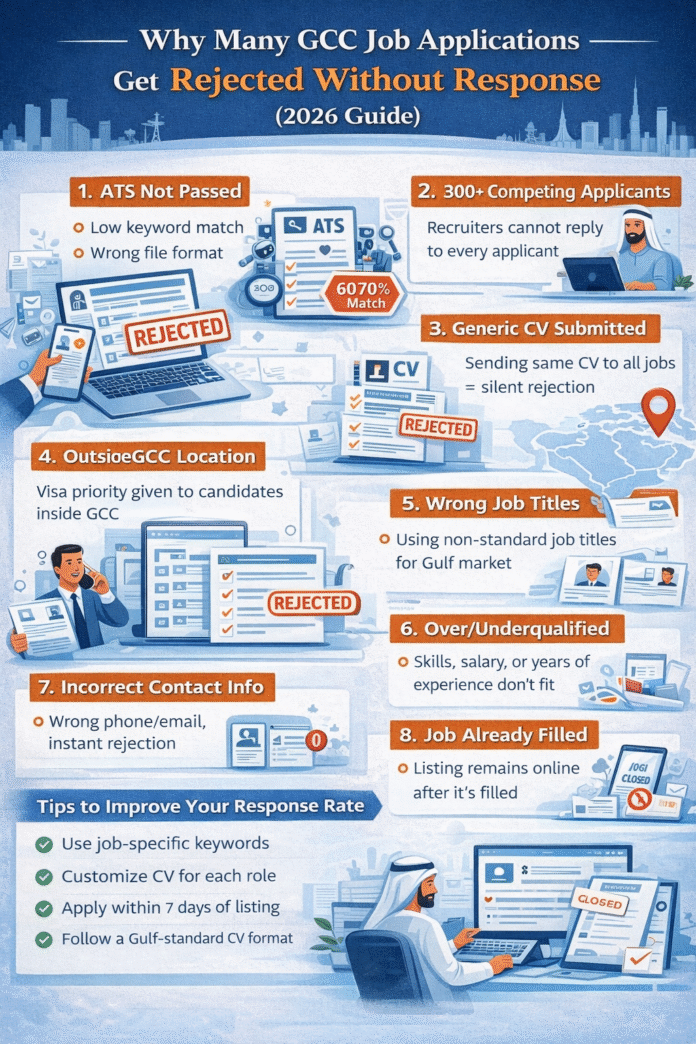
Illustration showing common reasons why GCC job applications are rejected without recruiter response
Common reasons job applications in GCC are rejected without feedback

Introduction

Many job seekers applying in the Gulf feel frustrated when they submit dozens of applications and GCC job applications rejected without response. In 2026, this silence is usually not personal. It is often the result of automated screening, recruiter workload, or application mistakes.

This article explains the real reasons GCC job applications get rejected without response and what you can do to improve your chances.


1. Your Application Never Passed the ATS

Most companies in Saudi Arabia, UAE, and Qatar use ATS software.

Common GCC job applications rejected without response reasons:

  • CV not matching job keywords
  • Wrong job title usage
  • File format issues
  • Missing required skills

2. Recruiters Receive Hundreds of Applications

A single Gulf job posting can receive:

  • 300–800 applications
  • Only 10–20 shortlisted
  • 3–5 interviewed

Recruiters simply do not reply to every applicant.

✅ What helps:

  • Apply early
  • Match 70%+ of job requirements
  • Use a targeted CV

3. Applying from Outside the GCC (Visa Priority)

Recruiters often prioritize:

  • Candidates already in the country
  • Transferable visas
  • Immediate joiners

This does not mean expats are rejected permanently, but priority matters.


4. Generic CVs Are Easy to Spot

Recruiters instantly recognize:

  • Same CV for all jobs
  • No measurable achievements
  • No industry-specific language

A generic CV usually leads to silent rejection.


5. Overqualification or Underqualification

If you are:

  • Too senior for the role
  • Expecting higher salary
  • Lacking required experience

GCC job applications rejected without response


6. Missing or Incorrect Contact Details

Surprisingly common mistakes:

  • Wrong phone number
  • No WhatsApp availability
  • Inactive email address

Always double-check before applying.


7. Job Posting Was Already Filled

In GCC markets:

  • Some jobs stay online after closing
  • Internal candidates get selected
  • Hiring freezes occur suddenly

No response does not always mean rejection.


8. Recruiters Expect Follow-Ups (But Correctly)

One professional follow-up after 7–10 days is acceptable.

Avoid:


9. How to Improve Your Response Rate in 2026

  • Customize CV for each role
  • Use GCC-standard job titles
  • Optimize LinkedIn profile
  • Apply within first week
  • Focus on fewer, better applications

FAQs (For FAQ Schema)

Q1: Is it normal to get no response from GCC recruiters?
Yes, due to high application volume and ATS screening.

Q2: Should I email recruiters after applying?
One polite follow-up is acceptable after a week.

Q3: Does nationality affect response rate?
In some roles, yes, due to localization policies.


Conclusion

If your GCC job applications are rejected without response, it usually comes down to systems, timing, or presentation, not your potential. Small improvements can significantly increase your interview calls in 2026.

https://www.indeed.com/career-advice/finding-a-job/job-application-rejected-immediately

How Recruiters in the Gulf Actually Shortlist CVs (2026 Insider Guide)

1
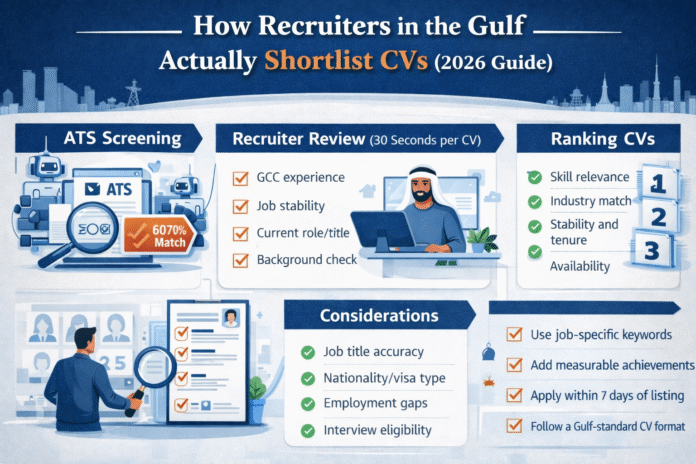
Infographic showing how recruiters in GCC countries shortlist CVs using ATS and manual screening
Step-by-step CV shortlisting process used by recruiters in the Gulf job market

Introduction

Many job seekers applying for jobs in the Gulf feel confused how recruiters shortlist CVs, when they never hear back, even with strong experience. In 2026, recruiters in GCC countries like Saudi Arabia, UAE, Qatar, and Oman follow a structured and technology-driven CV shortlisting process.

This insider guide explains exactly how recruiters shortlist CVs in the Gulf, what systems they use, what they look for in the first 30 seconds, and how you can position your CV to get shortlisted instead of ignored.


1. First Filter: ATS Systems Used in GCC

Most medium and large companies in the Gulf now use Applicant Tracking Systems (ATS).

Recruiters rarely see your CV first. The system does.

What ATS checks:

  • Job title match
  • Skills keywords
  • Years of experience
  • Industry relevance
  • Location and visa status

If your CV does not match 60–70% of the job description keywords, it is often rejected automatically.

Tip:
Always customize your CV for each job and reuse keywords from the job posting naturally.


2. Recruiters Spend Less Than 30 Seconds per CV

After ATS filtering, recruiters quickly scan shortlisted CVs.

They usually check:

  • Current job title
  • Company name
  • Total GCC experience
  • Nationality and location
  • Career stability

If these are unclear or buried deep in the CV, your chances drop immediately.

Best Practice:
Put your current role, industry, and GCC experience at the top of page one.


3. GCC Experience Matters More Than You Think

Recruiters in the Gulf strongly prefer candidates who:

  • Have worked in GCC before
  • Understand local work culture
  • Know regional compliance and business practices

Even one year of GCC experience can outweigh several years elsewhere.

If you are a fresher to the Gulf, recruiters look for:

  • Similar market exposure
  • Multinational company background
  • Transferable skills

4. Job Titles Must Match the Market Language

One common mistake is using non-standard job titles.

For example:

  • “Business Growth Ninja” instead of “Business Development Executive”
  • “Accounts Hero” instead of “Accountant”

Recruiters search by standard Gulf job titles.

✅ Use titles commonly used in:

  • Saudi job portals
  • UAE company listings
  • LinkedIn GCC job ads

5. Employment Gaps Are Flagged Quickly

Recruiters do not automatically reject CVs with gaps, but they notice them immediately.

Unexplained gaps raise concerns about:

  • Visa issues
  • Termination problems
  • Skill stagnation

✅ Always explain gaps briefly in your CV or cover letter:
“2024–2025: Skill upgrade and certification (SAP FICO)”


6. Nationality and Visa Status Still Influence Shortlisting

While skills matter, recruiters also consider:

  • Saudization / Emiratization rules
  • Company quotas
  • Visa transfer feasibility

This does not mean rejection, but it affects priority ranking.

Saudization Policy Explained and Its Impact on Expats (2026)


7. CV Length and Format Preferences in the Gulf

Recruiters prefer:

  • 2 pages (max 3 for senior roles)
  • Simple layout
  • No graphics or heavy design
  • Clear bullet points

Avoid:

  • Photos (unless requested)
  • Personal details like religion or marital status
  • Overdesigned templates

8. Common CV Mistakes That Kill Shortlisting Chances

Using one CV for all jobs
No measurable achievements
Missing keywords
Spelling and grammar errors
Listing duties instead of results

Example of weak vs strong bullet:

Weak:
“Handled sales activities”

Strong:
“Increased regional sales by 28% within 12 months across KSA market”


9. How Recruiters Rank CVs After Shortlisting

Recruiters rank CVs based on:

  1. Skill relevance
  2. Industry match
  3. GCC experience
  4. Stability and progression
  5. Availability and notice period

Top-ranked CVs are sent to hiring managers.


10. Final Insider Tips to Get Shortlisted Faster


FAQs (For FAQ Schema)

Q1: Do Gulf recruiters prefer local candidates?
Yes, but skilled expats with relevant experience are still in high demand.

Q2: Is ATS used in Saudi Arabia and UAE?
Yes, especially in large companies and government-linked firms.

Q3: Should I include my nationality on my CV?
Only if required. Focus more on skills and experience.


Conclusion

Understanding how recruiters shortlist CVs in the Gulf gives you a real advantage in 2026. It is not about luck. It is about alignment with systems, expectations, and local hiring practices.

Fix your CV using these insights, and your response rate will improve significantly.

Disclaimer

This article is for informational purposes only. Recruitment processes may vary by company and country. Always verify job requirements directly with employers.

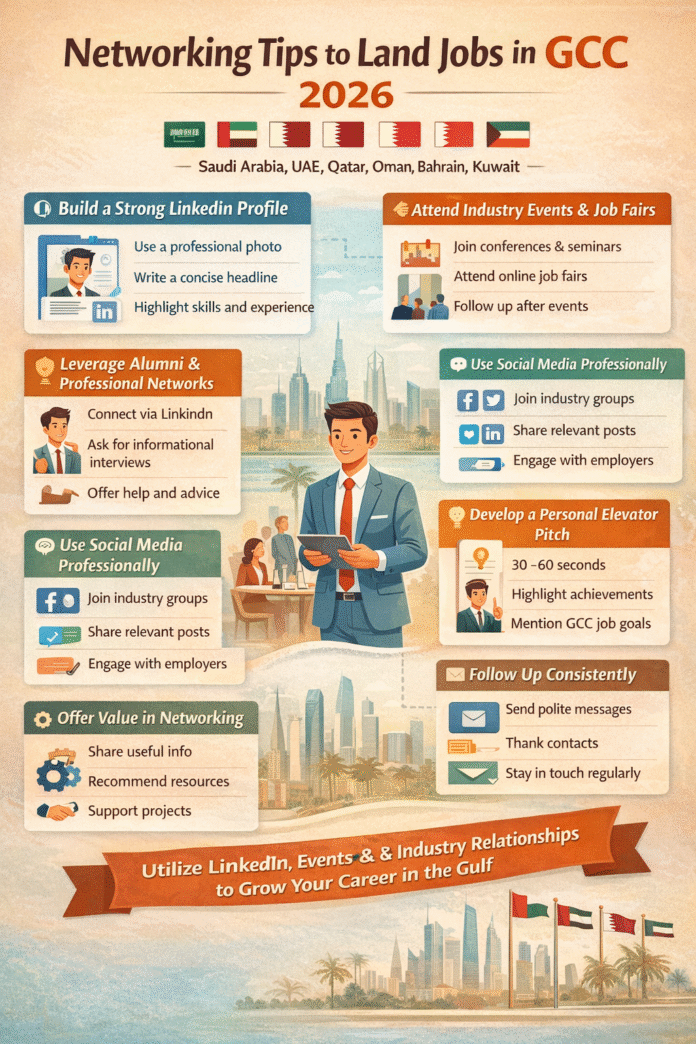
Networking Tips to Land Jobs in GCC (2026)

0
Professional networking tips for landing jobs in GCC countries including LinkedIn, events, and industry connections
Effective networking strategies to help job seekers secure employment in GCC countries in 2026

INTRODUCTION

In 2026, networking tips to land jobs in GCC have become essential for job seekers, as the Gulf job market is highly competitive and constantly evolving. Effective networking remains the most reliable way to get noticed by employers and recruiters across GCC countries.

This guide provides practical networking tips to land jobs in GCC, covering strategies for Saudi Arabia, UAE, Qatar, Oman, Bahrain, and Kuwait, helping you build connections and secure the right opportunities.


1. Build a Strong LinkedIn Profile

LinkedIn is the most powerful professional tool in GCC job markets.

  • Use a professional photo
  • Craft a concise headline
  • Highlight skills, certifications, and experience
  • Regularly post industry insights
  • Connect with recruiters and professionals in your field

2. Attend Industry Events and Job Fairs

Networking in person is still very effective.

  • Join conferences, seminars, and workshops
  • Attend virtual job fairs and webinars
  • Prepare a short elevator pitch
  • Collect contacts and follow up after the event

3. Leverage Alumni and Professional Networks

Your school, university, or professional organization can provide key connections.

  • Join alumni groups on LinkedIn and WhatsApp
  • Ask for informational interviews
  • Offer value before requesting help

4. Use Social Media Professionally

  • Join industry-specific Facebook, LinkedIn, and Telegram groups
  • Share professional updates and projects
  • Engage with hiring managers and company pages

5. Develop a Personal Elevator Pitch

Be ready to introduce yourself quickly and professionally:

  • 30–60 seconds
  • Highlight key achievements
  • Mention what you are looking for in GCC

6. Follow Up Consistently

  • Send polite emails or LinkedIn messages
  • Thank contacts for their time
  • Stay in touch periodically to maintain relationships

7. Offer Value in Networking

Networking is not just asking for jobs. You can:


8. Be Culturally Aware

Different GCC countries have different professional norms:

  • Dress professionally
  • Address people formally
  • Respect hierarchies and protocols

This makes a positive impression on potential employers.


FINAL THOUGHTS

Networking is no longer optional—it’s essential for landing jobs in GCC. By combining online tools like LinkedIn, attending events, leveraging alumni, and building professional relationships, you can significantly improve your chances of securing a job in Gulf countries in 2026.

https://www.bayt.com/en/saudi-arabia/jobs/

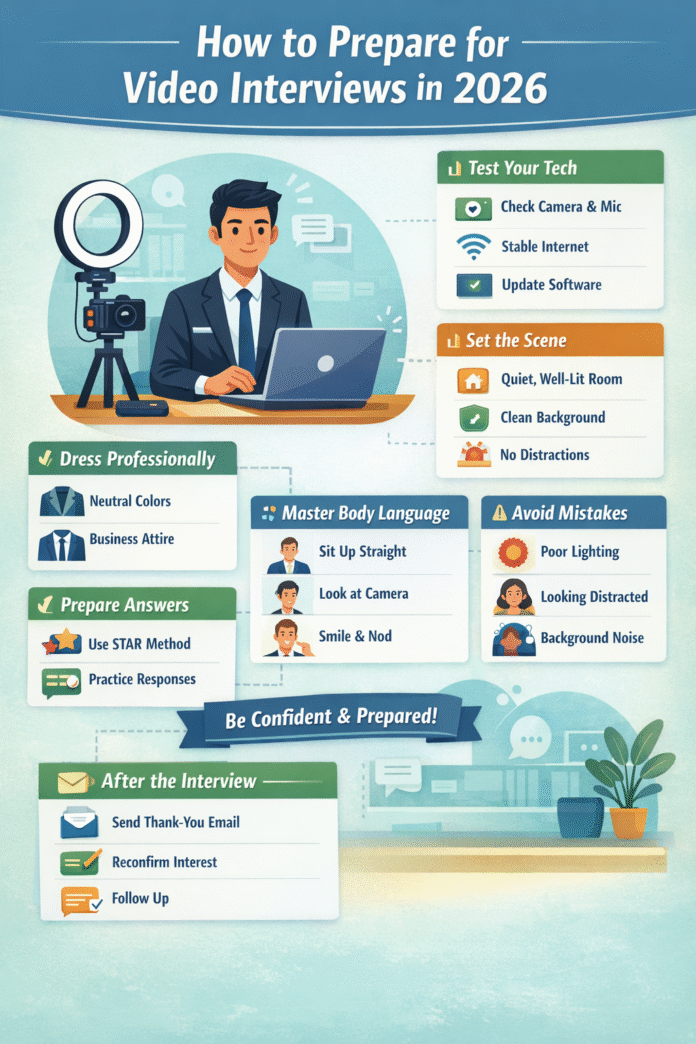
How to Prepare for Video Interviews in 2026

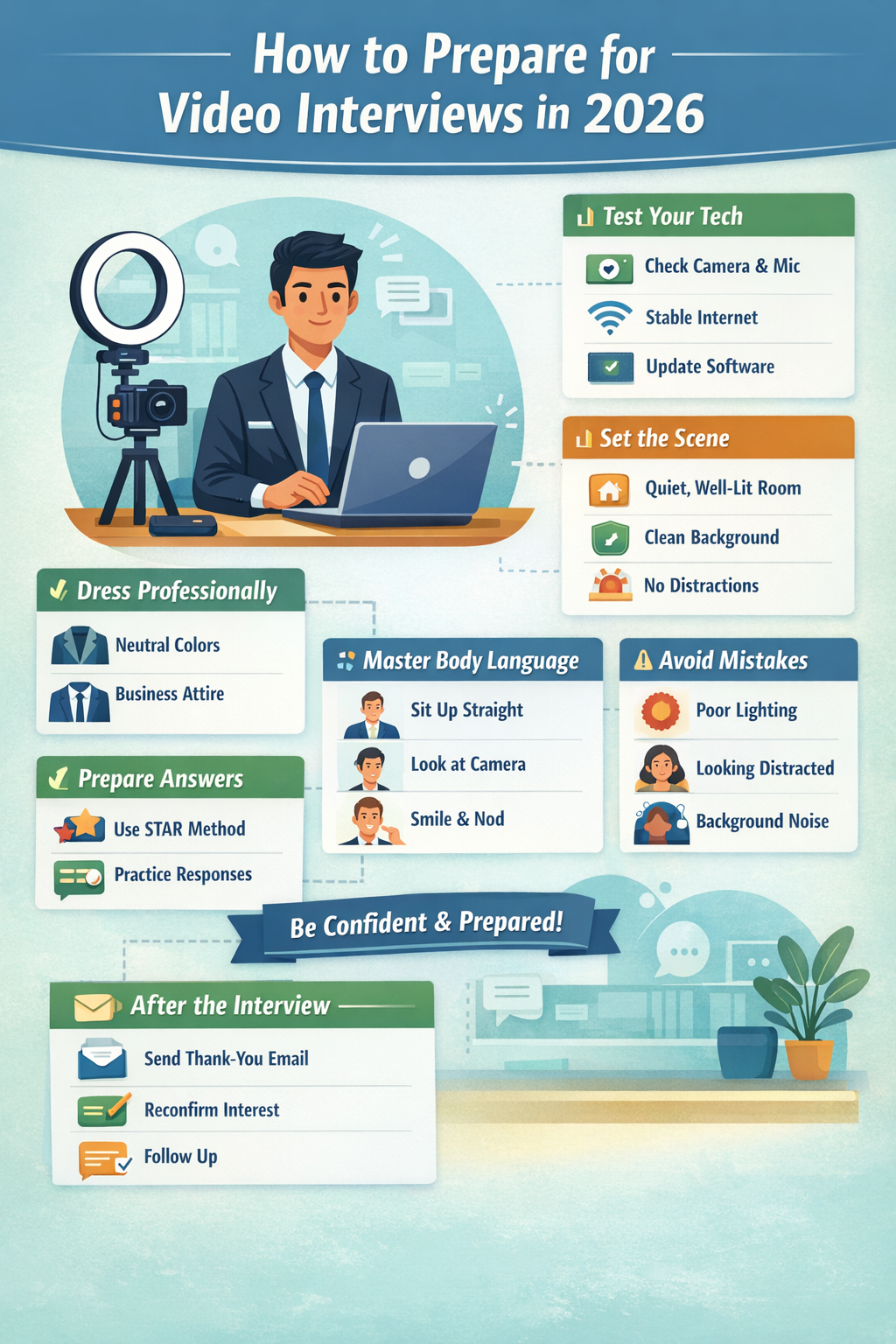
Preparing for a video interview in 2026 showing professional setup, camera, and confident candidate
Essential tips to prepare for video interviews and succeed in remote hiring in 2026

INTRODUCTION

Knowing how to prepare for video interviews is now a core career skill. By 2026, most companies use video interviews as the first or even final stage of hiring. Employers expect candidates to be confident on camera, technically prepared, and able to communicate clearly in a virtual setting.

This guide walks you through everything you need to know to perform well in video interviews and stand out from other candidates.


Why Video Interviews Matter More in 2026

Video interviews save time, reduce hiring costs, and allow employers to screen global talent. Companies now use:

  • Zoom
  • Microsoft Teams
  • Google Meet
  • AI-based interview platforms

Being comfortable with virtual interviews is no longer optional.


Step 1: Test Your Technology in Advance

Before the interview:

  • Check your internet connection
  • Test your camera and microphone
  • Update the interview app
  • Keep your device fully charged

Use headphones if possible to reduce background noise.


Step 2: Choose the Right Location

Your environment matters.

Make sure:

  • The room is quiet
  • Lighting is bright and natural
  • Background is clean and neutral
  • No interruptions from people or pets

A plain wall or tidy workspace works best.


Step 3: Dress Professionally for the Camera

Dress as you would for an in-person interview.

Tips:

  • Wear solid, neutral colors
  • Avoid flashy patterns
  • Keep grooming neat
  • Dress fully professional, not just from the waist up

Your appearance affects first impressions.


Step 4: Master Video Interview Body Language

Body language is still important online.

  • Sit upright
  • Look at the camera, not the screen
  • Smile naturally
  • Avoid excessive hand movements
  • Nod to show engagement

Confidence on camera builds trust.


Step 5: Prepare Strong Interview Answers

Prepare answers for:

  • Tell me about yourself
  • Why should we hire you
  • Your strengths and weaknesses
  • Experience with remote work
  • Problem-solving examples

Use the STAR method to structure answers clearly.


Step 6: Practice Speaking Clearly and Calmly

During video interviews:

  • Speak slightly slower than usual
  • Pause before answering
  • Avoid filler words
  • Keep answers focused

Practice with mock interviews or record yourself.


Step 7: Keep Notes, But Don’t Read

It’s okay to keep brief notes nearby, such as:

  • Key achievements
  • Questions for the interviewer

Do not read directly from notes. Maintain eye contact.


Step 8: Ask Smart Questions

At the end, ask thoughtful questions like:

  • What does success look like in this role
  • How does the team collaborate remotely
  • What are the next steps

This shows preparation and interest.


Common Video Interview Mistakes to Avoid

  • Joining late
  • Poor lighting or sound
  • Multitasking during the interview
  • Looking distracted
  • Ignoring body language

Small mistakes can cost big opportunities.


After the Interview: Follow-Up

Send a short thank-you email within 24 hours:

  • Thank the interviewer
  • Reconfirm your interest
  • Mention a key discussion point

This simple step leaves a professional impression.


FINAL THOUGHTS

Learning how to prepare for video interviews is essential for career success in 2026. With the right setup, preparation, and confidence, video interviews can actually work in your favor.

Treat them with the same seriousness as face-to-face interviews, and you’ll greatly improve your chances of getting hired.

How to Prepare for Video Interviews in 2026

https://mdgulfrecruitment.com/page/index/2048/Interview-UAE

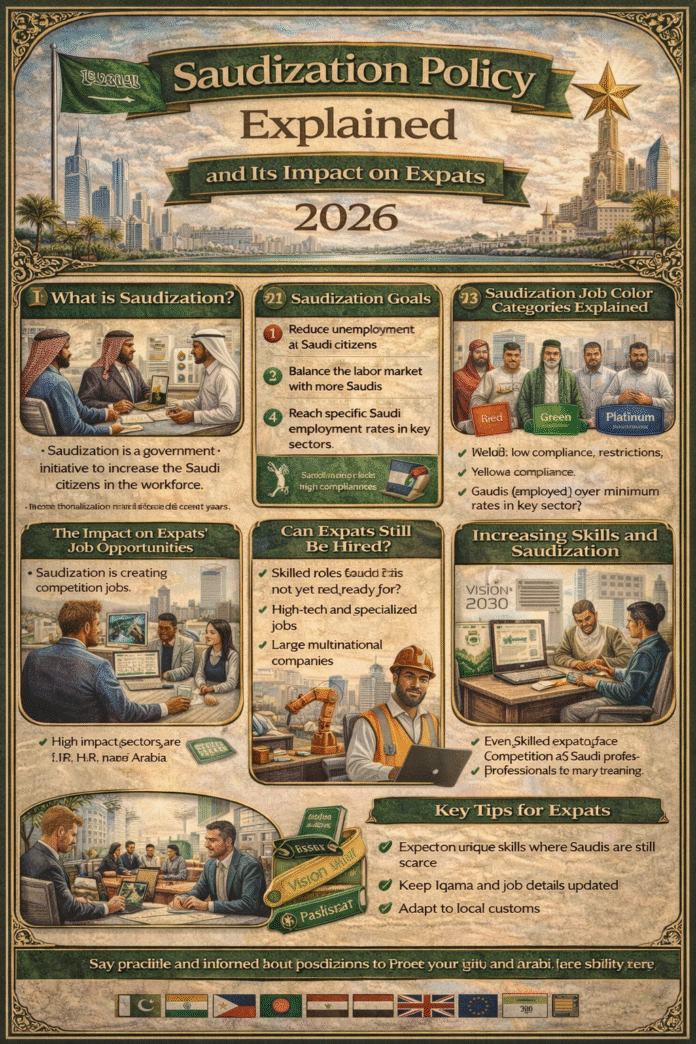
Saudization Policy Explained and Its Impact on Expats (2026)

2
Saudization policy in Saudi Arabia explaining its impact on expat jobs, employment sectors, and work visas in 2026
Understanding Saudization policy and how it affects expatriate jobs and careers in Saudi Arabia in 2026.

Saudi Arabia’s labor market is changing fast, and Saudization Policy in Saudi Arabia remains one of the most important policies shaping employment opportunities in the Kingdom. As we move into 2026, understanding how Saudization works and how it affects expatriates is essential for anyone planning to work or grow their career in Saudi Arabia.

This guide explains Saudization in simple terms, highlights its latest updates, and shows what expats can realistically expect in the coming years.


What Is Saudization?

Saudization, officially known as the Nitaqat Program, is a government initiative aimed at increasing the employment of Saudi nationals in the private sector.

The core objectives are:

  • Reduce unemployment among Saudi citizens
  • Encourage private companies to hire and train Saudis
  • Balance reliance on expatriate labor
  • Support long-term economic goals under Vision 2030

Under this policy, companies are required to meet specific Saudi employment quotas depending on their industry and size.

Saudi Iqama Rules Every Expat Must Know (2026)


How the Nitaqat System Works

The Nitaqat system categorizes companies into color bands based on their level of compliance:

  • Platinum & Green
    High compliance. These companies enjoy easier visa processing and business privileges.
  • Yellow
    Moderate compliance. Limited ability to hire new expats.
  • Red
    Low compliance. Restrictions on visas, renewals, and expansion.

A company’s category directly affects its ability to hire or retain foreign workers.


Saudization Updates Leading Into 2026

In recent years, Saudization has expanded into more sectors, and this trend is expected to continue in 2026. Key developments include:

  • Increased localization in HR, sales, accounting, customer service, and retail
  • Higher Saudi employment quotas in banking, insurance, and telecom
  • Strong focus on training Saudis for mid-level and leadership roles
  • Digital monitoring of company compliance through government platforms

These changes reflect Saudi Arabia’s goal of creating a skilled local workforce rather than only filling entry-level roles.


Impact of Saudization on Expats

1. Reduced Opportunities in Certain Roles

Some positions are now almost entirely reserved for Saudi nationals, especially:

  • HR officers
  • Receptionists
  • Cashiers
  • Government-facing administrative roles

For expats, these jobs are becoming increasingly limited.

2. Continued Demand for Skilled Expats

Despite stricter localization, skilled expatriates are still in demand, particularly in:

  • Engineering and construction
  • IT and cybersecurity
  • Healthcare
  • Project management
  • Specialized technical roles
  • Education and training

Saudi companies still rely on experienced foreign professionals where local expertise is limited.

3. Higher Competition

Expats now face competition not only from other foreigners but also from qualified Saudi professionals, many of whom are educated abroad and trained under Vision 2030 programs.


Can Expats Still Build Careers in Saudi Arabia?

Yes, but the approach must be smarter.

Expats who succeed in 2026 will usually:

  • Have specialized or niche skills
  • Offer experience that is hard to replace locally
  • Work in multinational or large private companies
  • Continuously upgrade qualifications

General or easily replaceable roles are becoming riskier for long-term career stability.


Best Strategies for Expats Under Saudization

Focus on High-Value Skills

Develop expertise in areas where Saudi talent is still growing, such as advanced IT, automation, AI, renewable energy, and large-scale project management.

Upskill Regularly

Certifications, short courses, and professional licenses significantly improve job security.

Stay Legally Updated

Ensure your Iqama, job title, and employer records are always accurate and compliant.

Understand Local Culture

Cultural awareness, basic Arabic communication skills, and professional etiquette add real value in the Saudi workplace.


How Saudization Supports Vision 2030

Saudization is not just a labor policy. It is a key pillar of Vision 2030, aiming to:

  • Create sustainable employment for Saudis
  • Reduce economic dependency on foreign labor
  • Improve productivity in the private sector
  • Develop local leadership and innovation

For expats, understanding this broader vision helps in aligning career goals with the Kingdom’s long-term direction.


Final Thoughts

The Saudization Policy in 2026 will continue to reshape Saudi Arabia’s job market. While it limits some opportunities for expatriates, it does not eliminate them.

Expats who adapt, upskill, and target the right sectors can still build strong and rewarding careers in Saudi Arabia. The key is to stay informed, flexible, and future-focused.

If you’re planning to work in Saudi Arabia or already employed there, understanding Saudization is no longer optional. It’s essential. https://www.vision2030.gov.sa/en

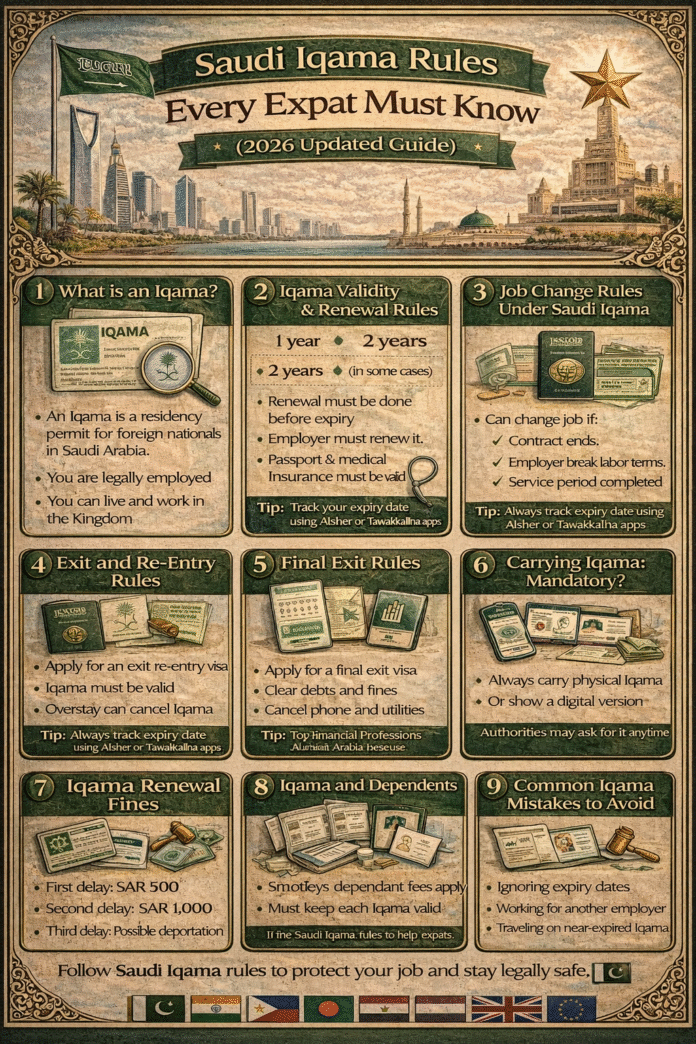
Saudi Iqama Rules Every Expat Must Know (2026 Updated Guide)

0
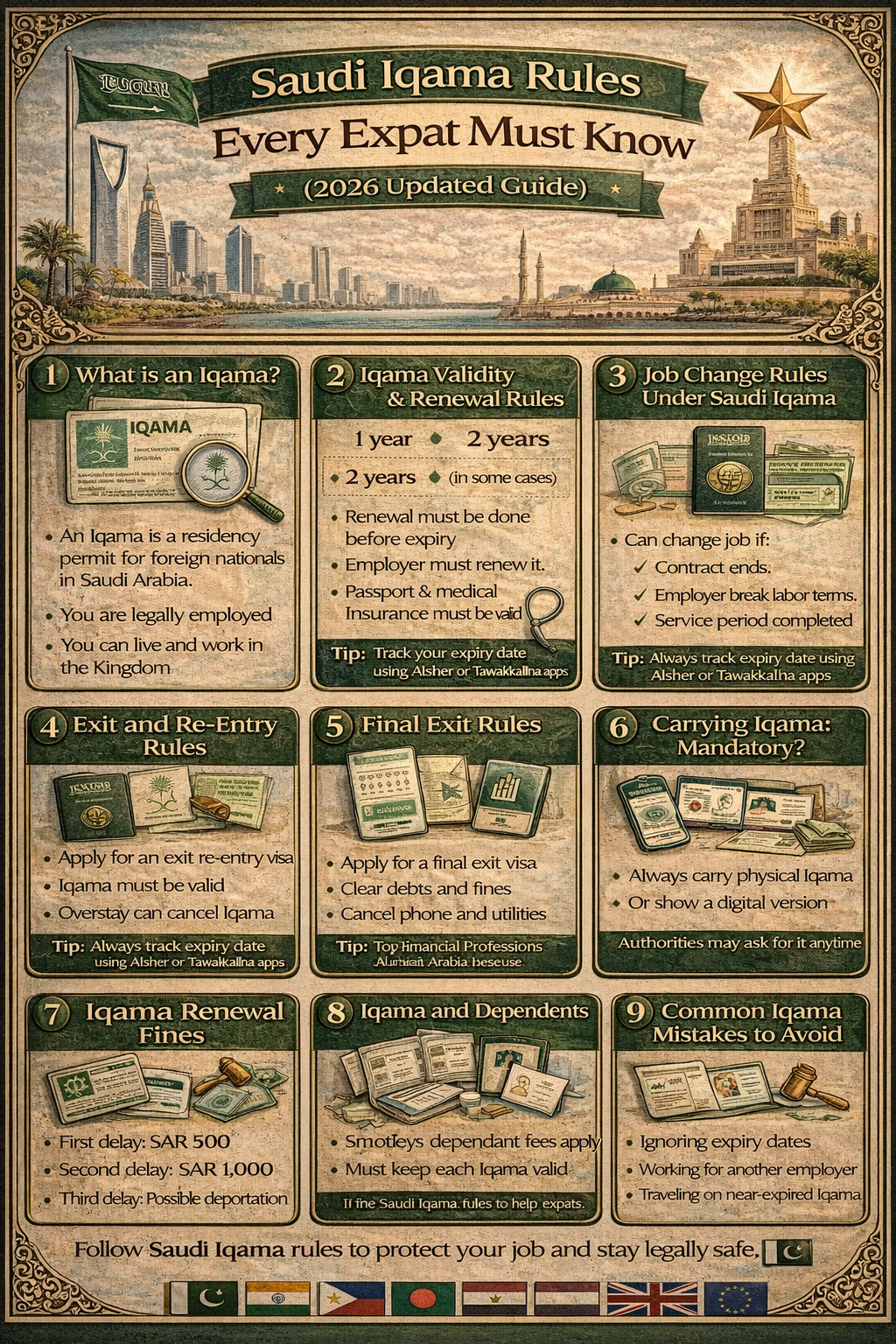
Infographic detailing Saudi Iqama rules for expats, including validity, renewal, fines, job change, exit and re-entry, final exit, carrying Iqama, and dependents
Comprehensive guide to Saudi Iqama rules for expats in 2026, including renewal, fines, job change, exit procedures, and dependent regulations

Introduction

Understanding Saudi Iqama rules is essential for every expat working or living in Saudi Arabia. The Iqama is your legal residency permit, and any mistake related to it can lead to fines, job issues, or even deportation. In 2026, Saudi authorities have tightened enforcement while also making some processes more digital and efficient.

This guide explains all major Iqama rules in simple terms so you can stay compliant and stress-free.


What Is an Iqama?

An Iqama is a residency permit issued to foreign nationals working in Saudi Arabia. It proves that:

  • You are legally employed
  • You are allowed to live in the Kingdom
  • You can access basic services like banking and healthcare

Without a valid Iqama, daily life in Saudi Arabia becomes very difficult.


Iqama Validity and Renewal Rules

Most Iqamas are valid for:

  • 1 year
  • 2 years (in some cases)

Important Renewal Rules

  • Renewal must be done before expiry
  • Employer is usually responsible
  • Medical insurance must be active
  • Passport validity must cover the Iqama period

Late renewal results in fines.

Work Visas and Residency Rules in the Gulf: A Complete Guide for Expats


Iqama Renewal Fines (Updated)

Failing to renew on time can lead to penalties:

  • First delay: SAR 500
  • Second delay: SAR 1,000
  • Third delay: Possible deportation

Always track your expiry date using Absher or Tawakkalna apps.


Job Change Rules Under Saudi Iqama

In recent years, Saudi Arabia has allowed more flexibility.

You may change jobs if:

  • Your contract ends
  • Employer violates labor terms
  • You complete the required service period

In many cases, employer consent is no longer required, but official approval through government portals is mandatory.


Exit and Re-Entry Rules

If you plan to travel outside Saudi Arabia:

  • You must apply for an exit re-entry visa
  • Your Iqama must be valid
  • Overstaying outside Saudi Arabia can cancel your Iqama

Single and multiple exit re-entry options are available depending on employer policy.


Final Exit Rules

When permanently leaving Saudi Arabia:

  • Apply for a final exit visa
  • Clear all debts and traffic fines
  • Cancel phone contracts and utilities
  • Employer must process the request

Once issued, you must leave within the allowed period.


Carrying Iqama: Is It Mandatory?

Yes. You should always:

  • Carry your physical Iqama or
  • Have a digital copy available on Absher

Authorities may request it during checks.


Iqama and Dependents

If you sponsor family members:

  • Each dependent has a separate Iqama
  • Monthly dependent fees may apply
  • School and healthcare access depends on valid Iqama status

Expired dependent Iqamas can also lead to fines.


Common Iqama Mistakes to Avoid

  • Ignoring expiry dates
  • Working for another employer illegally
  • Traveling with near-expiry Iqama
  • Not updating personal information

Small mistakes can create serious legal trouble.


Final Thoughts

Knowing and following Saudi Iqama rules protects your job, salary, and residency status. In 2026, digital systems have made compliance easier, but penalties are stricter for violations. Staying informed is the best way to live and work safely in Saudi Arabia.

If you respect the rules and keep your documents updated, Saudi Arabia offers long-term career stability for expats. https://www.mohre.gov.ae

In-Demand Skills in Saudi Arabia (2026): What Employers Are Looking For

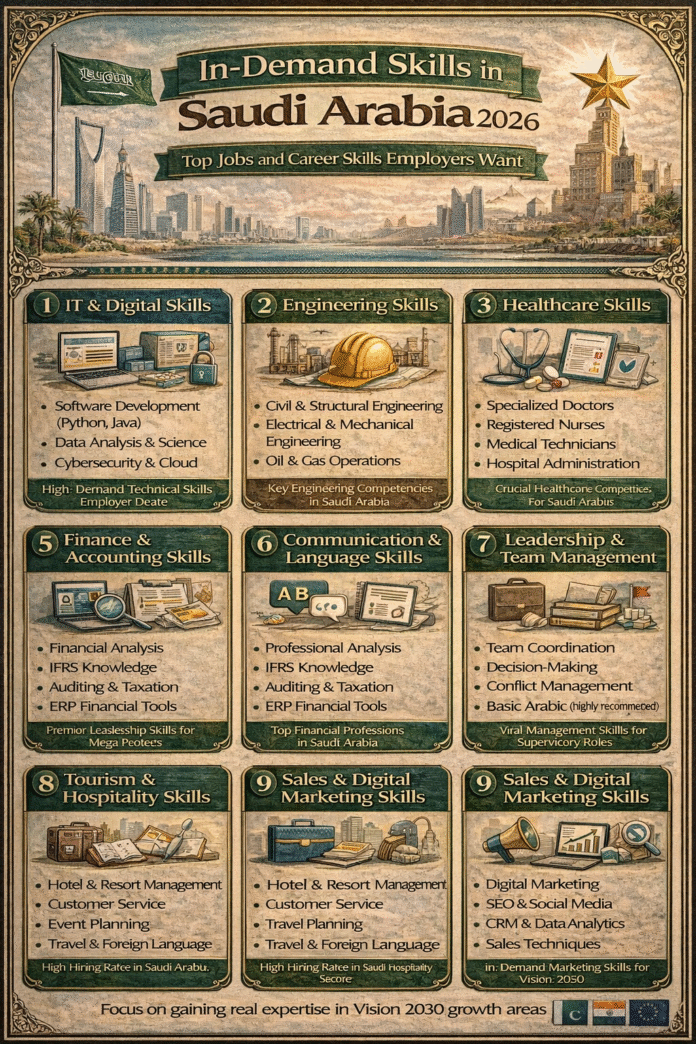
Infographic showing in-demand skills in Saudi Arabia for 2026 including IT, engineering, healthcare, finance, leadership, and digital marketing
Top in-demand skills in Saudi Arabia for 2026 driven by Vision 2030 and job market growth

Introduction

In-demand skills in Saudi Arabia are changing fast as the country moves forward with Vision 2030. Employers are no longer hiring based only on degrees. They want practical skills, digital knowledge, and professionals who can adapt quickly. Whether you are a fresh graduate, an experienced expat, or planning to move to Saudi Arabia, understanding these skills can significantly improve your job prospects in 2026.

This guide breaks down the most valuable skills Saudi employers are actively looking for right now.


Why Skills Matter More Than Ever in Saudi Arabia

Saudi Arabia is investing heavily in:

  • Digital transformation
  • Mega projects like NEOM and The Line
  • Healthcare and education reforms
  • Tourism, logistics, and renewable energy

Because of this shift, companies are prioritizing skills over titles. Candidates who can show real expertise have a clear advantage in the job market.

English Learning & Skill Improvement: A Practical Guide for Career Growth in 2026


Top Technical Skills in Demand in Saudi Arabia (2026)

1. IT and Digital Skills

Technology remains the strongest hiring sector.

High-demand IT skills include:

  • Software development (Python, Java, .NET)
  • Data analysis and data science
  • Cybersecurity and cloud computing
  • AI and machine learning
  • ERP systems like SAP and Oracle

These skills are highly valued in banking, government projects, telecom, and startups.


2. Engineering and Technical Skills

Saudi Arabia continues to need skilled engineers.

Most sought-after engineering skills:

  • Civil and structural engineering
  • Electrical and mechanical engineering
  • Oil and gas operations
  • Renewable energy engineering
  • Project planning and execution

Professionals with hands-on experience and certifications stand out quickly.


3. Healthcare and Medical Skills

Healthcare expansion has created strong demand.

In-demand healthcare skills:

  • Specialized doctors and surgeons
  • Registered nurses
  • Medical technicians
  • Hospital administration
  • Health informatics

Experience with modern healthcare systems and digital records is a big plus.


Professional and Business Skills Employers Want

4. Project Management Skills

Large-scale projects need strong leadership.

Valued project management skills:

  • PMP or PRINCE2 certification
  • Risk and budget management
  • Stakeholder coordination
  • Agile and hybrid project methods

Project managers are needed across construction, IT, and government sectors.


5. Finance and Accounting Skills

As businesses grow, financial expertise is critical.

Top finance skills:

  • Financial analysis and reporting
  • IFRS knowledge
  • Internal and external auditing
  • Tax and compliance management
  • ERP financial systems

Accountants with regional experience are especially preferred.


Soft Skills That Boost Hiring Chances

6. Communication and Language Skills

Clear communication is essential in multinational workplaces.

Important communication skills:

  • Professional English communication
  • Business writing and reporting
  • Presentation skills
  • Basic Arabic (highly recommended)

Strong communication often decides promotions and leadership roles.


7. Leadership and Team Management

Saudi companies value professionals who can lead teams.

Key leadership skills:

  • Team coordination
  • Decision-making
  • Conflict management
  • Cultural awareness

These skills are vital for supervisory and managerial positions.


Skills Linked to Vision 2030 Growth Areas

8. Tourism and Hospitality Skills

Tourism is expanding rapidly.

High-demand tourism skills:

  • Hotel and resort management
  • Customer service excellence
  • Event planning
  • Travel operations
  • Foreign language skills

Experience in international hospitality brands is a strong advantage.


9. Sales, Marketing, and Digital Marketing Skills

Businesses are focusing on online growth.

In-demand marketing skills:

  • Digital marketing strategy
  • SEO and content marketing
  • Social media management
  • CRM tools
  • Data-driven sales techniques

Results-based experience matters more than qualifications here.


How to Develop In-Demand Skills for Saudi Arabia

To stay competitive:

  • Take certified online courses
  • Gain hands-on experience through projects
  • Learn industry-specific software
  • Improve English communication skills
  • Stay updated with Saudi market trends

Short certifications combined with experience can be more valuable than long degrees.


Final Thoughts

In-demand skills in Saudi Arabia are closely tied to technology, leadership, and Vision 2030 projects. Professionals who continuously upgrade their skills will have better job security, higher salaries, and faster career growth in 2026 and beyond.

If you plan smartly and focus on the right skills, Saudi Arabia offers some of the best career opportunities in the GCC region.

https://www.glassdoor.com/Job/saudi-arabia-demand-jobs-SRCH_IL.0,12_IN207_KO13,19.htm

Average Salaries in Saudi Arabia by Industry (2026 Guide)

0
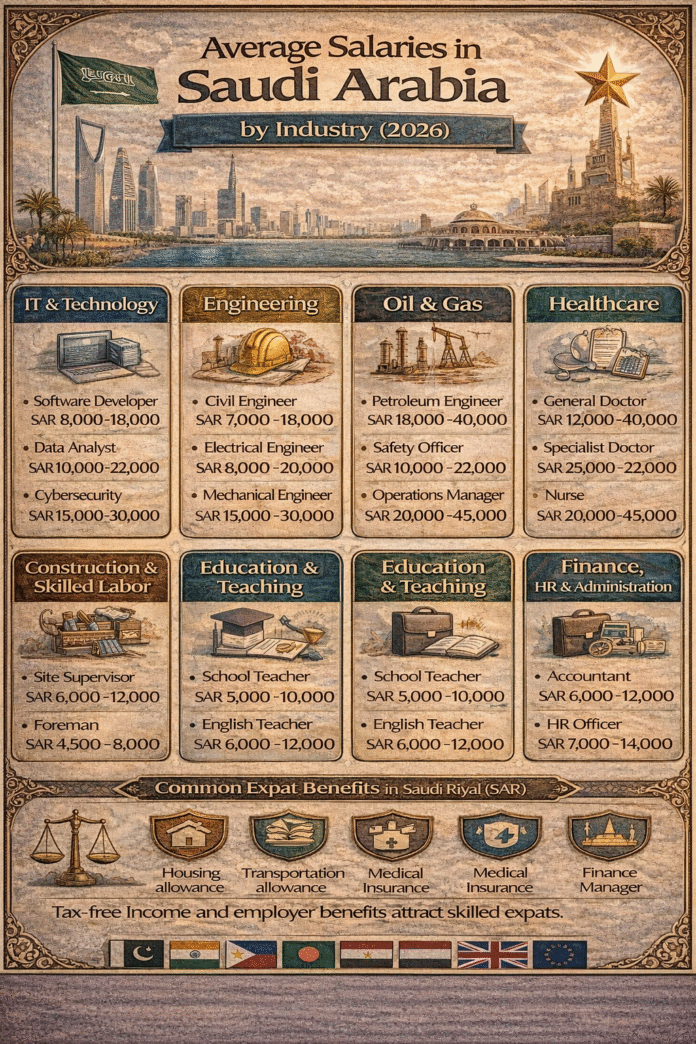
Average salaries in Saudi Arabia by industry showing monthly pay ranges in 2026
Average monthly salaries in Saudi Arabia across major industries in 2026

INTRODUCTION

Understanding average salaries in Saudi Arabia is essential for expats and professionals planning to work in the Kingdom. While Saudi Arabia offers tax-free income, salaries vary widely depending on industry, experience, city, and employer.

This 2026 salary guide breaks down expected monthly pay across major industries to help you negotiate better and choose the right career path.


How Salaries Work in Saudi Arabia

Key points:

  • Salaries are tax-free
  • Most figures are monthly (SAR)
  • Benefits often include housing, transport, medical insurance, and annual flights
  • Experience and nationality may affect pay scale
  • Gulf cost of living breakdown

1. IT & Technology Salaries

High demand due to digital transformation.

RoleAverage Monthly Salary
Software DeveloperSAR 8,000 – 18,000
Data AnalystSAR 10,000 – 22,000
Cybersecurity SpecialistSAR 15,000 – 30,000
IT ManagerSAR 18,000 – 35,000

2. Engineering Salaries

Especially strong in infrastructure and mega projects.

RoleAverage Monthly Salary
Civil EngineerSAR 7,000 – 18,000
Electrical EngineerSAR 8,000 – 20,000
Mechanical EngineerSAR 8,000 – 22,000
Project ManagerSAR 15,000 – 30,000

3. Oil & Gas Industry Salaries

One of the highest-paying sectors.

RoleAverage Monthly Salary
Petroleum EngineerSAR 18,000 – 40,000
Safety OfficerSAR 10,000 – 22,000
Operations ManagerSAR 20,000 – 45,000

4. Healthcare Salaries

Consistently high demand for professionals.

RoleAverage Monthly Salary
General DoctorSAR 12,000 – 25,000
Specialist DoctorSAR 25,000 – 45,000
NurseSAR 6,000 – 12,000
Medical TechnicianSAR 5,000 – 10,000

5. Construction & Skilled Labor Salaries

Large workforce with varied pay scales.

RoleAverage Monthly Salary
Site SupervisorSAR 6,000 – 12,000
ForemanSAR 4,500 – 8,000
Skilled TechnicianSAR 3,500 – 7,000

6. Education & Teaching Salaries

Depends on institution type.

RoleAverage Monthly Salary
School TeacherSAR 5,000 – 10,000
English TeacherSAR 6,000 – 12,000
University LecturerSAR 10,000 – 18,000

7. Finance, HR & Administration Salaries

Common in Riyadh and corporate hubs.

RoleAverage Monthly Salary
AccountantSAR 6,000 – 12,000
HR OfficerSAR 7,000 – 14,000
Finance ManagerSAR 15,000 – 30,000

What Affects Salary in Saudi Arabia

  • Industry demand
  • Years of experience
  • Professional certifications
  • City of employment
  • Employer type (private vs government)

Are Salaries Enough for Living in Saudi Arabia?

Yes, especially because:

  • No personal income tax
  • Employer benefits reduce expenses
  • Cost of living is moderate outside Riyadh

Most professionals save 30–50% of income monthly.


Salary Negotiation Tips

  • Research industry averages
  • Ask about allowances, not just basic pay
  • Compare total package, not salary alone
  • Get everything in writing

FINAL THOUGHTS

Knowing the average salaries in Saudi Arabia helps you plan your career, budget wisely, and negotiate confidently. In 2026, industries like IT, oil and gas, healthcare, and engineering continue to offer strong earning potential for skilled professionals.

Choosing the right industry can make a major difference in long-term financial growth.

https://www.bayt.com/en/saudi-arabia/salaries/

Best Cities to Work in Saudi Arabia (2026): Opportunities, Salaries & Lifestyle

0
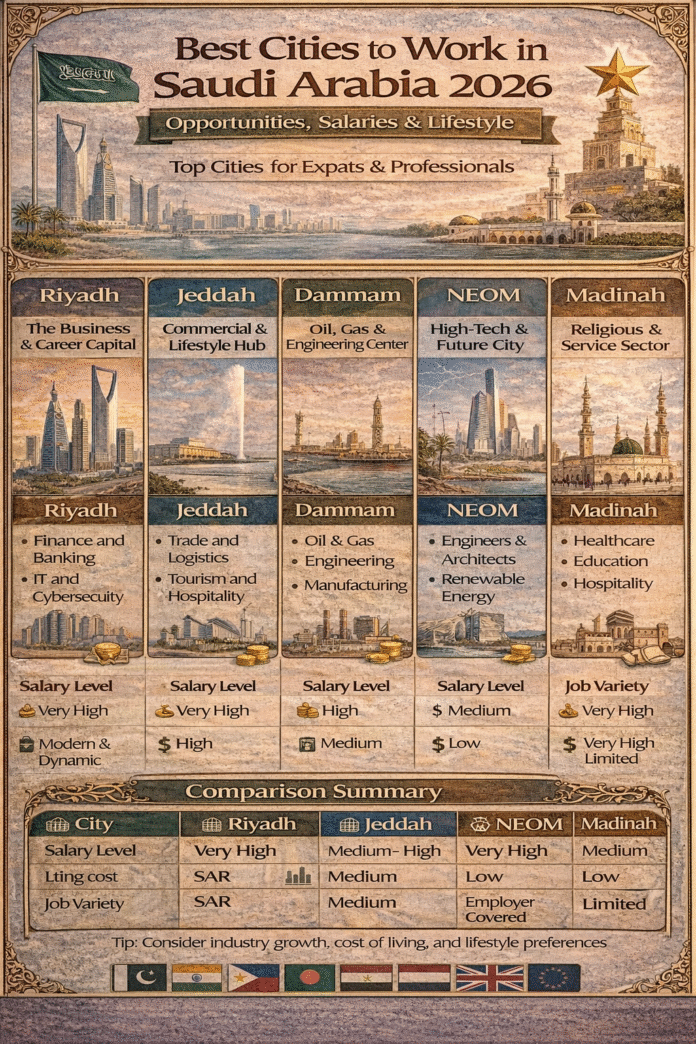
Best cities to work in Saudi Arabia showing job opportunities and lifestyle in 2026
Top cities to work in Saudi Arabia with career opportunities, salaries, and lifestyle comparison

INTRODUCTION

Choosing the best cities to work in Saudi Arabia can significantly impact your career growth, income, and quality of life. Saudi Arabia’s rapid economic expansion under Vision 2030 has created thousands of jobs across multiple cities, each offering different opportunities and lifestyles.

This guide breaks down the top Saudi cities for work in 2026 and helps you decide where your skills fit best.


1. Riyadh – The Business & Career Capital

Riyadh is the top choice for professionals seeking high-paying jobs.

Best For

  • Finance and banking
  • IT and cybersecurity
  • Government and consulting
  • Corporate management

Pros

  • Highest salary potential
  • Headquarters of major companies
  • Strong career growth

Cons

  • Higher cost of living
  • Fast-paced work environment

2. Jeddah – Commercial & Lifestyle Hub

Jeddah offers a balance between work and lifestyle.

Best For

  • Trade and logistics
  • Tourism and hospitality
  • Marketing and media
  • Education

Pros

  • Coastal lifestyle
  • Diverse culture
  • Slightly lower rent than Riyadh

Cons

  • Fewer corporate headquarters
  • Competitive job market

3. Dammam – Oil, Gas & Engineering Center

Dammam is ideal for technical professionals.

Best For

  • Oil and gas
  • Engineering
  • Manufacturing
  • Industrial management

Pros

  • Lower living costs
  • Stable work environment
  • Proximity to Bahrain

Cons


4. NEOM – Future City with High-Paying Roles

NEOM is Saudi Arabia’s most ambitious project.

Best For

  • Engineers and architects
  • Renewable energy experts
  • AI and technology professionals
  • Project managers

Pros

  • Premium salaries
  • International work culture
  • Cutting-edge projects

Cons

  • Remote location
  • Limited residential facilities (currently)

5. Madinah & Makkah – Service & Religious Sector Jobs

These cities are suitable for specific professions.

Best For

  • Healthcare
  • Education
  • Hospitality
  • Facility management

Pros

  • Lower cost of living
  • Peaceful environment

Cons

  • Limited corporate roles
  • Cultural restrictions

City Comparison Summary

CitySalary LevelLiving CostJob Variety
RiyadhHighHighVery High
JeddahMedium–HighMediumHigh
DammamMediumLow–MediumMedium
NEOMVery HighEmployer-basedNiche
MadinahMediumLowLimited

How to Choose the Right City

Consider:

  • Your profession and industry
  • Salary vs cost of living
  • Family needs
  • Long-term career goals

FINAL THOUGHTS

The best cities to work in Saudi Arabia in 2026 offer diverse opportunities depending on your career path. Riyadh leads in salaries and growth, Jeddah balances work and lifestyle, Dammam suits engineers, and NEOM attracts future-focused professionals.

Choosing the right city can define your success in Saudi Arabia.

https://livingcost.org/best/saudi-arabia