

Introduction
Understanding Qatar working hours and leave policies is essential for every expat planning to work in the country. Before accepting a job offer, employees should know their legal rights regarding working hours, annual leave, public holidays, overtime compensation, and sick leave.
Qatar has established labor laws that protect employees while ensuring businesses can operate efficiently. Whether you work in construction, hospitality, healthcare, retail, education, or corporate sectors, understanding these regulations can help you avoid misunderstandings and plan your work-life balance effectively.
This guide explains Qatar working hours and leave entitlements in 2026 in simple terms.
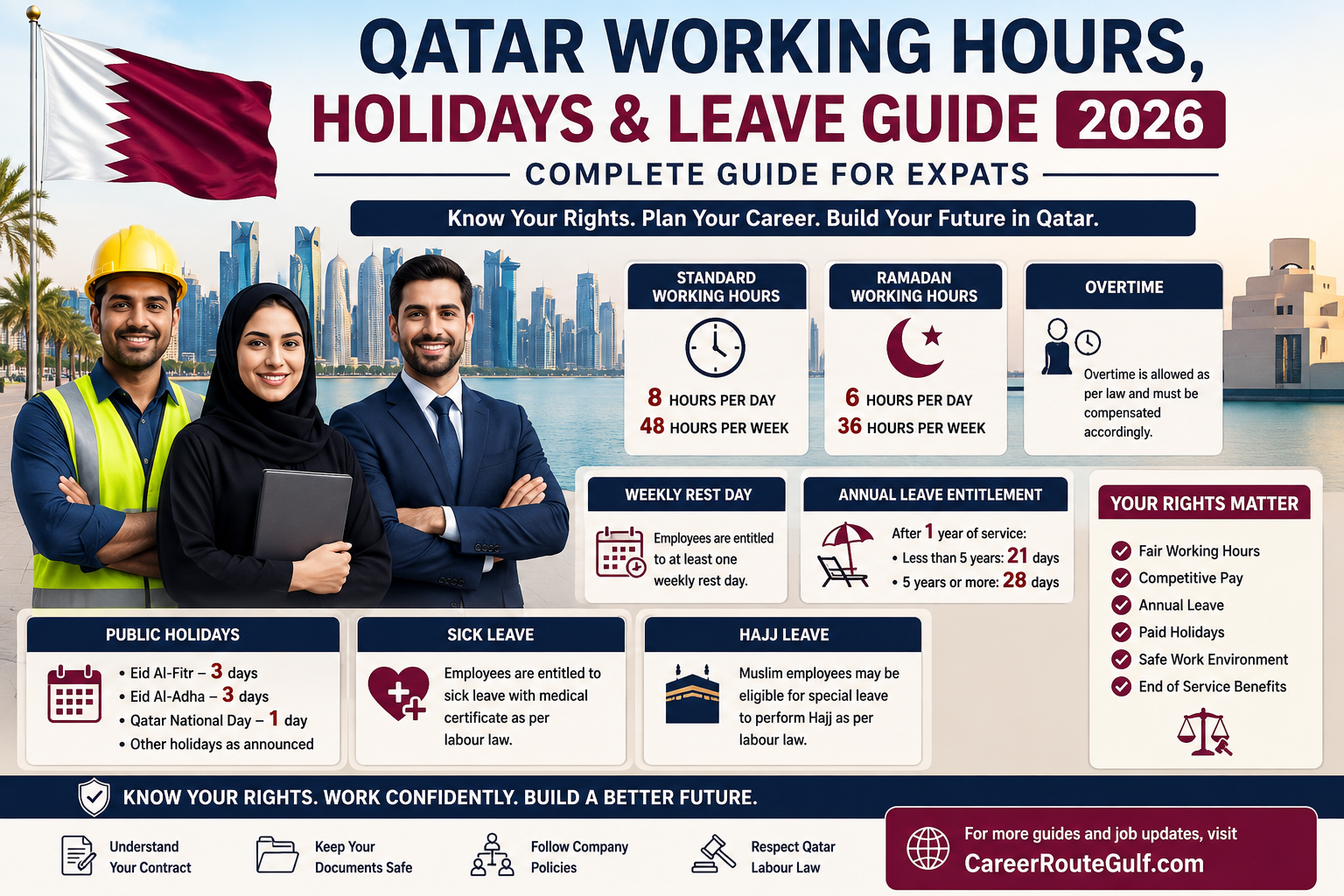
Standard Working Hours in Qatar
According to Qatar Labour Law, standard working hours must not exceed:
- 8 hours per day
- 48 hours per week
These limits apply to most private-sector employees across Qatar. Employers may schedule shifts differently depending on operational requirements, but the weekly maximum generally remains 48 hours.
Working Hours During Ramadan
During the holy month of Ramadan, working hours are reduced.
Employees generally work:
- 6 hours per day
- 36 hours per week
This reduction applies under Qatar labor regulations to accommodate fasting and religious observance.
Overtime Rules in Qatar
Many industries require employees to work additional hours during busy periods.
If an employee works beyond standard working hours, overtime compensation may apply.
Important points include:
- Overtime should be compensated according to labor regulations.
- Daytime overtime is generally paid at a higher rate than regular wages.
- Night work receives additional compensation.
- Employers cannot require unlimited overtime.
Always review your employment contract for company-specific overtime policies.
Weekly Rest Day
Employees are generally entitled to at least one weekly rest day.
For many workers, Friday remains the traditional weekly holiday, although some companies operate different schedules depending on industry requirements.
Annual Leave Entitlement in Qatar
Annual leave is one of the most important employee benefits.
After completing one year of continuous service, employees become eligible for paid annual leave.
Employees with Less Than 5 Years of Service
- Minimum 21 days (3 weeks) paid annual leave
Employees with 5 Years or More of Service
- Minimum 28 days (4 weeks) paid annual leave
Annual leave helps employees rest, travel, spend time with family, and maintain productivity.
Salary Guides for Gulf Countries: A Practical Guide for Expats 2025–2026
Who Decides Annual Leave Dates?
Many employees ask whether they can choose their own vacation dates.
Under Qatar labor regulations, employers generally have authority to determine annual leave schedules based on business needs, although many companies coordinate dates with employees whenever possible.
Public Holidays in Qatar
Employees are entitled to paid public holidays each year.
The main holidays include:
Eid Al-Fitr
- 3 working days
Eid Al-Adha
- 3 working days
Qatar National Day
- 1 day
Additional Holidays
- Additional leave days may be granted by employers according to company policy.
- http://Living and Working in Qatar: Complete Expat Guide
Qatar Public Holidays 2026
Major public holidays scheduled for 2026 include:
| Holiday | Expected Date |
|---|---|
| National Sports Day | 10 February 2026 |
| Eid Al-Fitr Holiday | March 2026 |
| Eid Al-Adha Holiday | May 2026 |
| Qatar National Day | 18 December 2026 |
Holiday dates may vary slightly depending on official announcements and moon sightings.
Sick Leave in Qatar
Employees who complete the required service period may be eligible for sick leave benefits.
A medical certificate is usually required when taking extended sick leave.
Employers may request documentation from approved healthcare providers before approving paid sick leave.
Hajj Leave for Muslim Employees
Muslim employees may be eligible for special leave to perform Hajj pilgrimage.
Under Qatar labor regulations, qualifying employees may receive leave for pilgrimage according to applicable legal requirements.
Important Rights Every Expat Should Know
Before signing a contract, verify:
- Working hours
- Weekly days off
- Annual leave entitlement
- Overtime policy
- Accommodation arrangements
- Transportation benefits
- Medical insurance coverage
- End-of-service benefits
Understanding these details helps prevent disputes later.
Tips for New Expats Working in Qatar
Read Your Contract Carefully
Never rely solely on verbal promises.
Keep Copies of Documents
Maintain copies of:
- Employment contract
- Visa documents
- Salary records
- Leave approvals
Understand Company Policies
Many organizations provide benefits beyond legal minimum requirements.
Know Your Rights
Awareness of labor regulations helps protect both employees and employers.
Conclusion
Qatar continues to attract professionals from around the world due to its strong economy and career opportunities. Understanding Qatar working hours and leave entitlements is essential for every expat planning to work in the country.
Most employees work up to 48 hours per week, receive annual leave after completing one year of service, and enjoy paid public holidays throughout the year. By understanding your rights and responsibilities, you can build a successful and rewarding career in Qatar.
https://www.gov.qa?utm_source=chatgpt.com
Frequently Asked Questions
How many hours can employees work in Qatar?
The standard limit is generally 8 hours per day and 48 hours per week.
How much annual leave is allowed in Qatar?
Employees with less than five years of service receive at least 21 days, while employees with five years or more receive at least 28 days.
Are public holidays paid in Qatar?
Yes, employees are generally entitled to paid public holidays recognized under labor regulations.
Are working hours reduced during Ramadan?
Yes. Working hours are generally reduced to 6 hours per day and 36 hours per week during Ramadan.



[…] Qatar Working Hours, Public Holidays and Leave Entitlements in 2026: Complete Guide for Expats […]