Introduction
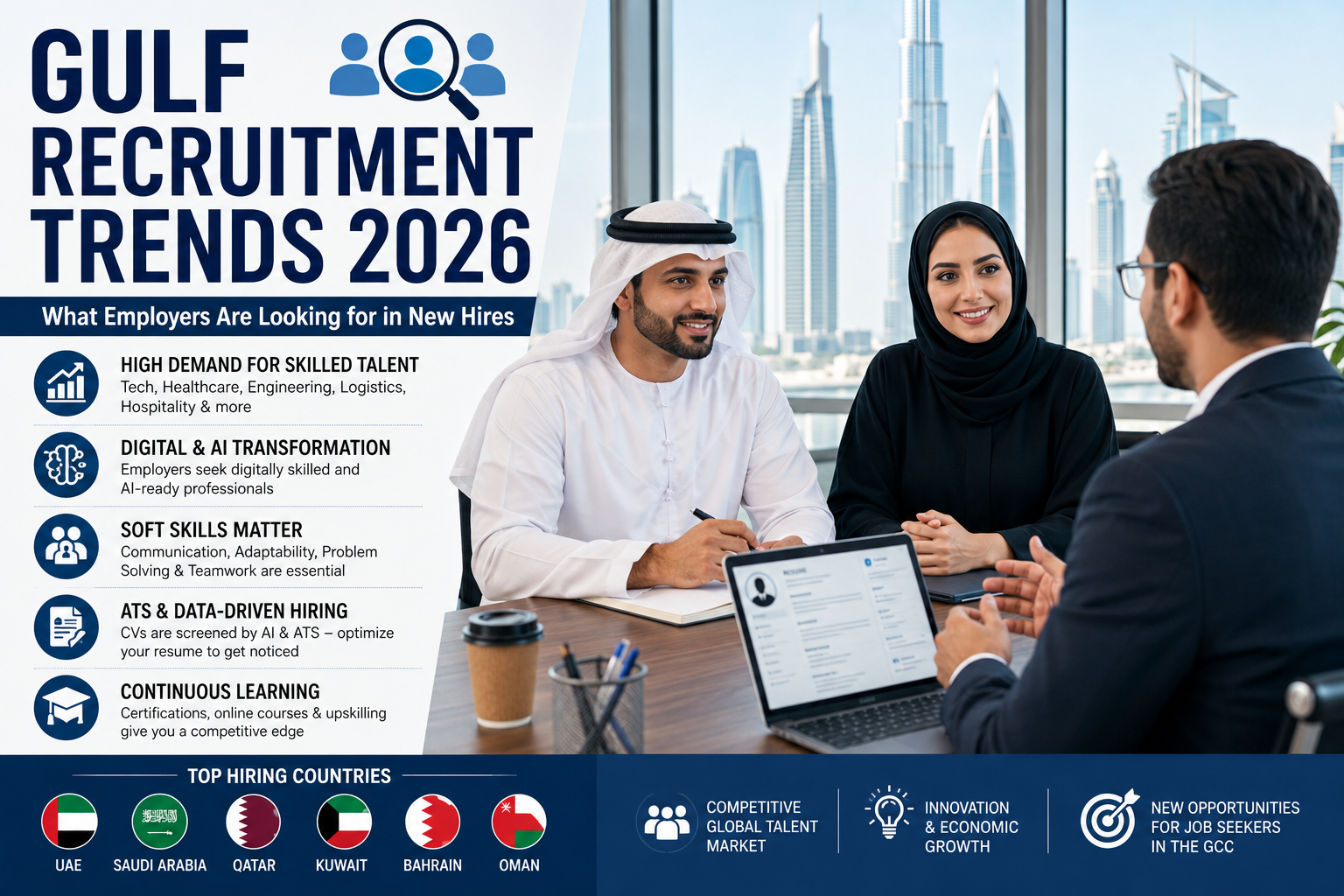
Gulf Recruitment Trends 2026 are reshaping how companies hire talent across the UAE, Saudi Arabia, Qatar, Kuwait, Bahrain, and Oman. As businesses embrace digital transformation, artificial intelligence, and economic diversification, employers are looking beyond academic qualifications and years of experience. They want professionals who are adaptable, digitally skilled, customer-focused, and capable of working in multicultural environments.
For job seekers, understanding these recruitment trends is essential. Whether you are applying for your first Gulf job or seeking a better opportunity, knowing what recruiters expect can significantly improve your chances of success. This guide explores the latest hiring practices, high-demand industries, and the key skills employers value most in 2026.
Table of Contents
- Why Recruitment Is Changing in the Gulf
- Industries Hiring the Most in 2026
- Top Skills Employers Want
- The Role of AI in Recruitment
- How ATS Is Changing CV Screening
- Common Recruitment Mistakes to Avoid
- Tips to Stand Out in the Gulf Job Market
- Conclusion
Why Recruitment Is Changing in the Gulf
The Gulf region is undergoing rapid economic transformation. National development plans such as Saudi Vision 2030, the UAE’s long-term economic strategies, and Qatar’s National Vision 2030 are creating new opportunities in technology, healthcare, renewable energy, tourism, logistics, finance, and education.
These developments have changed employer expectations. Organizations now prioritize practical skills, adaptability, and continuous learning over traditional hiring methods.
Some major factors influencing recruitment include:
- Digital transformation across industries.
- Increased investment in AI and automation.
- Expansion of tourism and hospitality.
- Growth of renewable energy projects.
- Rising demand for cybersecurity professionals.
- Increased competition for skilled international talent.
- Greater focus on employee productivity and innovation.
Industries Hiring the Most in 2026
Information Technology
Technology remains one of the fastest-growing sectors across the GCC.
High-demand roles include:
- Software Developers
- Cybersecurity Specialists
- Cloud Engineers
- AI Engineers
- Data Analysts
- IT Support Engineers
Why It Matters
Companies continue investing in digital infrastructure, making technology professionals among the highest-demand employees.
Healthcare
Healthcare expansion continues because of population growth and increased investment in medical facilities.
Employers are actively recruiting:
- Doctors
- Registered Nurses
- Pharmacists
- Medical Laboratory Technicians
- Healthcare Administrators
Healthcare professionals with international certifications and Gulf experience often enjoy better employment opportunities.
Construction and Engineering
Large infrastructure projects continue throughout the GCC.
Popular positions include:
- Civil Engineers
- Mechanical Engineers
- Electrical Engineers
- Quantity Surveyors
- Site Engineers
- Safety Officers
- Project Managers
Professionals with experience managing large commercial or infrastructure projects remain highly sought after.
Hospitality and Tourism
Tourism continues to grow across Dubai, Abu Dhabi, Doha, Riyadh, and other major cities.
Common vacancies include:
- Hotel Receptionists
- Front Office Supervisors
- Guest Relations Officers
- Restaurant Managers
- Chefs
- Customer Service Representatives
Excellent communication skills and multilingual abilities provide a competitive advantage.
Logistics and Supply Chain
Growing e-commerce and international trade have created significant demand for logistics professionals.
Employers are hiring:
- Warehouse Supervisors
- Logistics Coordinators
- Procurement Officers
- Fleet Managers
- Supply Chain Analysts
Knowledge of ERP systems and inventory management software is increasingly valuable.
Top Skills Employers Want
Modern employers evaluate candidates based on both technical expertise and workplace behavior.
1. Communication Skills
Strong verbal and written communication remains one of the most important qualities recruiters assess.
Candidates who communicate professionally during interviews often create a stronger first impression.
100 Essential English Phrases for Gulf Workplace Communication Part 2
2. Digital Literacy
Most organizations expect employees to use:
- Microsoft Office
- Google Workspace
- CRM software
- ERP systems
- Microsoft Teams
- Zoom
Basic digital competence is now considered an essential workplace skill.
3. Problem-Solving
Employers appreciate candidates who can identify problems, analyze situations, and recommend practical solutions without constant supervision.
4. Adaptability
Business environments continue changing rapidly.
Employees who quickly learn new software, processes, and technologies are more valuable to employers.
5. Teamwork
Multinational workplaces require excellent collaboration.
Successful employees respect different cultures, communicate effectively, and contribute positively to team goals.
6. Customer Service
Even technical positions often involve interaction with clients or colleagues.
Professional customer service skills improve company reputation and customer satisfaction.
7. Leadership Potential
Recruiters increasingly seek candidates who demonstrate initiative, accountability, and decision-making abilities.
Leadership is not limited to management positions.
8. Time Management
Meeting deadlines and prioritizing work effectively helps improve productivity and overall business performance.
The Role of AI in Recruitment
Artificial Intelligence has become an important part of recruitment across the Gulf.
Many organizations now use AI to:
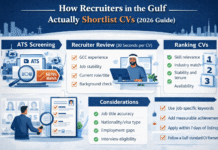
- Screen CVs
- Rank applicants
- Match skills with vacancies
- Schedule interviews
- Reduce recruitment time
Although AI helps employers process thousands of applications efficiently, final hiring decisions still involve human recruiters.
Applicants should optimize their CVs using keywords from the job description while maintaining clear, professional formatting.
How ATS Is Changing CV Screening
Applicant Tracking Systems (ATS) are widely used by employers before a recruiter reviews a CV.
Tips for ATS-Friendly CVs
- Use a simple layout.
- Avoid tables and text boxes.
- Include job-related keywords naturally.
- Use standard section headings.
- Save your CV as PDF unless another format is requested.
- Highlight measurable achievements rather than listing duties only.
An ATS-friendly CV significantly increases the chances of reaching the interview stage.
Jobs That AI Cannot Easily Replace in the Gulf: Future-Proof Careers for 2026
Common Recruitment Mistakes to Avoid
Many qualified candidates miss opportunities because of avoidable mistakes.
Avoid these common errors:
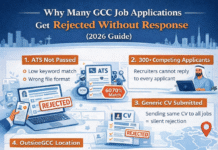
- Applying without reading the job description.
- Sending the same CV for every vacancy.
- Using an unprofessional email address.
- Including outdated contact information.
- Arriving late for interviews.
- Speaking negatively about previous employers.
- Failing to research the company.
- Ignoring follow-up emails from recruiters.
- Providing inaccurate employment information.
- Poor communication during interviews.
Correcting these mistakes can improve your chances of securing interviews and receiving job offers.
Tips to Stand Out in the Gulf Job Market
Competition is increasing every year. To improve your chances:
- Customize your CV for every application.
- Build a complete LinkedIn profile.
- Obtain relevant certifications.
- Improve your English communication skills.
- Learn basic Arabic phrases if possible.
- Practice common interview questions.
- Develop digital skills.
- Expand your professional network.
- Stay informed about industry trends.
- Continue learning through online courses.
Candidates who consistently invest in professional development are more likely to secure better career opportunities.
Conclusion
The Gulf job market continues to evolve, creating exciting opportunities for skilled professionals while increasing competition for top positions. Understanding Gulf Recruitment Trends 2026 allows job seekers to prepare effectively by developing the right technical skills, improving communication abilities, and adapting to modern recruitment practices.
Success is no longer determined solely by qualifications or experience. Employers across the UAE, Saudi Arabia, Qatar, Kuwait, Bahrain, and Oman increasingly value adaptability, continuous learning, digital competence, and strong interpersonal skills. Candidates who tailor their CVs, prepare thoroughly for interviews, and stay informed about changing hiring trends will be better positioned to secure rewarding careers in the GCC.
As recruitment continues to evolve with AI, automation, and digital transformation, the best investment you can make is in your own professional growth. By continuously upgrading your skills and understanding employer expectations, you can confidently navigate the Gulf job market and build a successful long-term career.