Overview of Gulf job market trends and opportunities in 2026
Introduction
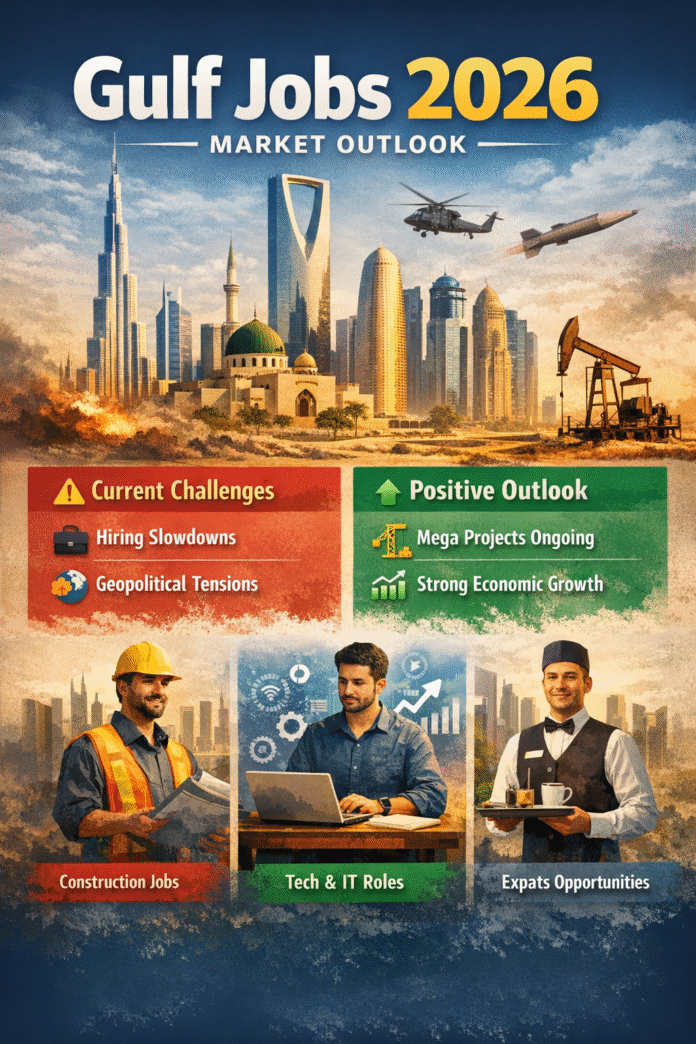
Gulf jobs 2026 remain a key focus for expats as regional tensions influence economic activity across Saudi Arabia, United Arab Emirates, and Qatar. While uncertainty has affected certain industries, the overall employment outlook in the Gulf remains stable, supported by strong government investment and ongoing mega projects.
This article provides a clear, professional analysis of how geopolitical tensions are shaping hiring trends, sector demand, and future job opportunities in 2026.
Overview of Gulf Job Market 2026
The Gulf region continues to diversify its economy through infrastructure, tourism, and technology investments. Despite geopolitical challenges, governments are maintaining development plans to sustain economic growth.
Key drivers of employment include:
Infrastructure expansion
Tourism development
Digital transformation
Energy sector investment
These factors ensure that Gulf jobs 2026 remain relevant and accessible for expatriates.
Short-Term Impact on Gulf Jobs 2026
Hiring Adjustments
In the short term, Gulf jobs 2026 have experienced selective hiring slowdowns, particularly in corporate and technology sectors. Employers are focusing on critical roles while delaying non-essential recruitment.
Workforce Mobility Challenges
Travel disruptions and regional uncertainties have slightly impacted:
International hiring timelines
Employee relocation
Onboarding processes
However, these challenges are temporary and gradually stabilizing.
Project Timeline Shifts
Some infrastructure projects have adjusted timelines due to external uncertainties. However, major developments continue without cancellation, ensuring continued demand for workers.
Positive Outlook for Gulf Jobs 2026
Continued Investment
Countries like Saudi Arabia and United Arab Emirates are maintaining strong investment in mega projects and economic reforms.
Mega Projects Driving Jobs
Large-scale developments such as:
NEOM
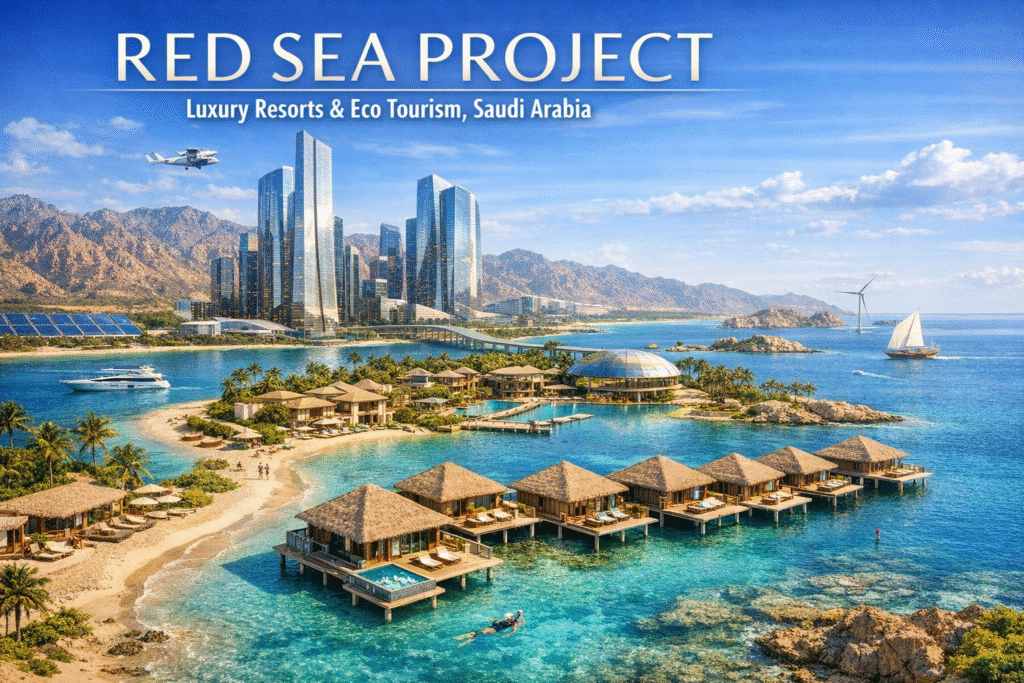
Red Sea Project
Qiddiya
continue to create thousands of opportunities, supporting the stability of Gulf jobs 2026.
Demand for Skilled Professionals
There is sustained demand in areas such as:
Engineering
Information Technology
Healthcare
Construction
This ensures long-term growth in employment opportunities.
Future of Gulf Jobs 2026 and Beyond
Stable Growth Scenario
The most likely scenario is moderate, stable growth where:
These countries continue to lead regional employment growth.
Conclusion
Gulf jobs 2026 are experiencing moderate short-term adjustments due to regional tensions, but the overall outlook remains positive. Continued investment, large-scale projects, and strong demand for skilled workers ensure long-term stability.
For job seekers, the best approach is to remain proactive, informed, and focused on emerging opportunities across the Gulf region.
Latest Saudi jobs 2026 offering over 10,000 vacancies
Introduction
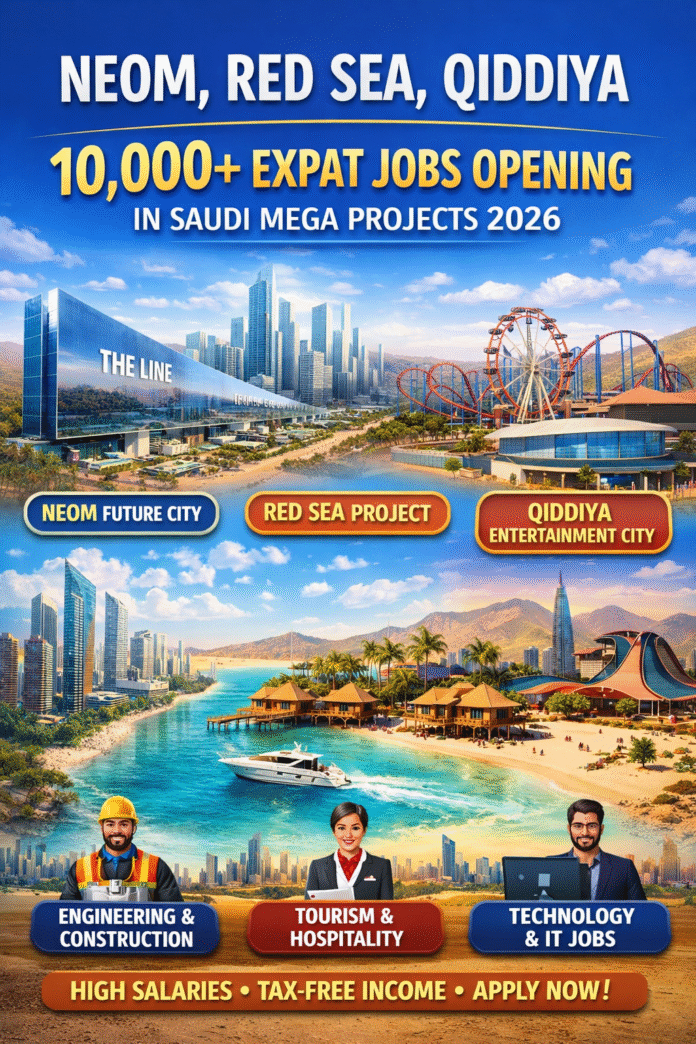
Latest Saudi jobs 2026 are creating massive opportunities for expats, with over 10,000 vacancies expected in major projects like NEOM, Red Sea Project, and Qiddiya. These projects are actively hiring across construction, IT, hospitality, and administration sectors, making 2026 one of the best years to work in Saudi Arabia
As we enter 2026, more than 10,000 vacancies are expected to open across these mega projects. These roles are not limited to highly skilled professionals but also include opportunities for technicians, administrative staff, and entry-level workers.
For job seekers aiming to build a stable and rewarding career abroad, Saudi Arabia presents a strong opportunity, especially with tax-free salaries and long-term employment prospects.
Saudi Vision 2030 and Job Growth
Vision 2030 is Saudi Arabia’s national strategy to diversify its economy and reduce reliance on oil revenues. The plan emphasizes growth in sectors such as tourism, technology, entertainment, and renewable energy.
These sectors require a large and diverse workforce. As a result, the demand for expatriate workers has significantly increased. The government and private sector are actively recruiting talent from across the world to support ongoing and upcoming developments.
Overview of Mega Projects Driving Jobs
The following projects are the primary sources of job creation in Saudi Arabia for 2026:
Project Name
Investment
Industry Focus
Job Potential
NEOM
$500 Billion
Smart City & Technology
Very High
Red Sea Project
$20 Billion
Tourism & Hospitality
High
Qiddiya
$40 Billion
Entertainment & Leisure
High
These projects are expected to continue hiring throughout 2026 and beyond.
Latest Saudi Jobs 2026 in NEOM
NEOM is one of the most ambitious urban development projects in the world. Located in the northwest of Saudi Arabia, it is designed to be a fully smart, sustainable city powered by renewable energy.
A major component of NEOM is “The Line,” a futuristic city concept focused on zero emissions and advanced urban living.
Key Employment Areas in NEOM:
Engineering (Civil, Mechanical, Electrical)
Information Technology and Artificial Intelligence
Project Management
Finance and Accounting
Human Resources and Administration
Construction and Skilled Labor
NEOM requires both highly qualified professionals and general workers, making it accessible to a wide range of job seekers.
A revolutionary smart city redefining urban living
The Red Sea Project is a luxury tourism initiative that aims to attract millions of visitors annually. It includes resorts, hotels, and eco-friendly developments across a vast coastal area.
Job Opportunities:
Hotel and Resort Staff
Food and Beverage Professionals
Tour Guides and Customer Service Agents
Maintenance Technicians
Logistics and Operations Staff
As tourism continues to grow in Saudi Arabia, the demand for hospitality professionals is expected to rise significantly.
Saudi Arabia’s mega projects—NEOM, the Red Sea Project, and Qiddiya—are creating a significant number of job opportunities for expatriates in 2026. With over 10,000 vacancies expected, job seekers have a strong chance of finding employment across various sectors.
Whether you are a skilled professional or looking for entry-level work, these projects offer competitive salaries, long-term stability, and valuable international experience.
Taking the right steps now can help you secure a rewarding career in one of the fastest-growing job markets in the world
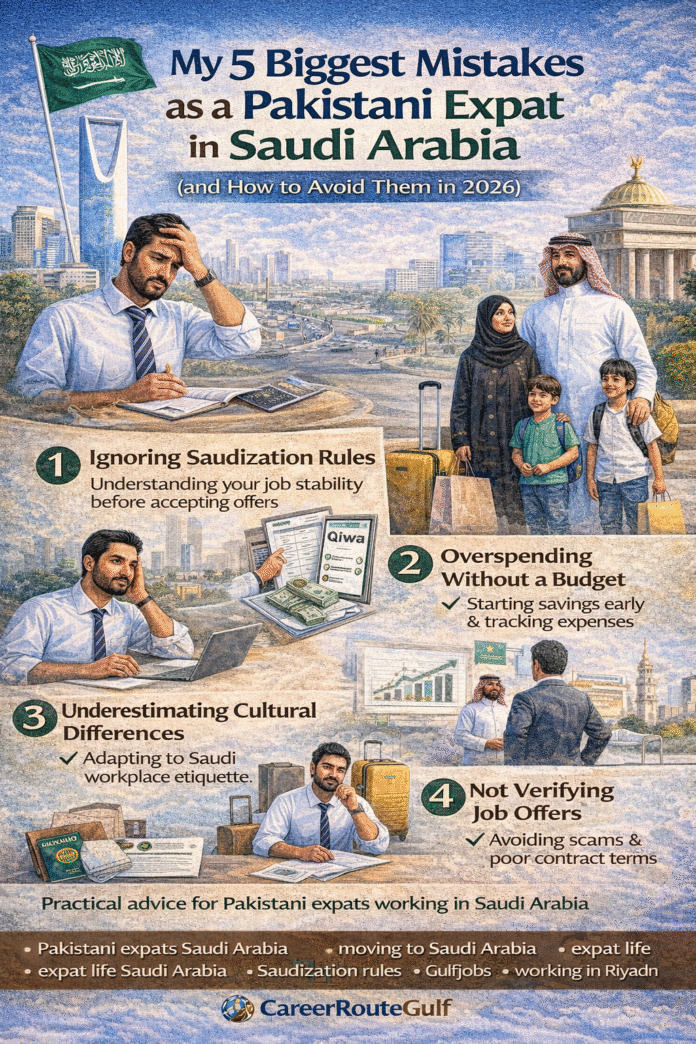
5 common mistakes Pakistani expats in Saudi Arabia make and how to avoid them.
Pakistani expats in Saudi Arabia continue to play an important role in the Kingdom’s workforce. Thousands of professionals from Pakistan move to Saudi Arabia every year for better salaries, tax-free income, and career opportunities created by Vision 2030 projects in cities like Riyadh, Jeddah, and Dammam.
In recent years, economic transformation under Saudi Vision 2030 has created thousands of new opportunities in industries such as engineering, construction, healthcare, finance, logistics, and technology.
Cities like Riyadh, Jeddah, and Dammam continue to attract expatriates. Emerging megaprojects like NEOM are also creating new job opportunities for international professionals.
However, the first few months can be challenging. Many new expatriates arrive with high expectations but little preparation for the realities of working and living in the Gulf.
Based on real experiences shared by Pakistani expatriates during 2025–2026, here are five of the most common mistakes people make when moving to Saudi Arabia — and practical strategies to avoid them.
1. Not Understanding Saudization Rules Before Accepting a Job
One of the most common mistakes new expatriates make is accepting a job offer without understanding how the government’s workforce localization policy affects their profession.
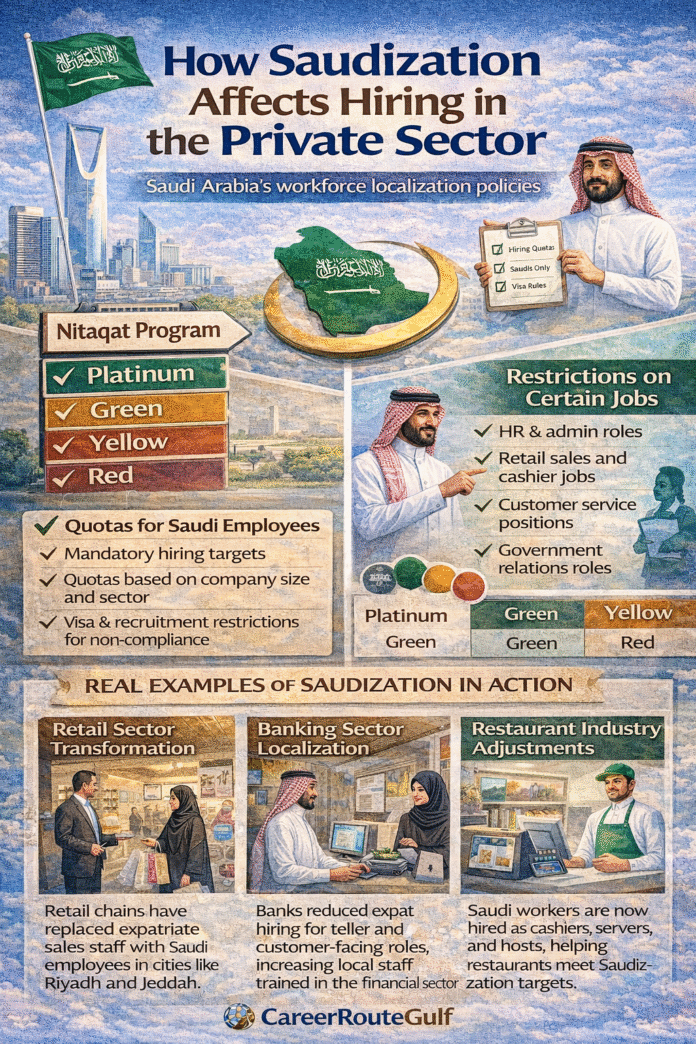
Saudi Arabia has introduced the Nitaqat Program to increase employment opportunities for Saudi nationals. Under this system, companies must hire a specific percentage of Saudi employees depending on their industry and company size.
Why This Matters
In 2026, Saudization policies have expanded significantly. Certain professions are now largely reserved for Saudi citizens, including:
Human resources roles
Customer service jobs
Retail sales positions
Administrative roles
Entry-level banking positions
For expatriates working in these sectors, job security can sometimes be uncertain.
Real Example
A Pakistani administrative supervisor working in a retail company in Riyadh shared that his job title was suddenly changed during contract renewal because the original position had been localized for Saudi citizens. Although he was offered a new role, the salary and responsibilities were reduced.
Situations like this are not uncommon when companies adjust their workforce to meet Saudization quotas.
How to Avoid This Mistake
Before accepting a job offer:
Verify your profession on the Qiwa platform
Check the company’s Saudization rating (Green or Platinum companies are generally more stable)
Focus on specialized roles where expatriate skills are still in demand
Industries that continue to rely on international talent include:
Engineering
Information technology
Healthcare
Construction
Energy and infrastructure
These fields remain essential to Saudi Arabia’s development projects.
2. Spending Your Salary Too Quickly Without a Budget
Another common mistake among new expatriates is overspending during the first few months.
Receiving a tax-free salary can be exciting, especially when the income is significantly higher than what many professionals earn in Pakistan. However, living costs in major Saudi cities have increased in recent years.
Housing, transportation, food delivery services, and family visits can quickly reduce monthly savings.
A Common Financial Pattern
Many new expatriates follow this pattern:
First salary arrives
Purchase expensive smartphone or electronics
Send large remittances home immediately
Spend heavily on restaurants and shopping
Within a few months, savings begin to disappear.
Real Example
A construction engineer who moved to Jeddah in 2025 shared that he purchased a car during his second month in the Kingdom. After insurance, fuel, and loan payments, he realized nearly half of his monthly salary was being spent on transportation alone.
This made saving money extremely difficult.
Smart Financial Strategy
A simple budgeting plan can help maintain financial stability.
Recommended monthly allocation:
Category
Percentage
Savings & investments
40%
Living expenses
30%
Family support
20%
Personal spending
10%
It is also wise to build an emergency fund covering at least three months of living expenses.
Using banking apps or simple expense tracking tools can help you monitor spending.
3. Underestimating Cultural and Workplace Differences
Adjusting to a new work culture is another major challenge.
While Pakistan and Saudi Arabia share many cultural similarities, workplace environments can still differ significantly.
Saudi workplaces often emphasize:
Respect for hierarchy
Formal communication
Clear authority structures
Strict punctuality
Understanding these norms can help expatriates build stronger professional relationships.
Communication Differences
In many Saudi companies, communication tends to be more indirect compared to South Asian workplaces.
For example:
Criticism may be expressed subtly
Instructions may require clarification
Meetings may follow formal protocols
Real Example
A Pakistani IT specialist working in Dammam shared that he initially struggled during meetings because he spoke too informally with senior managers. After observing colleagues and adjusting his communication style, his professional relationships improved significantly.
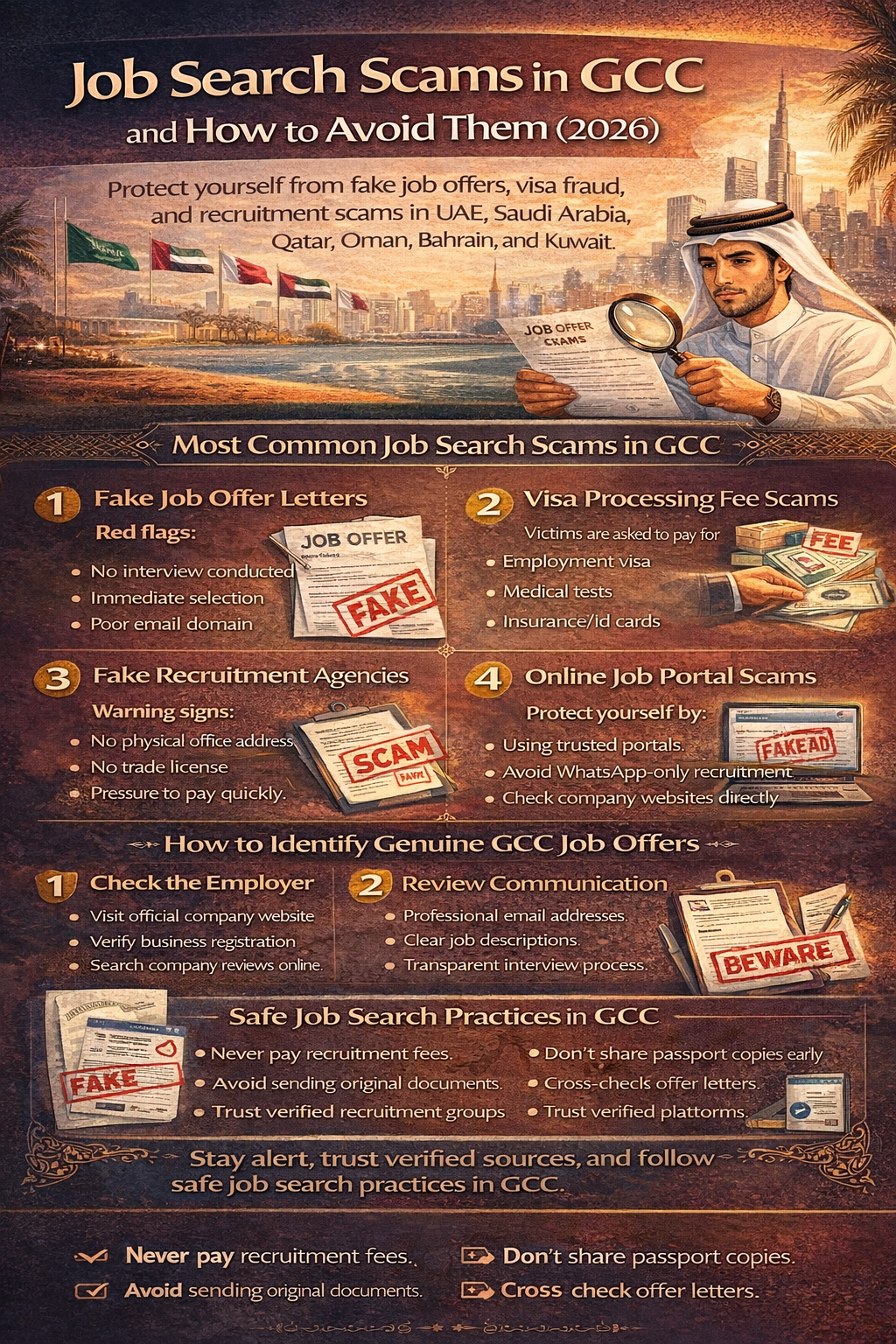
Job scams targeting Gulf job seekers remain a serious issue.
Every year, thousands of professionals lose money by accepting fake offers or dealing with unlicensed recruitment agents.
Fraudulent job offers often include requests for:
Visa processing fees
Recruitment charges
Medical or document verification payments
Legitimate companies typically cover recruitment costs themselves.
Real Example
In 2024, several job seekers in Pakistan reported receiving fake emails claiming to represent major Saudi construction companies. Applicants were asked to pay processing fees for visa documentation.
After sending the money, communication stopped completely.
How to Protect Yourself
Before accepting any job offer:
Verify the company through official Saudi government platforms
Check employment details on the Qiwa system
Confirm the job offer through the company’s official website or HR department
Never send money to agents claiming to guarantee employment
Always request a written employment contract before traveling.
The contract should clearly include:
Salary details
Housing allowance
Medical insurance
Annual leave policy
End-of-service benefits
Keeping copies of all documents can prevent problems later.
5. Delaying Family Sponsorship or Long-Term Planning
Many expatriates initially move to Saudi Arabia alone with the intention of bringing their families later.
However, without careful planning, family sponsorship can become complicated.
Factors that affect family relocation include:
Minimum salary requirements
Housing availability
School fees for children
Visa processing timelines
Real Example
A Pakistani accountant working in Riyadh delayed family sponsorship for two years due to rising living costs. By the time he applied for family visas, school admissions had already closed for the academic year, forcing his children to wait another year before joining him.
Planning early can help avoid such challenges.
Planning for Family Relocation
If you plan to bring your family:
Discuss family visa eligibility during job negotiations
Research international schools early
Budget for housing large enough for family members
Consider healthcare and insurance coverage
Many expatriates also find it helpful to join community groups and social organizations for support.
Saudi Arabia remains one of the most attractive destinations for Pakistani professionals seeking international career growth. With major economic reforms, infrastructure development, and global investments, opportunities continue to expand across many industries.
However, success as an expatriate requires preparation, patience, and smart decision-making.
Avoiding common mistakes — such as misunderstanding Saudization rules, overspending, ignoring cultural differences, accepting unverified job offers, or failing to plan long-term — can significantly improve your experience in the Kingdom.
Thousands of Pakistani professionals build successful careers in Saudi Arabia every year. With the right planning and awareness, you can do the same.
Understanding Saudization and its impact on private sector hiring
Introduction
The policy of Saudization, officially known as the Nitaqat program, has significantly changed the employment landscape in Saudi Arabia. Saudization affects hiring in the private sector introduced by the Saudi government to increase the participation of Saudi nationals in the private sector, this policy has reshaped hiring strategies for companies across industries.
For companies operating in cities like Riyadh, Jeddah, and Dammam, Saudization has become a major factor influencing recruitment decisions, workforce planning, and long-term business strategies.
Saudization has created several challenges for private companies.
Talent Availability
Some industries struggle to find enough qualified Saudi professionals for specialized technical roles.
Training Costs
Companies often invest heavily in training Saudi employees to meet skill requirements.
Workforce Planning
Businesses must carefully balance hiring local workers while maintaining operational efficiency.
Opportunities Created by Saudization
Despite challenges, Saudization also creates opportunities.
For Saudi Citizens
More job opportunities
Skills development programs
Leadership roles in growing industries
For Expat Professionals
Demand for specialized expertise
Opportunities in technical and management positions
Consulting and training roles
Future Outlook
Saudization policies will likely continue evolving as Saudi Arabia advances its economic transformation.
Key future trends include:
Greater workforce localization
Growth in private sector employment
Expansion of industries like tourism, technology, and entertainment
Companies that adapt to these changes early will have a competitive advantage.
Conclusion
Saudization has fundamentally reshaped hiring in Saudi Arabia’s private sector. While the policy prioritizes employment opportunities for Saudi nationals, expatriate professionals with specialized skills remain valuable to many industries.
Understanding how Saudization affects hiring can help job seekers prepare better for the Saudi job market and identify opportunities where their expertise is most needed.
Understanding the differences between private and government jobs in Saudi Arabia
Introduction
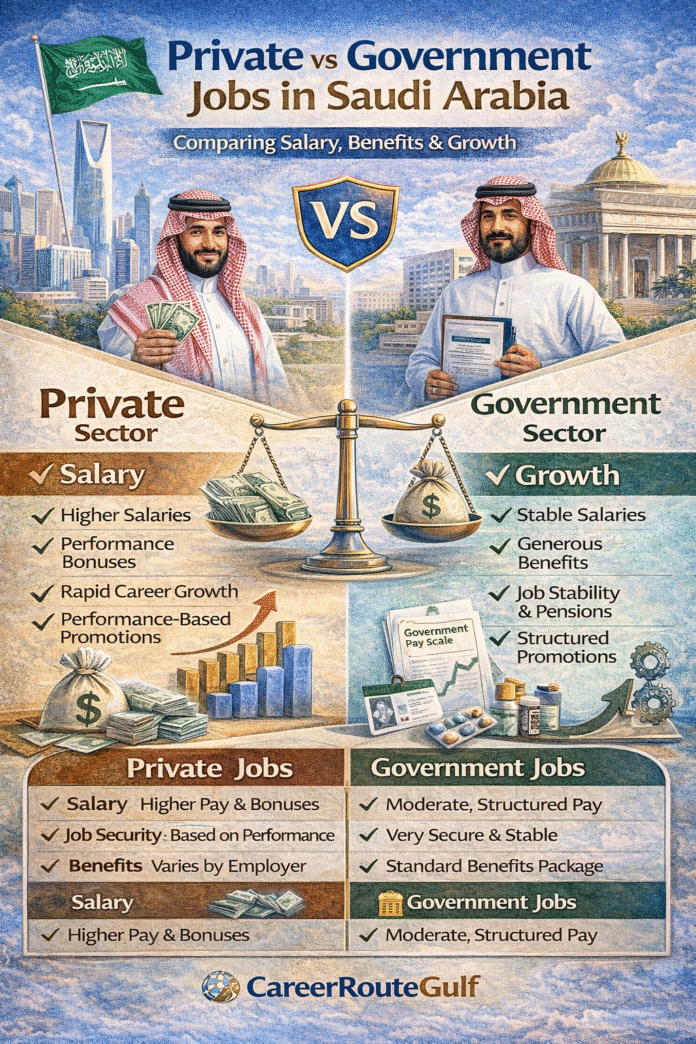
Choosing between private vs government jobs in Saudi Arabia is one of the most important career decisions for professionals planning to work in the Gulf. Both sectors offer unique advantages, but they differ significantly in salary structure, work culture, job stability, and long-term growth.
In Saudi Arabia, government jobs are known for stability and generous benefits, while private sector roles often offer higher salaries and faster career progression.
This guide explains the key differences between private vs government jobs in Saudi Arabia, including salary expectations, benefits, work environment, and long-term career growth opportunities.
Understanding the Saudi Job Market
Saudi Arabia’s labor market has changed significantly in recent years due to economic reforms and national development initiatives like Saudi Vision 2030.
These reforms aim to:
Diversify the economy
Reduce dependence on oil
Expand private sector employment
Create opportunities for skilled professionals
As a result, both government institutions and private companies are hiring talent across multiple sectors.
Government Jobs in Saudi Arabia
Overview
Government jobs are positions within ministries, public authorities, and state-owned organizations. These roles are often associated with stability, predictable working hours, and strong benefits.
Common Government Employers
Some major public sector employers include:
Ministry of Health Saudi Arabia
Saudi Arabian Monetary Authority
Saudi Electricity Company
Many government roles are primarily reserved for Saudi nationals, but some sectors still hire expatriate specialists.
Salary in Government Jobs
Government salaries are typically structured and regulated by official pay scales.
Key features:
Fixed salary bands
Annual increments
Government allowances
While government salaries may be moderate compared to top private companies, the overall compensation becomes attractive due to benefits.
Benefits of Government Jobs
Government employees often receive:
✔ Job security ✔ Pension plans ✔ Housing allowances ✔ Medical coverage ✔ Paid annual leave ✔ Predictable work hours
These benefits make government jobs attractive for professionals seeking long-term stability.
Work Culture in Government Sector
Government workplaces generally have:
Structured procedures
Clear hierarchy
Standardized working hours
Lower work pressure compared to private companies
However, career advancement can sometimes be slower.
Private Sector Jobs in Saudi Arabia
Overview
Private sector jobs are offered by corporations, multinational companies, startups, and privately owned businesses operating in Saudi Arabia.
Major industries include:
Technology
Construction
Banking
Oil & gas services
Tourism and hospitality
Logistics and transportation
Cities such as Riyadh, Jeddah, and Dammam are key hubs for private sector employment.
Salary in Private Sector Jobs
Private companies often offer higher salaries compared to government roles, especially in specialized fields.
Typical salary advantages include:
Performance bonuses
Commission structures
Higher starting salaries
International pay packages
However, salaries vary significantly depending on industry and experience level.
Benefits in Private Sector Jobs
Benefits vary widely depending on the employer.
Common private sector benefits include:
Housing allowance
Transportation allowance
Health insurance
Annual air tickets
Performance bonuses
Multinational companies often provide the most competitive benefits.
Work Environment in Private Companies
Private sector work culture tends to be more dynamic and competitive.
Employees may experience:
Faster career growth
Performance-based promotions
Longer working hours
Higher productivity expectations
For ambitious professionals, the private sector often offers stronger career acceleration.
Salary Comparison: Government vs Private Jobs
Factor
Government Jobs
Private Jobs
Salary Growth
Slow but stable
Faster growth
Bonuses
Rare
Common
Job Security
Very high
Moderate
Working Hours
Fixed
Sometimes longer
Promotion Speed
Slower
Faster
Job Stability Comparison
Government jobs are generally considered more stable because they are supported by public funding and structured employment policies.
Private sector jobs depend more on company performance, industry demand, and economic conditions.
However, large corporations and multinational firms also offer relatively stable employment.
Career Growth Opportunities
Government Sector Growth
Career advancement usually depends on:
Years of service
Internal promotions
Administrative structures
This creates predictable but slower growth.
Private Sector Growth
Private companies reward performance more aggressively.
Employees can grow faster through:
Promotions based on results
Job switching
Leadership opportunities
international project exposure
This makes the private sector attractive for professionals focused on career acceleration.
Which Option Is Better for Expats?
For expatriates working in Saudi Arabia, private sector jobs are usually more accessible.
Many government positions prioritize Saudi nationals due to localization policies.
Private companies often provide competitive packages designed to attract international talent.
Key Factors to Consider Before Choosing
Before deciding between private vs government jobs in Saudi Arabia, consider the following factors:
Career goals
If your goal is rapid growth, the private sector may be better.
Work-life balance
Government jobs often offer more predictable schedules.
Financial priorities
Private sector roles may provide higher earning potential.
Job security
Government employment usually offers stronger stability.
Future Job Trends in Saudi Arabia
As economic reforms continue under Saudi Vision 2030, the private sector is expected to expand significantly.
Growth sectors include:
tourism
technology
renewable energy
logistics
entertainment industries
This shift will likely create more private sector opportunities for both locals and expatriates.
Conclusion
Both private and government jobs in Saudi Arabia offer valuable career opportunities, but they serve different professional goals.
Government jobs provide stability, structured benefits, and predictable work environments. Private sector jobs offer higher earning potential, faster career growth, and exposure to global business practices.
Professionals planning to work in Saudi Arabia should carefully evaluate their priorities, industry demand, and long-term career plans before choosing between these two paths.
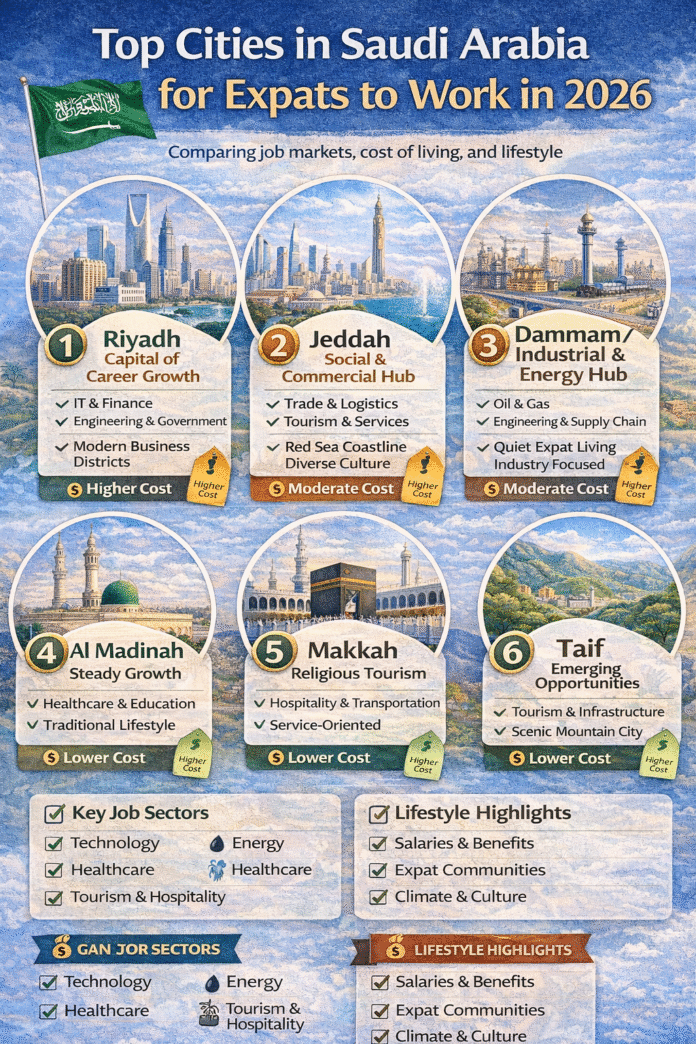
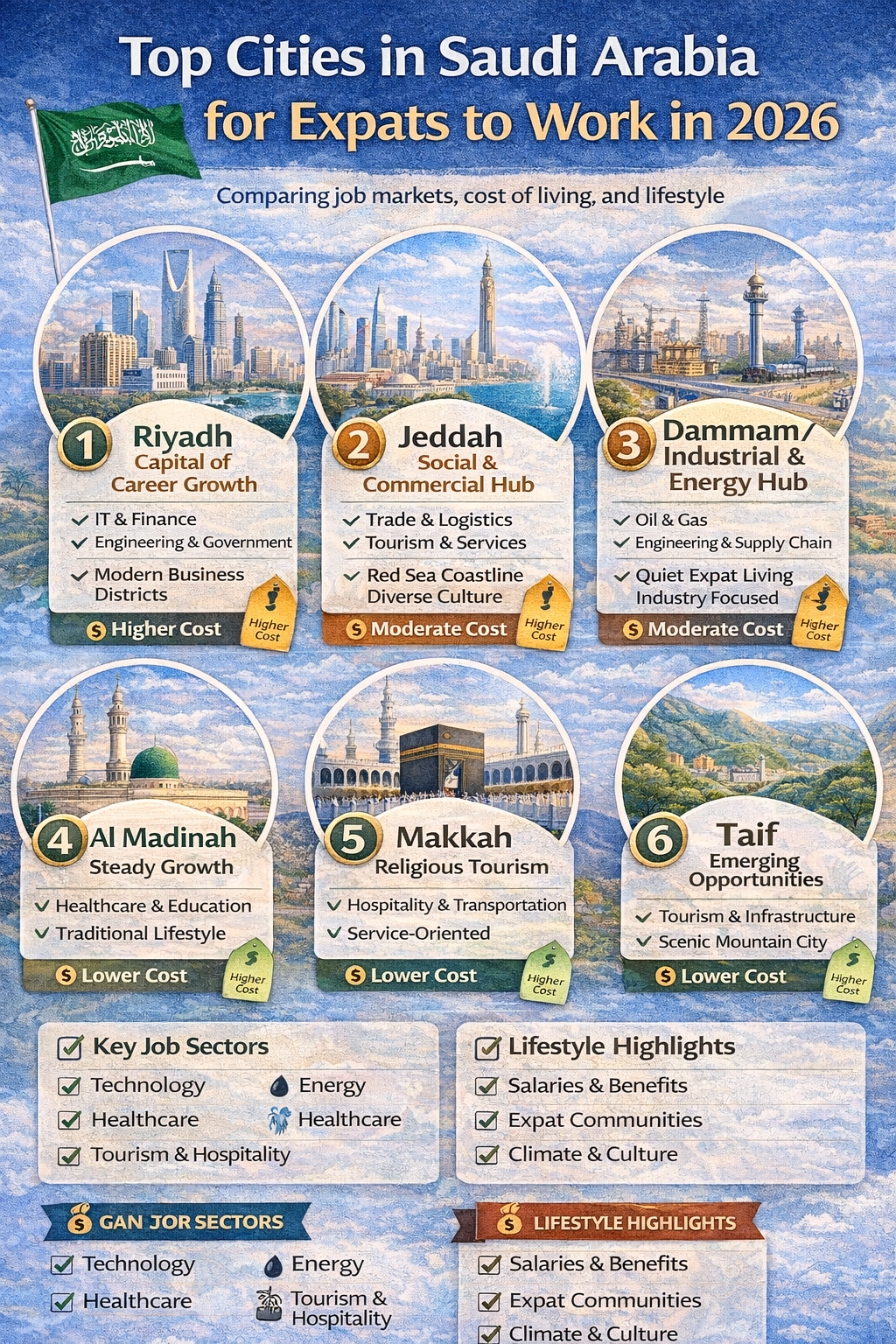
Comparing job markets, cost of living, and lifestyle in top Saudi Arabian cities for expats
Introduction
As Saudi Arabia continues its economic transformation under Vision 2030, the employment landscape is evolving rapidly. Many expatriates now look beyond traditional hubs like Riyadh and Jeddah, exploring cities in Saudi Arabia for expats to work emerging cities where job opportunities, lifestyle, and cost of living create strong quality-of-life advantages.
In this guide, we’ll walk through the top cities in Saudi Arabia for expats to work in 2026, covering job markets, living costs, industries, and lifestyle. Whether you’re considering relocating or planning a long-term career move, this article will help you compare major cities and choose the best fit.
1. Riyadh – The Capital of Career Growth
Why Riyadh Is a Top Destination
Riyadh is the political and economic capital of Saudi Arabia and remains the leading destination for professionals across industries.
Key benefits for expats:
Headquarters of major corporations and government bodies
Fast-growing tech, finance, and consulting sectors
High concentration of jobs in Vision 2030 projects
Job Opportunities in Riyadh
Riyadh offers strong demand in:
Information technology
Finance and banking
Engineering and construction
Government and public sector consulting
Lifestyle and Living Standards
Riyadh combines modern infrastructure with cultural heritage. Expats enjoy:
Shopping malls and business districts
Competitive salaries
Growing social and cultural events
Cost of Living: Higher than many other cities, particularly for housing. Expect to spend more on rent but benefit from higher cash compensation and allowances.
The Eastern Province cities of Dammam and Al Khobar are essential hubs for the oil, gas, and energy industries.
Key strengths:
Proximity to major energy companies
Industrial jobs with technical focus
Growing demand for engineering and project management roles
Job Sectors
Oil & gas operations
Petrochemicals
Engineering and maintenance
Logistics and supply chain
Lifestyle Highlights
Quiet expatriate communities
More affordable living than Riyadh and Jeddah
Easy access to Bahrain via King Fahd Causeway
Cost of Living: Housing and daily expenses tend to be lower, especially in suburban neighborhoods.
4. Al Madinah – Steady Growth with Traditional Living
Why It’s Worth Considering
Al Madinah is not as commercially dynamic as Riyadh or Jeddah, but it offers stable jobs in:
Healthcare
Education
Hospitality
Unique Benefits
Peaceful lifestyle
Significant religious tourism infrastructure
Lower cost housing
Who It Suits: Professionals seeking work in community-oriented roles with a slower pace of life compared to big metropolitan areas.
5. Makkah – Religious Tourism & Hospitality
Employment Opportunities
Makkah plays a central role in religious tourism, which drives year-round demand for:
Hospitality roles
Facility management
Customer service
Event logistics
Lifestyle and Culture
Life in Makkah largely revolves around service to pilgrims and related industries. While it may feel more conservative, the city provides solid opportunities for hospitality professionals.
6. NEOM – The Future City for High-Tech Expats
A Unique Opportunity
NEOM is one of Saudi Arabia’s flagship Vision 2030 projects. Designed as a next-generation smart city, it promises new jobs in:
Clean energy
Technology innovation
Advanced engineering
Research & development
Expats with cutting-edge tech skills or sector-specific expertise may find some of the best future opportunities in NEOM.
Early-Stage Careers
While still developing, NEOM attracts:
International teams
Global talent for startup ecosystems
Long-term investment in specialized roles
7. Taif – Emerging Jobs & Growing Infrastructure
Why Taif Is Becoming Popular
Taif is gaining attention for infrastructure expansion and lifestyle appeal.
Key features:
Cooler climate and scenic mountain views
Growing hospitality and service sectors
Lower cost of living compared to major cities
Professionals in tourism, education, and infrastructure development may find opportunities here.
Skills That Help You Succeed in These Cities
Across all top cities, demand is rising for professionals with:
Digital and IT expertise
Project management and leadership skills
Engineering disciplines
Healthcare and medical services
English communication and cultural adaptation skills
Professionals who continuously update their skills stand out in the Saudi job market.
Cultural & Social Considerations
Saudi Arabia is rooted in strong cultural traditions. Successful expats are those who:
Respect local customs and dress codes
Understand religious and social norms
Learn basic Arabic greetings
Navigate work etiquette professionally
Being culturally aware improves workplace relationships and community integration.
Salary and Benefits Expectations
Salaries in Saudi Arabia vary by city, industry, and experience level, but general trends include:
Higher pay in Riyadh and NEOM
Competitive packages in Jeddah and Eastern Province
Benefits often include:
Housing allowance
Transportation allowance
Health insurance
Annual flights home
Employer benefits can significantly offset living expenses.
Cost of Living Differences
Generally:
Riyadh and NEOM — highest cost
Jeddah — slightly lower
Dammam/Khobar — moderate
Al Madinah, Makkah, Taif — more affordable
Housing is typically the largest expense, followed by transportation, utilities, and food. Budgeting wisely is key to financial stability.
Final Thoughts
Saudi Arabia has a diverse range of cities where expats can build meaningful careers in 2026 and beyond. Each city offers unique advantages:
Riyadh: Best for career growth and corporate opportunities
Jeddah: Balanced lifestyle and commercial jobs
Dammam/Khobar: Energy and industrial focus
NEOM: Future-tech careers
Al Madinah & Makkah: Stable service and community-oriented roles
Taif: Emerging opportunities with a pleasant lifestyle
Choosing the right city depends on your career goals, lifestyle preferences, and industry demand.
Saudi Arabia’s job market is evolving, and understanding these trends helps you position yourself for long-term success.
Vision 2030 is reshaping employment opportunities across Saudi Arabia.
Introduction
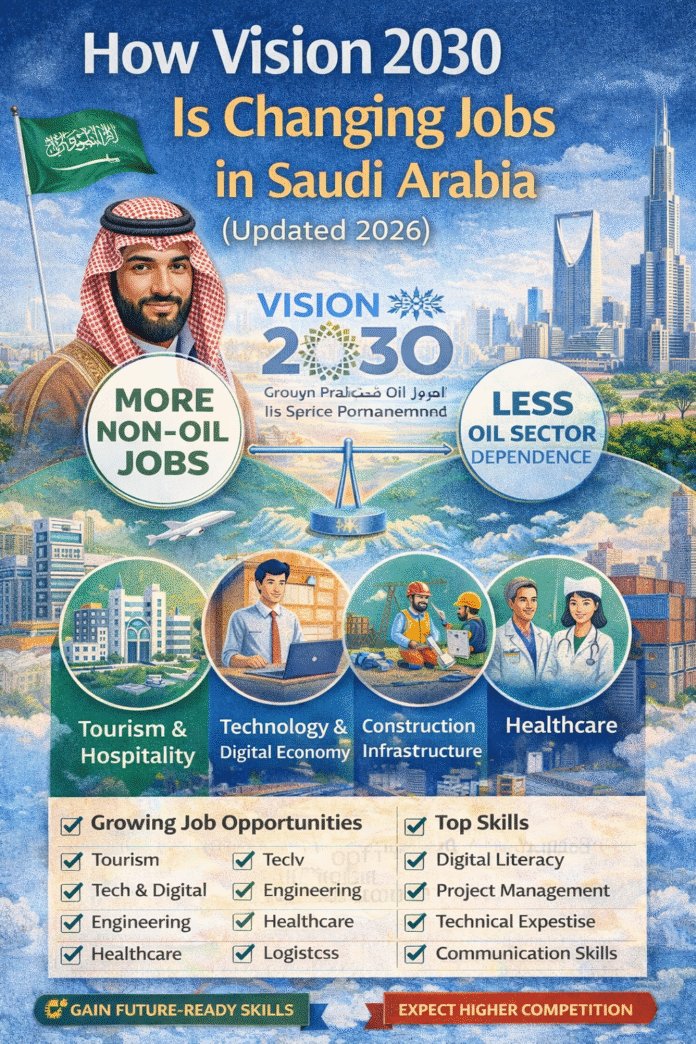
Vision 2030 jobs in Saudi Arabia are transforming the Kingdom’s employment landscape faster than ever before. As the country diversifies beyond oil, new industries, hiring priorities, and career paths are emerging for both locals and expatriates.
For professionals planning to work in Saudi Arabia, understanding how Vision 2030 is reshaping the job market is essential for career success in 2026 and beyond.
What Vision 2030 Means for Employment
Vision 2030 is a national transformation plan designed to:
Reduce reliance on oil revenue
Expand private sector employment
Increase foreign investment
Develop future-ready industries
Empower Saudi workforce participation
As a result, hiring trends across Saudi Arabia are shifting from traditional oil-sector roles to knowledge-based, service-driven, and technology-focused jobs.
Growing Vision 2030 Jobs in Saudi Arabia
Top Industries Creating Vision 2030 Jobs in Saudi Arabia
1. Tourism and Hospitality
Tourism is one of the biggest employment drivers under Vision 2030.
Key developments:
Mega tourism projects and entertainment hubs
Expansion of hotels, resorts, and travel services
Growth in aviation and event management
Demanded roles:
Hotel management professionals
Tour coordinators
Customer experience specialists
Event operations staff
Major tourism projects around NEOM and coastal destinations are creating thousands of jobs for both locals and expats.
2. Technology and Digital Economy
Saudi Arabia is rapidly building a digital economy.
High-demand tech roles:
Software developers
Cybersecurity specialists
Data analysts
AI and cloud professionals
IT project managers
Government digitalization initiatives and smart city projects are expanding employment opportunities in tech infrastructure and innovation.
3. Construction and Infrastructure
Massive infrastructure investment is fueling job creation in engineering and project management.
Growth areas:
Smart cities
Transport networks
Commercial development
Renewable energy facilities
Popular roles:
Civil engineers
Project planners
Quantity surveyors
Safety officers
Infrastructure expansion around Riyadh continues to drive long-term employment demand.
4. Healthcare Expansion
Healthcare modernization is another pillar of Vision 2030.
Hiring demand includes:
Doctors and nurses
Medical technicians
Healthcare administrators
Digital health specialists
Private healthcare investment is increasing job openings across major cities.
Future Outlook for Vision 2030 Jobs in Saudi Arabia
Employment transformation in Saudi Arabia is expected to continue beyond 2030.
Expected long-term trends:
Continued growth in non-oil sectors
Expansion of knowledge-based jobs
Greater private sector dominance
Increased global workforce integration
Saudi Arabia is positioning itself as one of the Middle East’s most dynamic job markets.
Conclusion
Vision 2030 is fundamentally reshaping the job market in Saudi Arabia. Opportunities are expanding across tourism, technology, healthcare, logistics, and infrastructure. While competition is rising, professionals who align their skills with emerging industries can benefit from strong career growth.
For job seekers, the message is clear: adapt early, develop future-ready skills, and focus on sectors driving national transformation.
Saudi Arabia’s employment landscape is changing rapidly, and those who prepare today will lead tomorrow’s workforce.
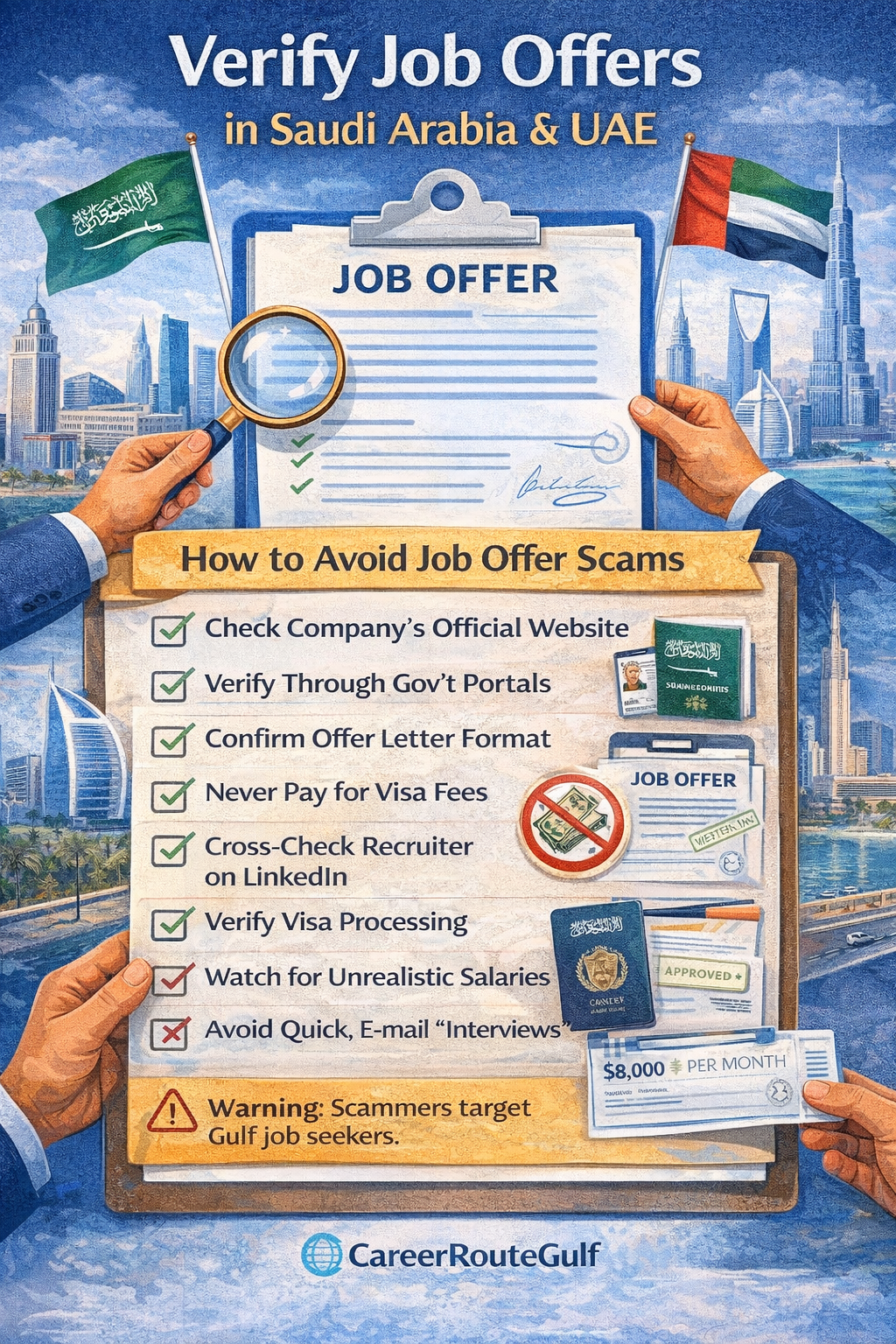
Steps to verify a genuine job offer in Saudi Arabia and UAE
Introduction: Why Job Offer Verification in the Gulf Is Critical
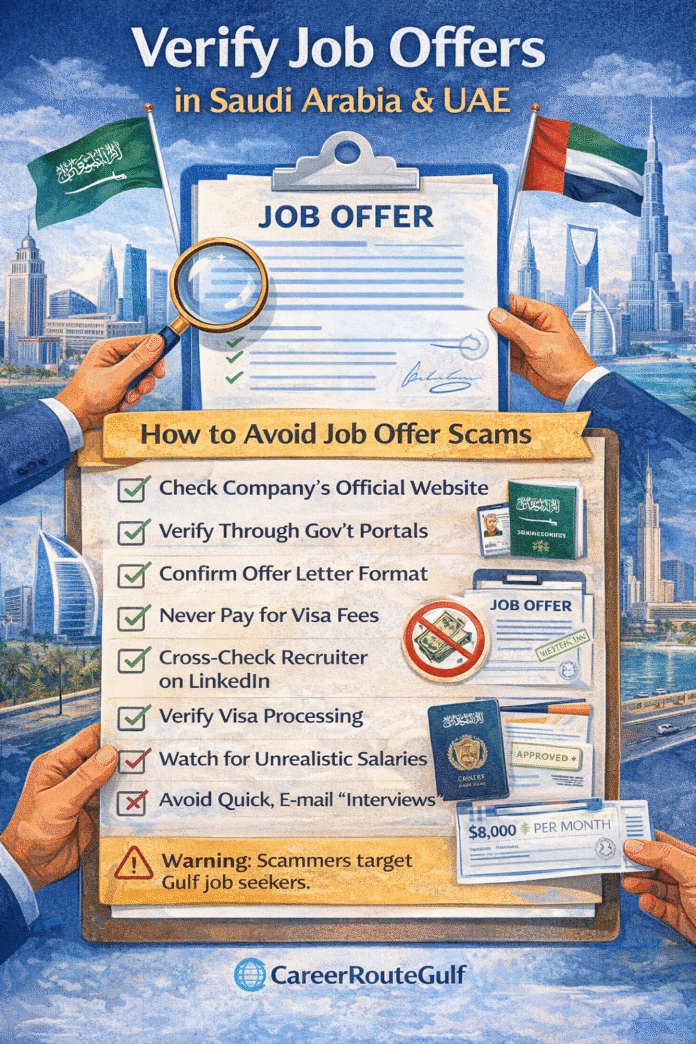
Every year, thousands of professionals apply for jobs in Saudi Arabia and the UAE hoping for better salaries, career growth, and international exposure. Unfortunately, job scams targeting Gulf employment seekers have increased significantly that,s why verify job offers in Saudi Arabia and UAE .
verify job offers because Fake job offer letters, fraudulent recruitment emails, and visa processing scams are common traps. Many victims lose money through “processing fees” or fake travel arrangements.
This guide explainsMethods to verify job offers safely, protect your personal information, and avoid employment scams.
Why Job Offer Scams Are Common in Saudi Arabia and UAE
verify job offers in Saudi Arabia and UAE Because
GCC salaries are attractive
Many candidates apply from overseas
Visa processes involve documentation
Candidates may not know local labor laws
Fraudsters often impersonate:
Real companies
Government departments
HR managers
Recruitment agencies
Understanding verification steps is your best protection.
Step 1: Check the Company’s Official Website
The first and simplest step to verify job offers in Saudi Arabia and UAE is checking the employer’s official website.
Look for:
Official company domain (not Gmail or Yahoo email)
Company registration number
Physical office address
Contact phone number
Red Flag: If the email domain does not match the company website, it may be fake.
Key points to review before accepting a job offer in GCC countries
Introduction: Why Reviewing a GCC Job Offer Letter Matters
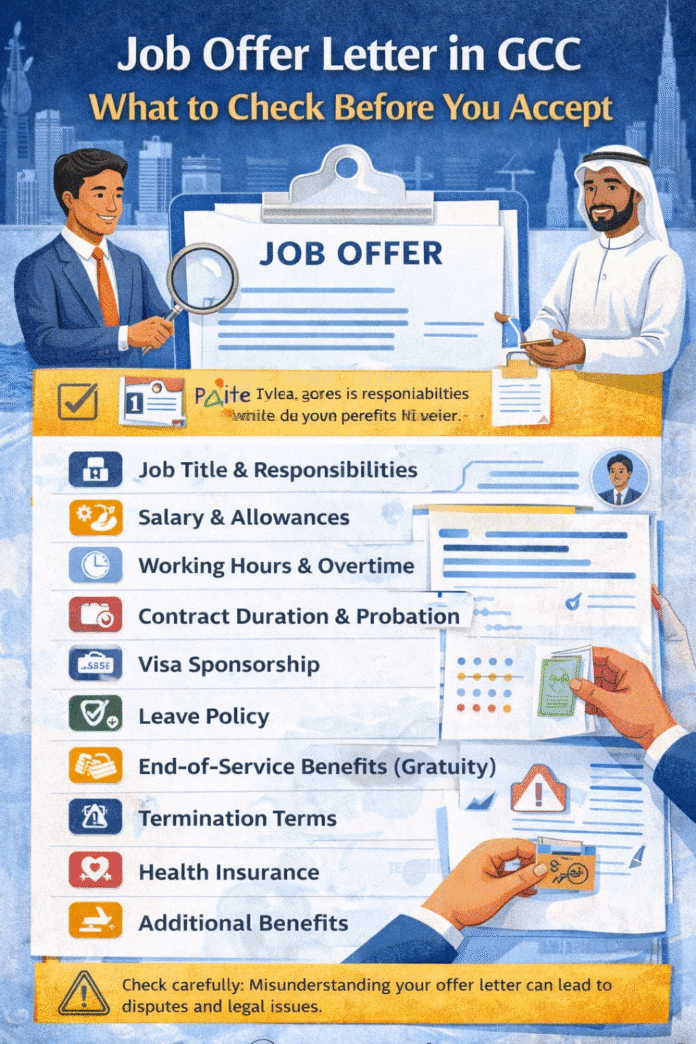
Receiving a job-offer-letter-in-gcc region is an exciting milestone for professionals aiming to work in countries like the UAE, Saudi Arabia, Qatar, Oman, Bahrain, and Kuwait. However, before accepting any offer, it is critical to carefully review the job offer letter.
In the GCC, employment is contract-based and closely tied to visa sponsorship. A poorly understood offer letter can lead to salary disputes, legal issues, or unexpected expenses after relocation. This guide explains what to check in job-offer-letter-in-gcc before accepting, helping expats make informed and secure decisions.
What Is a Job Offer Letter in the GCC?
A job offer letter in the GCC is a formal document issued by an employer outlining the key terms of employment. It usually precedes the employment contract and is often required for:
Work visa processing
Residency permit applications
Background and document verification
Although not always legally binding on its own, the offer letter sets expectations and should match the final employment contract.
1. Job Title, Role, and Responsibilities
Always confirm that your job title and responsibilities are clearly stated.
Check for:
Exact job designation
Department and reporting manager
Core responsibilities and scope of work
Why it matters: Vague roles can lead to workload expansion without salary adjustment, which is a common complaint among expats.
2. Salary Structure and Payment Details
Do not focus only on the basic salary. GCC offers usually include multiple components.
Ensure the offer letter clearly mentions:
Basic salary
Housing allowance
Transport allowance
Other fixed allowances
Payment frequency (monthly)
Currency of payment
Tip: Always evaluate the total salary package, not just the basic pay.
3. Working Hours, Days, and Overtime Policy
Standard working schedules in the Gulf vary by country.
Check for:
Weekly working days (usually Sunday to Thursday)
Daily working hours
Overtime eligibility and compensation
Reduced working hours during Ramadan
Clear terms help avoid unpaid overtime and burnout.
Most GCC countries provide an end-of-service gratuity.
Your offer should clarify:
Eligibility conditions
Calculation method
Payment timeline
Gratuity is often a significant long-term financial benefit.
8. Termination Clause and Notice Period
This is one of the most critical sections.
Review carefully:
Notice period from both sides
Immediate termination conditions
Penalties or deductions
Final settlement terms
Always ensure termination terms are fair and balanced.
9. Health Insurance and Medical Coverage
Healthcare is usually employer-provided.
Confirm:
Health insurance coverage
Inclusion of dependents (if applicable)
Hospital network details
Medical coverage is mandatory in many GCC countries.
10. Other Benefits and Allowances
Some offers include additional benefits such as:
Annual air ticket
Education allowance
Company accommodation
Relocation support
These extras significantly impact your overall cost of living.
Common Red Flags in GCC Job Offer Letters
Be cautious if:
Salary terms are vague
Verbal promises are not written
Visa sponsorship is unclear
Job role is undefined
Employer pressures immediate acceptance
If something feels unclear, ask for clarification in writing.
Should You Get the Offer Letter Reviewed?
Yes. If possible:
Compare it with local labor laws
Ask experienced expats
Consult HR professionals
Never rely only on verbal assurances.
Conclusion: Accept GCC Job Offers With Confidence
A job offer in the GCC can open doors to career growth, tax-free income, and international exposure. However, success begins with understanding your job offer letter fully before accepting.
By reviewing salary structure, visa sponsorship, benefits, and termination terms carefully, you protect yourself from future disputes and ensure a smooth transition into life in the Gulf.
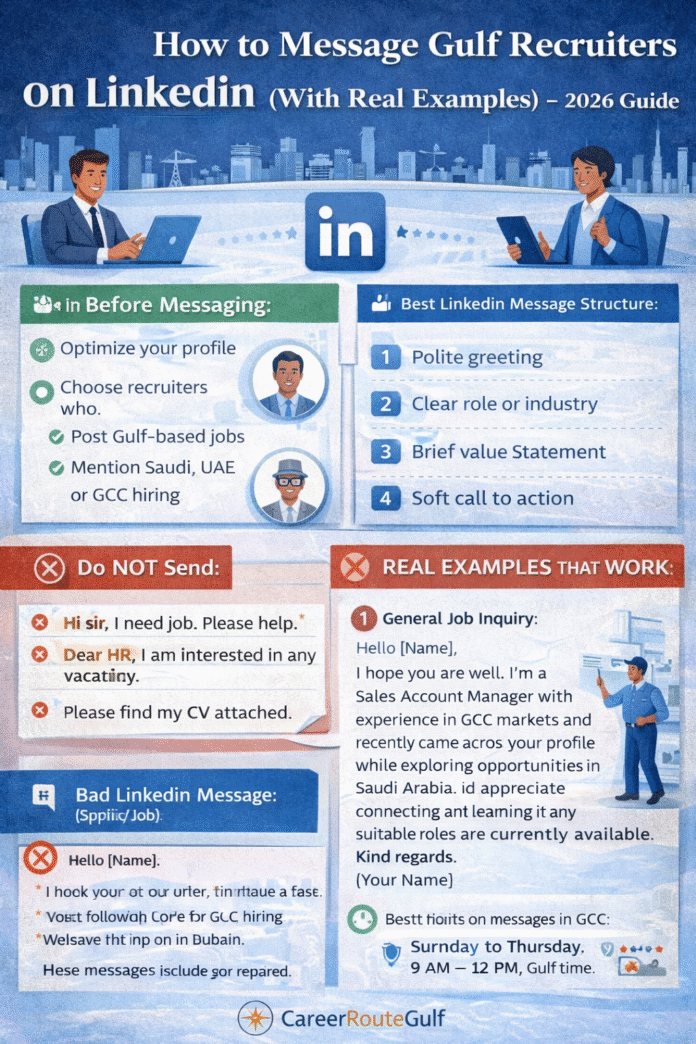
Correct and incorrect ways to message Gulf recruiters on LinkedIn
Introduction
LinkedIn is one of the most powerful tools for job seekers in the Gulf. In 2026, many interviews in Saudi Arabia, UAE, Qatar, and other GCC countries start with one well-written LinkedIn message this is about how to message Gulf recruiters on LinkedIn.
However, most job seekers message recruiters the wrong way. This guide shows how to message Gulf recruiters on LinkedIn professionally, with real examples that actually work.
Why Messaging Recruiters on LinkedIn Works in the GCC
Recruiters in the Gulf actively use LinkedIn to:
Source candidates
Screen profiles
Fill urgent roles
Verify experience
A good message can:
Get your CV reviewed faster
Bypass ATS delays
Start a real conversation
👉 Internal link: How Recruiters in the Gulf Shortlist CVs
Before You Message a Gulf Recruiter (Very Important)
I hope you are well. I’m a Sales Account Manager with experience in GCC markets and recently came across your profile while exploring opportunities in Saudi Arabia.
I’d appreciate connecting and learning if any suitable roles are currently available.
Kind regards, [Your Name]
Example 2: Applying for a Specific Job
Hello [Name],
I noticed you shared a vacancy for a Project Engineer role in Riyadh. I have 5+ years of experience in construction projects across the Gulf and would love to be considered.
May I share my CV with you?
Best regards, [Your Name]
Example 3: Follow-Up Message (After Applying)
Hello [Name],
Just following up on my earlier application for the HR Executive role in Dubai. I understand you receive many applications, but I wanted to express my continued interest.
Thank you for your time.
Regards, [Your Name]
Best Time to Message Recruiters in GCC
Sunday to Thursday
9:00 AM – 12:00 PM (Gulf time)
Avoid weekends and late nights
How Often Should You Follow Up?
Wait 7–10 days
Send only one follow-up
Keep it polite and short
👉 Internal link: Why GCC Job Applications Get Rejected Without Response
Common Mistakes That Reduce Reply Rate
Long paragraphs
Asking for “any job”
Sending CV without request
Over-messaging
Using informal language
Professional tone matters in GCC hiring.
Does Messaging Recruiters Guarantee a Job?
No, but it:
Increases visibility
Builds connections
Improves response rate
Helps bypass ATS
Used correctly, LinkedIn messaging is a powerful support tool, not a shortcut.
FAQs (For FAQ Schema)
Q1: Is it okay to message recruiters directly on LinkedIn? Yes, if done professionally and respectfully.
Q2: Should I attach my CV in the first message? No. Ask permission first.
Q3: Do Gulf recruiters reply to LinkedIn messages? Many do, especially for relevant profiles.
Conclusion
Learning how to message Gulf recruiters on LinkedIn can significantly improve your job search results in 2026. A short, polite, and targeted message often works better than dozens of online applications.