
Home Blog Page 4

Cost of Living in Saudi Arabia (2026): Riyadh, Jeddah & Dammam Compared

30
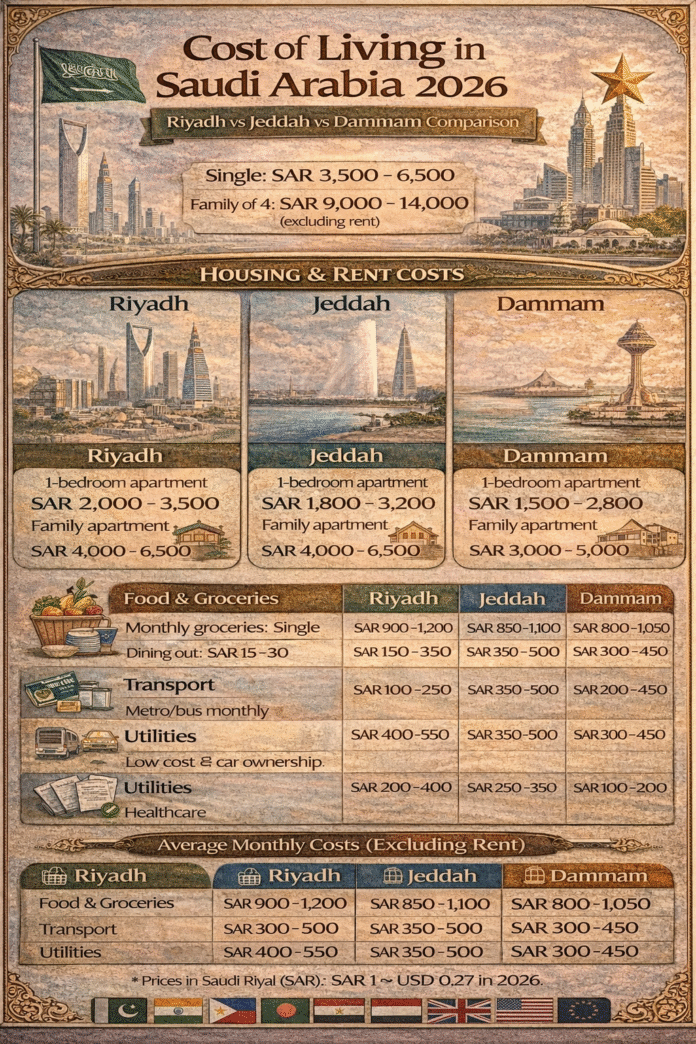
Cost of living in Saudi Arabia infographic comparing Riyadh, Jeddah, and Dammam in 2026
Cost of living comparison of Riyadh, Jeddah, and Dammam including rent, food, and transport costs

INTRODUCTION

Understanding the cost of living in Saudi Arabia is essential before relocating for work or long-term residence. While Saudi Arabia offers tax-free salaries, living expenses vary widely depending on the city, lifestyle, and housing choice.

In this 2026 guide, we compare living costs in Riyadh, Jeddah, and Dammam, helping expats and job seekers make informed decisions.


Average Monthly Living Cost in Saudi Arabia (2026)

For a single expat:

  • SAR 3,500 – 6,500 (excluding rent)

For a family of four:

  • SAR 9,000 – 14,000 (excluding rent)

Housing remains the biggest expense.


Housing & Rent Costs

Riyadh

  • 1-bedroom apartment: SAR 2,000 – 3,500
  • Family apartment: SAR 4,000 – 6,500

Jeddah

  • 1-bedroom apartment: SAR 1,800 – 3,200
  • Family apartment: SAR 3,800 – 6,000

Dammam

  • 1-bedroom apartment: SAR 1,500 – 2,800
  • Family apartment: SAR 3,000 – 5,000

Riyadh is the most expensive due to high demand and business activity.


Food & Grocery Expenses

Monthly grocery costs:

  • Single person: SAR 800 – 1,200
  • Family: SAR 2,500 – 3,500

Dining out:

  • Local meal: SAR 15 – 30
  • Mid-range restaurant: SAR 60 – 120

Imported food items are more expensive.


Transportation Costs

  • Public transport (metro/bus): SAR 100 – 250 monthly
  • Fuel: Affordable compared to global rates
  • Car ownership is common and cost-effective

Riyadh Metro has reduced daily commuting expenses.


Utilities & Internet

Average monthly costs:

  • Electricity & water: SAR 200 – 400
  • Internet: SAR 250 – 350
  • Mobile plans: SAR 100 – 200

Utility costs increase in summer due to air conditioning.


Healthcare & Insurance

  • Medical insurance is mandatory
  • Usually provided by employer
  • Private healthcare quality is high

Out-of-pocket costs are minimal with insurance coverage.


Education Costs (For Families)

International schools:

  • Annual fees: SAR 15,000 – 45,000 per child

School choice significantly affects overall cost of living.

Education and Schooling for Expat Children in the Gulf: Complete Guide 2025–2026


Is Saudi Arabia Affordable for Expats?

Yes, especially if:

  • Housing is employer-provided
  • Salary includes allowances
  • Family size is small

Tax-free income helps offset living costs.


Money-Saving Tips for Expats

  • Live outside city centers
  • Use public transport
  • Shop at local markets
  • Choose employer housing benefits

FINAL THOUGHTS

The cost of living in Saudi Arabia in 2026 remains reasonable compared to many global cities, especially considering tax-free salaries. Riyadh offers higher salaries but higher rent, while Jeddah and Dammam provide more affordable living options.

Planning your budget in advance ensures a smooth and stress-free relocation.
https://wise.com/gb/cost-of-living/saudi-arabia/

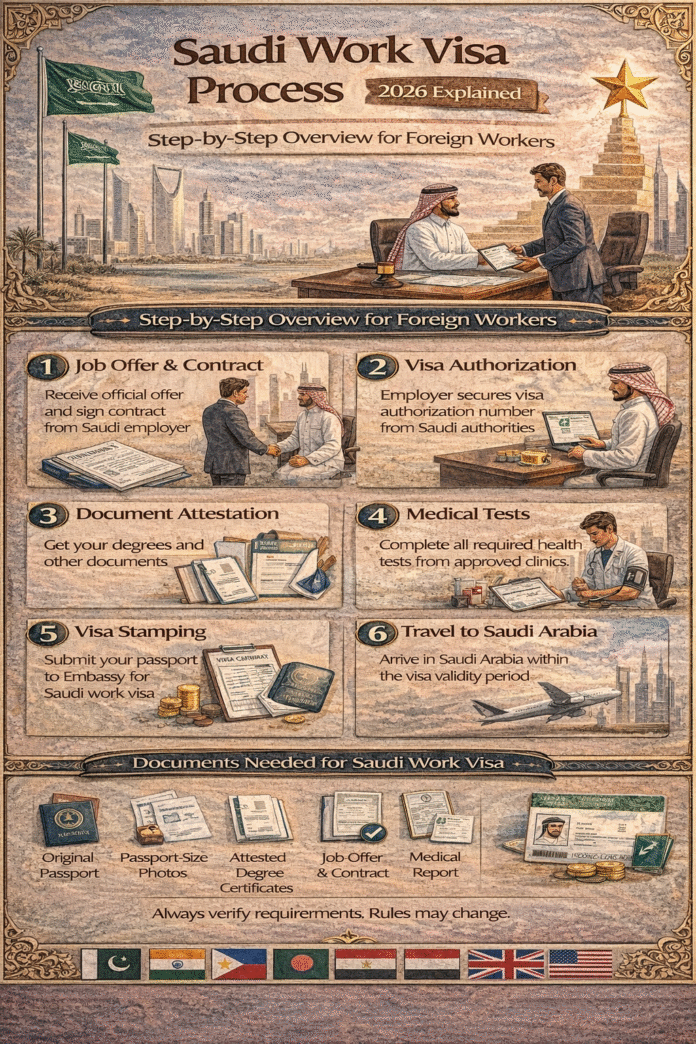
Saudi Work Visa Process 2026: Step-by-Step Guide for Expats

Saudi work visa process 2026 step-by-step infographic for expats
Step-by-step overview of the Saudi work visa process for foreign workers in 2026

Introduction

The Saudi work visa process is one of the most important steps for anyone planning to work in Saudi Arabia. Whether you are moving for a professional role, technical job, or skilled trade, understanding the correct visa procedure can save time, money, and stress. In 2026, Saudi Arabia continues to streamline its employment visa system as part of Vision 2030, making it more transparent for foreign workers.

This guide explains the Saudi work visa process step by step, including eligibility, documents, costs, and common mistakes to avoid.


What Is a Saudi Work Visa?

A Saudi work visa, also known as an employment visa, allows foreign nationals to legally live and work in the Kingdom of Saudi Arabia. It is issued only after a Saudi employer sponsors the applicant.

There are two main stages:

  1. Entry work visa issued from outside Saudi Arabia
  2. Residence permit (Iqama) issued after arrival

Who Is Eligible for a Saudi Work Visa?

To qualify under the Saudi work visa process, you must meet these conditions:

  • Have a valid job offer from a Saudi employer
  • Hold relevant educational or professional qualifications
  • Pass medical examinations
  • Clear police background verification
  • Match the profession listed on the visa

Some professions are restricted under Saudization policies, so eligibility depends on job category.


Step-by-Step Saudi Work Visa Process (2026)

Step 1: Job Offer and Contract

The process begins when a Saudi employer issues an official job offer. The contract must clearly state salary, job title, and benefits.

Step 2: Visa Authorization from Saudi Arabia

Your employer applies for a visa authorization through the Saudi Ministry of Human Resources and the Ministry of Foreign Affairs.

Step 3: Document Attestation

Required documents usually include:

  • Passport (minimum 6 months validity)
  • Educational certificates
  • Experience letters
  • Police clearance certificate

All documents must be attested by relevant authorities and the Saudi Embassy.

Step 4: Medical Examination

Applicants must complete a medical test from an approved medical center. Tests typically include blood work, X-ray, and general health screening.

Step 5: Visa Stamping

Once approved, your passport is submitted to the Saudi Embassy or authorized visa center for stamping.

Step 6: Travel to Saudi Arabia

After visa issuance, you can travel to Saudi Arabia within the visa validity period.

Step 7: Iqama Issuance

After arrival, your employer completes biometric registration and issues your Iqama, which acts as your residence ID.


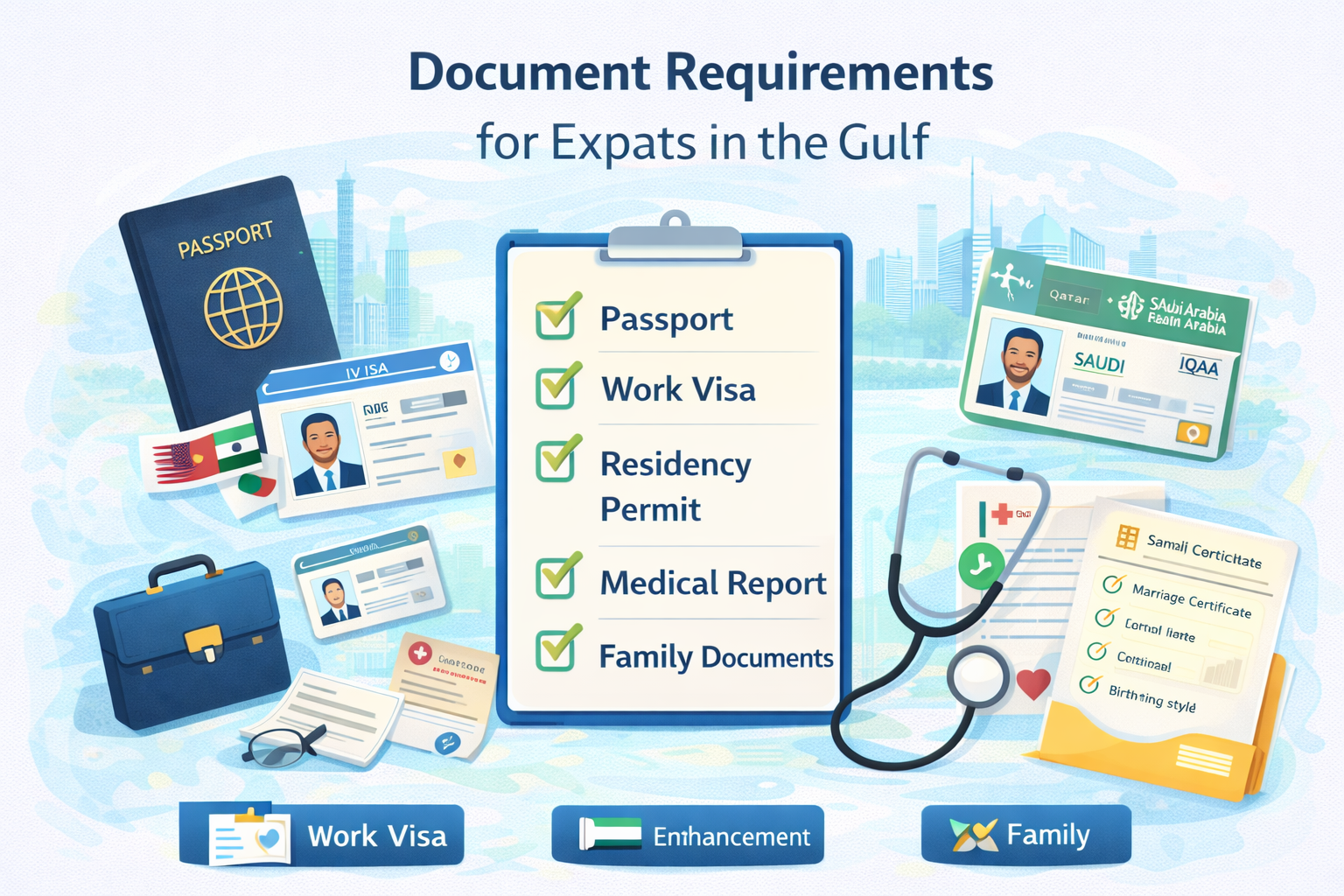
Documents Required for Saudi Work Visa

  • Original passport
  • Passport-size photographs
  • Employment contract
  • Degree certificates
  • Medical report
  • Police clearance certificate
  • Visa authorization slip

Always verify document requirements with the Saudi Embassy, as rules may change.

Document checklist for Gulf expats


Saudi Work Visa Processing Time

The Saudi work visa process typically takes:

  • 2 to 4 weeks after document submission
    Delays may occur due to document verification or high application volume.

Saudi Work Visa Fees (Approximate)

Costs vary by country and profession, but usually include:

  • Visa fee
  • Medical test fee
  • Document attestation charges

Most employers cover major visa expenses.


Common Mistakes to Avoid

  • Applying without proper document attestation
  • Mismatch between job title and qualifications
  • Using unapproved medical centers
  • Trusting unauthorized agents

Always deal directly with your employer or official visa centers.


Saudi Work Visa vs Business Visa

A work visa allows employment and long-term stay, while a business visa does not permit paid work. Using the wrong visa can lead to fines or deportation.


https://www.mofa.gov.sa/en/Pages/default.aspx


Final Thoughts

Understanding the Saudi work visa process is essential for anyone planning to work in the Kingdom in 2026. With proper documentation and a genuine employer, the process is straightforward and well-structured.

This guide helps you prepare confidently and avoid common visa-related issues before starting your career in Saudi Arabia.

Saudi Labor Law Explained for Employees (2026 Complete Guide)

0
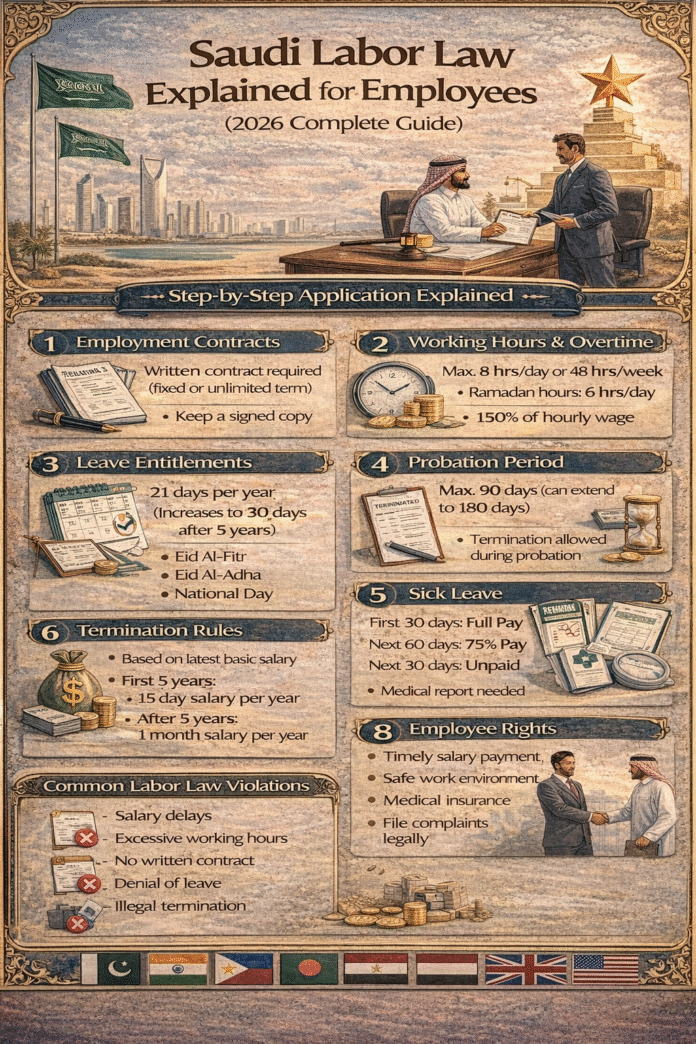
Saudi labor law for employees showing worker rights, contracts, working hours, and benefits in 2026
Saudi labor law explained for employees, covering contracts, working hours, leave, and end-of-service benefits

INTRODUCTION

Understanding Saudi labor law for employees is essential for anyone working in the Kingdom. Whether you are an expat or a local employee, Saudi labor laws protect your rights and clearly define employer responsibilities.

In 2026, Saudi Arabia continues to strengthen labor regulations to ensure fair treatment, job security, and workplace transparency. This guide explains the most important rules every employee must know.


Employment Contracts in Saudi Arabia

Every employee must have a written contract.

Types of Contracts

  • Fixed-term contract (most common for expats)
  • Unlimited contract (mainly for Saudi nationals)

Your contract must include:

  • Job title
  • Salary and benefits
  • Working hours
  • Contract duration
  • Termination terms

Always keep a signed copy.


Working Hours and Overtime Rules

According to Saudi labor law:

  • Standard working hours: 8 hours per day
  • Maximum: 48 hours per week
  • During Ramadan: 6 hours per day

Overtime Pay

  • Paid at 150% of basic hourly wage
  • Must be approved by the employer

Weekly Rest and Public Holidays

Employees are entitled to:

  • One weekly rest day (usually Friday)
  • Paid public holidays, including:
    • Eid Al-Fitr
    • Eid Al-Adha
    • National Day

Annual Leave Entitlement

Saudi labor law for employees provides:

  • 21 days paid annual leave after one year
  • 30 days after five years of service

Unused leave may be compensated as per company policy.


Sick Leave Policy

Employees are entitled to:

  • First 30 days: Full pay
  • Next 60 days: 75% pay
  • Next 30 days: Unpaid leave

Medical reports from approved hospitals are required.


Probation Period Rules

  • Maximum probation period: 90 days
  • Can be extended to 180 days (with agreement)
  • Either party may terminate during probation

Termination and Notice Period

Notice Period

  • Fixed-term contracts: As stated in contract
  • Unlimited contracts:
    • 60 days (monthly salary)
    • 30 days (daily wage)

Unlawful termination may lead to compensation.


End-of-Service Benefits (ESB)

One of the most important employee rights.

Calculation

  • First 5 years: Half month salary per year
  • After 5 years: One full month salary per year

Calculated based on last basic salary.

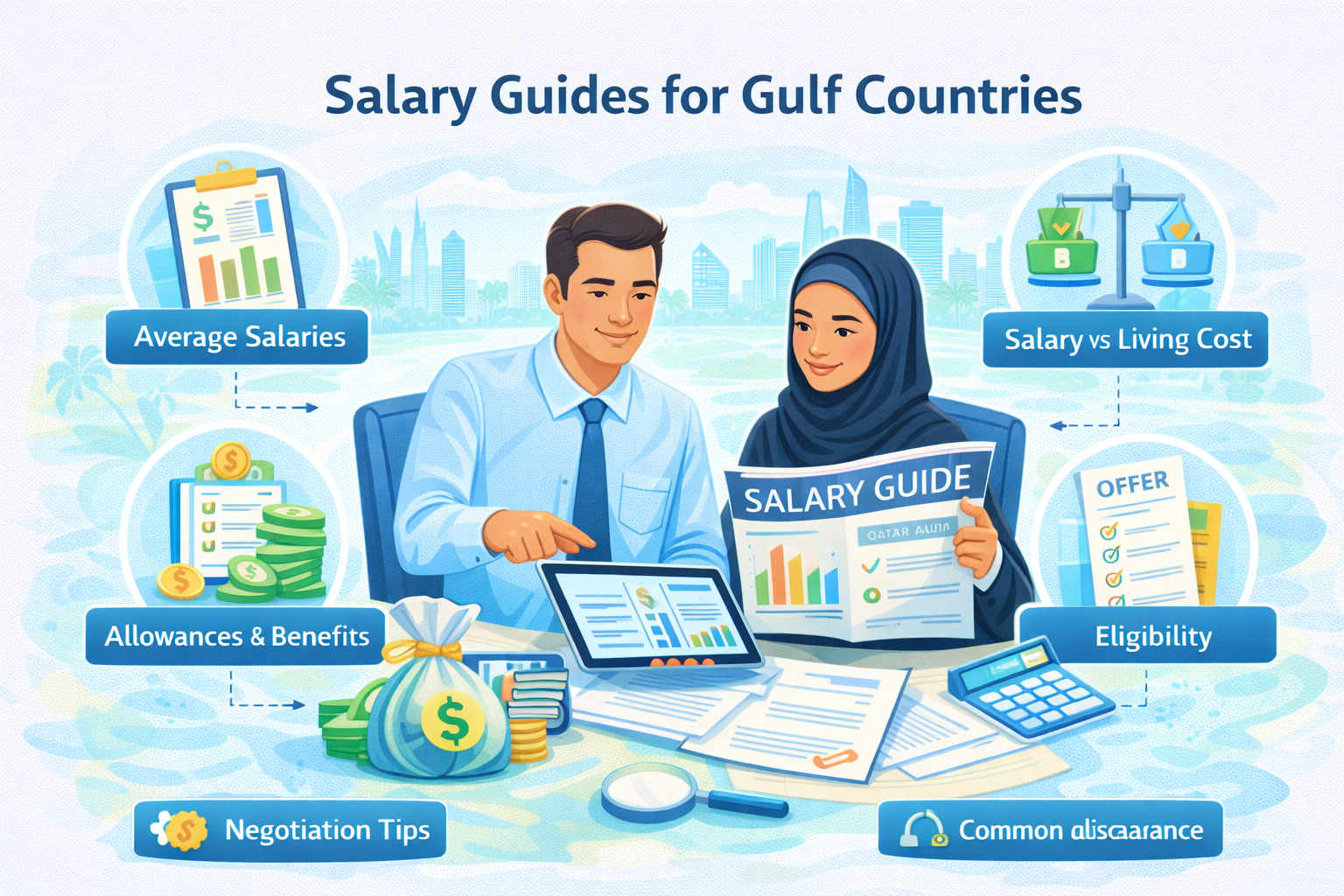
Salary guide for gulf countires


Employee Rights Under Saudi Labor Law

Employees have the right to:

  • Receive salary on time
  • Work in a safe environment
  • Access medical insurance
  • File complaints with labor courts
  • Transfer jobs legally under certain conditions

Common Labor Law Violations

  • Salary delays
  • Excessive working hours
  • No written contract
  • Denial of leave
  • Illegal termination

Employees can report violations through official channels.


How to Protect Yourself as an Employee

  • Read contracts carefully
  • Keep copies of documents
  • Track salary payments
  • Know your legal rights
  • Avoid illegal work arrangements

FREQUENTLY ASKED QUESTIONS

Does Saudi labor law apply to expats?

Yes. Saudi labor law protects both expats and Saudi nationals.

Can employers delay salary payments?

No. Salaries must be paid on time through the Wage Protection System.

Is overtime mandatory?

No. Overtime requires employee consent and compensation.


CONCLUSION

Understanding Saudi labor law for employees helps you work confidently and legally in the Kingdom. By knowing your rights related to contracts, working hours, leave, and end-of-service benefits, you can protect yourself from unfair practices and build a secure career in Saudi Arabia in 2026.

https://www.qiwa.sa/en/labor-law

Saudi Arabia Work Visa Process Explained (2026 Complete Guide)

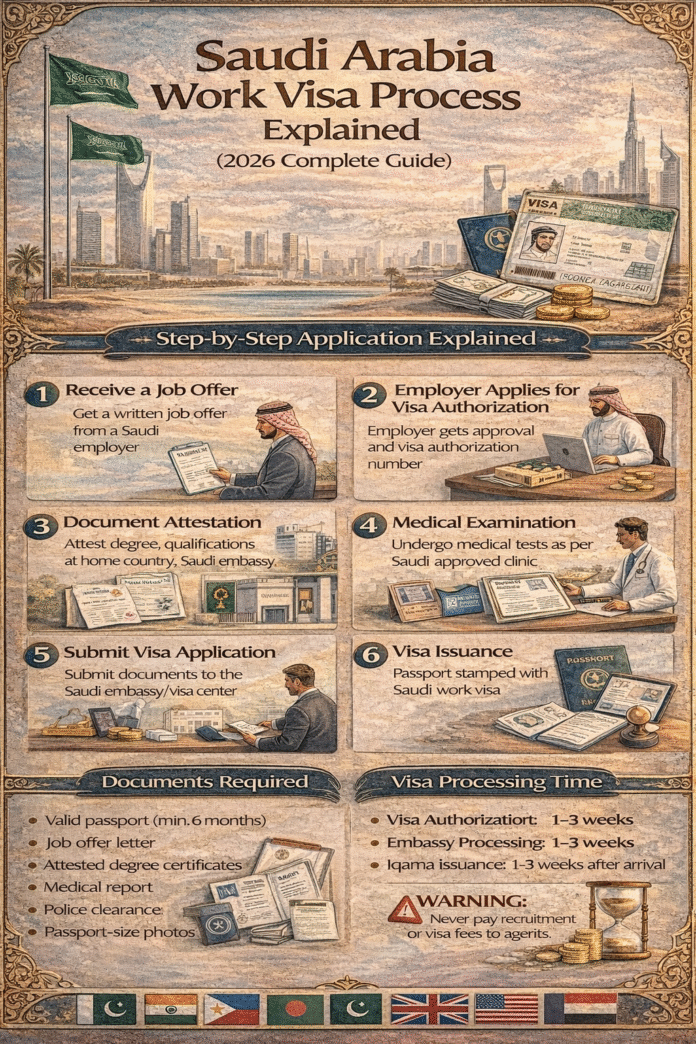
Saudi Arabia work visa process showing step-by-step application, required documents, and processing time in 2026

INTRODUCTION

Understanding the Saudi Arabia work visa process is essential before accepting a job offer in the Kingdom. Every foreign employee must obtain a valid work visa and residence permit to work legally in Saudi Arabia.

In 2026, the visa system is more structured and employer-driven. This guide explains the complete process, required documents, timelines, and how to avoid common visa-related scams.


What Is a Saudi Arabia Work Visa

A Saudi work visa is an employment visa issued to foreign nationals who have secured a job offer from a Saudi employer. It allows the holder to enter Saudi Arabia and later obtain an Iqama, which is the official residence permit.


Types of Saudi Work Visas

1. Employment (Work) Visa

  • Most common visa for expats
  • Issued for long-term employment
  • Requires employer sponsorship

2. Temporary Work Visa

  • Short-term projects
  • Valid for limited duration
  • No Iqama issued

3. Business Visit Visa (Not for Employment)

  • Meetings or training only
  • Does NOT allow paid work

Step-by-Step Saudi Arabia Work Visa Process (2026)

Step 1: Receive a Job Offer

You must receive a written job offer or contract from a registered Saudi employer.


Step 2: Employer Applies for Visa Authorization

The employer:

  • Requests a visa block from Saudi authorities
  • Issues a visa authorization number

This step is fully handled by the employer.


Step 3: Document Attestation

You must prepare and attest:

  • Degree certificates
  • Professional qualifications

Attestation usually includes:

  • Home country authorities
  • Saudi embassy

Step 4: Medical Examination

A medical test from an approved clinic is mandatory. This includes:

  • Blood tests
  • X-ray
  • General health screening

Step 5: Submit Visa Application

Submit documents to the Saudi embassy or authorized visa center.


Step 6: Visa Issuance

Once approved, your passport will be stamped with a Saudi work visa.


Step 7: Travel to Saudi Arabia

After entry, your employer will start the Iqama process.


Documents Required for Saudi Work Visa

  • Valid passport (minimum 6 months)
  • Job offer letter
  • Attested educational certificates
  • Medical report
  • Police clearance (if required)
  • Passport-size photographs

What Is an Iqama

The Iqama is your Saudi residence permit. It allows you to:

  • Live and work legally
  • Open a bank account
  • Rent accommodation
  • Access healthcare

Your employer is responsible for issuing and renewing it.


Saudi Work Visa Processing Time

  • Visa authorization: 1–3 weeks
  • Embassy processing: 1–2 weeks
  • Iqama issuance: 1–3 weeks after arrival

Processing times may vary by nationality and profession.


Cost of Saudi Work Visa

  • Visa fee: Paid by employer (in most cases)
  • Medical test: Paid by employee or employer
  • Iqama fee: Paid by employer

⚠️ You should never pay recruitment or visa fees to agents.


Common Saudi Work Visa Scams

  • Fake job offers without company email
  • Requests for visa processing fees
  • No written contract
  • WhatsApp-only communication

Always verify employer details before proceeding.

Work Visas and Residency Rules in the Gulf: A Complete Guide for Expats


Saudi Work Visa Rules You Must Know

  • You cannot work for another employer without transfer
  • Iqama renewal is mandatory
  • Leaving Saudi Arabia requires exit permits
  • Changing jobs requires legal transfer

Frequently Asked Questions

Can I apply for a Saudi work visa without a job offer?

No. A job offer is mandatory.

Is Saudi work visa transferable?

Yes, under specific conditions and legal approval.

Do I need Arabic language skills?

Not mandatory for most roles.


Conclusion

The Saudi Arabia work visa process in 2026 is straightforward when handled legally through a genuine employer. By understanding each step, preparing correct documents, and avoiding unauthorized agents, expats can work safely and confidently in Saudi Arabia.

This guide complements your job search and helps you move to the Kingdom without risk.

https://www.naukrigulf.com/keller-limited-careers-cid-121275?inventoryType=&inventoryId=121275

Jobs in Saudi Arabia for Expats (2026 Complete Guide)

2
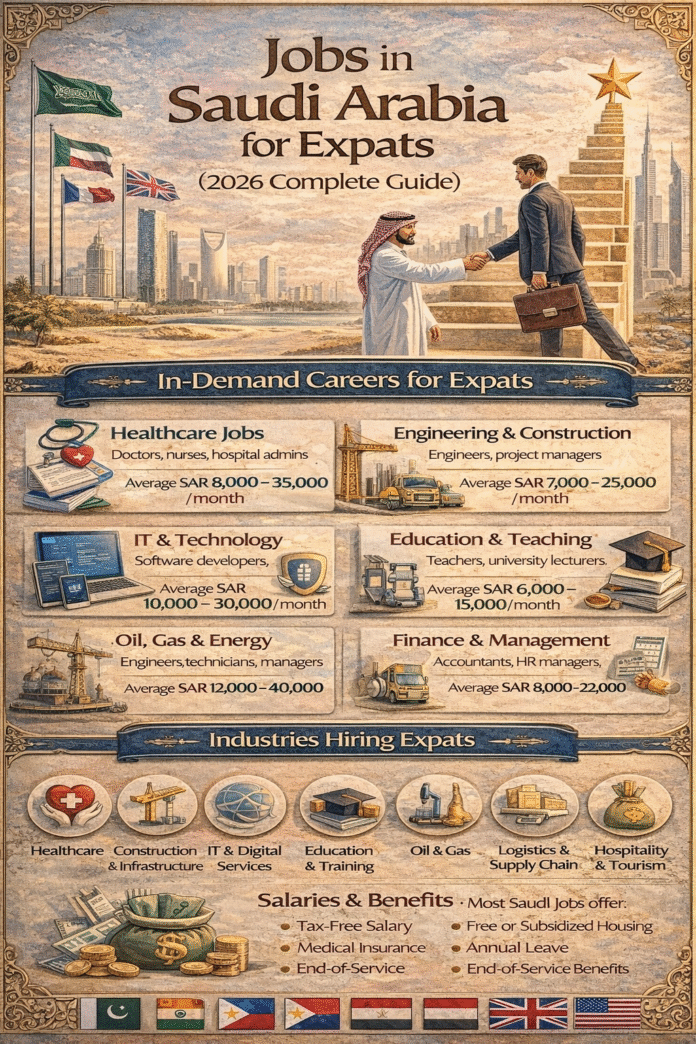
Jobs in Saudi Arabia for expats showing in-demand careers, salaries, and hiring sectors in 2026

INTRODUCTION

Finding jobs in Saudi Arabia for expats has become easier and more promising in 2026 due to rapid economic growth, mega projects, and Saudi Vision 2030. The Kingdom is actively hiring skilled foreign professionals across healthcare, construction, IT, education, oil and gas, and management sectors.

Whether you are applying from abroad or already in the Gulf, this complete guide will help you understand the Saudi job market, salaries, visa process, and safe ways to apply.


Why Saudi Arabia Is Hiring Expats in 2026

Saudi Arabia is undergoing major transformation under Vision 2030. This has created thousands of new roles for foreign workers.

Key reasons expats are in demand:

  • Mega projects like NEOM, Red Sea Project, Qiddiya
  • Expansion in healthcare and education
  • Digital transformation and IT growth
  • Infrastructure and construction boom
  • Shortage of highly skilled professionals

Most In-Demand Jobs in Saudi Arabia for Expats

1. Healthcare Jobs

  • Doctors and specialists
  • Nurses and medical technicians
  • Hospital administrators

Average Salary: SAR 8,000 – 35,000/month


2. Engineering & Construction

  • Civil, electrical, and mechanical engineers
  • Project managers
  • Safety officers and site supervisors

Average Salary: SAR 7,000 – 25,000/month


3. IT & Technology

  • Software developers
  • Cybersecurity experts
  • Data analysts
  • Cloud engineers

Average Salary: SAR 10,000 – 30,000/month


4. Education & Teaching

  • English teachers
  • STEM subject teachers
  • University lecturers

Average Salary: SAR 6,000 – 15,000/month


5. Oil, Gas & Energy

  • Petroleum engineers
  • Technicians
  • Operations managers

Average Salary: SAR 12,000 – 40,000/month


6. Finance & Management

  • Accountants
  • Auditors
  • HR managers
  • Business analysts

Average Salary: SAR 8,000 – 22,000/month


Industries Hiring Expats in Saudi Arabia

  • Healthcare
  • Construction & Infrastructure
  • IT & Digital Services
  • Education & Training
  • Oil & Gas
  • Logistics & Supply Chain
  • Hospitality & Tourism

Who Can Apply for Jobs in Saudi Arabia

Expats commonly hired include candidates from:

  • Pakistan
  • India
  • Philippines
  • Bangladesh
  • Egypt
  • UK, Europe, and Africa

Basic requirements:

  • Relevant qualification
  • Experience (2–5 years preferred)
  • Clean medical report
  • Valid passport

Saudi Arabia Work Visa Basics (Brief Overview)

To work legally, you need:

  • Job offer from a Saudi employer
  • Saudi work visa
  • Iqama (residence permit)

Recruitment Tips for GCC Jobs: A Practical Guide for Employers & Job Seekers (2026)


Best Job Portals for Saudi Arabia

Use trusted platforms only:

  • LinkedIn
  • Bayt
  • GulfTalent
  • Naukrigulf
  • Company career pages

Avoid random WhatsApp or Facebook offers asking for fees.


How to Apply for Jobs in Saudi Arabia Safely

  • Apply through official websites
  • Never pay recruitment or visa fees
  • Verify company email domains
  • Avoid agents without licenses
  • Read the employment contract carefully

Salary & Benefits for Expats

Most Saudi jobs offer:

  • Tax-free salary
  • Free or subsidized accommodation
  • Medical insurance
  • Annual leave
  • Return air ticket
  • End-of-service benefits

Cost of Living Considerations

Major cities:

  • Riyadh
  • Jeddah
  • Dammam

Costs vary based on lifestyle and family size. Salaries are usually adjusted accordingly.


Common Mistakes Expats Make

  • Accepting offers without written contracts
  • Paying fake agents
  • Not checking job roles clearly
  • Ignoring Saudi labor laws

Future Job Outlook in Saudi Arabia

With Vision 2030 continuing beyond 2026, demand for foreign professionals is expected to remain strong, especially in:

  • Technology
  • Healthcare
  • Renewable energy
  • Education
  • Project management

FREQUENTLY ASKED QUESTIONS

Can expats still get jobs in Saudi Arabia in 2026?

Yes. Skilled expats are still in high demand across multiple sectors.

Is Saudi Arabia good for long-term careers?

Yes, especially for professionals seeking tax-free income and large-scale project exposure.

Do I need Arabic to work in Saudi Arabia?

Not mandatory for most roles, but basic Arabic is an advantage.


CONCLUSION

Jobs in Saudi Arabia for expats remain one of the best career opportunities in the Gulf region in 2026. With competitive salaries, tax-free income, and large-scale projects, Saudi Arabia offers strong professional growth for skilled foreign workers.

By using trusted job portals, understanding visa requirements, and avoiding scams, expats can successfully build rewarding careers in the Kingdom.

https://www.naukrigulf.com/jobs-in-saudi-arabia

Career Growth Strategies in GCC: How to Advance in Your Job (2026)

0
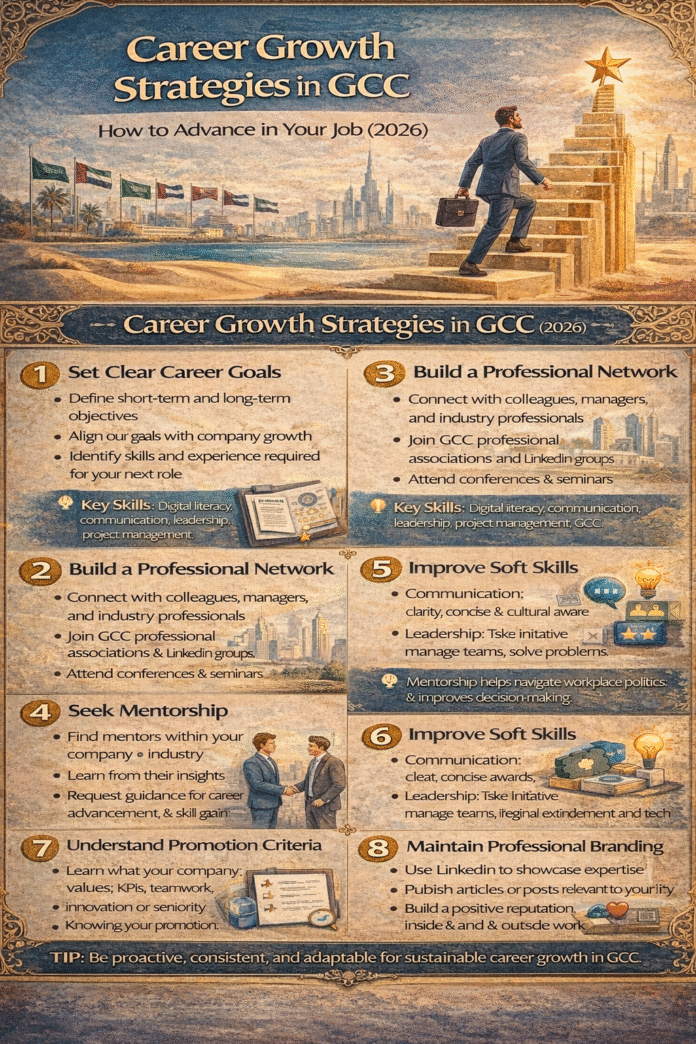
Career growth strategies for GCC professionals in UAE, Qatar, Saudi Arabia, and other Gulf countries in 2026
How to advance your career and achieve professional growth in GCC countries in 2026

INTRODUCTION

Achieving career growth in GCC requires more than just hard work. Professionals need strategic planning, continuous skill improvement, and an understanding of local workplace dynamics.

Whether you work in the UAE, Qatar, Saudi Arabia, or other Gulf countries, knowing how to position yourself for promotions, build your professional brand, and acquire key skills is essential in 2026.

This guide shares actionable strategies to help GCC professionals climb the career ladder efficiently.


1. Set Clear Career Goals

  • Define short-term and long-term objectives
  • Align your goals with company growth
  • Identify the skills and experience required for your next role

Tip: Write a personal career roadmap and review it quarterly.


2. Continuous Skills Improvement

  • Enroll in online courses or certifications relevant to your field
  • Stay updated with industry trends in GCC
  • Attend workshops and webinars

Key Skills: Digital literacy, communication, leadership, project management, and GCC market knowledge

Communication skills for professional and personal success


3. Build a Professional Network

  • Connect with colleagues, managers, and industry professionals
  • Join GCC-focused professional associations and LinkedIn groups
  • Attend conferences and seminars

Networking accelerates career growth and uncovers new opportunities.


4. Seek Mentorship

  • Find mentors within your company or industry
  • Learn from their experiences and insights
  • Request guidance for career advancement and skill development

Mentorship helps navigate workplace politics and improves decision-making.


5. Track and Showcase Your Achievements

  • Keep a record of projects, awards, and measurable results
  • Share accomplishments during performance reviews
  • Update your resume and LinkedIn profile regularly

Quantifiable results strengthen your case for promotions.


6. Improve Soft Skills

  • Communication: Clear, concise, and culturally aware
  • Leadership: Take initiative, manage teams, and solve problems
  • Adaptability: Adjust to changing work environments and technologies

Soft skills are critical for leadership roles in GCC companies.


7. Understand Promotion Criteria

  • Learn what your company values: KPIs, teamwork, innovation, or seniority
  • Request regular feedback
  • Prepare to meet or exceed expectations for advancement

Knowing the promotion path helps you target your efforts strategically.


8. Maintain Professional Branding

  • Use LinkedIn to showcase expertise
  • Publish articles or posts relevant to your industry
  • Build a positive reputation internally and externally

A strong professional brand attracts opportunities in GCC.


9. Balance Work-Life for Sustainable Growth

  • Avoid burnout by managing time and priorities
  • Maintain physical and mental well-being
  • Build relationships both inside and outside work

Sustainable growth comes from consistent performance over time.


10. Prepare for Internal and External Opportunities

  • Apply for higher roles internally
  • Explore lateral moves for skill growth
  • Keep an eye on the GCC job market for career-enhancing roles

Flexibility improves long-term career trajectory.


FREQUENTLY ASKED QUESTIONS

How fast can I grow in GCC?

Career growth depends on skill set, performance, and company culture, but consistent effort often yields promotions within 2–3 years.

Should I change companies for faster growth?

Yes, strategic moves can accelerate growth if internal opportunities are limited.

Are certifications important for career growth?

Absolutely. GCC employers value certified skills that match industry needs.


CONCLUSION

Career growth in GCC is achievable with strategic planning, continuous learning, networking, and professional branding. By following these strategies, professionals can advance their careers, achieve promotions, and secure leadership roles in UAE, Qatar, Saudi Arabia, Oman, Bahrain, and Kuwait in 2026.

https://www.adecco.com/en-sa/jobseeker

Salary Negotiation Tips in GCC: How to Get Paid What You Deserve (2026)

0
https://www.scribd.com/document/975832296/Salary-Guide-2026-Michael-Page-Saudi-Arabia
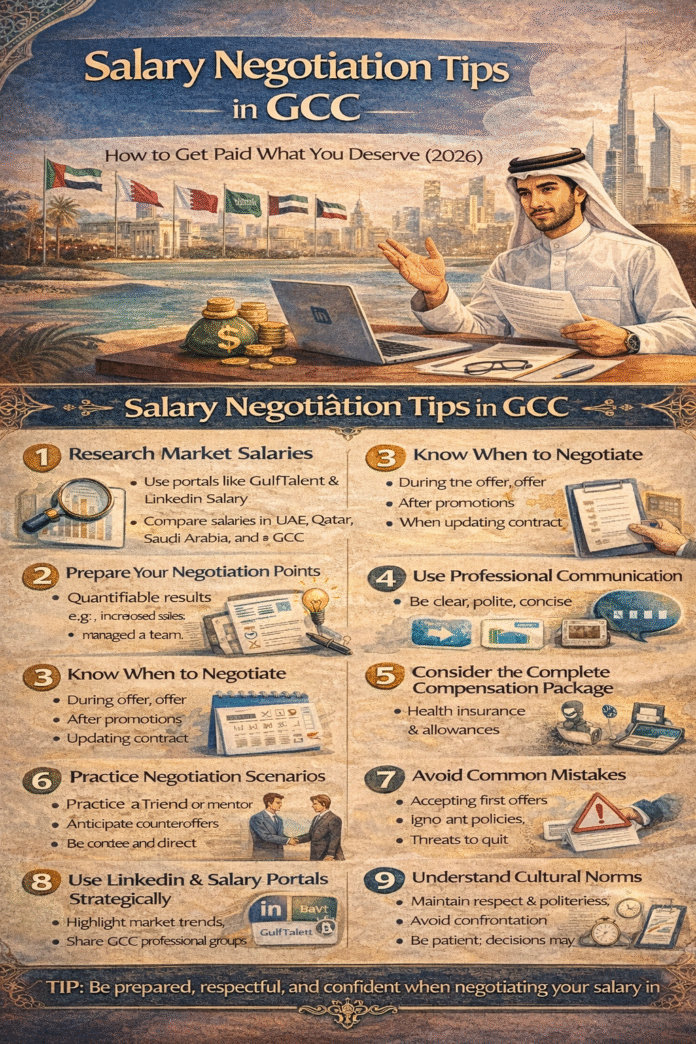
Salary negotiation tips in GCC for UAE, Qatar, and Gulf jobs in 2026

INTRODUCTION

Negotiating your salary is a critical step in securing fair compensation, yet many job seekers in the GCC struggle to ask for what they deserve. With salary negotiation in GCC becoming increasingly important in 2026, professionals must understand the market, prepare evidence of their value, and approach conversations strategically.

This guide provides practical tips to negotiate your salary confidently, avoid common mistakes, and maximize your earning potential across GCC countries.


1. Research Market Salaries Before Negotiating

Before negotiating, know your worth.

Steps:

  • Use salary portals like GulfTalent, Bayt, and LinkedIn Salary
  • Compare roles in UAE, Qatar, Saudi Arabia, and other GCC countries
  • Consider industry, experience, and company size

Tip: Being informed strengthens your negotiation position.

Gulf Job Market 2025: In-Demand Jobs, Salaries & Career Opportunities for Expats


2. Prepare Your Negotiation Points

Document your achievements and skills that justify higher pay.

  • Quantifiable results (e.g., increased sales, managed a team)
  • Certifications or technical skills
  • Years of experience in the GCC market

A clear justification shows your value beyond your job title.


3. Know When to Negotiate

Timing is crucial.

  • During the job offer stage
  • After receiving a promotion or new responsibilities
  • When updating a contract

Tip: Avoid negotiating too early or too late in your employment cycle.


4. Use Professional Communication

Communicate your request politely and confidently.

  • Avoid aggressive language
  • Use numbers and data to support your request
  • Be concise and direct

Example:
“Based on my experience and market rates for similar roles in Qatar, I would like to discuss a salary of QAR XX,XXX per month.”


5. Consider the Complete Compensation Package

Salary isn’t everything.

  • Look at benefits: health insurance, housing allowance, transportation
  • Vacation and leave policies
  • End-of-service benefits (per GCC labor laws)

Sometimes non-monetary perks can outweigh base salary.


6. Practice Negotiation Scenarios

Role-play with a friend or mentor.

  • Practice common negotiation dialogues
  • Anticipate counteroffers
  • Prepare responses to pushback

Confidence during negotiation increases success rates.


7. Avoid Common Mistakes

  • Accepting the first offer without review
  • Ignoring company policies or labor laws
  • Threatening to leave immediately
  • Being unprepared with data

Tip: Negotiation is a discussion, not a confrontation.


8. Use LinkedIn and Salary Portals Strategically

  • Highlight market trends
  • Share certifications and accomplishments
  • Join GCC professional groups for salary insights

This helps you present an informed case to recruiters.


9. Understand Cultural Norms in GCC Negotiations

  • Maintain respect and politeness
  • Avoid confrontation
  • Be patient; decisions may take time

Being culturally aware ensures smoother negotiation.


10. Know Your Bottom Line

Decide the minimum salary you are willing to accept.

  • Don’t compromise below your value
  • Be ready to walk away if the offer is unfair

Clarity about your limits protects your interests.


FREQUENTLY ASKED QUESTIONS

Is salary negotiation common in GCC?

Yes. Employers expect professionals to negotiate, especially in UAE and Qatar.

Should fresh graduates negotiate?

Yes, but base it on market data and internship achievements.

When is the best time to discuss benefits?

After receiving the offer but before signing the contract.


CONCLUSION

Mastering salary negotiation in GCC is essential for maximizing your career earnings. Research market rates, prepare strong points, understand cultural nuances, and communicate professionally. By following these strategies, you can confidently secure a fair salary and benefits package in 2026.

Salary guide for gulf countires

https://www.scribd.com/document/975832296/Salary-Guide-2026-Michael-Page-Saudi-Arabia

Common Job Search Scams in GCC and How to Avoid Them (2026)

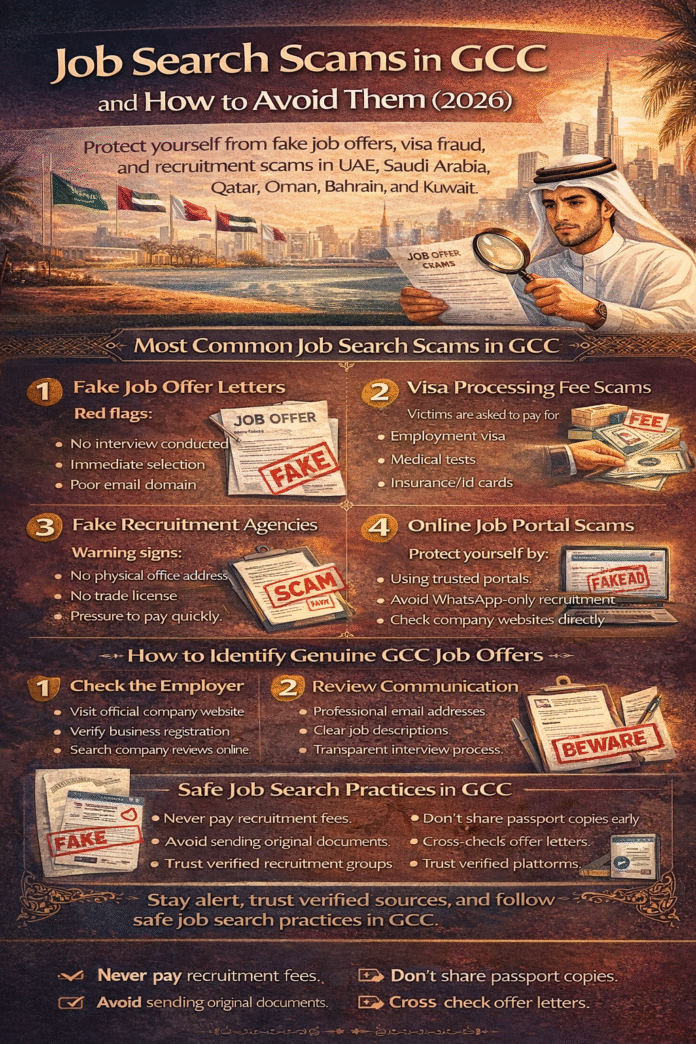
Job search scams in GCC and how to identify and avoid fake job offers in 2026
Common job search scams in GCC countries and practical ways to avoid fake job offers in 2026

INTRODUCTION

Job search scams in GCC have increased as more people look for work in the UAE, Qatar, Saudi Arabia, Oman, Bahrain, and Kuwait. Fraudsters target job seekers with fake offers, false promises, and illegal visa schemes.

Understanding how these scams work is essential to protect your money, personal information, and career. This guide explains the most common job search scams in GCC and how to avoid them safely in 2026.


Why Job Search Scams Are Common in GCC

GCC countries attract millions of job seekers every year. Scammers take advantage of:

  • High demand for Gulf jobs
  • Overseas applicants unfamiliar with local laws
  • Online recruitment platforms
  • Urgency created by fake job offers

Awareness is the first step to prevention.


Most Common Job Search Scams in GCC

1. Fake Job Offer Letters

Scammers send professional-looking offer letters claiming to be from well-known companies.

Red flags:

  • No interview conducted
  • Immediate selection
  • Poor email domain (Gmail instead of company email)

Legitimate GCC employers always conduct interviews.


2. Visa Processing Fee Scams

Victims are asked to pay for:

  • Employment visa
  • Medical tests
  • Insurance or ID cards

Important:
In GCC countries, employers pay visa costs, not job seekers.


3. Fake Recruitment Agencies

Fraud agencies promise guaranteed jobs in exchange for registration fees.

Warning signs:

  • No physical office address
  • No trade license
  • Pressure to pay quickly

Always verify agencies before engaging.


4. Online Job Portal Scams

Fake job ads are posted on social media and unofficial websites.

Protect yourself by:

  • Using trusted portals
  • Avoiding WhatsApp-only recruitment
  • Checking company websites directly

5. Contract Replacement Scams

Candidates receive one contract online but are offered different terms after arrival.

How to avoid:

  • Verify contracts carefully
  • Confirm job details with HR
  • Keep written communication records

How to Identify Genuine GCC Job Offers

Check the Employer

  • Visit official company website
  • Verify business registration
  • Search company reviews online

Review Communication

  • Professional email addresses
  • Clear job descriptions
  • Transparent interview process

Verify Salary and Benefits

  • Unrealistic salaries are suspicious
  • Benefits should align with GCC labor laws

Safe Job Search Practices in GCC

To avoid job search scams in GCC:

  • Never pay recruitment fees
  • Do not share passport copies early
  • Avoid sending original documents
  • Cross-check offer letters carefully
  • Trust verified recruitment platforms

These steps significantly reduce risk.


What to Do If You Encounter a Job Scam

If you suspect fraud:

  • Stop communication immediately
  • Do not send money or documents
  • Report the listing to the job portal
  • Inform local cybercrime authorities
  • Warn others in professional groups

Early action prevents further damage.


Legal Protection for Job Seekers in GCC

Most GCC countries have strict cybercrime and labor laws.

Authorities take job fraud seriously, especially:

  • Visa scams
  • Identity theft
  • Fake recruitment agencies

Reporting scams helps protect future job seekers.


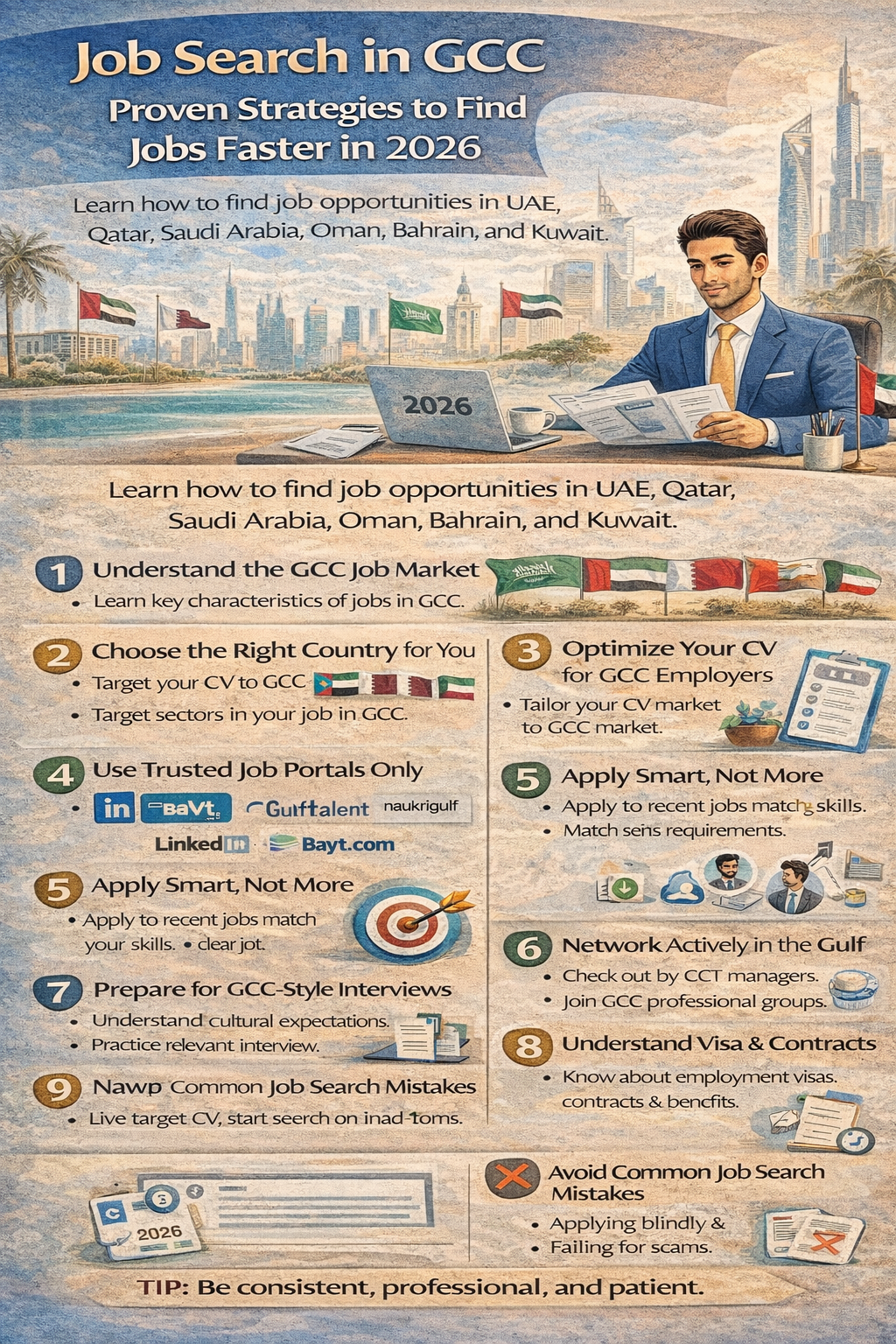
Job Search in GCC Proven Strategies to Find Jobs Faster in 2026


FREQUENTLY ASKED QUESTIONS

Are job search scams common in GCC?

Yes, especially targeting overseas job seekers unfamiliar with local hiring practices.

Do real employers ask for money?

No. Legitimate employers never charge job seekers.

How can I verify a job offer?

Check company credentials, conduct direct communication, and confirm via official channels.


CONCLUSION

Understanding job search scams in GCC is essential for a safe and successful career journey. By staying informed, verifying job offers, and following safe job search practices, you can protect yourself from fraud and focus on real opportunities in 2026.

Stay alert, stay informed, and search smart.

https://www.founditgulf.com/

Job Search Strategies in GCC: How to Find Jobs Faster in 2026

1
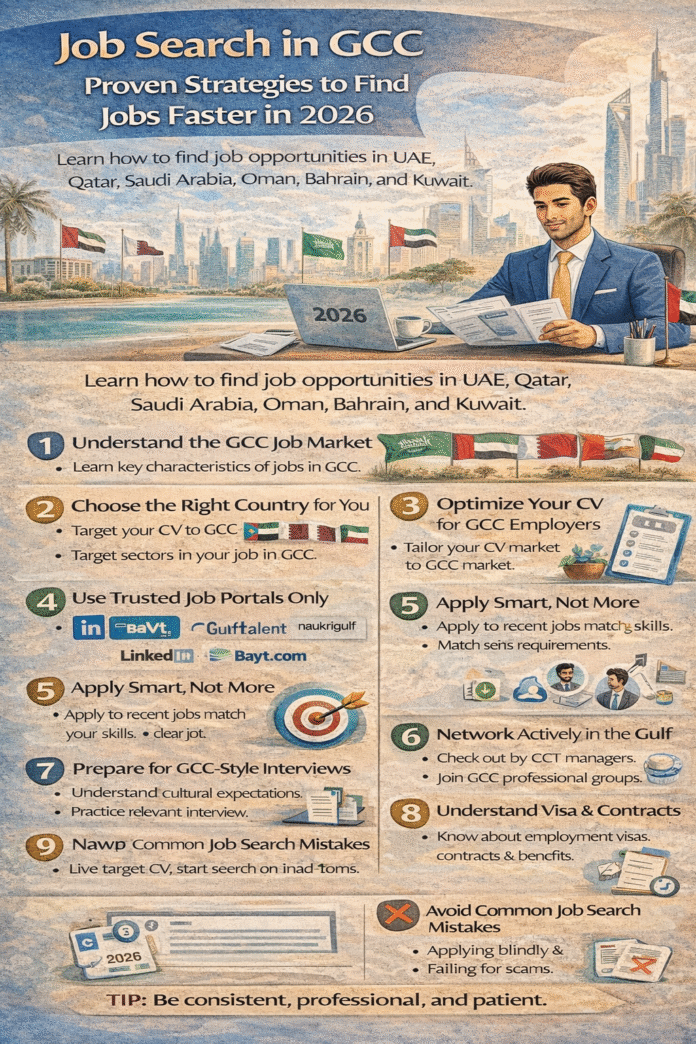
Job search in GCC with proven strategies for finding jobs faster in 2026
Proven job search strategies to find jobs faster in GCC countries in 2026

Introduction

Job search in GCC has changed rapidly in recent years. In 2026, employers in the UAE, Qatar, Saudi Arabia, Oman, Bahrain, and Kuwait are using smarter recruitment methods, digital platforms, and strict screening systems. To succeed, job seekers must go beyond applying randomly and adopt focused strategies.

This guide explains how to approach job search in GCC the right way, helping you find opportunities faster and increase your chances of getting hired.


Understand the GCC Job Market First

Before applying, it’s important to understand how the GCC job market works.

Key Characteristics of Job Search in GCC

  • Strong demand for skilled professionals
  • Preference for experience in GCC or similar markets
  • Emphasis on professional certifications
  • Multinational and multicultural work environment
  • High competition for popular roles

Knowing these factors helps you position yourself better during your job search in GCC.


Choose the Right Country for Your Profile

Each GCC country has different hiring needs.

UAE

  • Strong demand in IT, sales, finance, hospitality, and construction
  • Faster recruitment cycles

Qatar

  • Focus on infrastructure, education, healthcare, and energy
  • Employers value stability and long-term commitment

Saudi Arabia

  • Growing opportunities due to Vision 2030
  • High demand for engineering, digital, healthcare, and management roles

Oman, Bahrain, Kuwait

  • Smaller markets but less competition
  • Ideal for niche skills and experienced professionals

Targeting the right country makes your job search in GCC more effective.


Optimize Your CV for GCC Employers

A generic CV will not work.

GCC-Friendly CV Tips

  • Keep it 2 pages maximum
  • Use a professional summary at the top
  • Mention nationality and visa status clearly
  • Focus on achievements, not job duties
  • Use keywords from job descriptions

A strong CV is the foundation of successful job search in GCC.


Use Trusted Job Portals Only

Avoid fake websites and unreliable sources.

Best Platforms for Job Search in GCC

  • LinkedIn Jobs
  • Bayt
  • GulfTalent
  • Naukrigulf
  • Company career pages

Create complete profiles and keep them updated weekly.


Apply Smart, Not More

Sending 100 applications without strategy rarely works.

Smart Application Strategy

  • Apply to jobs posted within the last 7 days
  • Match at least 70% of requirements
  • Customize your CV slightly for each role
  • Follow up professionally after applying

Quality applications improve success in job search in GCC.


Network Actively in the Gulf Region

Many jobs in GCC are filled through referrals.

How to Network Effectively

  • Connect with HR managers on LinkedIn
  • Join GCC professional groups
  • Attend online job fairs and webinars
  • Engage with company posts regularly

Networking can cut your job search time in half.


Prepare for GCC-Style Interviews

Interviews in GCC are professional but relationship-focused.

Common Interview Expectations

  • Clear communication skills
  • Respect for cultural values
  • Confidence without arrogance
  • Willingness to adapt

Prepare examples using the STAR method and research the company thoroughly.


Understand Visa and Contract Basics

Employers often ask about visa status early.

Important Points

  • Employment visa is usually sponsored by employer
  • Probation period is typically 3–6 months
  • Notice periods vary by country
  • End-of-service benefits are standard

Understanding these basics shows maturity during job search in GCC.

Work Visas and Residency Rules in the Gulf: A Complete Guide for Expats


Avoid Common Job Search Mistakes

Many candidates fail due to avoidable errors.

Mistakes to Avoid

  • Applying without reading job descriptions
  • Using outdated CV formats
  • Ignoring LinkedIn profile optimization
  • Falling for visa or fee scams
  • Being unrealistic about salary initially

Staying alert keeps your job search in GCC safe and productive.


Stay Consistent and Patient

Job search in GCC requires persistence.

Weekly Job Search Routine

  • Update profiles once a week
  • Apply to 5–10 relevant jobs
  • Network daily for 15–20 minutes
  • Improve skills through short courses

Consistency leads to results.


Final Thoughts

Job search in GCC can be highly rewarding if done strategically. With the right CV, smart applications, strong networking, and patience, you can secure opportunities in one of the world’s most competitive job markets.

Focus on quality, stay professional, and adapt to market needs. Your next career move in the Gulf may be closer than you think.

https://www.naukrigulf.com/

LinkedIn Tips for GCC Professionals to Get More Job Opportunities (2026)

0
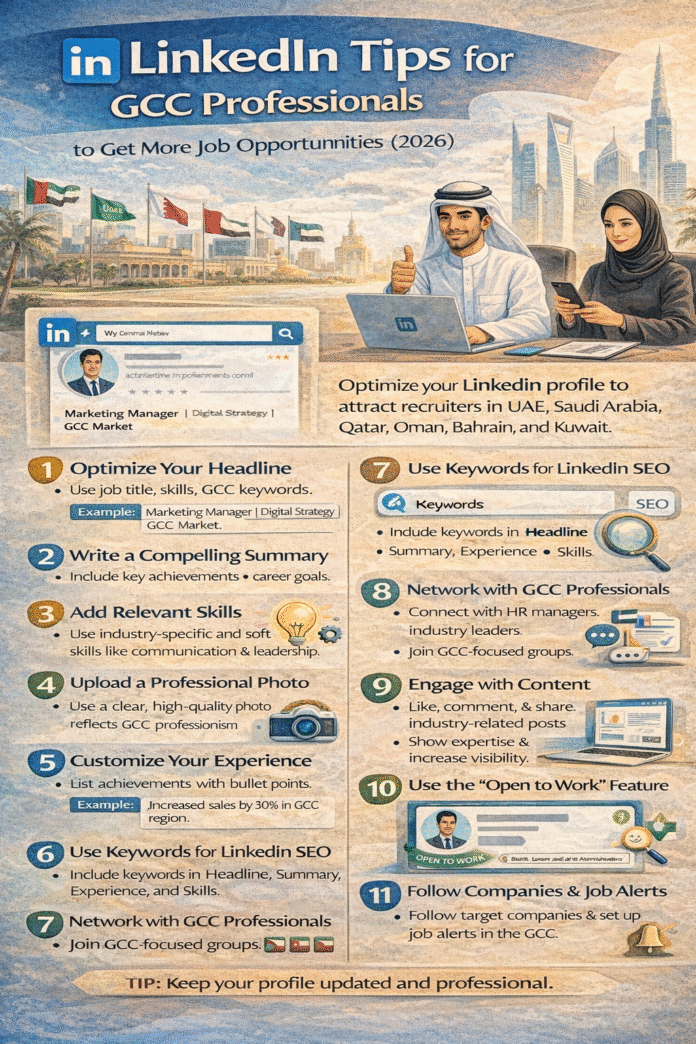
LinkedIn tips for GCC professionals

INTRODUCTION

LinkedIn tips for GCC professionals are essential in today’s competitive job market. Recruiters in the UAE, Qatar, Saudi Arabia, and other GCC countries actively use LinkedIn to find qualified candidates.

In 2026, a well-optimized LinkedIn profile is just as important as a strong resume. This guide explains how GCC professionals can use LinkedIn effectively to attract recruiters and unlock better job opportunities.


1. Why LinkedIn Is Important for GCC Professionals

LinkedIn helps professionals:

  • Connect with recruiters and HR managers
  • Apply for verified job opportunities
  • Build a strong professional brand
  • Network across GCC industries

Most recruiters search LinkedIn before shortlisting candidates.


2. Optimize Your LinkedIn Profile Headline

Your headline appears in searches.

A strong headline should include:

  • Job title or expertise
  • Key skills
  • Industry keywords

Example:
Sales Account Manager | B2B Telecom Solutions | GCC Market Experience

This improves visibility in recruiter searches.


3. Write a Powerful LinkedIn Summary

Your summary should:

  • Explain who you are
  • Highlight key achievements
  • Mention your career goals

Use a friendly, professional tone and include keywords naturally.

Tip: Write in first person for authenticity.


4. Use a Professional Profile Photo

Profile photos matter.

Best practices:

  • Clear, high-quality image
  • Neutral background
  • Professional attire
  • Friendly expression

Profiles with photos receive more profile views.


5. Customize Your Experience Section

List achievements, not just duties.

Use:

  • Bullet points
  • Action verbs
  • Numbers where possible

Example:
“Increased client retention by 25% across GCC accounts.”


6. Add Skills Relevant to GCC Job Market

Recruiters search by skills.

Include:

  • Industry-specific skills
  • Soft skills like communication and leadership
  • Technical tools relevant to your role

Keep skills aligned with job descriptions.


7. Use Keywords for LinkedIn SEO

LinkedIn works like a search engine.

Add keywords in:

  • Headline
  • Summary
  • Experience
  • Skills

This improves discoverability.


8. Networking Tips for GCC Professionals

Effective networking includes:

  • Connecting with HR managers
  • Engaging with industry posts
  • Joining GCC-focused LinkedIn groups

Quality connections matter more than quantity.


9. How to Use LinkedIn for Job Search

Use LinkedIn features like:

  • Job alerts
  • “Open to Work” setting
  • Easy Apply

Follow companies you want to work for and engage with their content.


10. LinkedIn Etiquette in GCC

Maintain professionalism by:

  • Using polite language
  • Avoiding spam messages
  • Respecting cultural norms

Professional behavior builds trust.


11. Common LinkedIn Mistakes to Avoid

Avoid:

  • Incomplete profiles
  • Copy-paste summaries
  • Irrelevant skills
  • Negative posts

Your profile represents your personal brand.


12. Link LinkedIn With Resume and Interviews

Your LinkedIn profile should match your resume.


Top Interview Questions for UAE Jobs and How to Answer Them (2026)

Consistency builds credibility.


FREQUENTLY ASKED QUESTIONS

Is LinkedIn important for jobs in GCC?

Yes. Most recruiters actively use LinkedIn in GCC countries.

How often should I update my profile?

Every 3–6 months or when your role changes.

Should fresh graduates use LinkedIn?

Yes. It helps build visibility and professional connections.


CONCLUSION

Following these LinkedIn tips for GCC professionals can significantly improve job visibility and recruiter engagement. A strong LinkedIn profile, combined with smart networking, opens doors to better career opportunities in 2026.

LinkedIn is not optional anymore. It is a career tool.

https://www.linkedin.com/company/gulf-jobs