

Home Blog Page 6

Spoken English: How to Speak Fluently and Confidently in 2026

spoken English fluency and confident English speaking
Spoken English fluency for confident communication

INTRODUCTION

Spoken English fluency is one of the most important skills for personal confidence, career growth, and global communication. Many learners understand English grammar but struggle to speak fluently due to fear, hesitation, and lack of practice.

This guide explains how to improve spoken English fluency step by step using practical methods that work in real-life situations in 2026.


1. What Spoken English Fluency Really Means

Spoken English fluency does not mean speaking perfect English. It means:

  • Speaking without long pauses
  • Expressing ideas clearly
  • Communicating with confidence
  • Being understood easily

Fluency focuses on communication, not perfection.


2. Common Problems in Spoken English Fluency

Many learners face similar challenges:

  • Fear of making mistakes
  • Limited vocabulary
  • Pronunciation issues
  • Thinking in the native language

Understanding these problems is the first step toward improving spoken English fluency.


3. Daily Practice Techniques for Spoken English Fluency

Consistency is the key to improvement.

Effective spoken English fluency practice includes:

  • Speaking aloud every day
  • Describing daily activities in English
  • Practicing mirror speaking
  • Recording and listening to your voice

Even 20–30 minutes daily makes a big difference.


4. Improve Pronunciation and Clarity

Good pronunciation improves confidence.

To improve pronunciation:

  • Listen to native speakers
  • Focus on word stress and sentence rhythm
  • Practice difficult sounds
  • Use simple pronunciation tools

Clear speech is more important than accent.


5. Build Vocabulary for Speaking

Spoken English fluency improves with active vocabulary.

Focus on:

  • Common daily phrases
  • Workplace expressions
  • Simple connectors like because, however, and therefore

Use new words in sentences instead of memorizing lists.


6. Think in English While Speaking

One major barrier to spoken English fluency is translation.

Train your mind to think in English by:

  • Naming objects around you
  • Thinking simple thoughts in English
  • Avoiding mental translation

This reduces hesitation and improves speed.


7. Spoken English Fluency for Workplace Communication

In professional life, spoken English fluency is essential for:

  • Meetings
  • Presentations
  • Interviews
  • Telephone conversations

Clear and confident speaking improves professional image and career opportunities.

English learning skills guide for 2026


8. Role of Grammar in Spoken English

Grammar supports clarity but should not block speech.

Focus on:

  • Basic tenses
  • Simple sentence structures
  • Correct word order

Fluency improves faster when grammar is learned through speaking.


9. Overcoming Fear and Building Confidence

Confidence is the foundation of spoken English fluency.

Build confidence by:

  • Accepting mistakes
  • Speaking without overthinking
  • Practicing with supportive partners
  • Celebrating small progress

Confidence grows with regular practice.


10. Common Mistakes to Avoid While Speaking English

Avoid:

  • Waiting for perfect sentences
  • Avoiding conversations
  • Memorizing speeches only
  • Comparing yourself with others

Natural speaking improves with real interaction.


11. Spoken English Fluency Tips for Non-Native Speakers

Non-native speakers should:

  • Focus on clarity
  • Speak slowly and clearly
  • Practice everyday conversations
  • Stay consistent

Fluency comes from use, not theory.


12. Future of Spoken English Learning in 2026

Spoken English learning will continue evolving with:

  • Online speaking platforms
  • AI conversation tools
  • Virtual speaking practice
  • Global communication needs

Practical speaking ability will remain a valuable life skill.


FREQUENTLY ASKED QUESTIONS

How long does it take to improve spoken English fluency?

With daily practice, noticeable improvement appears within 2 to 4 months.

Is accent important for fluency?

No. Clear communication matters more than accent.

Can adults improve spoken English fluency?

Yes. Adults can improve at any age with consistent practice.


CONCLUSION

Developing strong spoken English fluency is possible for anyone willing to practice regularly. Fluency is built through speaking, listening, and confidence, not through memorizing rules.

Speak daily, accept mistakes, and focus on communication. Fluency will follow naturally.

https://www.britishcouncil.ae/en/english/adults

English Learning & Skill Improvement: A Practical Guide for Career Growth in 2026

English learning and skill improvement for career growth
English learning and skill improvement for professional success

INTRODUCTION

English learning skills have become essential for academic success, career growth, and global communication. In 2026, English is no longer just a language. It is a professional skill that directly impacts confidence, employability, and workplace performance.

This guide explains practical English learning skills that help students, professionals, and job seekers improve fluency and communication in real-life situations.


1. Why English Learning & Skill Improvement Matters Today

English is the working language of:

  • International business
  • Higher education
  • Digital platforms
  • Multinational workplaces

Strong English learning skills improve:

  • Job opportunities
  • Professional communication
  • Confidence in interviews
  • Workplace performance

Employers increasingly value communication skills alongside technical knowledge.


2. Core English Learning Skills Everyone Must Develop

Effective English learning focuses on four core skills:

2.1 Listening Skills

Listening helps learners understand accents, pronunciation, and natural speech patterns. Improve listening by:

  • Watching English videos
  • Listening to podcasts
  • Following English news

2.2 Speaking Skills

Speaking is the most challenging but important part of English learning skills. Practice speaking through:

  • Daily conversations
  • Self-talk exercises
  • Role-play situations

Consistency is more important than perfection.


2.3 Reading Skills

Reading improves vocabulary and sentence structure. Recommended materials include:

  • News articles
  • Short stories
  • Professional blogs

Reading daily builds strong English foundations.


2.4 Writing Skills

Writing helps organize thoughts clearly. Start with:

  • Short paragraphs
  • Emails
  • Simple essays

Writing regularly improves grammar and clarity.


3. Common Challenges in English Learning Skills

Many learners struggle due to:

  • Fear of mistakes
  • Limited vocabulary
  • Grammar confusion
  • Lack of speaking practice

Understanding these challenges helps learners overcome them with the right strategies.


4. Effective English Learning Methods in 2026

Modern English learning skills improve faster with:

  • Online learning platforms
  • Language apps
  • Video-based lessons
  • AI speaking tools

However, real improvement comes from regular practice and active usage.


5. English Learning Skills for Career Growth

English plays a key role in professional life.

English learning skills improve:

  • Interview performance
  • Workplace communication
  • Email writing
  • Presentation skills

Professionals with strong English communication advance faster in their careers.

http://Family Life in the Gulf: Schools, Safety & Lifestyle


6. Role of Grammar in Skill Improvement

Grammar supports accuracy and clarity. Focus on:

  • Tenses
  • Sentence structure
  • Common grammar rules

Grammar should support communication, not block confidence.


7. Daily Practice Routine for English Learning Skills

A simple daily routine:

  • 15 minutes listening
  • 15 minutes reading
  • 15 minutes speaking
  • 10 minutes writing

Short daily practice delivers better results than long, irregular study sessions.


8. Mistakes to Avoid While Learning English

Avoid:

  • Memorizing without practice
  • Translating every sentence
  • Avoiding speaking due to fear
  • Ignoring pronunciation

Mistakes are part of learning and help improvement.


9. English Learning Skills for Non-Native Speakers

Non-native speakers should:

  • Focus on clarity, not accent
  • Build practical vocabulary
  • Practice real-life conversations

Clear communication matters more than perfect pronunciation.


10. Future of English Learning & Skill Development

English learning skills in the future will focus on:

  • Practical communication
  • Workplace language
  • Confidence building
  • Digital interaction

Learners who practice consistently will stay ahead.


FREQUENTLY ASKED QUESTIONS

How long does it take to improve English skills?

With daily practice, noticeable improvement can be seen within 3 to 6 months.

Is grammar more important than speaking?

Both matter, but speaking practice builds confidence faster.

Can adults improve English skills?

Yes. Adults often learn faster with the right methods.


CONCLUSION

Developing strong English learning skills is a long-term investment in personal and professional success. With regular practice, the right mindset, and practical methods, anyone can improve English fluency and communication.

English is not about perfection. It is about confidence, clarity, and consistency.

How to Write a Winning Cover Letter for Gulf Jobs (Complete 2026 Guide)

Workplace Culture in GCC Countries: What Employees and Employers Should Know in 2026

0
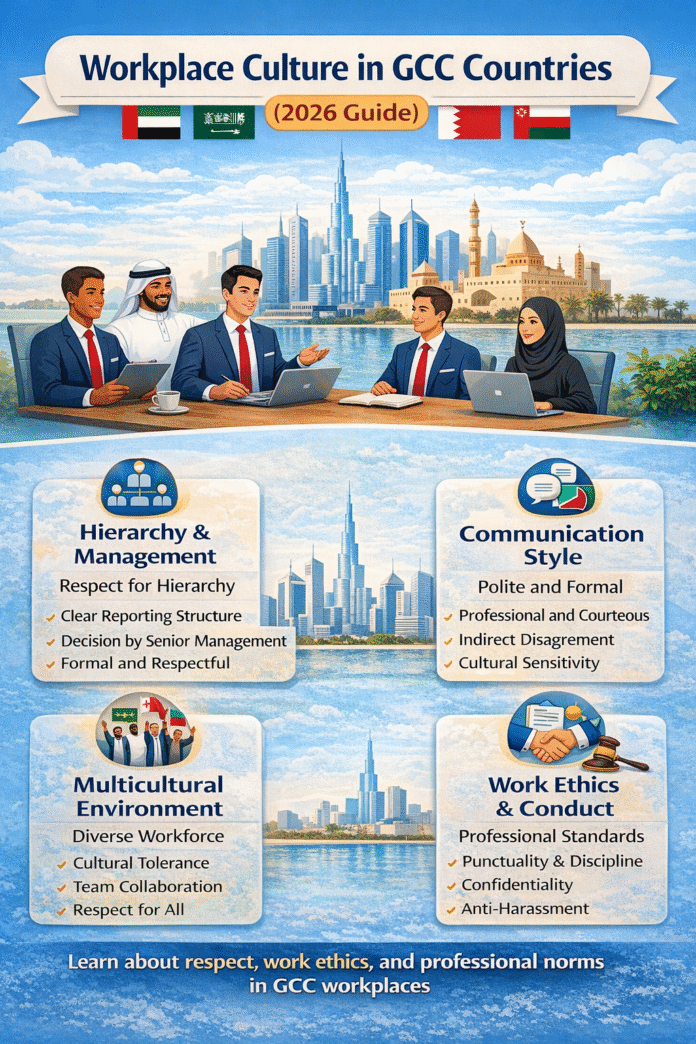
workplace culture in GCC countries and office environment
Workplace culture and professional environment in GCC countries

INTRODUCTION

Workplace culture GCC organizations follow is shaped by local traditions, labor laws, and a highly multicultural workforce. GCC countries such as the UAE, Qatar, Saudi Arabia, Kuwait, Bahrain, and Oman employ professionals from all over the world, making workplace dynamics unique.

Understanding workplace culture GCC employers expect in 2026 helps employees adapt faster, perform better, and build long-term careers in the Gulf.


1. Understanding Workplace Culture in GCC Countries

Workplace culture in the GCC is a mix of:

  • Traditional values
  • Modern corporate practices
  • Multinational workforce norms

Respect, professionalism, and hierarchy play a major role in daily work life. Employees who understand workplace culture GCC standards avoid misunderstandings and conflicts.


2. Professional Hierarchy and Management Style

One key aspect of workplace culture GCC companies follow is respect for hierarchy.

Common characteristics include:

  • Clear reporting structures
  • Decision-making by senior management
  • Formal communication with supervisors

Employees are expected to respect authority while maintaining professionalism.


3. Communication Style in GCC Workplaces

Communication is generally polite, formal, and respectful.

Workplace culture GCC norms encourage:

  • Professional tone in emails
  • Respectful disagreement
  • Indirect communication in sensitive matters

Open confrontation is usually avoided. Cultural sensitivity is highly valued.


4. Multicultural Work Environment

The GCC workforce is one of the most diverse in the world.

Workplace culture GCC organizations promote:

  • Cultural tolerance
  • Team collaboration
  • Respect for different nationalities

Employees must be mindful of cultural differences, especially during meetings and social interactions.


5. Working Hours and Office Discipline

Workplace culture GCC labor laws regulate working hours, but expectations remain strict.

Key points include:

  • Punctuality is essential
  • Attendance is closely monitored
  • Overtime policies vary by company

During Ramadan, working hours are reduced by law in most GCC countries.

Legal Rights and Labor Laws for Expats in the Gulf: A Complete Guide


6. Dress Code and Professional Appearance

Dress code is an important part of workplace culture GCC offices follow.

General expectations include:

  • Modest and professional attire
  • Business formal or business casual depending on industry
  • Safety gear where required

Even in modern workplaces, conservative dressing is appreciated.


7. Workplace Ethics and Professional Conduct

Strong workplace culture GCC companies maintain includes strict ethical standards.

Employees are expected to:

  • Avoid workplace conflicts
  • Respect company policies
  • Maintain confidentiality
  • Follow anti-harassment guidelines

Professional behavior directly affects career growth in the Gulf.


8. Employee Relations and Teamwork

Teamwork is encouraged, but individual responsibility is equally important.

Workplace culture GCC organizations promote:

  • Collaboration across departments
  • Respectful teamwork
  • Clear task ownership

Positive employee relations improve productivity and job satisfaction.


9. Performance, Feedback, and Career Growth

Performance evaluation is a formal process.

Workplace culture GCC companies usually follow:

  • Annual appraisals
  • KPI-based reviews
  • Structured promotions

Employees who show consistency, loyalty, and professionalism are more likely to advance.


10. Common Cultural Mistakes to Avoid

New employees often struggle due to cultural misunderstandings.

Workplace culture GCC experts advise avoiding:

  • Disrespectful communication
  • Ignoring hierarchy
  • Missing deadlines
  • Over-casual behavior

Cultural awareness helps build trust and long-term success.


11. Workplace Culture GCC Trends in 2026

Modern workplace culture GCC countries are moving toward includes:

  • Flexible working arrangements
  • Employee well-being programs
  • Diversity and inclusion policies
  • Digital collaboration tools

Organizations balancing tradition and innovation will lead the future workforce.


FREQUENTLY ASKED QUESTIONS

Is workplace culture strict in GCC countries?

It is professional and structured but varies by company and industry.

Are women treated equally in GCC workplaces?

Yes. Most GCC countries have strengthened workplace equality laws.

Is teamwork important in GCC offices?

Yes. Team collaboration is highly valued alongside individual responsibility.


CONCLUSION

Understanding workplace culture GCC employers follow is essential for career success in the Gulf. Respect, professionalism, cultural awareness, and ethical conduct define daily work life in GCC countries.

Employees who adapt to workplace expectations build stronger professional relationships and long-term career stability.

Healthcare in the Gulf: What Expats Need to Know Before Moving

https://www.hrsd.gov.sa

HR Practices in GCC Countries – Policies, Laws & Best Practices

0
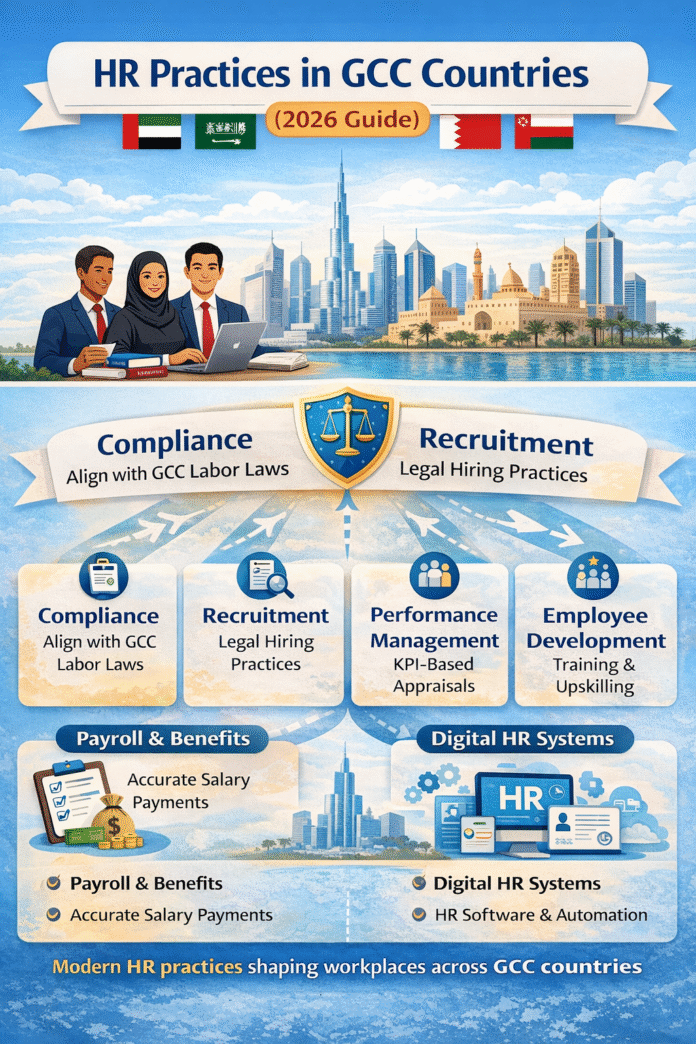
HR practices in GCC countries and workforce management
Modern HR practices shaping workplaces across GCC countries

INTRODUCTION

HR practices GCC organizations follow have changed significantly in recent years due to labor law reforms, workforce nationalization, and the growing number of expatriate employees. Countries such as the UAE, Qatar, Saudi Arabia, Kuwait, Bahrain, and Oman now require structured and transparent HR systems in.

HR practices GCC employers must follow in 2026 is essential for legal compliance, employee retention, and business growth.


1. HR Practices GCC Countries Require for Legal Compliance

One of the most critical HR responsibilities in the GCC is compliance with labor laws. HR departments must ensure:

  • Valid employment contracts
  • Correct working hours
  • Legal salary payments
  • Proper leave records

Failure to follow HR practices GCC labor laws can lead to fines, visa bans, or business suspension.


2. Recruitment and Hiring as Core HR Practices GCC Employers Use


Recruitment is a major part of HR operations in the Gulf. Effective HR practices GCC companies follow include:

  • Hiring through licensed agencies
  • Verifying employee documents
  • Issuing written offer letters
  • Processing work visas legally

HR teams must coordinate closely with recruitment departments to avoid illegal hiring.

https://careerroutegulf.com/gulf-career-growth/


3. Workforce Nationalization and HR Strategy

Most GCC countries have workforce nationalization programs:

  • Emiratisation (UAE)
  • Saudization (Saudi Arabia)
  • Omanization (Oman)

HR practices GCC employers adopt must balance:

  • Hiring local talent
  • Retaining skilled expatriates
  • Meeting government quotas

This requires careful workforce planning and training programs.


4. Performance Management in GCC Workplaces

Modern HR practices GCC organizations are shifting toward performance-based systems rather than seniority.

Key elements include:

  • Clear KPIs
  • Annual performance appraisals
  • Incentive-based rewards
  • Promotion policies

Transparent performance management improves productivity and reduces disputes.


5. Training and Employee Development

Training is now a strategic HR function. Strong HR practices GCC companies invest in include:

  • Skill development programs
  • Leadership training
  • Compliance and ethics training
  • Digital skills enhancement

Training also supports nationalization goals by preparing local employees for leadership roles.


6. Payroll Management and Employee Benefits

Payroll accuracy is a legal requirement in the GCC. HR practices GCC payroll systems must ensure:

  • On-time salary payments
  • Wage Protection System compliance
  • Medical insurance coverage
  • Leave and gratuity calculations

Payroll errors can result in employee complaints and legal action.


7. Employee Relations and Workplace Policies

Strong HR practices GCC companies follow focus on maintaining positive employee relations through:

  • Clear workplace policies
  • Grievance handling procedures
  • Anti-harassment policies
  • Equal opportunity guidelines

HR departments act as a bridge between management and employees.


8. Handling Termination and End-of-Service Benefits

Termination is a sensitive HR responsibility. HR practices GCC labor laws require:

  • Written notice periods
  • Valid termination reasons
  • Full settlement of dues
  • End-of-service gratuity payments

Incorrect handling of termination can result in labor disputes.


9. Digital HR Systems and Automation

In 2026, HR practices GCC organizations increasingly rely on:

  • HR management software
  • Digital employee records
  • Online leave management
  • Automated payroll systems

Technology improves accuracy, transparency, and compliance.


10. Future Trends in HR Practices GCC Countries

HR practices GCC workplaces will continue evolving with focus on:

  • Employee well-being
  • Flexible work arrangements
  • Data-driven HR decisions
  • Diversity and inclusion

Employers who adapt early will attract and retain better talent.


FREQUENTLY ASKED QUESTIONS

Are HR policies mandatory in GCC companies?

Yes. Written HR policies are required for compliance and dispute resolution.

Can HR withhold employee salaries?

No. Salary delays violate labor laws and wage protection systems.

Do small companies need HR departments?

Yes. Even small businesses must follow HR practices GCC labor laws require.


CONCLUSION

Strong HR practices GCC employers follow are no longer optional. They are essential for legal compliance, employee satisfaction, and sustainable growth in the Gulf region.

Whether managing a small business or a large organization, understanding HR responsibilities helps avoid legal risks and build a professional workplace culture

http://Ministry of Public Health Qatar

Recruitment Tips for GCC Jobs: A Practical Guide for Employers & Job Seekers (2026)

1
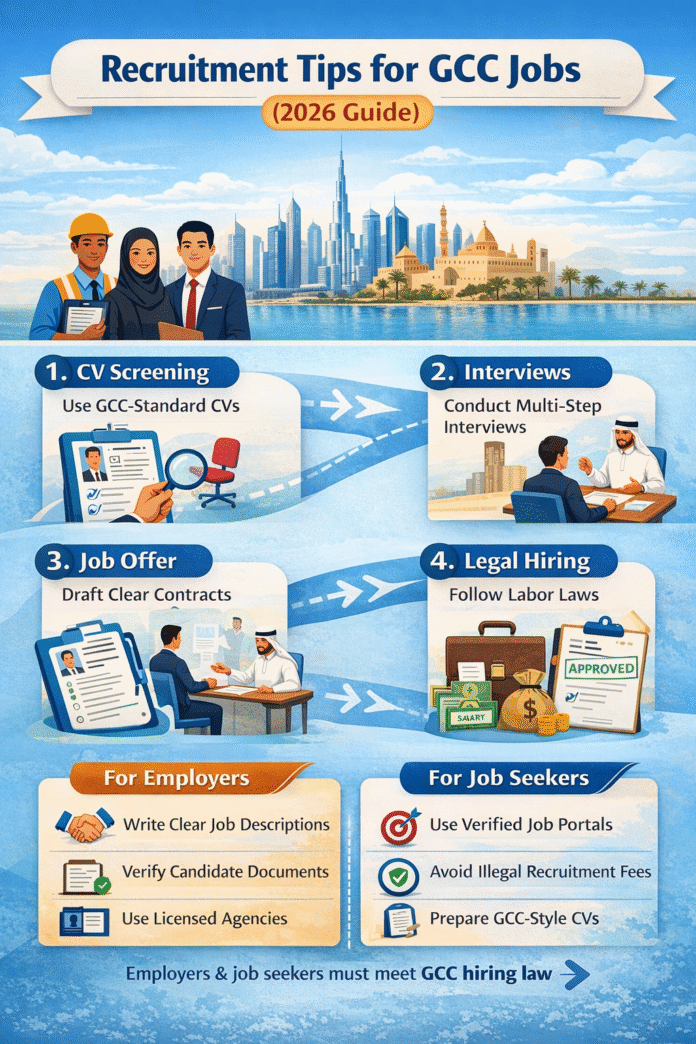
recruitment tips for GCC jobs and hiring process
Practical recruitment tips for GCC employers and job seekers

INTRODUCTION

Recruitment tips GCC employers and job seekers follow can make the difference between a successful hire and a costly mistake. Recruitment in GCC countries such as the UAE, Qatar, Saudi Arabia, Kuwait, Bahrain, and Oman follows specific legal, cultural, and professional standards.

Whether you are an employer looking to hire reliable talent or a job seeker aiming to secure a Gulf job, understanding recruitment tips GCC markets demand is essential in 2026.


1. Understanding Recruitment in GCC Countries

Recruitment in the Gulf is heavily influenced by:

  • Labor laws
  • Visa regulations
  • Multinational work environments
  • Skill shortages in key sectors

Industries with continuous hiring demand include construction, healthcare, IT, oil and gas, logistics, retail, and hospitality.

Recruitment tips GCC professionals use always start with understanding local hiring rules.


2. Recruitment Tips GCC Employers Should Follow

2.1 Write Clear and Legal Job Descriptions

Job descriptions should clearly mention:

  • Job role and responsibilities
  • Required qualifications
  • Salary range (if possible)
  • Visa sponsorship details

Misleading job ads damage employer credibility and may violate labor regulations.


2.2 Use Licensed Recruitment Channels

Employers should hire only through:

  • Licensed recruitment agencies
  • Verified job portals
  • Company career pages

This protects businesses from legal penalties and fake candidate documentation.

External link:
You can verify agencies through the Ministry of Human Resources and Emiratisation (UAE) official website.


2.3 Verify Documents Before Hiring

One of the most important recruitment tips GCC employers often overlook is document verification:

  • Educational certificates
  • Experience letters
  • Passport validity

Skipping verification can result in visa rejection or legal issues.


3. Recruitment Tips GCC Job Seekers Must Know

3.1 Use a GCC-Standard CV Format

A Gulf CV should include:

  • Passport nationality
  • Visa status (if applicable)
  • Clear job titles
  • Professional photo (optional but common)

Avoid long CVs. Two pages are usually ideal

ATS-Friendly CV Tips for Gulf Jobs


3.2 Apply Through Trusted Job Portals

Safe platforms for GCC job searches include:

  • Bayt
  • Naukrigulf
  • LinkedIn
  • Company career websites

Avoid paying recruitment fees. Charging job seekers is illegal in most GCC countries.


3.3 Prepare for Multi-Stage Interviews

Recruitment tips GCC recruiters expect candidates to follow include strong interview preparation. Interviews often include:

  • HR screening
  • Technical assessment
  • Management approval

Professional communication and cultural awareness are critical.


4. Common Recruitment Mistakes in GCC Jobs

Both employers and job seekers make avoidable mistakes.

Mistakes Employers Make

  • Hiring without background checks
  • Offering verbal promises without contracts
  • Ignoring cultural fit

Mistakes Job Seekers Make

  • Accepting jobs on visit visas
  • Trusting unofficial WhatsApp offers
  • Signing contracts without reading terms

Understanding recruitment tips GCC standards helps avoid these issues.


5. Digital Recruitment Trends in the GCC

Recruitment in 2026 is increasingly digital. Popular tools include:

  • LinkedIn recruiter tools
  • AI CV screening
  • Online interviews

However, final hiring decisions still rely on human judgment and legal compliance.


6. Legal Recruitment Requirements in GCC Countries

Recruitment tips GCC law requires employers to follow include:

  • Issuing written employment contracts
  • Processing work visas legally
  • Registering employees with labor authorities

Failure to follow legal hiring procedures can lead to fines or company bans.


7. Onboarding and Retention Best Practices

Recruitment does not end with hiring. Proper onboarding improves:

  • Employee retention
  • Productivity
  • Workplace morale

Clear job orientation and training reduce early resignations.


8. Recruitment Tips GCC Markets Will Value in the Future

By 2026 and beyond, successful recruitment will focus on:

  • Skill-based hiring
  • Transparent salary structures
  • Employee well-being
  • Diversity and inclusion

Companies that adapt early will attract better talent.


FREQUENTLY ASKED QUESTIONS

Is it legal to charge recruitment fees in GCC countries?

No. Charging job seekers is illegal in most GCC countries.

Can employers hire workers on visit visas?

No. Employment requires a valid work visa and contract.

Are online interviews accepted for GCC jobs?

Yes. Many employers now conduct online interviews before issuing offers.


CONCLUSION

Following the right recruitment tips GCC professionals rely on creates safer, faster, and more successful hiring outcomes. Employers reduce legal risks, and job seekers increase their chances of landing genuine Gulf jobs.

Whether you are hiring or applying, knowledge of recruitment practices is your strongest advantage in the GCC job market.

https://www.khda.gov.ae

Employee Rights in GCC Countries (2026 Guide for Expats & Workers)

2
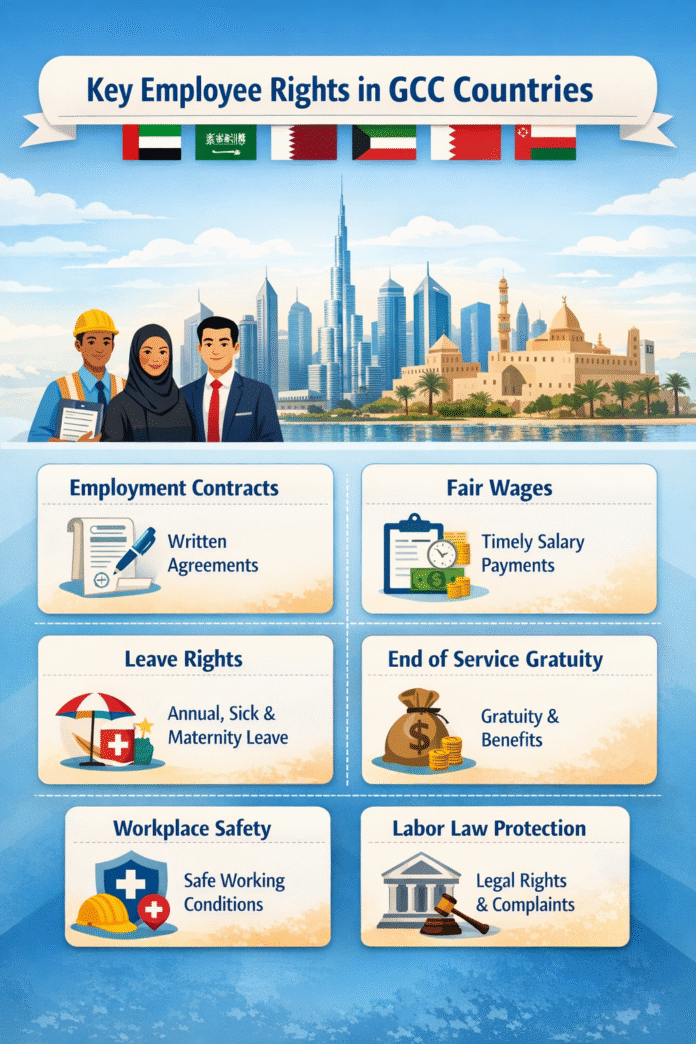
Employee rights and labor law protections in GCC countries
Key employee rights protected under GCC labor laws

INTRODUCTION

Employee rights GCC laws protect millions of local and expatriate workers across the Gulf region, including the UAE, Qatar, Saudi Arabia, Kuwait, Bahrain, and Oman. Understanding employee rights in GCC workplaces is essential to avoid unfair treatment, salary delays, and illegal termination while working in the region.

Millions of expatriates work across GCC countries such as the UAE, Qatar, Saudi Arabia, Kuwait, Bahrain, and Oman. While these countries offer strong career opportunities, many workers are unaware of their legal rights under local labor laws.

Understanding employee rights in GCC countries is essential to protect yourself from unfair treatment, delayed salaries, or unlawful termination. This guide explains your core rights clearly and practically, whether you are a new job seeker or already employed in the Gulf.


1. Employee Rights GCC Under Employment Contracts

Every employee in the GCC must have a written employment contract approved by the labor ministry.

Your contract should clearly mention:

  • Job title and responsibilities
  • Basic salary and allowances
  • Working hours
  • Leave entitlement
  • Contract duration
  • Termination terms

Always ensure the contract you sign matches what was promised during recruitment. Any changes must be approved by both parties.

Tip: Never work without a signed contract. It weakens your legal position.


2. Working Hours and Overtime Rights in GCC

Most GCC labor laws follow similar working hour limits:

  • 8 hours per day
  • 48 hours per week
  • Reduced hours during Ramadan

If you work beyond official hours, you are entitled to overtime pay, usually calculated at:

  • 125 percent of basic hourly wage
  • 150 percent for night shifts or rest days

Some roles, such as senior management, may be exempt, but this must be clearly stated in the contract.


3. Salary Protection and Wage Systems in GCC

Employee rights GCC regulations require employers to pay salaries on time through approved wage protection systems.

Key protections include:

  • Salaries paid through approved banks
  • Fixed monthly payment dates
  • Legal action against employers for delays

If your salary is delayed beyond the legal limit, you have the right to file a complaint with the labor department.

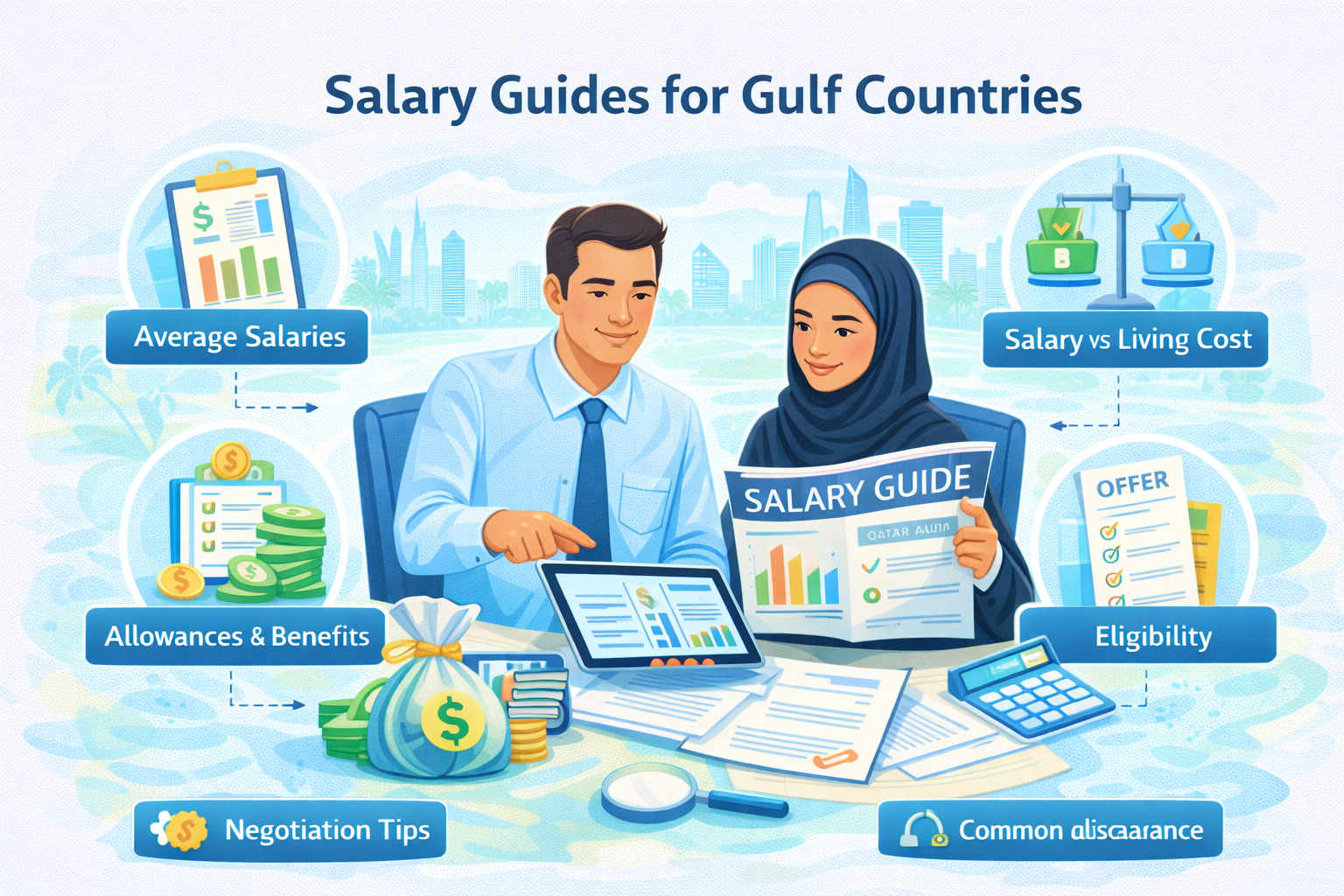
Salary guide for gulf countires


4. Leave Rights for Employees in GCC Countries

Employees in GCC countries are legally entitled to various types of leave.

Annual Leave

  • Minimum 21 to 30 paid days per year depending on country and service length

Sick Leave

  • Paid and unpaid sick leave based on medical certification

Public Holidays

  • Official national and religious holidays

Maternity and Paternity Leave

  • Maternity leave ranges from 45 to 60 days
  • Paternity leave is now recognized in some GCC countries

Employers cannot deny approved leave or deduct salary unfairly.


5. End-of-Service Benefits and Gratuity Rights GCC

One of the most important employee rights in the GCC is end-of-service gratuity.

Gratuity is calculated based on:

  • Length of service
  • Basic salary
  • Reason for contract termination

Typically:

  • 21 days’ basic salary per year for the first five years
  • 30 days’ basic salary per year after that

Employees who complete at least one year of service usually qualify.


6. Termination and Notice Period Rights in GCC

Understanding employee rights GCC helps workers challenge unfair termination through official labor channels.

Your rights include:

  • Written termination notice (30–90 days)
  • Full salary during notice period
  • Gratuity and pending dues

Unlawful termination can be challenged through labor courts. In some cases, employees may receive compensation.


7. Workplace Safety and Legal Protection in GCC

GCC labor laws require employers to:

  • Provide a safe working environment
  • Offer protective equipment
  • Prevent harassment or abuse

Employees have the right to dignity at work, regardless of nationality or job role.

Any form of physical abuse, verbal harassment, or forced labor is illegal and punishable.


8. Employee Rights During Contract Transfer

Many GCC countries now allow job transfers without employer permission under specific conditions, such as:

  • Contract completion
  • Salary non-payment
  • Employer violations

This reform has significantly improved worker mobility and reduced exploitation.


9. How to File a Labor Complaint in GCC Countries

If your rights are violated, you can file a complaint through:

  • Ministry of Labor portals
  • Labor courts
  • Helplines and mobile apps

Documents required usually include:

  • Employment contract
  • Salary slips
  • Emirates ID or residence permit

Complaints are often resolved through mediation before legal escalation.


10. Common Employee Mistakes to Avoid

  • Signing contracts without reading
  • Working on visit visas
  • Paying recruitment fees illegally
  • Not keeping salary proof

Awareness is your strongest protection.


FREQUENTLY ASKED QUESTIONS (FAQs)

Are expat workers protected under GCC labor laws?

Yes. Labor laws apply to both local and foreign employees.

Can my employer hold my passport?

No. Passport retention is illegal in most GCC countries.

What if my salary is delayed?

You can file a labor complaint through the Wage Protection System.

Do domestic workers have rights?

Yes. Most GCC countries now have separate domestic worker protection laws.


CONCLUSION

Awareness of employee rights GCC ensures legal protection and confidence while working in Gulf countries. Employee rights in GCC countries are stronger than ever, but only if workers understand and use them. Knowing your legal protections helps you work confidently, avoid exploitation, and take action when needed.

Before accepting any job in the Gulf, always review your contract, understand your rights, and keep proper documentation.

http://UAE Ministry of Human Resources (MOHRE)

Kuwait & Bahrain Job Updates 2025–2026: Complete Expat Career Guide

0
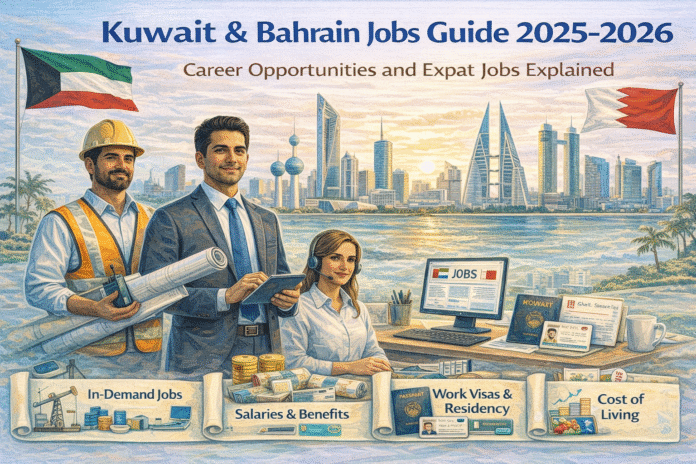
Kuwait and Bahrain Jobs Guide 2025–2026
Career opportunities and expat jobs in Kuwait and Bahrain explained

Introduction: Why Consider Kuwait and Bahrain for Jobs?

The Kuwait Bahrain jobs 2025 market offers strong opportunities for expats in oil, finance, construction, and emerging sectors. When people think about Gulf jobs, countries like the UAE and Saudi Arabia often dominate the conversation. However, Kuwait and Bahrain continue to offer stable, well-paying opportunities for expatriates, especially for professionals seeking a balanced lifestyle, lower competition, and strong employment protections.

In 2025–2026, both Kuwait and Bahrain are investing in economic diversification, infrastructure, healthcare, finance, and digital transformation. While the job markets are smaller compared to Dubai or Riyadh, they remain attractive for experienced professionals, particularly in specialized roles.

This guide provides a complete overview of Kuwait and Bahrain jobs, including hiring trends, salaries, visas, cost of living, and practical tips for expats.


Overview of the Job Market in Kuwait Bahrain 2025

Kuwait Job Market Outlook (2025–2026)

Kuwait’s economy remains heavily supported by oil revenues, but the government is pushing gradual reforms under Vision 2035. Expats continue to play a key role in sectors where local expertise is limited.

Key characteristics of Kuwait’s job market:

  • Strong demand for experienced professionals
  • Conservative work culture
  • High salary packages with tax-free income
  • Limited but stable private-sector hiring

Bahrain Job Market Outlook (2025–2026)

Bahrain positions itself as a business-friendly and expat-welcoming Gulf nation, particularly in finance, fintech, and professional services. English is widely used in workplaces, making integration easier.

Key characteristics of Bahrain’s job market:

  • Smaller but flexible labor market
  • Growing startup and fintech ecosystem
  • Lower cost of living compared to UAE
  • Progressive regulations for foreign professionals

In-Demand Jobs in Kuwait (2025–2026)

1. Oil, Gas, and Energy Roles

Oil remains Kuwait’s economic backbone.

Popular roles:

  • Petroleum Engineers
  • Mechanical Engineers
  • HSE Officers
  • Project Managers

Average salaries:
KWD 1,200–3,500 per month (experience dependent)


2. Healthcare Professionals

Kuwait continues to expand public and private healthcare facilities.

High-demand roles:

  • Specialist Doctors
  • Registered Nurses
  • Lab Technicians
  • Hospital Administrators

Average salaries:
KWD 800–2,500 per month


3. Education and Teaching Jobs

International schools regularly hire qualified expat teachers.

Common roles:

  • English Teachers
  • Science & Math Teachers
  • School Administrators

Average salaries:
KWD 700–1,800 per month (often with housing)


4. IT and Technical Roles

Digital transformation is creating steady demand.

In-demand roles:

  • Network Engineers
  • ERP Specialists
  • Cybersecurity Analysts

In-Demand Jobs in Bahrain (2025–2026)

1. Banking, Finance, and FinTech

Bahrain is a regional financial hub.

Popular roles:

  • Financial Analysts
  • Compliance Officers
  • Risk Managers
  • FinTech Product Specialists

Average salaries:
BHD 900–2,500 per month


2. IT and Digital Jobs

Bahrain’s digital-first policies encourage tech hiring.

Key roles:

  • Software Developers
  • Cloud Engineers
  • Data Analysts

3. Hospitality and Tourism

Tourism and business travel drive demand.

Roles include:

  • Hotel Managers
  • Customer Service Executives
  • Event Coordinators

4. Engineering and Construction

Infrastructure projects continue steadily.

Roles include:

  • Civil Engineers
  • Electrical Engineers
  • Quantity Surveyors

Salary Expectations and Benefits

Kuwait Salary Structure

  • Tax-free income
  • Housing allowance or company accommodation
  • Annual return ticket
  • End-of-service gratuity

Bahrain Salary Structure

  • Competitive but slightly lower than Kuwait
  • Flexible employment terms
  • Easier family sponsorship
  • Strong work-life balance

Cost of Living Comparison: Kuwait Bahrain 2025

Expense CategoryKuwaitBahrain
Rent (1BR city)HighModerate
UtilitiesLowModerate
TransportAffordableAffordable
School FeesHighModerate

Bahrain is generally more affordable for families, while Kuwait offers higher net savings for single professionals.

Gulf Cost of Living Overview


Work Visa and Residency Rules

Kuwait Work Visa

  • Employer-sponsored only
  • Job change restrictions apply
  • Residency tied strictly to employer

Bahrain Work Visa

  • More flexible sponsorship system
  • Easier job mobility
  • Family visas are simpler

Cultural and Workplace Environment

Kuwait

  • Formal workplace culture
  • Clear hierarchy
  • Conservative social norms

Bahrain

  • More open and multicultural
  • Business-friendly environment
  • English widely spoken

Respect for local customs is essential in both countries.


Job Search Tips for Expats

  1. Apply only through verified platforms
  2. Tailor CVs to GCC standards
  3. Highlight Gulf or Middle East experience
  4. Avoid paying recruitment fees
  5. Network through LinkedIn and referrals

Recommended platforms:

  • Bayt.com
  • GulfTalent
  • LinkedIn Jobs

Pros and Cons of Working in Kuwait Bahrain 2025

Pros

  • Tax-free income
  • Strong job security
  • Safe living environment
  • Growing professional opportunities

Cons

  • Smaller job markets
  • Limited career mobility in Kuwait
  • Fewer entertainment options compared to UAE

Conclusion: Is Kuwait or Bahrain Right for You?

If you are seeking stability, savings, and long-term employment, Kuwait offers excellent opportunities for experienced professionals. If you prefer flexibility, lifestyle balance, and easier integration, Bahrain may be the better choice.

Both countries remain valuable options for expats in 2025–2026, especially for those willing to adapt and specialize.

https://lmra.gov.bh/en/home

UAE Jobs Guide 2025–2026: Complete Expat Career Roadmap

1
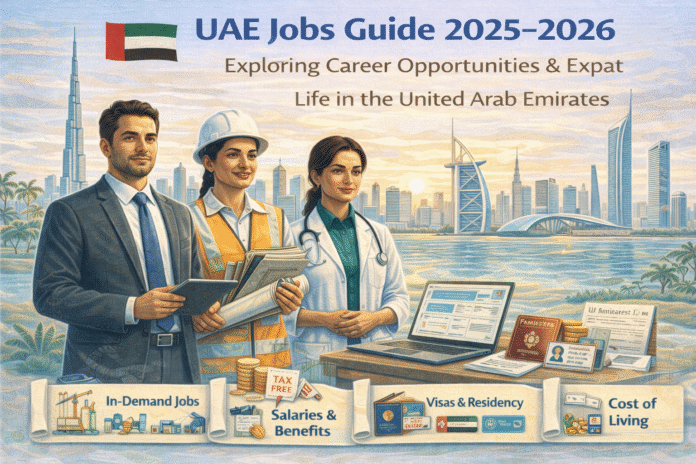
UAE jobs guide showing Dubai skyline, professionals, and career opportunities
Exploring career opportunities and expat life in the United Arab Emirates

Introduction: Why the UAE Remains a Top Career Destination

The UAE jobs 2025 market is booming with opportunities for expats in Dubai, Abu Dhabi, and across the Emirates. The UAE jobs 2025–2026 market is booming with opportunities for expats in Dubai, Abu Dhabi, and across the Emirates.The United Arab Emirates continues to be one of the most attractive destinations for global professionals. With tax-free salaries, world-class infrastructure, political stability, and a multicultural workforce, the UAE offers unmatched career exposure for expats.

In 2025–2026, the UAE job market is being driven by digital transformation, economic diversification, and long-term initiatives like UAE Vision 2031. From Dubai’s tech and finance ecosystem to Abu Dhabi’s energy and government-backed projects, opportunities remain strong for skilled professionals.

This UAE jobs guide explains everything expats need to know, from in-demand sectors and salary expectations to visas, work culture, and job search strategies.


Overview of the UAE Job Market in 2025–2026

The UAE job market is evolving rapidly. While nationalization programs such as Emiratization prioritize UAE nationals, expats remain in high demand for specialized and senior roles.

Key job market trends:

  • Growth in technology, AI, and cybersecurity roles
  • Continued demand in healthcare and education
  • Expansion of logistics, supply chain, and e-commerce
  • Strong hiring in construction and project management
  • Increased focus on sustainability and renewable energy

Dubai leads in private-sector hiring, while Abu Dhabi offers stability through government-linked entities and energy companies.


Top In-Demand Jobs in the UAE

1. Technology and IT Jobs

The UAE is positioning itself as a global digital hub.

High-demand roles:

  • Software Engineers
  • Data Analysts and Data Scientists
  • Cybersecurity Specialists
  • Cloud Architects
  • AI and Machine Learning Engineers

Average salaries:
AED 18,000–45,000 per month depending on experience.

Key locations: Dubai Internet City, Abu Dhabi Global Market.


2. Healthcare Careers

Healthcare expansion and medical tourism keep demand strong.

Roles in demand:

  • Specialist Doctors
  • Registered Nurses
  • Medical Technicians
  • Healthcare Administrators

Average salaries:
AED 15,000–70,000+ per month.


3. Engineering and Construction

Infrastructure projects continue across the UAE.

Roles include:

  • Civil and Mechanical Engineers
  • Project Managers
  • Quantity Surveyors
  • HSE Officers

Average salaries:
AED 12,000–35,000 per month.


4. Finance, Banking, and Accounting

Dubai remains a financial hub for the region.

Key roles:

  • Financial Analysts
  • Auditors
  • Compliance Officers
  • CFOs and Finance Managers

Average salaries:
AED 15,000–50,000+ per month.


5. Sales, Marketing, and Business Development

Private companies rely heavily on revenue-generating roles.

Common roles:

  • Sales Managers
  • Digital Marketing Specialists
  • Account Managers
  • Growth Strategists

Average salaries:
AED 10,000–30,000 plus commissions.


UAE Work Visa and Residency Overview

To work legally, expats need an employer-sponsored visa.

Common visa types:

  • Employment Visa
  • Green Visa (skilled professionals and freelancers)
  • Golden Visa (investors, highly skilled professionals)

Employers usually handle:

  • Work permit
  • Medical tests
  • Emirates ID
  • Residency stamping

Visa duration is typically 2 years, renewable.


Salary Structure and Employee Benefits

One of the biggest attractions of UAE jobs is tax-free income.

Typical benefits include:

  • Housing allowance or company accommodation
  • Health insurance
  • Annual return air ticket
  • End-of-service gratuity
  • Education allowance (for senior roles)

Always evaluate the total compensation package, not just the basic salary.


Cost of Living in the UAE

Living costs vary significantly by city and lifestyle.

Monthly expenses (approximate):

  • Rent (1-bedroom): AED 3,500–9,000
  • Utilities and internet: AED 600–900
  • Groceries: AED 1,200–2,000
  • Transport: AED 300–700

Dubai is the most expensive, while Sharjah and Ajman offer affordable alternatives.


Work Culture in the UAE

The UAE workplace is professional and multicultural.

What to expect:

  • Formal communication and respect for hierarchy
  • Punctuality and accountability
  • Performance-based growth
  • Sunday to Thursday workweek

Understanding cultural sensitivity and workplace etiquette is essential for long-term success.


How to Find Jobs in the UAE

Best job portals:

  • LinkedIn
  • Bayt.com
  • GulfTalent
  • Indeed UAE

Job search tips:

  • Tailor your CV for each role
  • Highlight UAE or GCC experience
  • Use ATS-friendly CV formats
  • Network actively on LinkedIn
  • Avoid paying recruitment fees

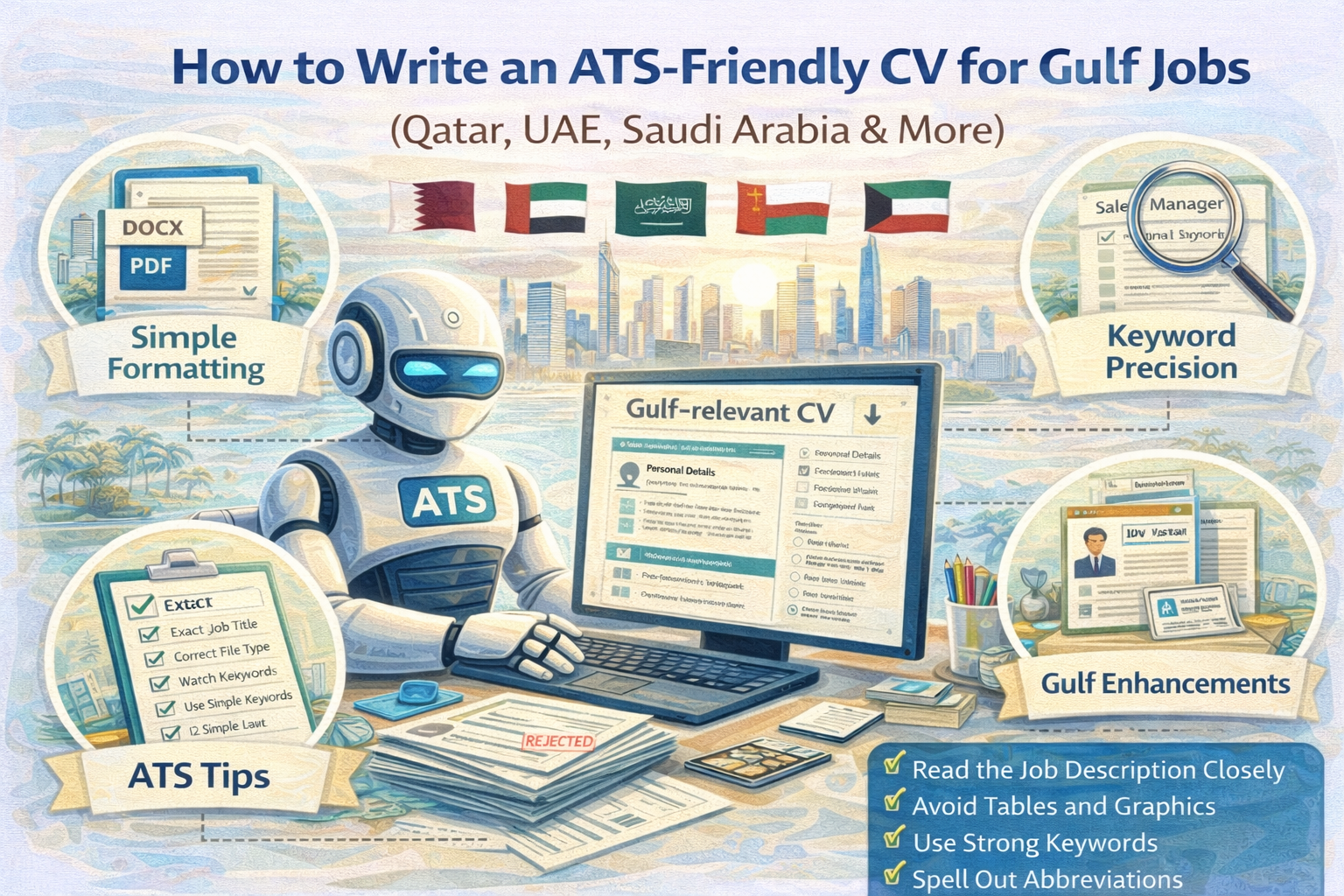
How to Write an ATS-Friendly CV for Gulf Jobs: Qatar, UAE, Saudi Arabia Guide 2026


Career Growth and Job Switching Rules

Job switching has become easier under UAE labor reforms.

  • No-objection certificates (NOC) are no longer mandatory in most cases
  • Notice periods usually range from 30–90 days
  • Green and Golden visas allow more flexibility

Upskilling and performance remain key to promotions and salary growth.


Tips for Expats Planning to Work in the UAE

  • Secure an offer before relocating
  • Understand labor laws and contracts
  • Maintain savings for initial months
  • Respect local laws and customs
  • Invest in continuous learning

Conclusion: Is the UAE Right for Your Career?

The UAE continues to offer strong career opportunities for skilled professionals in 2025–2026. With competitive salaries, global exposure, and a high standard of living, it remains a top destination for expats.

Success depends on preparation, relevant skills, and understanding the local job market. With the right strategy, the UAE can be a powerful platform for both professional growth and financial stability.

https://www.gulftalent.com

Jobs in Saudi Arabia 2025–2026: Complete Expat Guide to Careers, Salaries, and Work Life

0
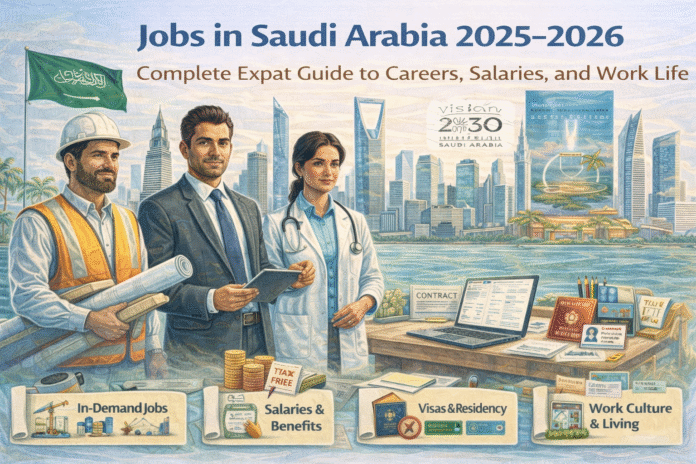
Jobs in Saudi Arabia 2025–2026 offer expats high salaries, tax-free income, and long-term career growth.

Introduction: Why Saudi Arabia Is a Top Job Destination in 2025–2026

Jobs in Saudi Arabia 2025 are attracting record numbers of expats as the Kingdom undergoes one of the fastest economic transformations in the world. Driven by Vision 2030, Saudi Arabia is creating millions of new jobs across construction, technology, healthcare, tourism, energy, and finance.

With tax-free salaries, large-scale mega projects like NEOM, The Red Sea Project, and Qiddiya, and a growing expat-friendly environment, Saudi Arabia has moved from a traditional oil economy to a diversified global hub. For professionals seeking career growth, high income, and long-term stability, Saudi Arabia is now one of the strongest job markets in the Gulf.

This complete guide covers everything expats need to know about working in Saudi Arabia, including in-demand jobs, salaries, visa requirements, work culture, and practical job search tips.

Work visa and residency rules in gulf


Overview of the Saudi Job Market in 2025–2026

Saudi Arabia’s labor market is expanding rapidly. Under Vision 2030, the government aims to reduce oil dependency and increase private-sector employment. By 2025–2026, over one million new jobs are expected across multiple industries.

Key trends shaping jobs in Saudi Arabia 2025 include:

  • Massive government investment in infrastructure and tourism
  • Digital transformation and smart city development
  • Increased demand for skilled foreign professionals
  • Saudization policies prioritizing local talent in some roles

While Saudization exists, expats remain essential for specialized, technical, and leadership positions.


In-Demand Jobs in Saudi Arabia 2025

Technology and IT Jobs in Saudi Arabia

Saudi Arabia’s digital push has created strong demand for IT professionals.

High-demand roles:

  • Software Engineers
  • Data Scientists
  • Cybersecurity Specialists
  • Cloud Architects
  • AI and Machine Learning Engineers

Average salaries:
SAR 18,000–45,000 per month

Key cities:
Riyadh, NEOM, Jeddah


Engineering and Construction Careers

Mega projects are fueling continuous hiring in engineering.

Popular roles:

  • Civil Engineers
  • Mechanical Engineers
  • Electrical Engineers
  • Project Managers
  • HSE Officers

Average salaries:
SAR 15,000–40,000 per month

NEOM alone accounts for thousands of engineering vacancies.


Healthcare Jobs in Saudi Arabia

Healthcare expansion and medical tourism are driving demand.

In-demand roles:

  • Specialist Doctors
  • Nurses
  • Medical Technologists
  • Hospital Administrators

Average salaries:
Doctors: SAR 30,000–80,000+
Nurses: SAR 10,000–18,000


Energy and Renewable Sector Jobs

Saudi Arabia is investing heavily in renewable energy.

Key roles:

  • Renewable Energy Engineers
  • Sustainability Consultants
  • Environmental Engineers

Average salaries:
SAR 20,000–50,000+


Hospitality and Tourism Jobs

Tourism growth has opened new opportunities.

Roles include:

  • Hotel Managers
  • Event Coordinators
  • Chefs
  • Guest Relations Officers

Average salaries:
SAR 8,000–25,000 plus benefits


Finance, Banking, and Corporate Roles

Saudi Arabia’s financial sector is expanding alongside foreign investment.

Common roles:

  • Financial Analysts
  • Accountants
  • Internal Auditors
  • Compliance Officers

Average salaries:
SAR 15,000–45,000+


Salary Expectations and Benefits in Saudi Arabia

One of the biggest attractions of jobs in Saudi Arabia 2025 is tax-free income.

Common benefits include:

  • Free or subsidized accommodation
  • Annual flight tickets
  • Medical insurance
  • Paid leave (21–30 days annually)
  • End-of-service benefits

Compared to other Gulf countries, Saudi packages are often more generous for senior and technical roles.


Work Visa and Residency in Saudi Arabia

Expats must have a valid Saudi work visa and Iqama.

Process overview:

  1. Job offer from a Saudi employer
  2. Employer applies for work visa
  3. Entry visa issued
  4. Medical tests and biometrics
  5. Iqama (residency permit) issued

Most employers handle the process entirely.


Work Culture and Life in Saudi Arabia

Saudi work culture has modernized significantly.

What to expect:

  • Sunday to Thursday workweek
  • Professional but relationship-driven environment
  • Respect for hierarchy
  • Increasingly multicultural workplaces

English is widely used in offices, though basic Arabic is an advantage.


Cost of Living in Saudi Arabia

Saudi Arabia remains more affordable than the UAE.

Average monthly expenses (single expat):

  • Rent: SAR 2,500–5,000
  • Utilities: SAR 300–600
  • Food: SAR 800–1,200
  • Transport: SAR 300–500

Cities like Riyadh and Jeddah are more expensive than smaller regions.


How to Apply for Jobs in Saudi Arabia

Best job portals:

  • Bayt.com
  • GulfTalent
  • LinkedIn Jobs
  • Company career pages

Job search tips:

  • Tailor your CV for Saudi roles
  • Highlight Gulf experience
  • Use ATS-friendly CV formats
  • Network through LinkedIn

Avoid agencies asking for upfront fees.


Tips for Expats Moving to Saudi Arabia

  • Research Saudization restrictions
  • Negotiate housing allowance
  • Understand contract terms carefully
  • Be culturally aware
  • Keep documents attested

Preparation makes relocation smooth.


Future Outlook: Saudi Jobs Beyond 2026

Saudi Arabia’s job market is expected to remain strong beyond 2026 due to continued investment in tourism, clean energy, healthcare, and technology. For skilled professionals, long-term career growth is realistic.


Conclusion

Jobs in Saudi Arabia 2025–2026 offer unmatched opportunities for expats seeking career advancement, financial stability, and exposure to world-scale projects. With tax-free income, rising salaries, and a modernizing lifestyle, Saudi Arabia is no longer just an option, it is a top global career destination.

By choosing the right sector, preparing a strong CV, and understanding the local work environment, expats can build successful and rewarding careers in the Kingdom.

https://www.gulftalent.com/saudi-arabia/jobs

Job Search Strategy for First-Time Expats: A Practical Guide to Working Abroad

0
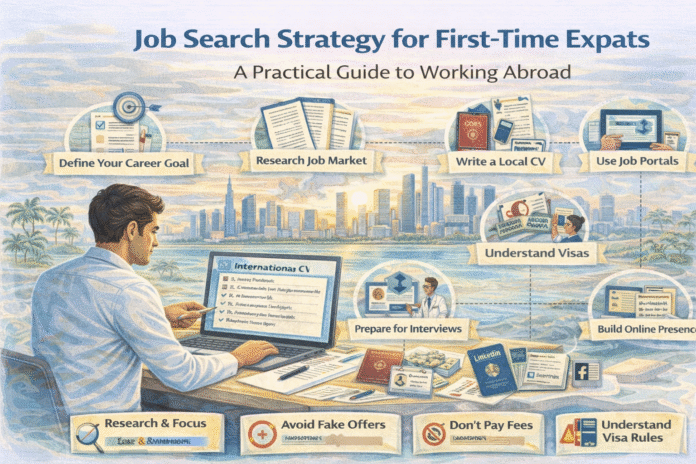
Job search strategy for first-time expats planning to work abroad
A first-time expat planning a successful overseas job search with documents and laptop

Introduction

A solid first-time expat job search strategy is essential for landing work abroad. From tailoring CVs to navigating visas, this guide helps beginners succeed in competitive markets.

Moving abroad for work is an exciting milestone, but for first-time expats, the job search can feel overwhelming. Different countries follow different hiring practices, visa rules, and employer expectations. Without a clear plan, many candidates waste time applying randomly or fall into common mistakes.

A structured job search strategy helps you stay focused, confident, and competitive. Whether you are targeting Gulf countries, Europe, or Asia, the fundamentals remain the same: preparation, research, and smart execution.

This guide breaks down a step-by-step job search strategy for first-time expats, helping you move from planning to placement with clarity.


Step 1: Define Your Career Goal Clearly

Before applying, be clear about what job you want and where.

Ask yourself:

  • What role matches my experience and skills?
  • Which countries hire expats in my profession?
  • Am I open to entry-level roles or only experienced positions?

Avoid applying to “any job abroad.” Employers prefer candidates with direction. Focus on 2–3 job titles and target them consistently.

Example:
Instead of “administrative roles,” target “Administrative Assistant” or “Office Coordinator.”


Step 2: Research the Job Market of Your Target Country

Every country has different demand trends, salary structures, and labor laws.

Research:

  • In-demand jobs
  • Salary ranges
  • Visa sponsorship rules
  • Local qualifications or licensing

For example:

  • Gulf countries favor contract-based hiring
  • Some countries prioritize local citizens (nationalization policies)
  • Certain professions require attestation or licensing

Step 3: CV Tips for First-Time Expat Job Search

Your local CV may not work internationally.

CV tips for first-time expats:

  • Keep it 1–2 pages
  • Use a clean, ATS-friendly format
  • Focus on achievements, not duties
  • Avoid photos unless required
  • Mention location and visa status if applicable

Cover letter strategy:

  • Address the employer directly
  • Explain why you want to work in that country
  • Highlight adaptability and cross-cultural skills

Tailor your CV and cover letter for each job. This significantly improves interview chances.


Step 4: Job Portals for First-Time Expat Job Search

Don’t rely on one platform only.

Best job search sources for expats:

  • LinkedIn (jobs + networking)
  • Country-specific job portals
  • Company career pages
  • Recruitment agencies
  • Professional referrals

Create job alerts and track your applications using a simple spreadsheet.

ATS-Friendly CV Guide for Gulf Jobs


Step 5: Visa Strategy in First-Time Expat Job Search

As a first-time expat, visa clarity is critical.

Key points:

  • Most countries require employer sponsorship
  • You usually cannot work on a visit visa
  • Work permits are tied to job offers
  • Some countries restrict job switching initially

Never pay anyone for a “guaranteed job” or visa.

Rule of thumb:
A genuine employer pays for or officially processes your work visa.


Step 6: Interviews for First-Time Expat Job Search

Most first-round interviews are online.

Interview preparation tips:

  • Research the company and country
  • Be ready to explain why you want to relocate
  • Show flexibility and cultural awareness
  • Be honest about notice period and availability

Common expat interview questions:

  • Why do you want to work abroad?
  • How will you adapt to a new culture?
  • Are you willing to relocate immediately?

Practice clear, confident answers.


Step 7: Build a Professional Online Presence

Employers often check your online profile.

Ensure:

  • LinkedIn profile is updated and professional
  • Headline matches your target role
  • Experience matches your CV
  • No unprofessional public content

Start engaging with recruiters and professionals in your target country.


Step 8: Be Patient and Consistent

International hiring takes time.

Typical timelines:

  • Job search: 2–6 months
  • Visa processing: 2–8 weeks
  • Relocation planning: 1–2 months

Avoid frustration by:

  • Applying consistently
  • Improving your CV based on feedback
  • Upskilling during the wait

Persistence matters more than volume.


Step 9: Prepare Financially and Mentally

Before moving:

  • Save at least 3 months of expenses
  • Understand cost of living
  • Prepare documents (degrees, certificates, passport)
  • Mentally prepare for cultural change

A strong mindset helps you adapt faster and perform better.


Common Mistakes First-Time Expats Should Avoid

  • Applying without research
  • Using the same CV everywhere
  • Paying agents for fake offers
  • Ignoring visa rules
  • Accepting unclear contracts
  • Underestimating relocation costs

Avoiding these mistakes saves time, money, and stress.


Conclusion

A successful international job search doesn’t happen by luck. It requires planning, focus, and consistency. For first-time expats, the key is to treat the job hunt like a project with clear steps and realistic expectations.

By defining your goal, preparing the right documents, understanding visa rules, and applying strategically, you dramatically increase your chances of landing the right opportunity abroad.

With the right strategy, your first expat job can become the foundation of a strong international career.

http://indeed