
INTRODUCTION
Workplace culture GCC organizations follow is shaped by local traditions, labor laws, and a highly multicultural workforce. GCC countries such as the UAE, Qatar, Saudi Arabia, Kuwait, Bahrain, and Oman employ professionals from all over the world, making workplace dynamics unique.
Understanding workplace culture GCC employers expect in 2026 helps employees adapt faster, perform better, and build long-term careers in the Gulf.
1. Understanding Workplace Culture in GCC Countries
Workplace culture in the GCC is a mix of:
- Traditional values
- Modern corporate practices
- Multinational workforce norms
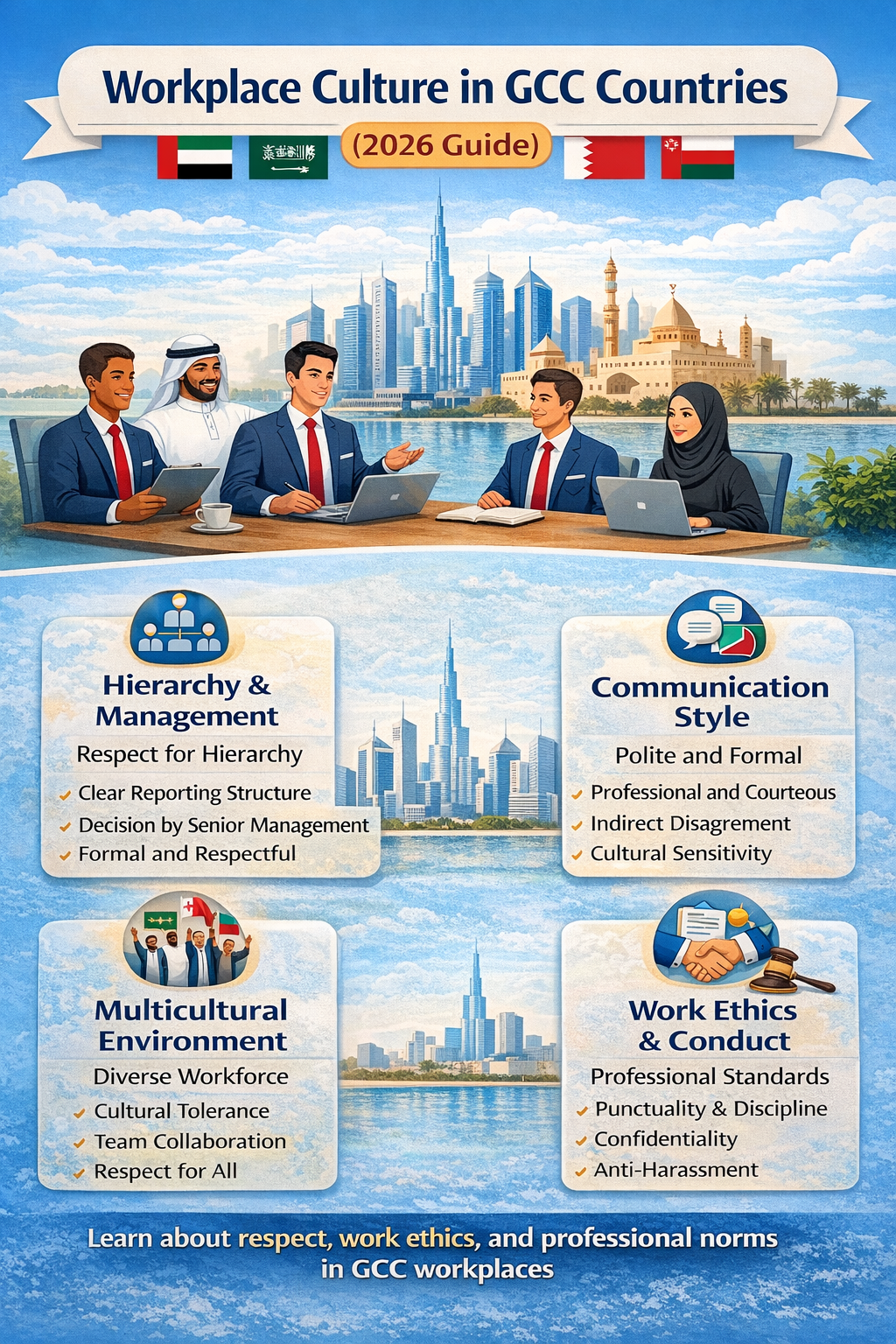
Respect, professionalism, and hierarchy play a major role in daily work life. Employees who understand workplace culture GCC standards avoid misunderstandings and conflicts.
2. Professional Hierarchy and Management Style
One key aspect of workplace culture GCC companies follow is respect for hierarchy.
Common characteristics include:
- Clear reporting structures
- Decision-making by senior management
- Formal communication with supervisors
Employees are expected to respect authority while maintaining professionalism.
3. Communication Style in GCC Workplaces
Communication is generally polite, formal, and respectful.
Workplace culture GCC norms encourage:
- Professional tone in emails
- Respectful disagreement
- Indirect communication in sensitive matters
Open confrontation is usually avoided. Cultural sensitivity is highly valued.
4. Multicultural Work Environment
The GCC workforce is one of the most diverse in the world.
Workplace culture GCC organizations promote:
- Cultural tolerance
- Team collaboration
- Respect for different nationalities
Employees must be mindful of cultural differences, especially during meetings and social interactions.
5. Working Hours and Office Discipline
Workplace culture GCC labor laws regulate working hours, but expectations remain strict.
Key points include:
- Punctuality is essential
- Attendance is closely monitored
- Overtime policies vary by company
During Ramadan, working hours are reduced by law in most GCC countries.
Legal Rights and Labor Laws for Expats in the Gulf: A Complete Guide
6. Dress Code and Professional Appearance
Dress code is an important part of workplace culture GCC offices follow.
General expectations include:
- Modest and professional attire
- Business formal or business casual depending on industry
- Safety gear where required
Even in modern workplaces, conservative dressing is appreciated.
7. Workplace Ethics and Professional Conduct
Strong workplace culture GCC companies maintain includes strict ethical standards.
Employees are expected to:
- Avoid workplace conflicts
- Respect company policies
- Maintain confidentiality
- Follow anti-harassment guidelines
Professional behavior directly affects career growth in the Gulf.
8. Employee Relations and Teamwork
Teamwork is encouraged, but individual responsibility is equally important.
Workplace culture GCC organizations promote:
- Collaboration across departments
- Respectful teamwork
- Clear task ownership
Positive employee relations improve productivity and job satisfaction.
9. Performance, Feedback, and Career Growth
Performance evaluation is a formal process.
Workplace culture GCC companies usually follow:
- Annual appraisals
- KPI-based reviews
- Structured promotions
Employees who show consistency, loyalty, and professionalism are more likely to advance.
10. Common Cultural Mistakes to Avoid
New employees often struggle due to cultural misunderstandings.
Workplace culture GCC experts advise avoiding:
- Disrespectful communication
- Ignoring hierarchy
- Missing deadlines
- Over-casual behavior
Cultural awareness helps build trust and long-term success.
11. Workplace Culture GCC Trends in 2026
Modern workplace culture GCC countries are moving toward includes:
- Flexible working arrangements
- Employee well-being programs
- Diversity and inclusion policies
- Digital collaboration tools
Organizations balancing tradition and innovation will lead the future workforce.
FREQUENTLY ASKED QUESTIONS
Is workplace culture strict in GCC countries?
It is professional and structured but varies by company and industry.
Are women treated equally in GCC workplaces?
Yes. Most GCC countries have strengthened workplace equality laws.
Is teamwork important in GCC offices?
Yes. Team collaboration is highly valued alongside individual responsibility.
CONCLUSION
Understanding workplace culture GCC employers follow is essential for career success in the Gulf. Respect, professionalism, cultural awareness, and ethical conduct define daily work life in GCC countries.
Employees who adapt to workplace expectations build stronger professional relationships and long-term career stability.
Healthcare in the Gulf: What Expats Need to Know Before Moving