

INTRODUCTION
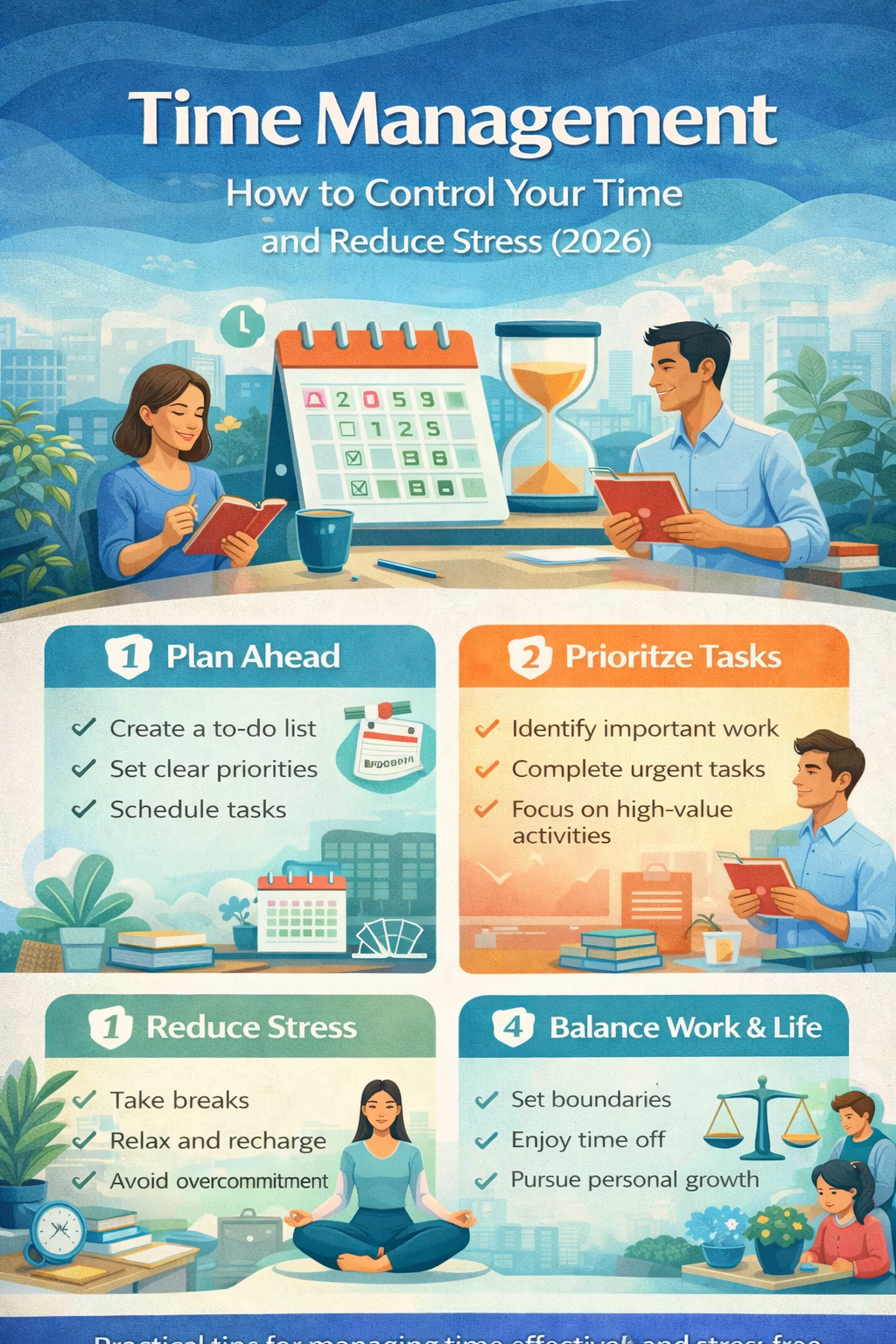
Time management is the ability to plan and control how you use your time effectively. Poor time management leads to stress, missed deadlines, and burnout, while good time management creates balance, focus, and productivity.
In 2026, mastering time management is essential for both career success and personal well-being.
1. What Is Time Management?
Time management means:
- Planning tasks in advance
- Prioritizing important work
- Avoiding unnecessary distractions
- Using time efficiently
Strong time management helps you achieve more with less stress.
2. Why Time Management Is Important
Time management improves:
- Productivity
- Mental clarity
- Work-life balance
- Decision-making
People with good time management feel more in control of their lives.
3. Time Management and Personal Development
Time management supports personal development by:
- Building discipline
- Improving consistency
- Creating better habits
- Reducing overwhelm
4. Common Time Management Problems
Many people struggle with:
- Procrastination
- Poor planning
- Overcommitment
- Distractions
Identifying these issues is the first step to better time management.
5. How to Prioritize Tasks Effectively
Prioritization is a key time management skill.
Simple methods include:
- Listing daily tasks
- Identifying urgent vs important work
- Completing high-priority tasks first
Prioritizing correctly saves time and energy.
6. Daily Planning for Better Time Management
Daily planning improves focus.
Effective planning includes:
- Creating a to-do list
- Setting realistic deadlines
- Scheduling breaks
Planning your day gives structure and clarity.
7. Time Management at Work
In the workplace, time management helps:
- Meet deadlines
- Reduce work pressure
- Improve performance
- Maintain professionalism
Good time management makes employees more reliable and confident.
8. Time Management and Productivity
Time management and productivity work together.
Better time management leads to:
- Improved focus
- Less wasted time
- Higher quality work
- Productivity Tips: How to Get More Done Without Burnout (2026)
9. Avoiding Procrastination
Procrastination wastes valuable time.
To reduce it:
- Break tasks into small steps
- Set clear deadlines
- Remove distractions
- Start with simple tasks
Small actions build momentum.
10. Time Management for Work-Life Balance
Good time management allows:
- Time for family
- Personal growth
- Rest and hobbies
Balance prevents burnout and improves long-term success.
11. Time Management Tools and Techniques
Helpful tools include:
- Digital calendars
- Task management apps
- Timers
- Weekly planners
Use tools that match your routine and style.
12. Time Management Trends in 2026
Modern time management focuses on:
- Flexible scheduling
- Energy management
- Focused work sessions
- Mental well-being
People now value balance over long working hours.
FREQUENTLY ASKED QUESTIONS
How can I improve my time management skills?
Plan daily tasks, set priorities, and avoid distractions.
Is time management important for mental health?
Yes. It reduces stress and creates balance.
Can time management be learned?
Yes. Anyone can improve with practice and consistency.
CONCLUSION
Strong time management skills help you stay organized, focused, and stress-free. By planning wisely and prioritizing correctly, you can control your time instead of feeling controlled by it.
Time is limited. Managing it well changes everything.






[…] Time Management: How to Control Your Time and Reduce Stress (2026) […]