

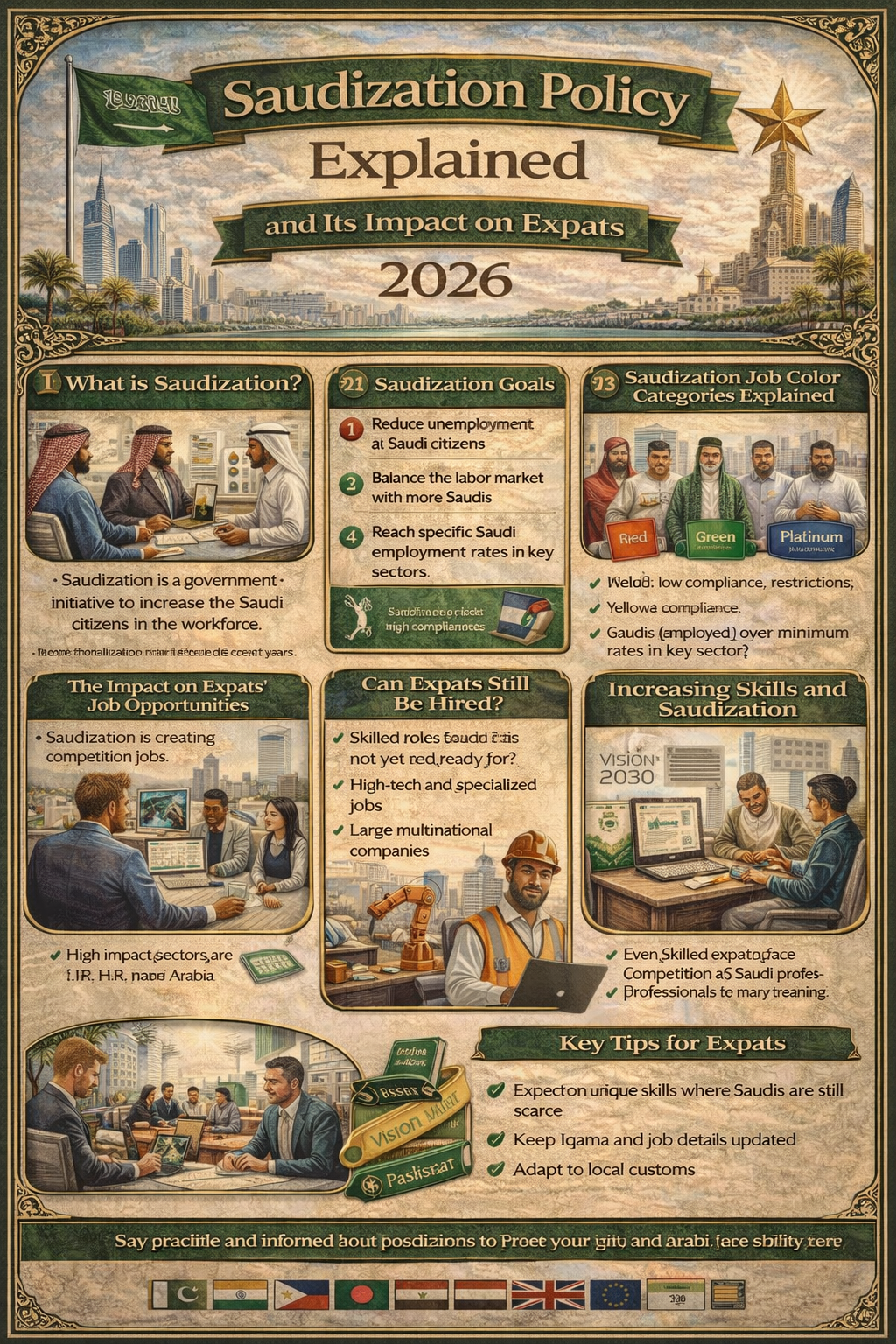
Saudi Arabia’s labor market is changing fast, and Saudization Policy in Saudi Arabia remains one of the most important policies shaping employment opportunities in the Kingdom. As we move into 2026, understanding how Saudization works and how it affects expatriates is essential for anyone planning to work or grow their career in Saudi Arabia.
This guide explains Saudization in simple terms, highlights its latest updates, and shows what expats can realistically expect in the coming years.
What Is Saudization?
Saudization, officially known as the Nitaqat Program, is a government initiative aimed at increasing the employment of Saudi nationals in the private sector.
The core objectives are:
- Reduce unemployment among Saudi citizens
- Encourage private companies to hire and train Saudis
- Balance reliance on expatriate labor
- Support long-term economic goals under Vision 2030
Under this policy, companies are required to meet specific Saudi employment quotas depending on their industry and size.
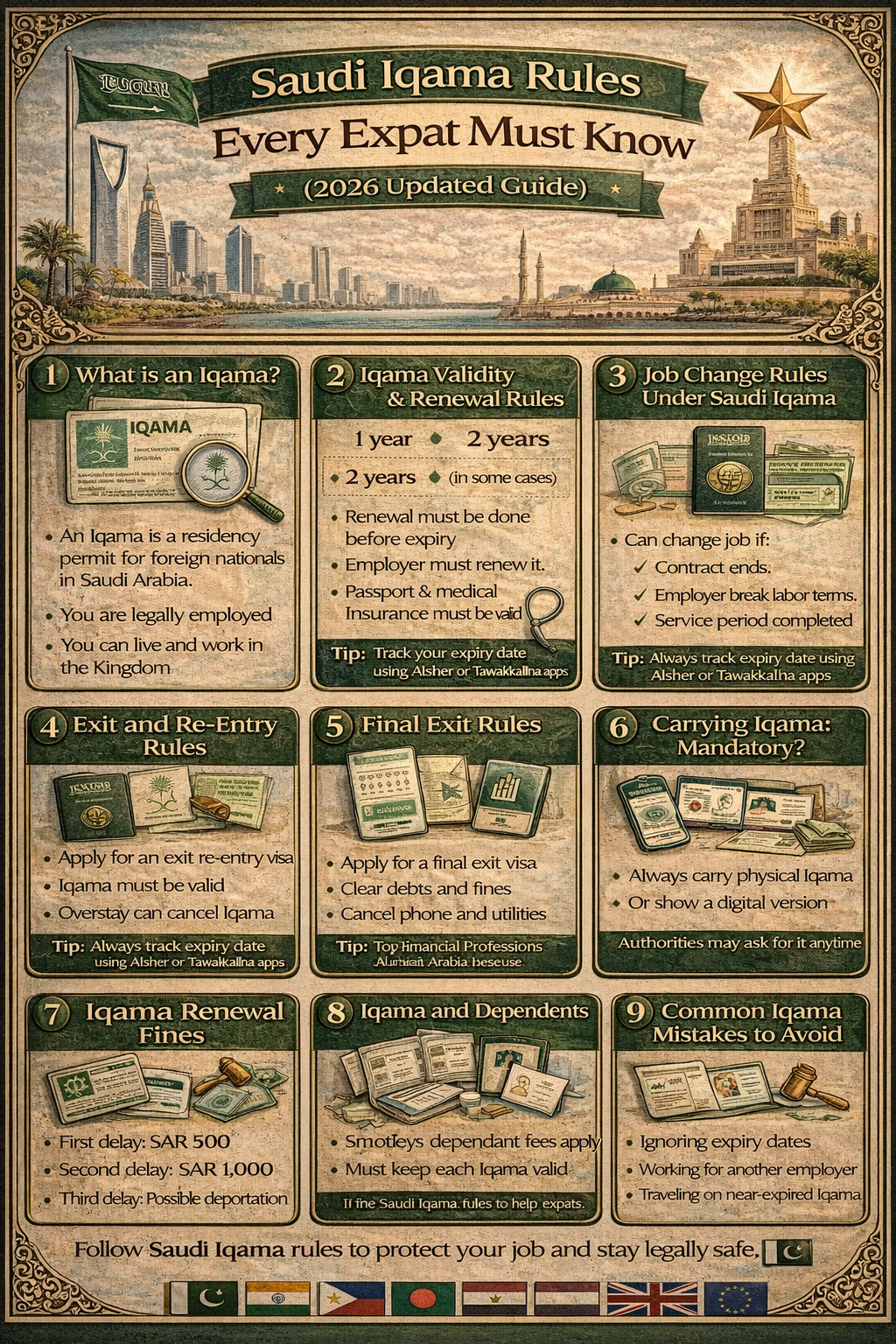
Saudi Iqama Rules Every Expat Must Know (2026)
How the Nitaqat System Works
The Nitaqat system categorizes companies into color bands based on their level of compliance:
- Platinum & Green
High compliance. These companies enjoy easier visa processing and business privileges. - Yellow
Moderate compliance. Limited ability to hire new expats. - Red
Low compliance. Restrictions on visas, renewals, and expansion.
A company’s category directly affects its ability to hire or retain foreign workers.
Saudization Updates Leading Into 2026
In recent years, Saudization has expanded into more sectors, and this trend is expected to continue in 2026. Key developments include:
- Increased localization in HR, sales, accounting, customer service, and retail
- Higher Saudi employment quotas in banking, insurance, and telecom
- Strong focus on training Saudis for mid-level and leadership roles
- Digital monitoring of company compliance through government platforms
These changes reflect Saudi Arabia’s goal of creating a skilled local workforce rather than only filling entry-level roles.
Impact of Saudization on Expats
1. Reduced Opportunities in Certain Roles
Some positions are now almost entirely reserved for Saudi nationals, especially:
- HR officers
- Receptionists
- Cashiers
- Government-facing administrative roles
For expats, these jobs are becoming increasingly limited.
2. Continued Demand for Skilled Expats
Despite stricter localization, skilled expatriates are still in demand, particularly in:
- Engineering and construction
- IT and cybersecurity
- Healthcare
- Project management
- Specialized technical roles
- Education and training
Saudi companies still rely on experienced foreign professionals where local expertise is limited.
3. Higher Competition
Expats now face competition not only from other foreigners but also from qualified Saudi professionals, many of whom are educated abroad and trained under Vision 2030 programs.
Can Expats Still Build Careers in Saudi Arabia?
Yes, but the approach must be smarter.
Expats who succeed in 2026 will usually:
- Have specialized or niche skills
- Offer experience that is hard to replace locally
- Work in multinational or large private companies
- Continuously upgrade qualifications
General or easily replaceable roles are becoming riskier for long-term career stability.
Best Strategies for Expats Under Saudization
Focus on High-Value Skills
Develop expertise in areas where Saudi talent is still growing, such as advanced IT, automation, AI, renewable energy, and large-scale project management.
Upskill Regularly
Certifications, short courses, and professional licenses significantly improve job security.
Stay Legally Updated
Ensure your Iqama, job title, and employer records are always accurate and compliant.
Understand Local Culture
Cultural awareness, basic Arabic communication skills, and professional etiquette add real value in the Saudi workplace.
How Saudization Supports Vision 2030
Saudization is not just a labor policy. It is a key pillar of Vision 2030, aiming to:
- Create sustainable employment for Saudis
- Reduce economic dependency on foreign labor
- Improve productivity in the private sector
- Develop local leadership and innovation
For expats, understanding this broader vision helps in aligning career goals with the Kingdom’s long-term direction.
Final Thoughts
The Saudization Policy in 2026 will continue to reshape Saudi Arabia’s job market. While it limits some opportunities for expatriates, it does not eliminate them.
Expats who adapt, upskill, and target the right sectors can still build strong and rewarding careers in Saudi Arabia. The key is to stay informed, flexible, and future-focused.
If you’re planning to work in Saudi Arabia or already employed there, understanding Saudization is no longer optional. It’s essential. https://www.vision2030.gov.sa/en





[…] Saudization Policy Explained and Its Impact on Expats (2026) […]
[…] Saudization Policy Explained and Its Impact on Expats (2026) […]