
INTRODUCTION
Negotiating your salary is a critical step in securing fair compensation, yet many job seekers in the GCC struggle to ask for what they deserve. With salary negotiation in GCC becoming increasingly important in 2026, professionals must understand the market, prepare evidence of their value, and approach conversations strategically.
This guide provides practical tips to negotiate your salary confidently, avoid common mistakes, and maximize your earning potential across GCC countries.
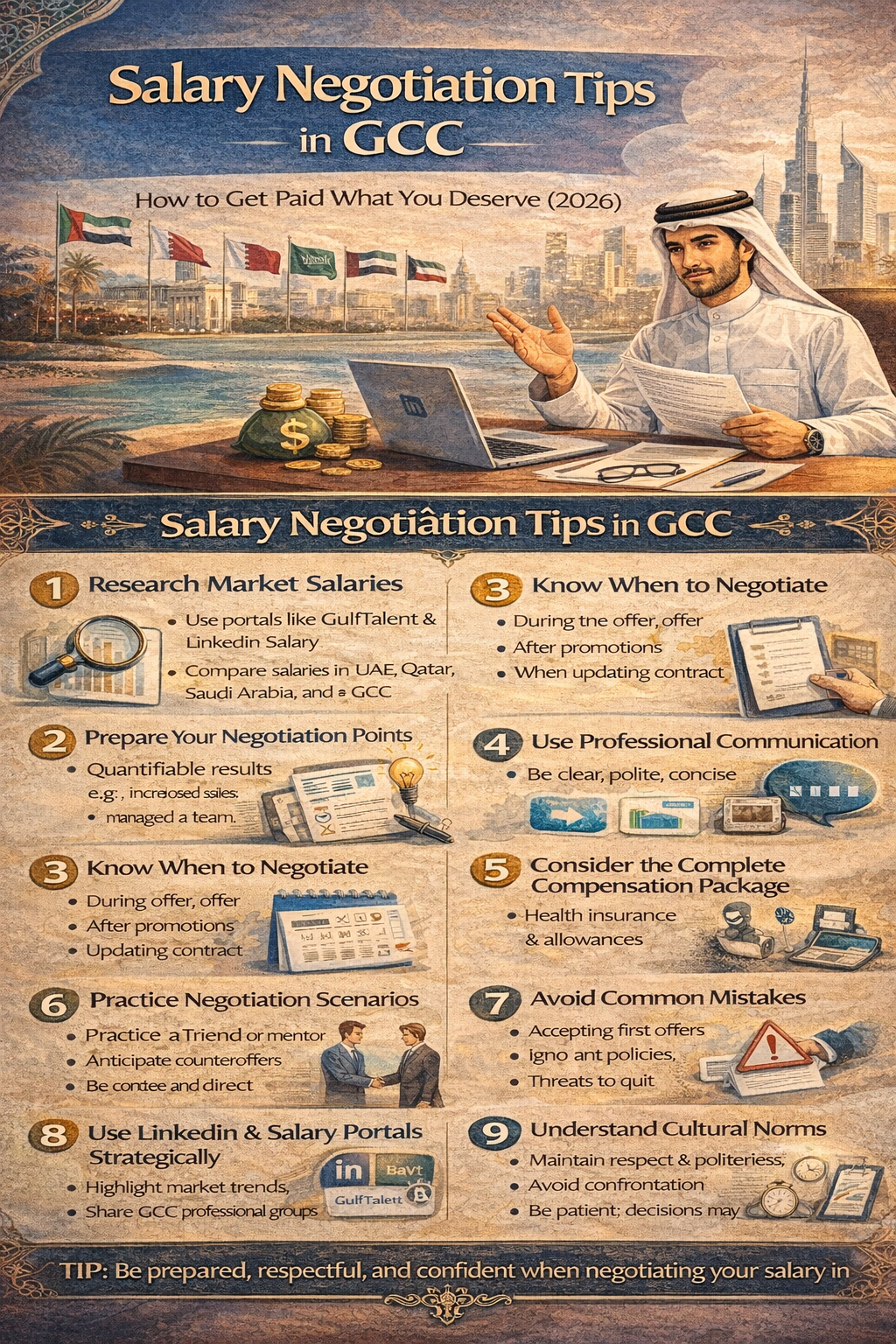
1. Research Market Salaries Before Negotiating
Before negotiating, know your worth.
Steps:
- Use salary portals like GulfTalent, Bayt, and LinkedIn Salary
- Compare roles in UAE, Qatar, Saudi Arabia, and other GCC countries
- Consider industry, experience, and company size
Tip: Being informed strengthens your negotiation position.
Gulf Job Market 2025: In-Demand Jobs, Salaries & Career Opportunities for Expats
2. Prepare Your Negotiation Points
Document your achievements and skills that justify higher pay.
- Quantifiable results (e.g., increased sales, managed a team)
- Certifications or technical skills
- Years of experience in the GCC market
A clear justification shows your value beyond your job title.
3. Know When to Negotiate
Timing is crucial.
- During the job offer stage
- After receiving a promotion or new responsibilities
- When updating a contract
Tip: Avoid negotiating too early or too late in your employment cycle.
4. Use Professional Communication
Communicate your request politely and confidently.
- Avoid aggressive language
- Use numbers and data to support your request
- Be concise and direct
Example:
“Based on my experience and market rates for similar roles in Qatar, I would like to discuss a salary of QAR XX,XXX per month.”
5. Consider the Complete Compensation Package
Salary isn’t everything.
- Look at benefits: health insurance, housing allowance, transportation
- Vacation and leave policies
- End-of-service benefits (per GCC labor laws)
Sometimes non-monetary perks can outweigh base salary.
6. Practice Negotiation Scenarios
Role-play with a friend or mentor.
- Practice common negotiation dialogues
- Anticipate counteroffers
- Prepare responses to pushback
Confidence during negotiation increases success rates.
7. Avoid Common Mistakes
- Accepting the first offer without review
- Ignoring company policies or labor laws
- Threatening to leave immediately
- Being unprepared with data
Tip: Negotiation is a discussion, not a confrontation.
8. Use LinkedIn and Salary Portals Strategically
- Highlight market trends
- Share certifications and accomplishments
- Join GCC professional groups for salary insights
This helps you present an informed case to recruiters.
9. Understand Cultural Norms in GCC Negotiations
- Maintain respect and politeness
- Avoid confrontation
- Be patient; decisions may take time
Being culturally aware ensures smoother negotiation.
10. Know Your Bottom Line
Decide the minimum salary you are willing to accept.
- Don’t compromise below your value
- Be ready to walk away if the offer is unfair
Clarity about your limits protects your interests.
FREQUENTLY ASKED QUESTIONS
Is salary negotiation common in GCC?
Yes. Employers expect professionals to negotiate, especially in UAE and Qatar.
Should fresh graduates negotiate?
Yes, but base it on market data and internship achievements.
When is the best time to discuss benefits?
After receiving the offer but before signing the contract.
CONCLUSION
Mastering salary negotiation in GCC is essential for maximizing your career earnings. Research market rates, prepare strong points, understand cultural nuances, and communicate professionally. By following these strategies, you can confidently secure a fair salary and benefits package in 2026.
Salary guide for gulf countires
https://www.scribd.com/document/975832296/Salary-Guide-2026-Michael-Page-Saudi-Arabia