Pakistani expats in Saudi Arabia continue to play an important role in the Kingdom’s workforce. Thousands of professionals from Pakistan move to Saudi Arabia every year for better salaries, tax-free income, and career opportunities created by Vision 2030 projects in cities like Riyadh, Jeddah, and Dammam.
In recent years, economic transformation under Saudi Vision 2030 has created thousands of new opportunities in industries such as engineering, construction, healthcare, finance, logistics, and technology.
Cities like Riyadh, Jeddah, and Dammam continue to attract expatriates. Emerging megaprojects like NEOM are also creating new job opportunities for international professionals.
However, the first few months can be challenging. Many new expatriates arrive with high expectations but little preparation for the realities of working and living in the Gulf.
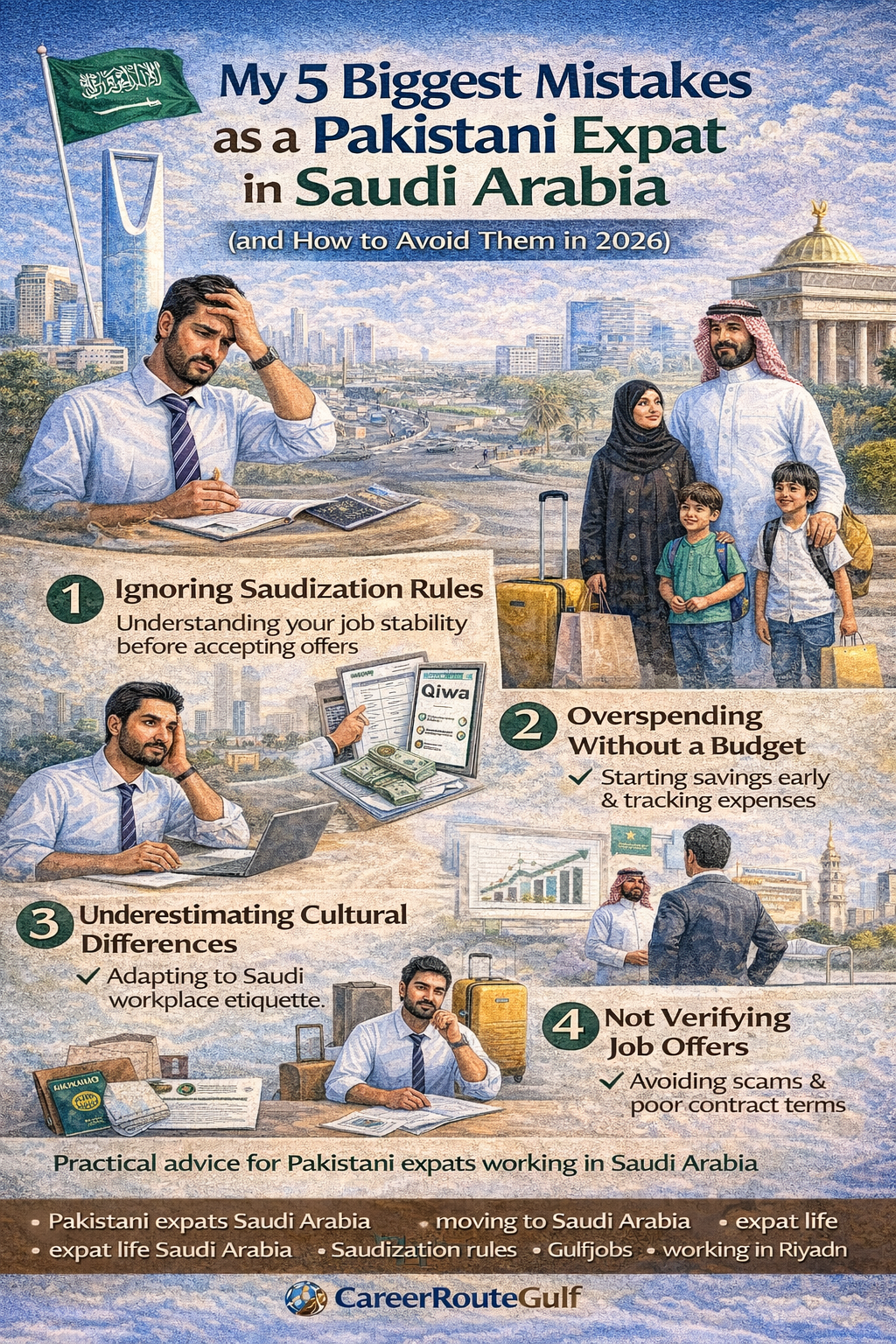
Based on real experiences shared by Pakistani expatriates during 2025–2026, here are five of the most common mistakes people make when moving to Saudi Arabia — and practical strategies to avoid them.
1. Not Understanding Saudization Rules Before Accepting a Job
One of the most common mistakes new expatriates make is accepting a job offer without understanding how the government’s workforce localization policy affects their profession.
Saudi Arabia has introduced the Nitaqat Program to increase employment opportunities for Saudi nationals. Under this system, companies must hire a specific percentage of Saudi employees depending on their industry and company size.
Why This Matters
In 2026, Saudization policies have expanded significantly. Certain professions are now largely reserved for Saudi citizens, including:
- Human resources roles
- Customer service jobs
- Retail sales positions
- Administrative roles
- Entry-level banking positions
For expatriates working in these sectors, job security can sometimes be uncertain.
Real Example
A Pakistani administrative supervisor working in a retail company in Riyadh shared that his job title was suddenly changed during contract renewal because the original position had been localized for Saudi citizens. Although he was offered a new role, the salary and responsibilities were reduced.
Situations like this are not uncommon when companies adjust their workforce to meet Saudization quotas.
How to Avoid This Mistake
Before accepting a job offer:
- Verify your profession on the Qiwa platform
- Check the company’s Saudization rating (Green or Platinum companies are generally more stable)
- Focus on specialized roles where expatriate skills are still in demand
Industries that continue to rely on international talent include:
- Engineering
- Information technology
- Healthcare
- Construction
- Energy and infrastructure
These fields remain essential to Saudi Arabia’s development projects.
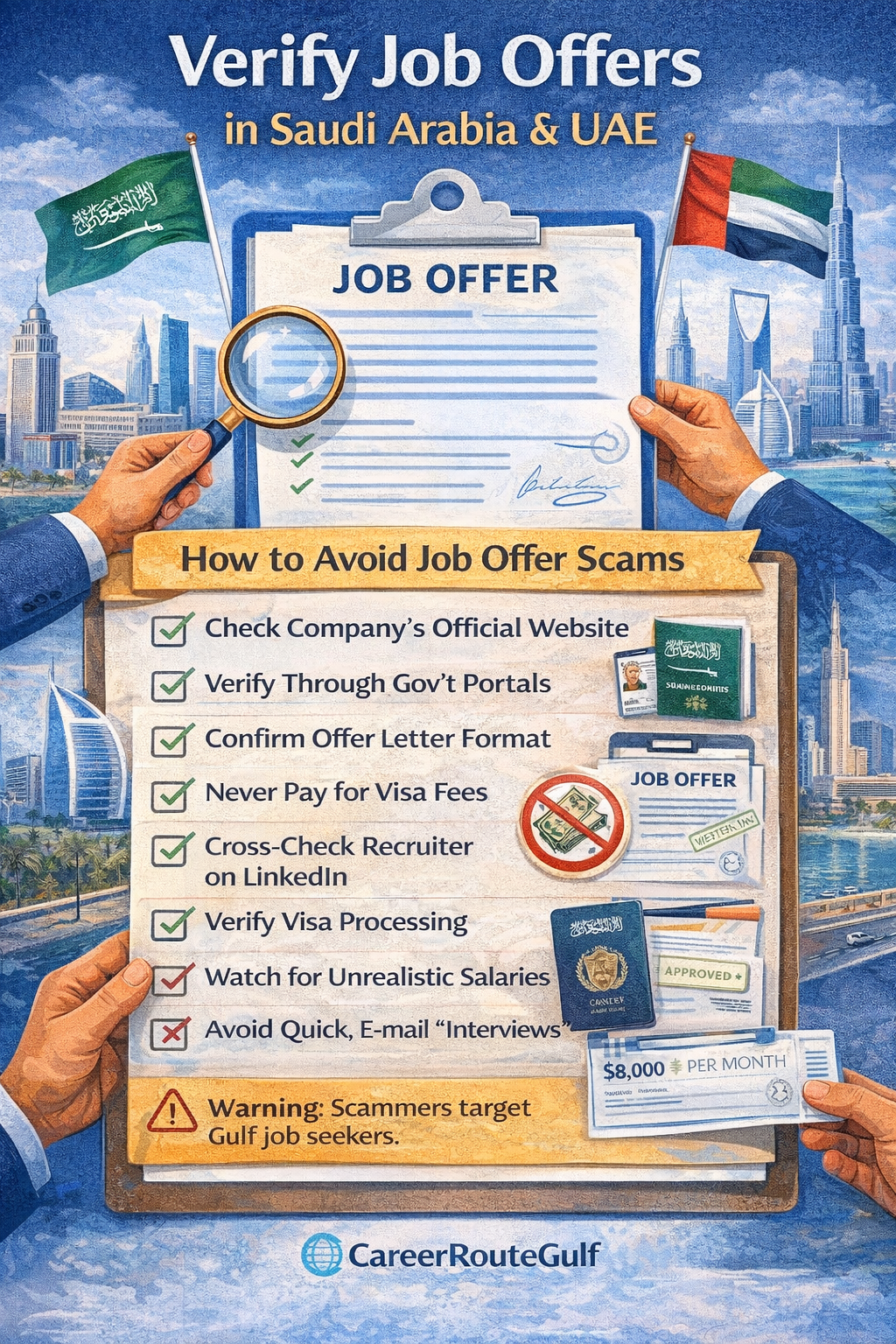
Verify Job Offers in Saudi Arabia and UAE Guide
2. Spending Your Salary Too Quickly Without a Budget
Another common mistake among new expatriates is overspending during the first few months.
Receiving a tax-free salary can be exciting, especially when the income is significantly higher than what many professionals earn in Pakistan. However, living costs in major Saudi cities have increased in recent years.
Housing, transportation, food delivery services, and family visits can quickly reduce monthly savings.
A Common Financial Pattern
Many new expatriates follow this pattern:
- First salary arrives
- Purchase expensive smartphone or electronics
- Send large remittances home immediately
- Spend heavily on restaurants and shopping
Within a few months, savings begin to disappear.
Real Example
A construction engineer who moved to Jeddah in 2025 shared that he purchased a car during his second month in the Kingdom. After insurance, fuel, and loan payments, he realized nearly half of his monthly salary was being spent on transportation alone.
This made saving money extremely difficult.
Smart Financial Strategy
A simple budgeting plan can help maintain financial stability.
Recommended monthly allocation:
| Category | Percentage |
|---|---|
| Savings & investments | 40% |
| Living expenses | 30% |
| Family support | 20% |
| Personal spending | 10% |
It is also wise to build an emergency fund covering at least three months of living expenses.
Using banking apps or simple expense tracking tools can help you monitor spending.
In-Demand Skills in Saudi Arabia (2026): What Employers Are Looking For
3. Underestimating Cultural and Workplace Differences
Adjusting to a new work culture is another major challenge.
While Pakistan and Saudi Arabia share many cultural similarities, workplace environments can still differ significantly.
Saudi workplaces often emphasize:
- Respect for hierarchy
- Formal communication
- Clear authority structures
- Strict punctuality
Understanding these norms can help expatriates build stronger professional relationships.
Communication Differences
In many Saudi companies, communication tends to be more indirect compared to South Asian workplaces.
For example:
- Criticism may be expressed subtly
- Instructions may require clarification
- Meetings may follow formal protocols
Real Example
A Pakistani IT specialist working in Dammam shared that he initially struggled during meetings because he spoke too informally with senior managers. After observing colleagues and adjusting his communication style, his professional relationships improved significantly.
Practical Tips for Cultural Adaptation
- Address managers respectfully
- Observe workplace etiquette
- Improve English communication skills
- Learn basic Arabic greetings
- Avoid sensitive discussions about politics or religion
Building connections with colleagues from different nationalities can also help expatriates adjust more easily.
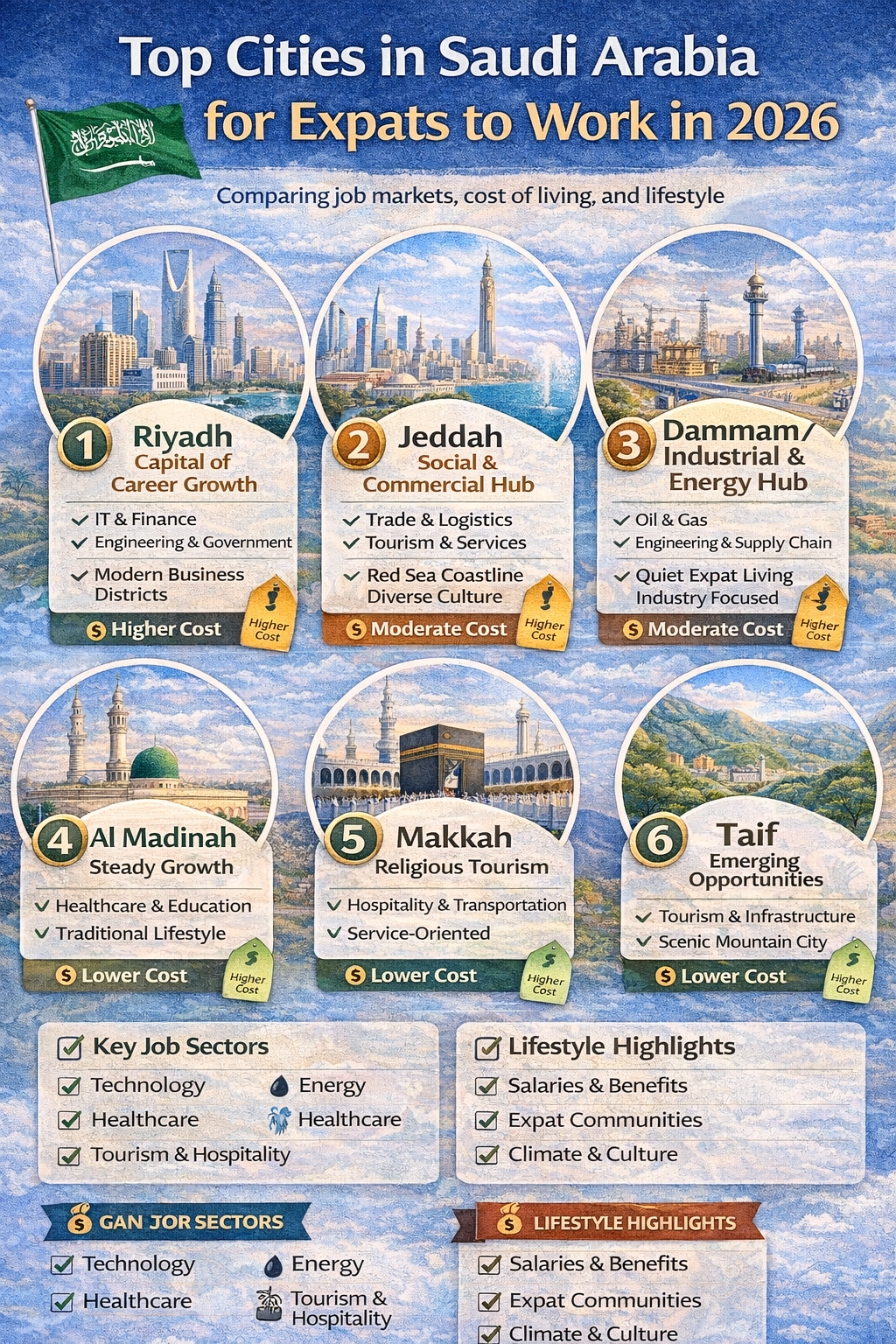
Top Cities in Saudi Arabia for Expats to Work in 2026
4. Ignoring Proper Job Offer Verification
Job scams targeting Gulf job seekers remain a serious issue.
Every year, thousands of professionals lose money by accepting fake offers or dealing with unlicensed recruitment agents.
Fraudulent job offers often include requests for:
- Visa processing fees
- Recruitment charges
- Medical or document verification payments
Legitimate companies typically cover recruitment costs themselves.
Real Example
In 2024, several job seekers in Pakistan reported receiving fake emails claiming to represent major Saudi construction companies. Applicants were asked to pay processing fees for visa documentation.
After sending the money, communication stopped completely.
How to Protect Yourself
Before accepting any job offer:
- Verify the company through official Saudi government platforms
- Check employment details on the Qiwa system
- Confirm the job offer through the company’s official website or HR department
- Never send money to agents claiming to guarantee employment
Always request a written employment contract before traveling.
The contract should clearly include:
- Salary details
- Housing allowance
- Medical insurance
- Annual leave policy
- End-of-service benefits
Keeping copies of all documents can prevent problems later.
Private vs Government Jobs in Saudi Arabia: Salary, Benefits & Growth
5. Delaying Family Sponsorship or Long-Term Planning
Many expatriates initially move to Saudi Arabia alone with the intention of bringing their families later.
However, without careful planning, family sponsorship can become complicated.
Factors that affect family relocation include:
- Minimum salary requirements
- Housing availability
- School fees for children
- Visa processing timelines
Real Example
A Pakistani accountant working in Riyadh delayed family sponsorship for two years due to rising living costs. By the time he applied for family visas, school admissions had already closed for the academic year, forcing his children to wait another year before joining him.
Planning early can help avoid such challenges.
Planning for Family Relocation
If you plan to bring your family:
- Discuss family visa eligibility during job negotiations
- Research international schools early
- Budget for housing large enough for family members
- Consider healthcare and insurance coverage
Many expatriates also find it helpful to join community groups and social organizations for support.
Top Cities in Saudi Arabia for Expats to Work in 2026
Final Thoughts
Saudi Arabia remains one of the most attractive destinations for Pakistani professionals seeking international career growth. With major economic reforms, infrastructure development, and global investments, opportunities continue to expand across many industries.
However, success as an expatriate requires preparation, patience, and smart decision-making.
Avoiding common mistakes — such as misunderstanding Saudization rules, overspending, ignoring cultural differences, accepting unverified job offers, or failing to plan long-term — can significantly improve your experience in the Kingdom.
Thousands of Pakistani professionals build successful careers in Saudi Arabia every year. With the right planning and awareness, you can do the same.