


Introduction
Many job seekers applying for jobs in the Gulf feel confused how recruiters shortlist CVs, when they never hear back, even with strong experience. In 2026, recruiters in GCC countries like Saudi Arabia, UAE, Qatar, and Oman follow a structured and technology-driven CV shortlisting process.
This insider guide explains exactly how recruiters shortlist CVs in the Gulf, what systems they use, what they look for in the first 30 seconds, and how you can position your CV to get shortlisted instead of ignored.
1. First Filter: ATS Systems Used in GCC
Most medium and large companies in the Gulf now use Applicant Tracking Systems (ATS).
Recruiters rarely see your CV first. The system does.
What ATS checks:
- Job title match
- Skills keywords
- Years of experience
- Industry relevance
- Location and visa status
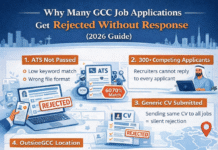
If your CV does not match 60–70% of the job description keywords, it is often rejected automatically.
✅ Tip:
Always customize your CV for each job and reuse keywords from the job posting naturally.
2. Recruiters Spend Less Than 30 Seconds per CV
After ATS filtering, recruiters quickly scan shortlisted CVs.
They usually check:
- Current job title
- Company name
- Total GCC experience
- Nationality and location
- Career stability
If these are unclear or buried deep in the CV, your chances drop immediately.
✅ Best Practice:
Put your current role, industry, and GCC experience at the top of page one.
3. GCC Experience Matters More Than You Think
Recruiters in the Gulf strongly prefer candidates who:
- Have worked in GCC before
- Understand local work culture
- Know regional compliance and business practices
Even one year of GCC experience can outweigh several years elsewhere.
If you are a fresher to the Gulf, recruiters look for:
- Similar market exposure
- Multinational company background
- Transferable skills
4. Job Titles Must Match the Market Language
One common mistake is using non-standard job titles.
For example:
- “Business Growth Ninja” instead of “Business Development Executive”
- “Accounts Hero” instead of “Accountant”
Recruiters search by standard Gulf job titles.
✅ Use titles commonly used in:
- Saudi job portals
- UAE company listings
- LinkedIn GCC job ads
5. Employment Gaps Are Flagged Quickly
Recruiters do not automatically reject CVs with gaps, but they notice them immediately.
Unexplained gaps raise concerns about:
- Visa issues
- Termination problems
- Skill stagnation
✅ Always explain gaps briefly in your CV or cover letter:
“2024–2025: Skill upgrade and certification (SAP FICO)”
6. Nationality and Visa Status Still Influence Shortlisting
While skills matter, recruiters also consider:
- Saudization / Emiratization rules
- Company quotas
- Visa transfer feasibility
This does not mean rejection, but it affects priority ranking.
Saudization Policy Explained and Its Impact on Expats (2026)
7. CV Length and Format Preferences in the Gulf
Recruiters prefer:
- 2 pages (max 3 for senior roles)
- Simple layout
- No graphics or heavy design
- Clear bullet points
Avoid:
- Photos (unless requested)
- Personal details like religion or marital status
- Overdesigned templates
8. Common CV Mistakes That Kill Shortlisting Chances
Using one CV for all jobs
No measurable achievements
Missing keywords
Spelling and grammar errors
Listing duties instead of results
Example of weak vs strong bullet:
Weak:
“Handled sales activities”
Strong:
“Increased regional sales by 28% within 12 months across KSA market”
9. How Recruiters Rank CVs After Shortlisting
Recruiters rank CVs based on:
- Skill relevance
- Industry match
- GCC experience
- Stability and progression
- Availability and notice period
Top-ranked CVs are sent to hiring managers.
10. Final Insider Tips to Get Shortlisted Faster
- Apply within the first 7 days of job posting
- Optimize your LinkedIn profile to match your CV
- Use a Gulf-standard CV format
- Follow up professionally after applying
- https://www.naukrigulf.com/career-tips/what-recruiters-check-in-your-cv/
FAQs (For FAQ Schema)
Q1: Do Gulf recruiters prefer local candidates?
Yes, but skilled expats with relevant experience are still in high demand.
Q2: Is ATS used in Saudi Arabia and UAE?
Yes, especially in large companies and government-linked firms.
Q3: Should I include my nationality on my CV?
Only if required. Focus more on skills and experience.
Conclusion
Understanding how recruiters shortlist CVs in the Gulf gives you a real advantage in 2026. It is not about luck. It is about alignment with systems, expectations, and local hiring practices.
Fix your CV using these insights, and your response rate will improve significantly.
Disclaimer
This article is for informational purposes only. Recruitment processes may vary by company and country. Always verify job requirements directly with employers.



[…] How Recruiters in the Gulf Actually Shortlist CVs (2026 Insider Guide) […]