
INTRODUCTION
HR practices GCC organizations follow have changed significantly in recent years due to labor law reforms, workforce nationalization, and the growing number of expatriate employees. Countries such as the UAE, Qatar, Saudi Arabia, Kuwait, Bahrain, and Oman now require structured and transparent HR systems in.
HR practices GCC employers must follow in 2026 is essential for legal compliance, employee retention, and business growth.
1. HR Practices GCC Countries Require for Legal Compliance
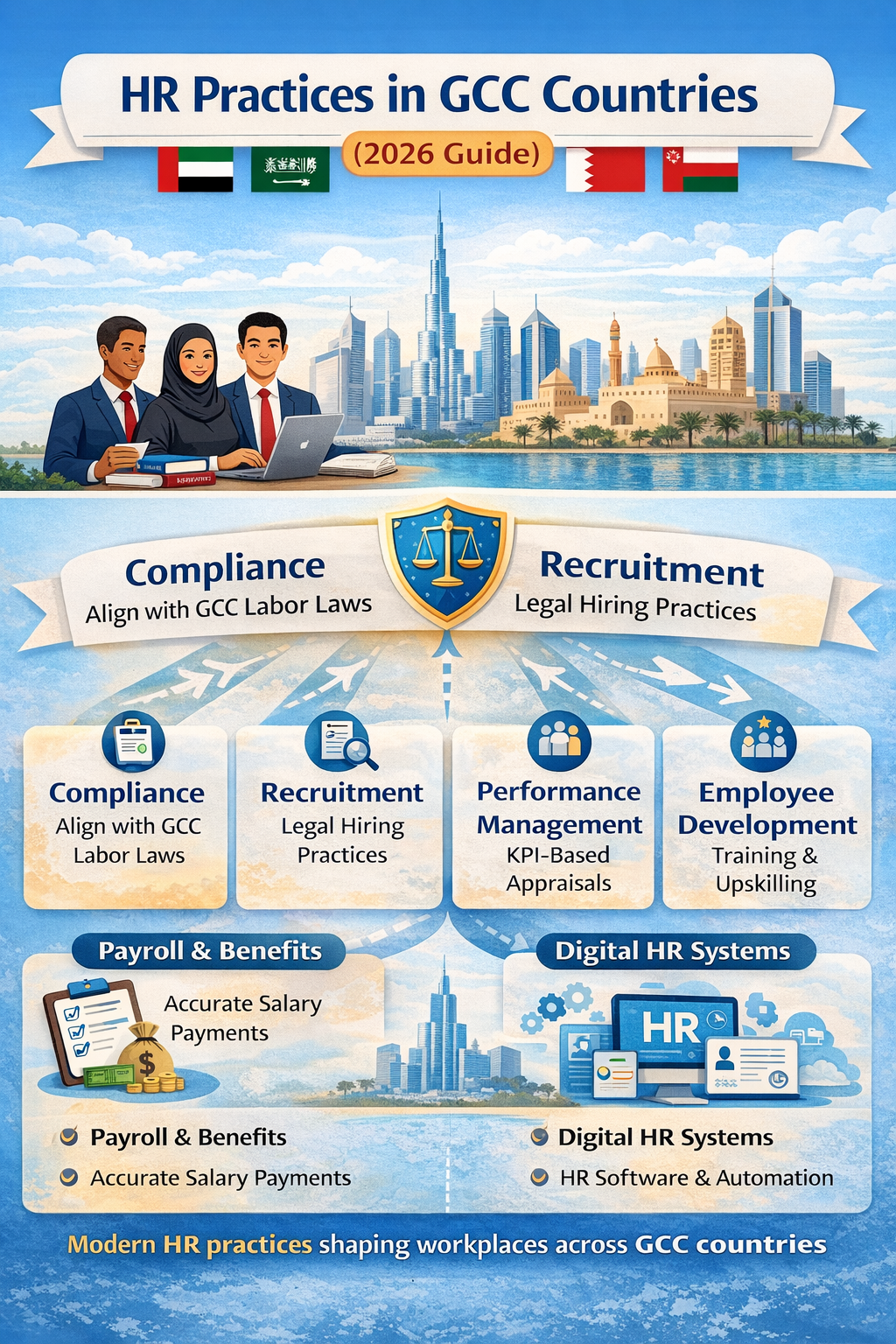
One of the most critical HR responsibilities in the GCC is compliance with labor laws. HR departments must ensure:
- Valid employment contracts
- Correct working hours
- Legal salary payments
- Proper leave records
Failure to follow HR practices GCC labor laws can lead to fines, visa bans, or business suspension.
2. Recruitment and Hiring as Core HR Practices GCC Employers Use
Recruitment is a major part of HR operations in the Gulf. Effective HR practices GCC companies follow include:
- Hiring through licensed agencies
- Verifying employee documents
- Issuing written offer letters
- Processing work visas legally
HR teams must coordinate closely with recruitment departments to avoid illegal hiring.
https://careerroutegulf.com/gulf-career-growth/
3. Workforce Nationalization and HR Strategy
Most GCC countries have workforce nationalization programs:
- Emiratisation (UAE)
- Saudization (Saudi Arabia)
- Omanization (Oman)
HR practices GCC employers adopt must balance:
- Hiring local talent
- Retaining skilled expatriates
- Meeting government quotas
This requires careful workforce planning and training programs.
4. Performance Management in GCC Workplaces
Modern HR practices GCC organizations are shifting toward performance-based systems rather than seniority.
Key elements include:
- Clear KPIs
- Annual performance appraisals
- Incentive-based rewards
- Promotion policies
Transparent performance management improves productivity and reduces disputes.
5. Training and Employee Development
Training is now a strategic HR function. Strong HR practices GCC companies invest in include:
- Skill development programs
- Leadership training
- Compliance and ethics training
- Digital skills enhancement
Training also supports nationalization goals by preparing local employees for leadership roles.
6. Payroll Management and Employee Benefits
Payroll accuracy is a legal requirement in the GCC. HR practices GCC payroll systems must ensure:
- On-time salary payments
- Wage Protection System compliance
- Medical insurance coverage
- Leave and gratuity calculations
Payroll errors can result in employee complaints and legal action.
7. Employee Relations and Workplace Policies
Strong HR practices GCC companies follow focus on maintaining positive employee relations through:
- Clear workplace policies
- Grievance handling procedures
- Anti-harassment policies
- Equal opportunity guidelines
HR departments act as a bridge between management and employees.
8. Handling Termination and End-of-Service Benefits
Termination is a sensitive HR responsibility. HR practices GCC labor laws require:
- Written notice periods
- Valid termination reasons
- Full settlement of dues
- End-of-service gratuity payments
Incorrect handling of termination can result in labor disputes.
9. Digital HR Systems and Automation
In 2026, HR practices GCC organizations increasingly rely on:
- HR management software
- Digital employee records
- Online leave management
- Automated payroll systems
Technology improves accuracy, transparency, and compliance.
10. Future Trends in HR Practices GCC Countries
HR practices GCC workplaces will continue evolving with focus on:
- Employee well-being
- Flexible work arrangements
- Data-driven HR decisions
- Diversity and inclusion
Employers who adapt early will attract and retain better talent.
FREQUENTLY ASKED QUESTIONS
Are HR policies mandatory in GCC companies?
Yes. Written HR policies are required for compliance and dispute resolution.
Can HR withhold employee salaries?
No. Salary delays violate labor laws and wage protection systems.
Do small companies need HR departments?
Yes. Even small businesses must follow HR practices GCC labor laws require.
CONCLUSION
Strong HR practices GCC employers follow are no longer optional. They are essential for legal compliance, employee satisfaction, and sustainable growth in the Gulf region.
Whether managing a small business or a large organization, understanding HR responsibilities helps avoid legal risks and build a professional workplace culture