
Introduction
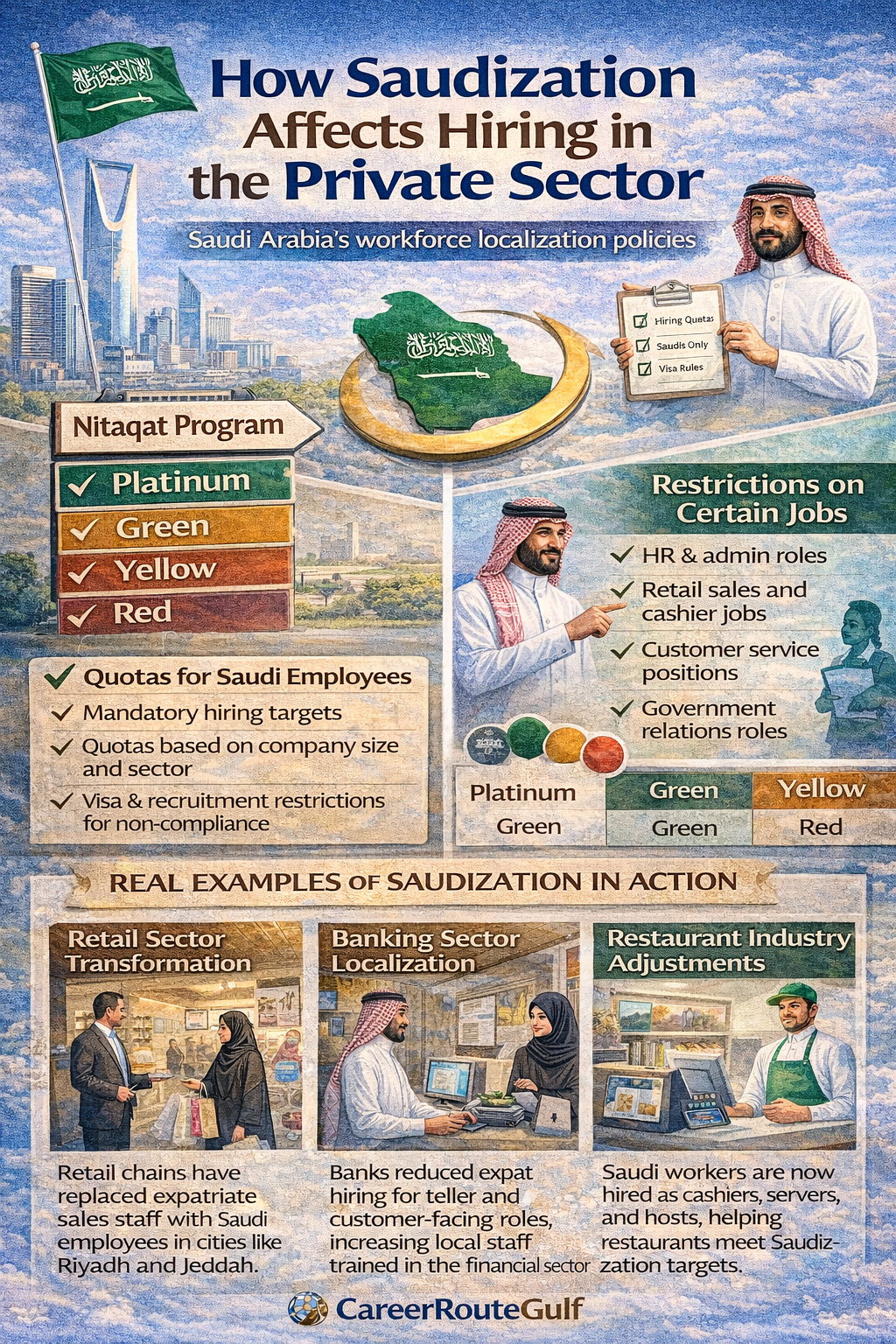
The policy of Saudization, officially known as the Nitaqat program, has significantly changed the employment landscape in Saudi Arabia. Saudization affects hiring in the private sector introduced by the Saudi government to increase the participation of Saudi nationals in the private sector, this policy has reshaped hiring strategies for companies across industries.
For companies operating in cities like Riyadh, Jeddah, and Dammam, Saudization has become a major factor influencing recruitment decisions, workforce planning, and long-term business strategies.
If you’re planning to work in Saudi Arabia, it’s important to understand how these policies affect hiring. You may also want to read our guide on
Private vs Government Jobs in Saudi Arabia: Salary, Benefits & Growth
This article explains Saudization affects hiring in the private sector, with real examples from industries adapting to the policy.
What Is Saudization?
Saudization is a labor policy designed to increase employment opportunities for Saudi citizens within private companies.
Under the Nitaqat system, businesses are classified based on the percentage of Saudi nationals they employ.
Companies are placed into categories such as:
- Platinum
- Green
- Yellow
- Red
Companies with higher Saudization compliance receive benefits such as easier visa processing and access to government services.
For official information about the Nitaqat program, see the Saudi government labor authority:
https://www.hrsd.gov.sa
Why Saudization Was Introduced
Saudi Arabia historically relied heavily on expatriate workers across many industries.
However, economic reforms under Vision 2030 aim to:
- Increase employment for Saudi citizens
- Develop local workforce skills
- Reduce dependency on foreign labor
- Strengthen the private sector economy
- https://www.vision2030.gov.sa
These reforms have significantly influenced how companies recruit employees.
You can also read our related guide:
How Vision 2030 Is Changing Jobs in Saudi Arabia (Updated 2026)
How Saudization Affects Private Sector Hiring
Saudization influences hiring decisions in several ways.
1. Hiring Quotas for Saudi Nationals
Companies must employ a certain percentage of Saudi citizens depending on their industry and company size.
For example:
- Retail companies have higher Saudization quotas
- Technical industries may have lower quotas due to specialized skills requirements
Failure to meet these quotas can lead to restrictions on hiring expatriates.
2. Certain Jobs Are Reserved for Saudis
The government has localized several job roles that were previously dominated by expatriates.
Examples include:
- HR roles
- Customer service positions
- Retail sales staff
- Government relations officers
This change has reduced expat hiring in entry-level service positions.
3. Work Visa Restrictions
Companies that fail to meet Saudization targets may face restrictions such as:
- Delays in visa approvals
- Limitations on hiring foreign workers
- Restrictions on renewing existing work permits
If you want to understand job offer safety before applying, read:
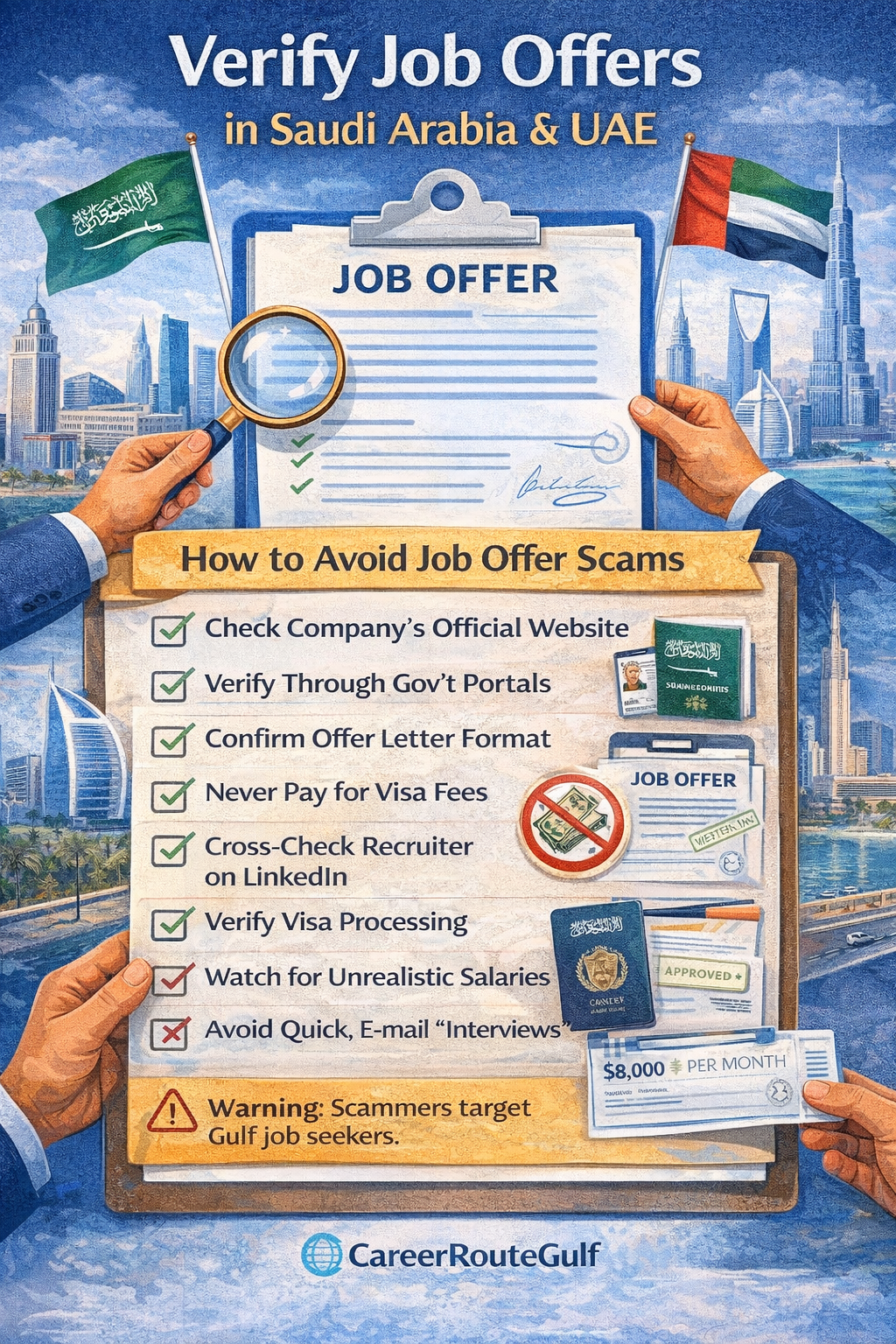
Verify Job Offers in Saudi Arabia and UAE Guide
Real Examples of Saudization in Action
Example 1: Retail Industry
Retail companies operating in Riyadh and Jeddah had to increase Saudi hiring after localization policies targeted retail jobs.
Many stores replaced expatriate sales staff with Saudi employees while keeping foreign professionals in management positions.
Example 2: Banking Sector
Banks in Saudi Arabia have increased hiring of Saudi nationals in customer-facing roles such as:
- Bank tellers
- Customer service representatives
- Relationship managers
Expatriates are now more commonly hired in specialized roles such as IT, financial analysis, and compliance.
Example 3: Restaurant Industry
Restaurants have also adapted their hiring strategies.
Today, many restaurants employ Saudi nationals as:
- Cashiers
- Front desk hosts
- Customer service staff
Meanwhile, expatriates still work in technical roles such as chefs and kitchen specialists.
Industries Where Expats Are Still Needed
Despite Saudization policies, expatriates remain essential in several sectors where specialized skills are required.
These include:
- Engineering and construction
- Healthcare
- Information technology
- Energy and oil services
- Infrastructure development
For example, large construction projects and international companies continue to recruit skilled foreign professionals.
You can also explore our guide:
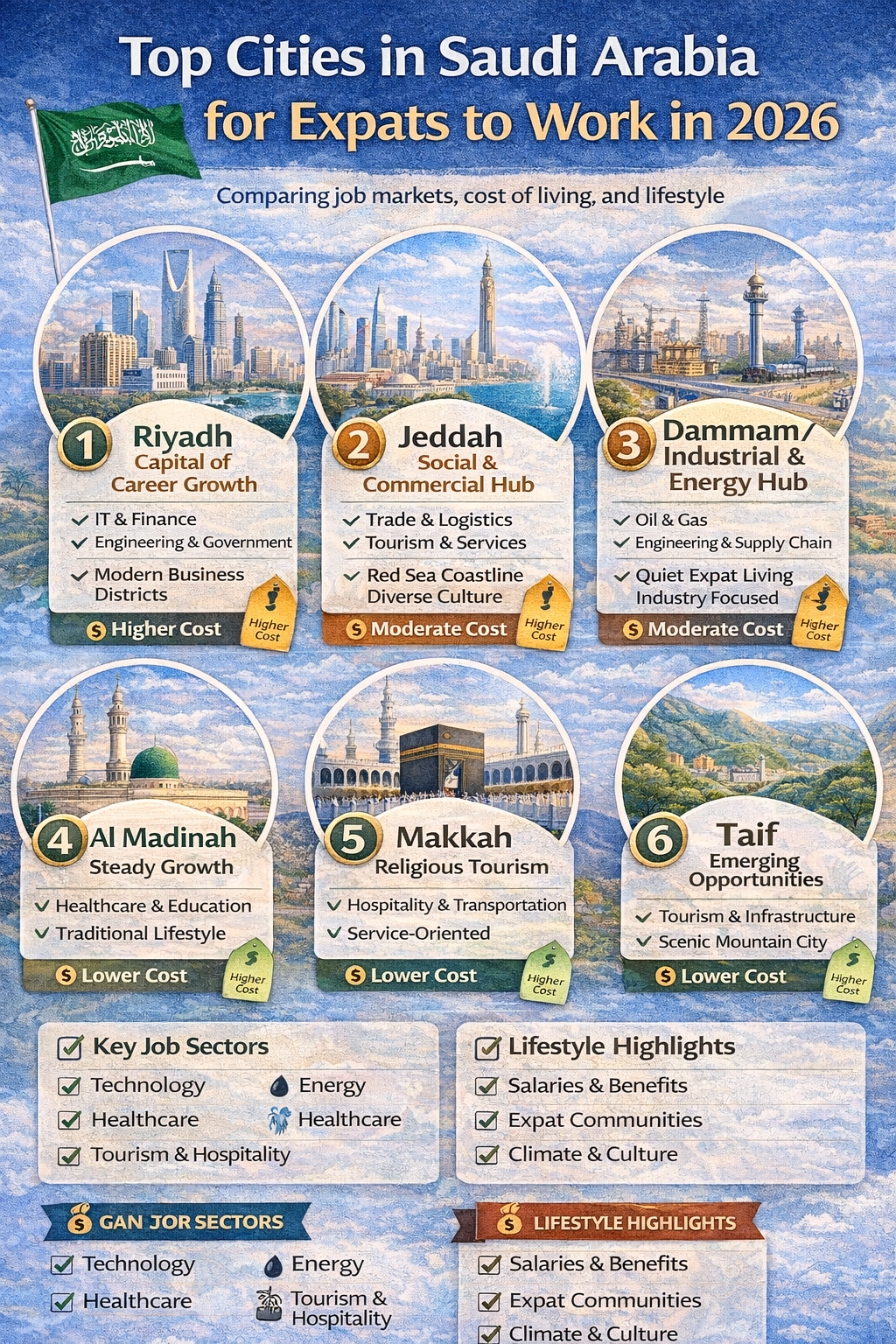
Top Cities in Saudi Arabia for Expats to Work in 2026
Challenges for Companies
Saudization has created several challenges for private companies.
Talent Availability
Some industries struggle to find enough qualified Saudi professionals for specialized technical roles.
Training Costs
Companies often invest heavily in training Saudi employees to meet skill requirements.
Workforce Planning
Businesses must carefully balance hiring local workers while maintaining operational efficiency.
Opportunities Created by Saudization
Despite challenges, Saudization also creates opportunities.
For Saudi Citizens
- More job opportunities
- Skills development programs
- Leadership roles in growing industries
For Expat Professionals
- Demand for specialized expertise
- Opportunities in technical and management positions
- Consulting and training roles
Future Outlook
Saudization policies will likely continue evolving as Saudi Arabia advances its economic transformation.
Key future trends include:
- Greater workforce localization
- Growth in private sector employment
- Expansion of industries like tourism, technology, and entertainment
Companies that adapt to these changes early will have a competitive advantage.
Conclusion
Saudization has fundamentally reshaped hiring in Saudi Arabia’s private sector. While the policy prioritizes employment opportunities for Saudi nationals, expatriate professionals with specialized skills remain valuable to many industries.
Understanding how Saudization affects hiring can help job seekers prepare better for the Saudi job market and identify opportunities where their expertise is most needed.