
Introduction: Why Understanding Gulf Work Visas and Residency is Essential for Expats
Navigating Gulf work visas and residency rules is crucial for every expat planning to live and work in UAE, Saudi Arabia, Qatar, Oman, or Kuwait. Unlike many Western countries, Gulf nations operate under a sponsorship-based immigration system where employment and residency are closely linked.
Countries such as Qatar, the UAE, Saudi Arabia, Oman, and Kuwait welcome millions of expatriates, but residency is strictly regulated. Knowing how visas work, what your rights are, and how to maintain legal status will help you avoid serious complications.
This guide explains the work visa process, residency requirements, sponsorship rules, family visas, and key legal points every expat must know before and after moving to the Gulf.
1. Gulf Work Visas: Understanding the Sponsorship (Kafala) System
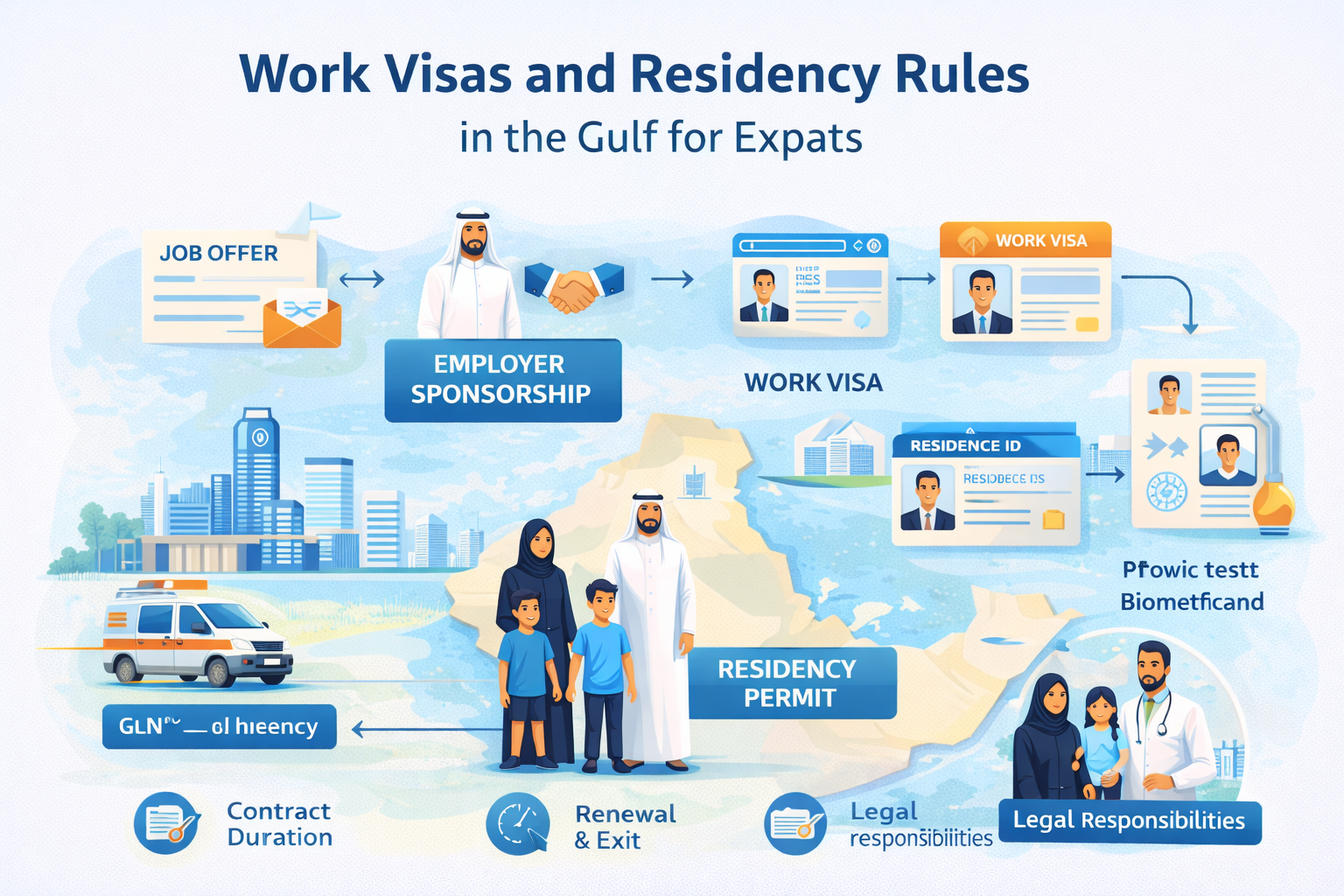
Most Gulf countries follow a sponsorship system, where your employer acts as your legal sponsor.
Key points:
• You cannot legally work without a sponsor
• Your residency is tied to your employment
• Changing jobs requires proper transfer procedures
• Sponsors handle visa processing and renewals
Although reforms have been introduced in some countries, sponsorship still plays a central role in residency status.
2. Types of Gulf Work Visas and Residency Permits
Work Visa Requirements and Process
Issued to expats who have secured a job offer.
Requirements usually include:
• Valid job contract
• Passport with sufficient validity
• Medical fitness test
• Police clearance certificate
• Educational attestation (for some roles)
The work visa allows entry, after which residency formalities are completed.
Residency Permit (Residence ID): Rights and Benefits
Once inside the country, your work visa is converted into a residency permit.
This allows you to:
• Live legally in the country
• Open a bank account
• Rent accommodation
• Obtain a driving license
• Sponsor family members (if eligible)
Residency permits are typically valid for 1–3 years and must be renewed.
Family Residence Visa: Sponsoring Dependents
Expats earning above a certain salary threshold can sponsor immediate family members.
Common requirements:
• Minimum salary (varies by country)
• Suitable accommodation
• Marriage and birth certificates (attested)
• Health insurance for dependents
Family visas do not allow dependents to work unless they obtain separate work permits.
Mandatory Medical Tests and Biometrics for Gulf Visas
All Gulf countries require medical screening.
This includes:
• Blood tests
• Chest X-rays
• Fingerprints and biometrics
Failing a medical test can lead to visa rejection or cancellation, especially for certain infectious diseases.
Contract Duration and Visa Validity: What Happens When Employment Ends
Work visas and residency permits are usually linked to the employment contract.
Important points:
• Contract length often matches visa validity
• Early termination may cancel residency
• Notice periods must be respected
• Exit procedures are required upon leaving
Always keep copies of your contract and visa documents.
Changing Jobs with Gulf Work Visas: Rules and Reforms
Changing employers is possible but regulated.
General rules:
• Completion of notice period
• Employer approval or legal transfer process
• New contract and sponsor required
• Updated residency permit
Some countries now allow job changes without employer consent under specific conditions, but rules vary.
Exit, Re-entry, and Travel Rules for Gulf Residents
Residency permits allow multiple exits and entries, but rules apply.
Key things to remember:
• Do not stay outside the country beyond allowed duration
• Exit permits may be required in some cases
• Visa cancellation required when leaving permanently
Overstaying can result in fines or travel bans.
Top In-Demand Jobs in the Gulf 2025
Legal Responsibilities of Expats Holding a Gulf Residency Permit
Holding a residency permit comes with responsibilities.
Expats must:
• Carry valid ID
• Follow local laws and cultural norms
• Avoid working outside visa terms
• Renew residency on time
Violations can lead to fines, detention, deportation, or blacklisting.
Legal Responsibilities of Expats Holding a Gulf Residency Permit
Golden Visas and Investor Programs in UAE and Saudi Arabia
Most Gulf countries do not offer citizenship, but long-term residency options are increasing.
Examples include:
• Golden Visas (UAE, Saudi Arabia)
• Long-term investor visas
• Special residency programs
These are usually based on profession, investment, or exceptional skills.
Practical Tips for a Smooth Gulf Visa and Residency Experience
• Never enter on a tourist visa for work
• Ensure documents are properly attested
• Track visa expiry dates
• Keep digital and physical copies
• Clarify sponsorship terms before signing
Being informed protects your legal status.
Conclusion
Key Takeaways for Successful Expat Life in the Gulf
Work visas and residency rules in the Gulf are structured, strict, and highly regulated. While the system may seem complex at first, it offers stability and security for expatriates who follow the rules.
By understanding sponsorship, visa types, family residency, and legal obligations, you can build a smooth and successful life in the Gulf. Preparation, transparency, and compliance are the keys to long-term success in the region.
http://Ministry of Interior Qatar





[…] Work Visas and Residency Rules in the Gulf: A Complete Guide for Expats […]
[…] Work Visas and Residency Rules in the Gulf: A Complete Guide for Expats […]
[…] Work Visas and Residency Rules in the Gulf: A Complete Guide for Expats […]