

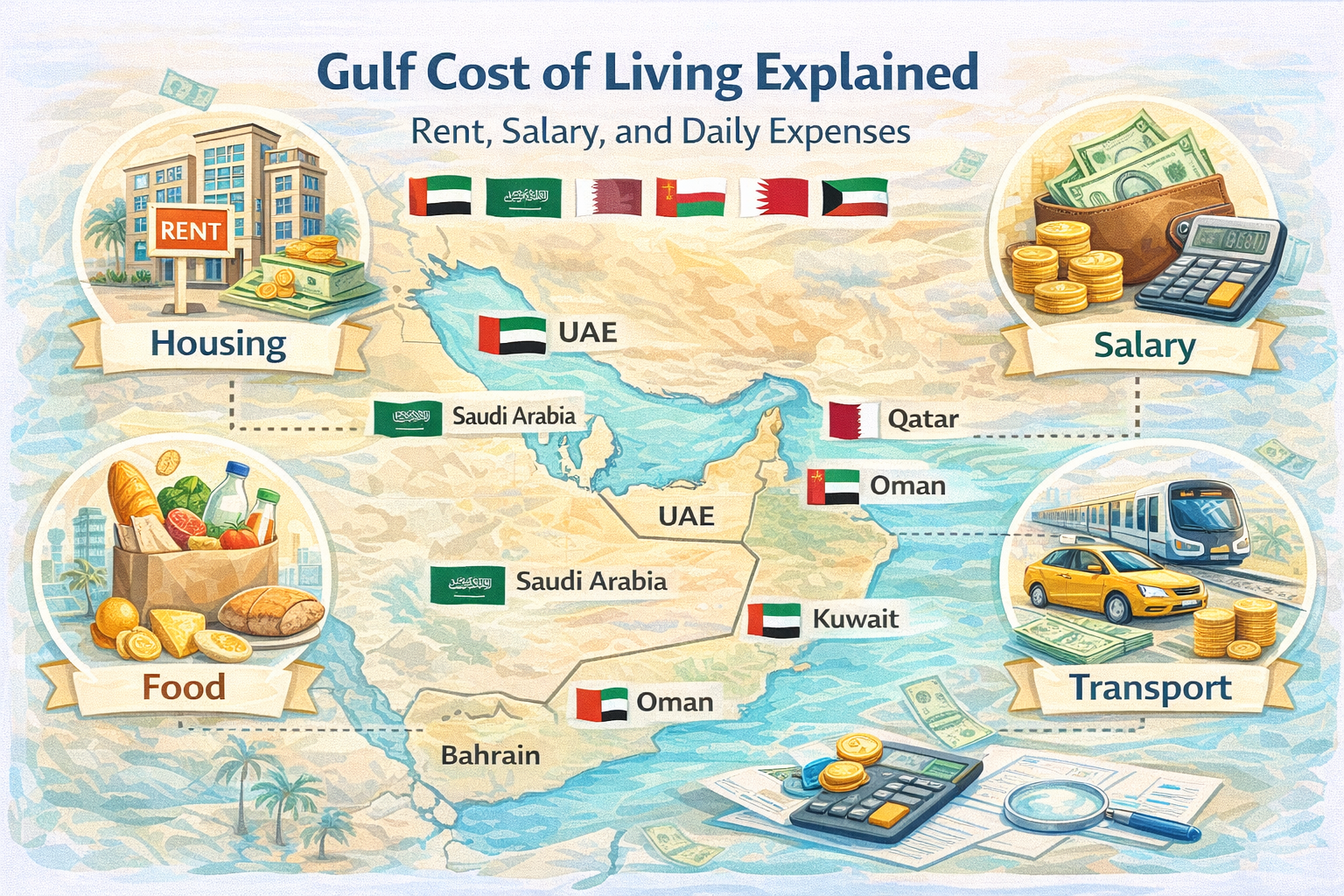
Full Cost of Living Breakdown for Expats (2025–2026)
Introduction: Understanding the Real Cost of Living in the Gulf
Understanding the Gulf cost of living before moving helps expats avoid financial stress and plan long-term savings effectively. While the region is known for tax-free salaries and modern lifestyles, actual expenses can vary significantly depending on the country, city, and lifestyle choices.
The Gulf Cooperation Council (GCC) includes the United Arab Emirates (UAE), Saudi Arabia, Qatar, Oman, Bahrain, and Kuwait. Each offers different salary levels, housing options, and living standards. Some cities provide luxury-driven lifestyles, while others focus on affordability and long-term stability.
This guide provides a realistic, experience-based breakdown of housing, food, transport, education, healthcare, and daily expenses to help expats plan smarter and avoid financial surprises.
Gulf Cost of Living by Country (2025–2026)
Living expenses across GCC countries differ due to government subsidies, import reliance, and urban development levels.
Gulf Cost of Living for Expats: Monthly Expenses Breakdown
- UAE (Dubai / Abu Dhabi): High cost, premium lifestyle
- Qatar (Doha): Comparable to UAE, slightly lower utilities
- Saudi Arabia (Riyadh): Moderate and improving affordability
- Bahrain (Manama): Balanced cost, suitable for families
- Kuwait (Kuwait City): Low utility costs, limited housing options
- Oman (Muscat): Most affordable overall
Oman consistently ranks as one of the most cost-effective GCC countries, making it attractive for entry-level professionals and families.
Housing Costs and Rent in the Gulf Cost of Living
Housing is the largest expense for expats across all Gulf countries.
Average Monthly Rent (1-Bedroom Apartment, City Center)
- Dubai: High, especially in business districts
- Abu Dhabi: Slightly lower than Dubai
- Riyadh: Reasonable and improving quality
- Doha: Mid to high range
- Manama: Affordable with good amenities
- Kuwait City: Stable pricing due to regulation
- Muscat: Most affordable option
Many employers offer housing allowances or company accommodation, which can significantly reduce expenses. Always clarify this before accepting a job offer.
English Learning & Skill Improvement: A Practical Guide for Career Growth in 2026
Food and Daily Living Expenses
Understanding the Gulf cost of living before moving helps expats avoid financial stress and plan long-term savings effectively.
Monthly Grocery Costs (Single Person)
- UAE & Qatar: Moderate to high
- Saudi Arabia & Bahrain: Moderate
- Oman & Kuwait: Lower
Dining out is widely available, with options ranging from affordable local eateries to premium restaurants. Cooking at home significantly reduces monthly expenses.
Transportation and Utilities
Transportation
- Public transport is well-developed in Dubai, Doha, and Riyadh
- Fuel prices remain low across the Gulf
- Ride-hailing services are widely used
Utilities (Electricity, Water, Internet)
- Subsidized in Kuwait and Saudi Arabia
- Higher in UAE and Qatar due to air-conditioning use
- Internet costs are consistent across the region
Education and Healthcare Costs for Expats
Education
International schools are common but expensive in some countries.
- UAE & Qatar: High school fees
- Saudi Arabia & Bahrain: Moderate
- Oman: More affordable options
Education allowances are a major negotiation point for families.
Healthcare
- Employer-provided health insurance is common
- Private healthcare is modern and regulated
- Emergency services are reliable across GCC
Entertainment, Lifestyle, and Social Life
Expats enjoy:
- Shopping malls and dining venues
- Gyms and fitness clubs
- Beaches, desert activities, and travel access
While nightlife is regulated, social life is active through community groups and professional networks.
Cost of Living Trends in 2025–2026
- UAE costs increased slightly due to tourism growth
- Saudi Arabia stabilized costs under Vision 2030
- Oman remains the most budget-friendly GCC country
- Salaries continue to offset expenses in major cities
Tips to Manage Living Costs in the Gulf
- Choose suburban housing
- Use public transport where possible
- Negotiate total compensation, not just salary
- Track expenses during the first 3 months
Conclusion: Is the Gulf Affordable for Expats?
The cost of living in the Gulf depends heavily on location and lifestyle. While cities like Dubai and Doha are expensive, countries such as Oman and Bahrain offer excellent value.
With smart planning, employer benefits, and realistic budgeting, expats can enjoy a high quality of life while saving money.







[…] How Much Does It Really Cost to Live in the Gulf? Full Breakdown for Expats […]
[…] How Much Does It Really Cost to Live in the Gulf? Full Breakdown for Expats […]