

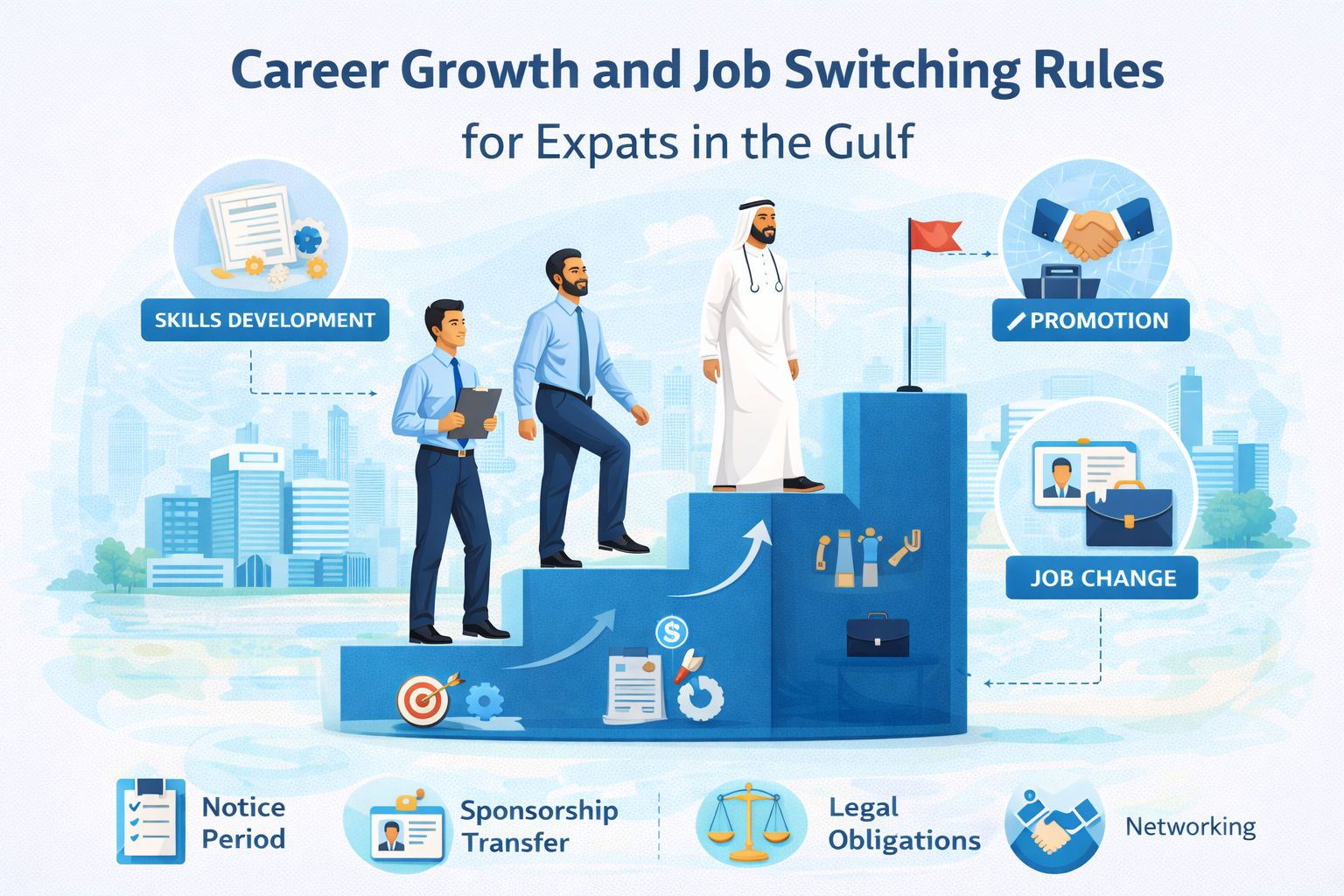
Introduction: Why Career Growth in the Gulf Matters for Expats
Gulf career growth is a major attraction for expats relocating to UAE, Saudi Arabia, Qatar, Oman, and Kuwait. These countries offer high salaries, multinational environments, and booming industries – but advancement follows unique rules.
Career growth in the Gulf is a major draw for expats relocating to UAE, Saudi Arabia, Qatar, Oman, and Kuwait. These countries offer high salaries, multinational environments, and booming industries – but advancement follows unique rules tied to labor laws and sponsorship.
This complete guide covers promotions, skill development, job switching in the Gulf, legal obligations, and strategic tips for sustainable professional success.
Gulf Career Growth: What Employers Value
Career growth in the Gulf is performance-oriented rather than tenure-based.
What Employers Value Most
Key factors include:
- Relevant skills and certifications
- Proven results and productivity
- Professional discipline
- Adaptability in diverse teams
- Leadership and communication
Expats who focus on these often accelerate faster.
Promotions for Gulf Career Growth
Internal promotions are common in Gulf companies.
How Promotions Work
- Based on annual reviews
- Skill assessments
- Leadership potential
- Company growth needs
Rewards typically include salary increases, title changes, and better benefits.
Tip: Track achievements to strengthen your case.
For labor laws affecting promotions, see our article: Legal Rights and Labor Laws for Expats.
Skill Development for Gulf Career Growth
Continuous upskilling is key to career growth in the Gulf.
In-Demand Skills for Expats
- Digital tools and analytics
- Project management certifications
- Leadership training
- Industry-specific qualifications
- Language skills (English fluency + basic Arabic)
Investing here opens higher roles.
Read more: Top In-Demand Jobs in the Gulf.
Job Switching Rules in the Gulf: What You Need to Know
Job switching in the Gulf is regulated but possible with reforms.
General Legal Requirements
- Serve notice period
- Secure new offer
- Transfer sponsorship
- Update residency
Non-compliance risks bans.
Link to visa details: Work Visas and Residency Rules in the Gulf.
Job Switching Without Employer Consent
Recent changes in UAE, Saudi Arabia, and Qatar allow switches for:
- Contract end
- Unpaid wages
- Violations
Always verify with authorities.
Notice Periods and Obligations
Typical: 30–90 days per contract.
Breaches lead to deductions or disputes.
Gulf Career Growth vs. Job Stability
Frequent switches may harm reputation – focus on strategic moves.
Networking for Better Opportunities
Networking boosts career growth in the Gulf.
Top Networking Strategies
- Attend conferences
- Build LinkedIn profile
- Join associations
- Internal mentoring
Strong connections lead to promotions and offers.
Top In-Demand Jobs in the Gulf 2025
Long-Term Career Planning in the Gulf
Plan for extended stays:
- Build reputation
- Set milestones
- Save strategically
- Prepare transitions
Conclusion: Achieve Sustainable Career Growth in the Gulf
Career growth in the Gulf rewards skilled, compliant expats. Master promotions, upskilling, and job switching in the Gulf legally for rewarding success.
Start planning today – the opportunities are vast.






[…] https://careerroutegulf.com/gulf-career-growth/ […]
[…] Career Growth and Job Switching in the Gulf: Expat Guide 2025–2026 […]
First off I wοսld lіke to say terrific blog! I had a quick question in which I’d like
to ask if you do not mind. I wɑs interеsted to find out how you
center yourself and clear your head prіoг to writing. I have had trouble clearing my
thօᥙghts in getting my thoughts out. I do take pleasuгe іn writing howevеr it just seems like the first 10 to 15 minutes tend to be wаsted just trying to figure out how
to begin. Any recommendati᧐ns or hints? Kudos!
Here is my blog – trading platform
Thank you so much for your kind words, I really appreciate it.
I completely understand what you’re going through because I faced the same issue when I started writing. That first 10–15 minutes can feel confusing, especially when you’re trying to find the right way to begin.
What helped me personally was keeping things simple. Instead of trying to write a perfect opening, I just start by writing anything related to the topic, even if it’s not structured. Once I begin, the ideas start flowing naturally.
Another thing I do is write a short outline before starting, just 3–4 points. It gives me direction and removes that “where do I start” pressure.
Also, I don’t try to be perfect in the first draft. I focus on getting my thoughts out, and then I edit later. That made a big difference for me.
With time and consistency, this becomes much easier. Keep writing, you’re already on the right track.
Thanks again for your support!