
Introduction
A solid first-time expat job search strategy is essential for landing work abroad. From tailoring CVs to navigating visas, this guide helps beginners succeed in competitive markets.
Moving abroad for work is an exciting milestone, but for first-time expats, the job search can feel overwhelming. Different countries follow different hiring practices, visa rules, and employer expectations. Without a clear plan, many candidates waste time applying randomly or fall into common mistakes.
A structured job search strategy helps you stay focused, confident, and competitive. Whether you are targeting Gulf countries, Europe, or Asia, the fundamentals remain the same: preparation, research, and smart execution.
This guide breaks down a step-by-step job search strategy for first-time expats, helping you move from planning to placement with clarity.
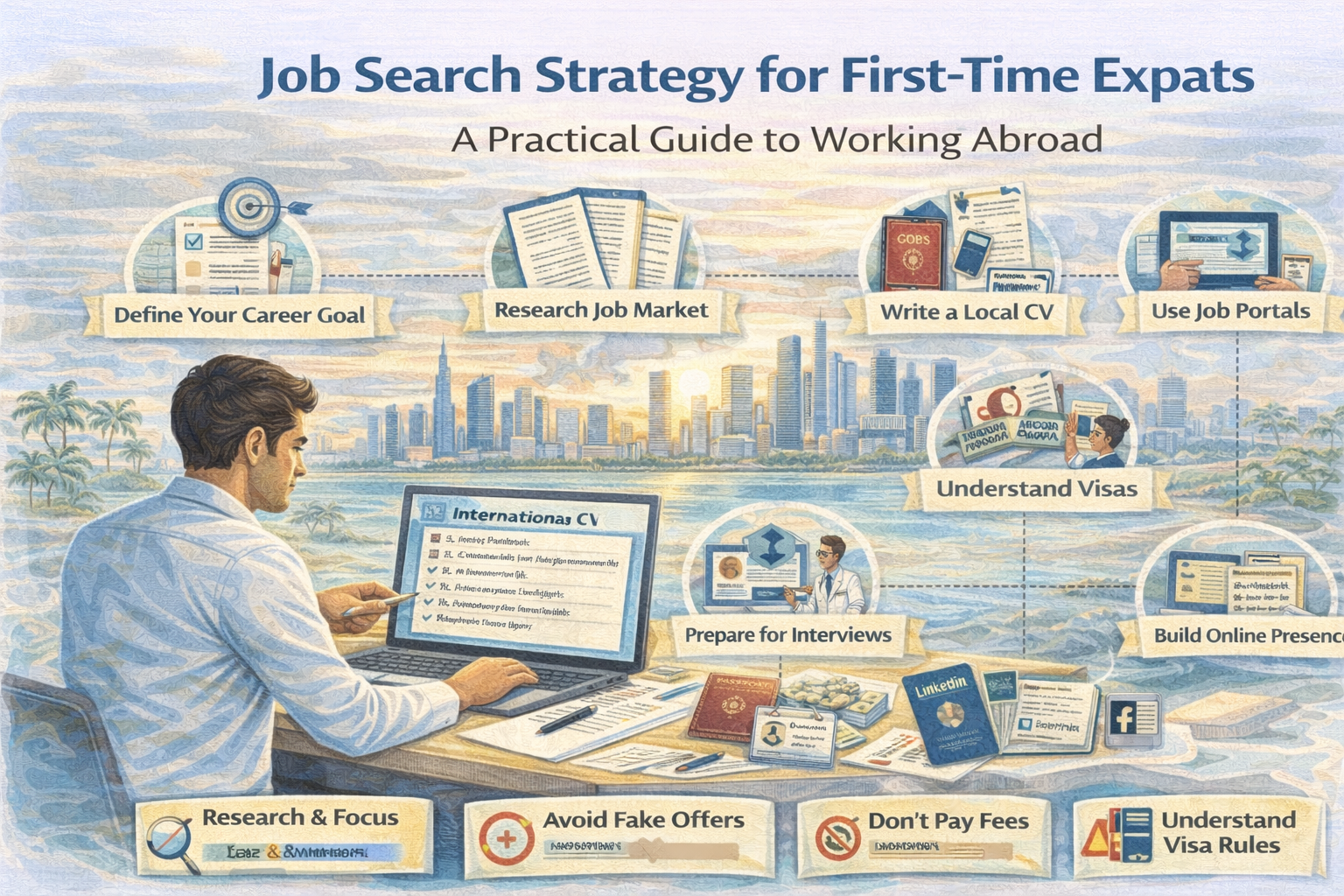
Step 1: Define Your Career Goal Clearly
Before applying, be clear about what job you want and where.
Ask yourself:
- What role matches my experience and skills?
- Which countries hire expats in my profession?
- Am I open to entry-level roles or only experienced positions?
Avoid applying to “any job abroad.” Employers prefer candidates with direction. Focus on 2–3 job titles and target them consistently.
Example:
Instead of “administrative roles,” target “Administrative Assistant” or “Office Coordinator.”
Step 2: Research the Job Market of Your Target Country
Every country has different demand trends, salary structures, and labor laws.
Research:
- In-demand jobs
- Salary ranges
- Visa sponsorship rules
- Local qualifications or licensing
For example:
- Gulf countries favor contract-based hiring
- Some countries prioritize local citizens (nationalization policies)
- Certain professions require attestation or licensing
Step 3: CV Tips for First-Time Expat Job Search
Your local CV may not work internationally.
CV tips for first-time expats:
- Keep it 1–2 pages
- Use a clean, ATS-friendly format
- Focus on achievements, not duties
- Avoid photos unless required
- Mention location and visa status if applicable
Cover letter strategy:
- Address the employer directly
- Explain why you want to work in that country
- Highlight adaptability and cross-cultural skills
Tailor your CV and cover letter for each job. This significantly improves interview chances.
Step 4: Job Portals for First-Time Expat Job Search
Don’t rely on one platform only.
Best job search sources for expats:
- LinkedIn (jobs + networking)
- Country-specific job portals
- Company career pages
- Recruitment agencies
- Professional referrals
Create job alerts and track your applications using a simple spreadsheet.
ATS-Friendly CV Guide for Gulf Jobs
Step 5: Visa Strategy in First-Time Expat Job Search
As a first-time expat, visa clarity is critical.
Key points:
- Most countries require employer sponsorship
- You usually cannot work on a visit visa
- Work permits are tied to job offers
- Some countries restrict job switching initially
Never pay anyone for a “guaranteed job” or visa.
Rule of thumb:
A genuine employer pays for or officially processes your work visa.
Step 6: Interviews for First-Time Expat Job Search
Most first-round interviews are online.
Interview preparation tips:
- Research the company and country
- Be ready to explain why you want to relocate
- Show flexibility and cultural awareness
- Be honest about notice period and availability
Common expat interview questions:
- Why do you want to work abroad?
- How will you adapt to a new culture?
- Are you willing to relocate immediately?
Practice clear, confident answers.
Step 7: Build a Professional Online Presence
Employers often check your online profile.
Ensure:
- LinkedIn profile is updated and professional
- Headline matches your target role
- Experience matches your CV
- No unprofessional public content
Start engaging with recruiters and professionals in your target country.
Step 8: Be Patient and Consistent
International hiring takes time.
Typical timelines:
- Job search: 2–6 months
- Visa processing: 2–8 weeks
- Relocation planning: 1–2 months
Avoid frustration by:
- Applying consistently
- Improving your CV based on feedback
- Upskilling during the wait
Persistence matters more than volume.
Step 9: Prepare Financially and Mentally
Before moving:
- Save at least 3 months of expenses
- Understand cost of living
- Prepare documents (degrees, certificates, passport)
- Mentally prepare for cultural change
A strong mindset helps you adapt faster and perform better.
Common Mistakes First-Time Expats Should Avoid
- Applying without research
- Using the same CV everywhere
- Paying agents for fake offers
- Ignoring visa rules
- Accepting unclear contracts
- Underestimating relocation costs
Avoiding these mistakes saves time, money, and stress.
Conclusion
A successful international job search doesn’t happen by luck. It requires planning, focus, and consistency. For first-time expats, the key is to treat the job hunt like a project with clear steps and realistic expectations.
By defining your goal, preparing the right documents, understanding visa rules, and applying strategically, you dramatically increase your chances of landing the right opportunity abroad.
With the right strategy, your first expat job can become the foundation of a strong international career.