

Introduction
Expat labor laws Gulf protect foreign workers in UAE, Saudi Arabia, Qatar, Oman, Bahrain, and Kuwait. Understanding rights, contracts, hours, and disputes is essential for a fair career.
Understanding expat labor laws in the Gulf is crucial for every foreign worker in UAE, Saudi Arabia, Qatar, Oman, Kuwait, and Bahrain. While the region offers tax-free salaries, career growth, and modern living, understanding legal rights and labor laws is essential for every expat.
Labor laws in the Gulf are structured, strictly enforced, and designed to regulate employer-employee relationships. However, they differ significantly from Western or Asian systems. Knowing your rights can protect you from disputes, contract violations, and unexpected legal issues.
This guide explains the key legal rights, employment laws, and protections for expats working in the Gulf, helping you stay informed and confident.
Understanding the Gulf Labor Law System
Each Gulf country has its own labor law, but they share common principles:
- Employment is contract-based
- Residency is linked to employment
- Laws protect both employer and employee
- Government ministries regulate labor disputes
Labor laws typically apply to private-sector employees, while government employees follow separate regulations.
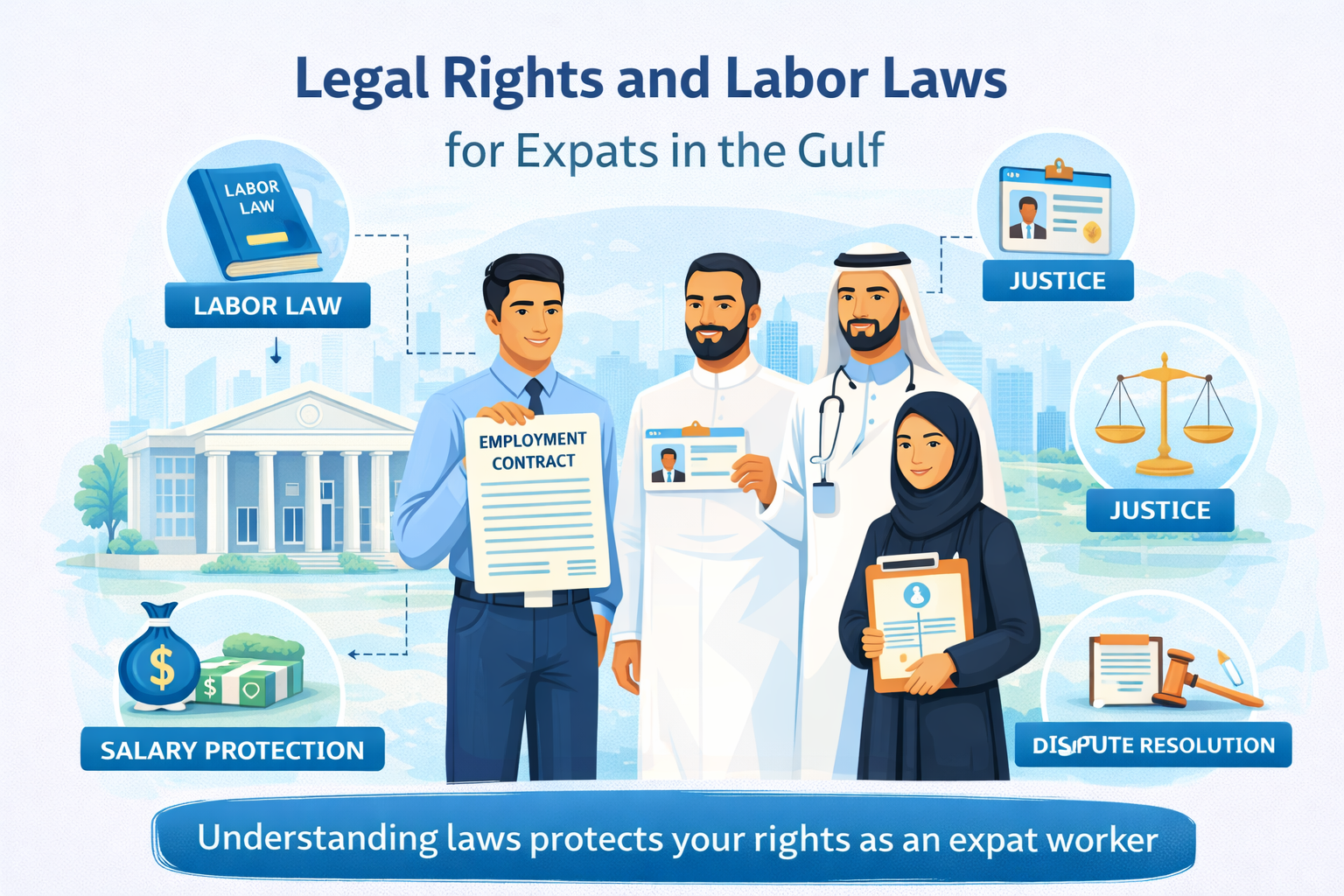
Tip: Always keep a copy of your signed employment contract.
Expat Labor Laws Gulf: Employment Contracts Explained
Your employment contract is the most important legal document in the Gulf.
Common Contract Types
- Limited (Fixed-Term) Contract
- Unlimited (Open-Ended) Contract (in some countries)
Key Contract Elements
- Job title and responsibilities
- Salary and allowances
- Working hours
- Leave entitlement
- Notice period
- End-of-service benefits
Any work outside your contract scope may be illegal unless approved.
Working Hours Under Expat Labor Laws in the Gulf
Most Gulf labor laws regulate working hours to protect employees.
Standard Rules
- 8–9 hours per day
- 48 hours per week
- Reduced hours during Ramadan
Overtime Pay
- Extra hours must be compensated
- Rates are usually higher for night or holiday work
Employers cannot force unpaid overtime.
Salary Protection and Wage Laws
Gulf countries have strict salary protection systems.
Key Protections
- Salaries must be paid on time
- Payments tracked through government systems (WPS)
- Delayed or unpaid wages are punishable
If salary issues arise, expats can file complaints with the labor ministry.
Leave Entitlements for Expats
Labor laws ensure paid leave for employees.
Common Leave Types
- Annual leave (21–30 days)
- Sick leave
- Maternity leave
- Public holidays
Leave policies may vary by country and employer but must meet legal minimums.
Termination, Resignation, and Notice Periods
Understanding termination laws is crucial.
Legal Termination
- Requires valid reason
- Notice period must be served
- Compensation may apply
Resignation
- Must follow notice period
- Early exit may require penalties in some cases
Unlawful termination can be challenged legally.
End-of-Service Gratuity: Expat Labor Laws Gulf
Most Gulf countries offer end-of-service gratuity.
How It Works
- Paid after contract completion
- Calculated based on basic salary
- Depends on years of service
This is a major financial benefit for long-term expats.
Workplace Rights and Protections
Expats are legally protected against:
- Harassment or abuse
- Unsafe working conditions
- Discrimination (within legal frameworks)
- Forced labor
Employers must provide safe workplaces and respect labor regulations.
Filing Complaints: Expat Rights Under Gulf Labor Laws
If disputes arise:
- Attempt internal resolution
- File complaint with labor ministry
- Case reviewed legally
- Court involvement if needed
Most Gulf countries offer free labor dispute services.
External Resource
- Qatar Ministry of Labour
- UAE Ministry of Human Resources
- Saudi Ministry of Human Resources
Residency and Legal Compliance
Legal residency depends on employment status.
Important Rules
- Valid ID and residency permit required
- Job changes must follow legal transfer procedures
- Overstaying visas leads to fines
Always renew documents on time.
Work visa and residency rules in gulf
Cultural and Legal Awareness
Some actions legal elsewhere may be illegal in the Gulf.
Examples
- Public arguments
- Offensive language
- Social media misuse
- Alcohol violations
Respecting laws ensures a trouble-free stay.
Conclusion
“Master expat labor laws in the Gulf for a safe and fair career.” The Gulf offers outstanding opportunities for expatriates, but success depends on understanding legal rights and labor laws.“Knowing your rights under expat labor laws Gulf protects you from tension and issues, salary protections, working hours, and dispute processes empowers you to work confidently and securely.
For expats, knowledge is protection. Stay informed, stay compliant, and your Gulf journey can be both rewarding and legally secure







[…] Legal Rights and Labor Laws for Expats in the Gulf: A Complete Guide […]