

INTRODUCTION
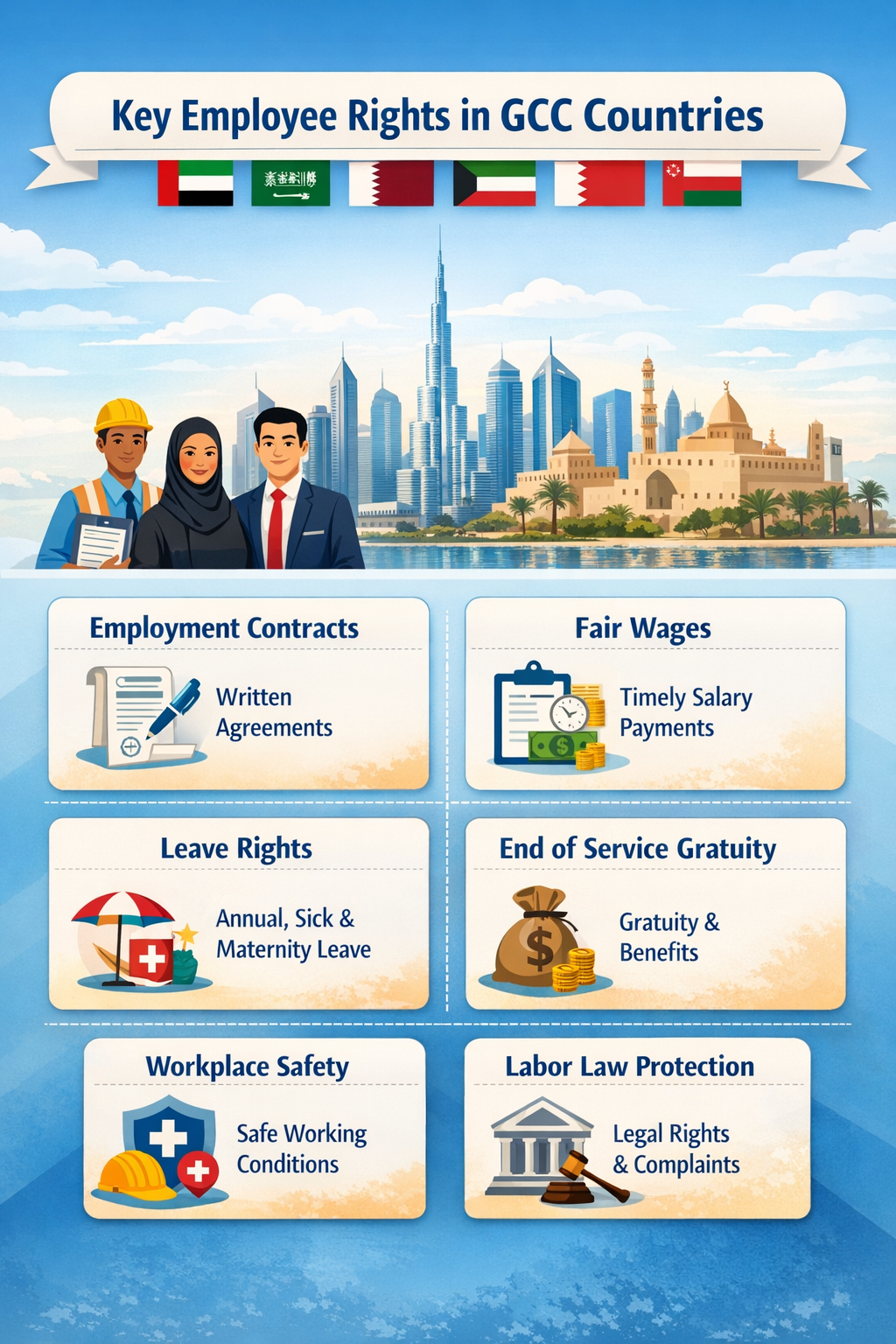
Employee rights GCC laws protect millions of local and expatriate workers across the Gulf region, including the UAE, Qatar, Saudi Arabia, Kuwait, Bahrain, and Oman. Understanding employee rights in GCC workplaces is essential to avoid unfair treatment, salary delays, and illegal termination while working in the region.
Millions of expatriates work across GCC countries such as the UAE, Qatar, Saudi Arabia, Kuwait, Bahrain, and Oman. While these countries offer strong career opportunities, many workers are unaware of their legal rights under local labor laws.
Understanding employee rights in GCC countries is essential to protect yourself from unfair treatment, delayed salaries, or unlawful termination. This guide explains your core rights clearly and practically, whether you are a new job seeker or already employed in the Gulf.
1. Employee Rights GCC Under Employment Contracts
Every employee in the GCC must have a written employment contract approved by the labor ministry.
Your contract should clearly mention:
- Job title and responsibilities
- Basic salary and allowances
- Working hours
- Leave entitlement
- Contract duration
- Termination terms
Always ensure the contract you sign matches what was promised during recruitment. Any changes must be approved by both parties.
Tip: Never work without a signed contract. It weakens your legal position.
2. Working Hours and Overtime Rights in GCC
Most GCC labor laws follow similar working hour limits:
- 8 hours per day
- 48 hours per week
- Reduced hours during Ramadan
If you work beyond official hours, you are entitled to overtime pay, usually calculated at:
- 125 percent of basic hourly wage
- 150 percent for night shifts or rest days
Some roles, such as senior management, may be exempt, but this must be clearly stated in the contract.
3. Salary Protection and Wage Systems in GCC
Employee rights GCC regulations require employers to pay salaries on time through approved wage protection systems.
Key protections include:
- Salaries paid through approved banks
- Fixed monthly payment dates
- Legal action against employers for delays
If your salary is delayed beyond the legal limit, you have the right to file a complaint with the labor department.
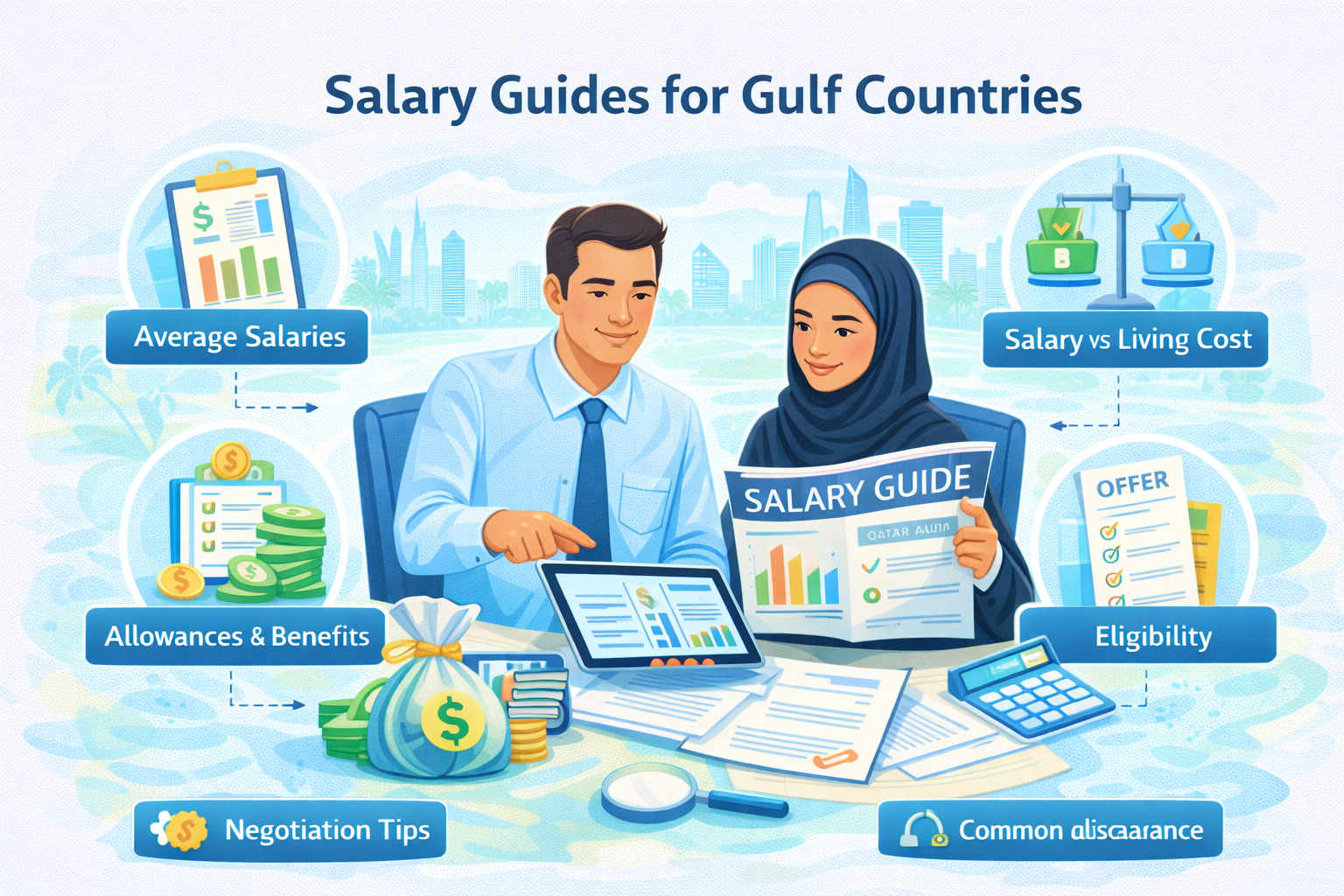
Salary guide for gulf countires
4. Leave Rights for Employees in GCC Countries
Employees in GCC countries are legally entitled to various types of leave.
Annual Leave
- Minimum 21 to 30 paid days per year depending on country and service length
Sick Leave
- Paid and unpaid sick leave based on medical certification
Public Holidays
- Official national and religious holidays
Maternity and Paternity Leave
- Maternity leave ranges from 45 to 60 days
- Paternity leave is now recognized in some GCC countries
Employers cannot deny approved leave or deduct salary unfairly.
5. End-of-Service Benefits and Gratuity Rights GCC
One of the most important employee rights in the GCC is end-of-service gratuity.
Gratuity is calculated based on:
- Length of service
- Basic salary
- Reason for contract termination
Typically:
- 21 days’ basic salary per year for the first five years
- 30 days’ basic salary per year after that
Employees who complete at least one year of service usually qualify.
6. Termination and Notice Period Rights in GCC
Understanding employee rights GCC helps workers challenge unfair termination through official labor channels.
Your rights include:
- Written termination notice (30–90 days)
- Full salary during notice period
- Gratuity and pending dues
Unlawful termination can be challenged through labor courts. In some cases, employees may receive compensation.
7. Workplace Safety and Legal Protection in GCC
GCC labor laws require employers to:
- Provide a safe working environment
- Offer protective equipment
- Prevent harassment or abuse
Employees have the right to dignity at work, regardless of nationality or job role.
Any form of physical abuse, verbal harassment, or forced labor is illegal and punishable.
8. Employee Rights During Contract Transfer
Many GCC countries now allow job transfers without employer permission under specific conditions, such as:
- Contract completion
- Salary non-payment
- Employer violations
This reform has significantly improved worker mobility and reduced exploitation.
9. How to File a Labor Complaint in GCC Countries
If your rights are violated, you can file a complaint through:
- Ministry of Labor portals
- Labor courts
- Helplines and mobile apps
Documents required usually include:
- Employment contract
- Salary slips
- Emirates ID or residence permit
Complaints are often resolved through mediation before legal escalation.
10. Common Employee Mistakes to Avoid
- Signing contracts without reading
- Working on visit visas
- Paying recruitment fees illegally
- Not keeping salary proof
Awareness is your strongest protection.
FREQUENTLY ASKED QUESTIONS (FAQs)
Are expat workers protected under GCC labor laws?
Yes. Labor laws apply to both local and foreign employees.
Can my employer hold my passport?
No. Passport retention is illegal in most GCC countries.
What if my salary is delayed?
You can file a labor complaint through the Wage Protection System.
Do domestic workers have rights?
Yes. Most GCC countries now have separate domestic worker protection laws.
CONCLUSION
Awareness of employee rights GCC ensures legal protection and confidence while working in Gulf countries. Employee rights in GCC countries are stronger than ever, but only if workers understand and use them. Knowing your legal protections helps you work confidently, avoid exploitation, and take action when needed.
Before accepting any job in the Gulf, always review your contract, understand your rights, and keep proper documentation.





[…] Employee Rights in GCC Countries (2026 Guide for Expats & Workers) […]