
Culture in the Gulf: Traditions & Customs for Expats
Introduction
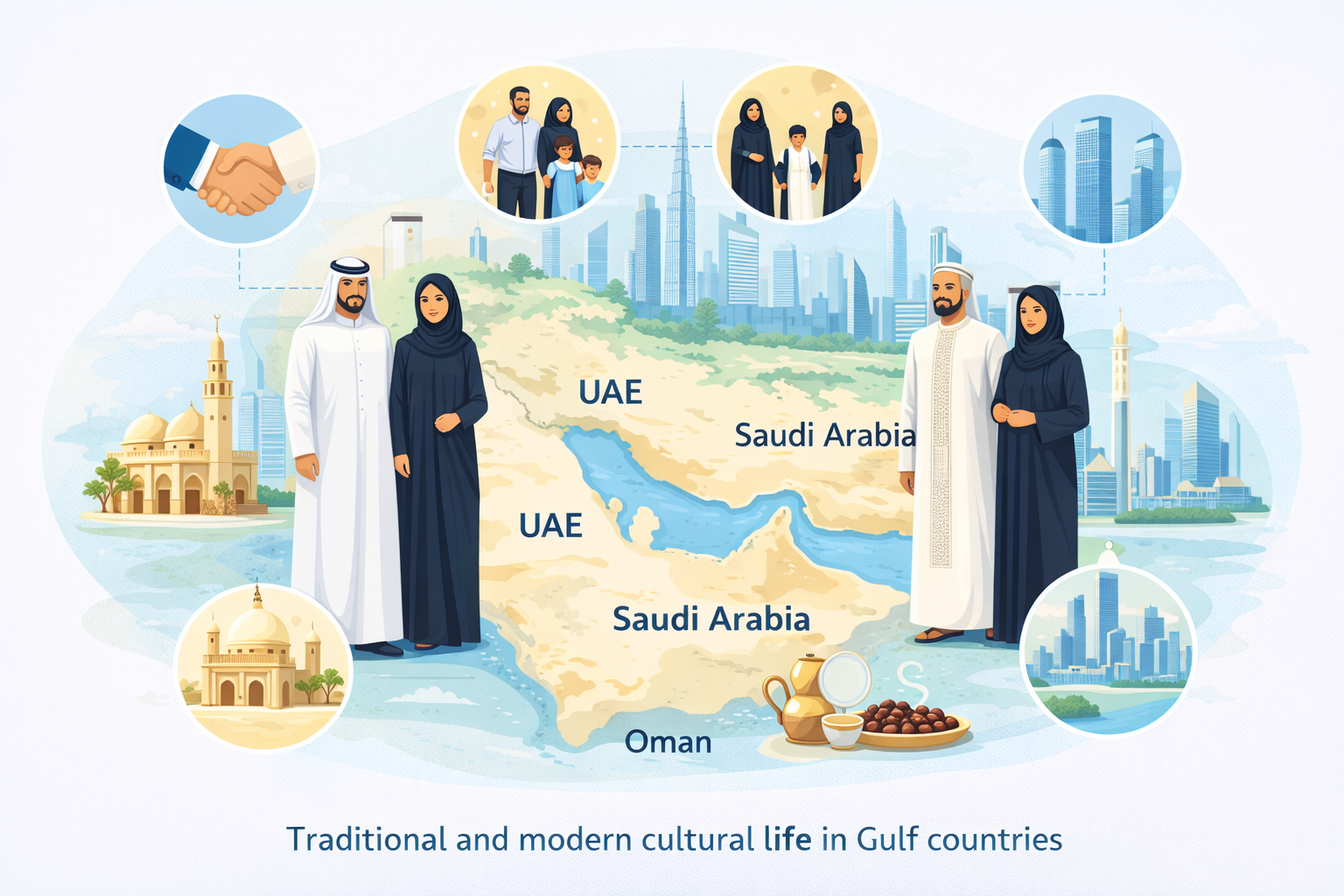
The Gulf region is known for its modern cities, strong economies, and diverse expatriate population. However, beneath the skyscrapers and luxury malls lies a rich cultural heritage shaped by centuries of tradition, religion, and community values. For new expats, understanding the culture in the Gulf is essential for smooth integration, professional success, and respectful daily living.
Countries such as Qatar, the UAE, Saudi Arabia, Oman, Kuwait, and Bahrain share many cultural similarities, yet each has its own identity. This guide explains the key cultural aspects of the Gulf, helping newcomers adapt confidently while appreciating local traditions.
Understanding the Foundations of Gulf Culture
Islamic Influence on Daily Life
Islam plays a central role in shaping Gulf culture. It influences laws, work schedules, social behavior, and public etiquette.
Key points to understand:
-
Daily life revolves around five prayer times
-
Friday is the main religious day
-
Ramadan is the most significant month of the year
-
Respect for religious practices is expected from everyone
Even non Muslims are expected to observe public etiquette, especially during religious occasions.
Hospitality: A Core Gulf Value
Hospitality is one of the most admired aspects of Gulf culture. Guests are treated with respect, generosity, and warmth.
Common hospitality traditions include:
-
Offering Arabic coffee (Gahwa) and dates
-
Welcoming guests warmly, even strangers
-
Polite and respectful conversation
-
Sharing meals as a sign of goodwill
As an expat, showing appreciation for hospitality goes a long way in building trust and relationships.
Dress Code and Modesty
While the Gulf is modern and diverse, modest dressing remains important, especially in public spaces.
General Dress Guidelines
-
Shoulders and knees should be covered in public
-
Avoid tight or revealing clothing
-
Swimwear is acceptable only at beaches or pools
-
Traditional clothing such as thobes and abayas are common
In workplaces, formal and conservative attire is usually expected.
Social Etiquette in Culture in the Gulf
“Understanding culture in the Gulf involves..
Important Cultural Etiquette
-
Public displays of affection are discouraged
-
Use polite language and calm tone
-
Avoid pointing soles of shoes at others
-
Handshakes are common, but wait for women to initiate
-
“Respect is central to culture in the Gulf…”
Simple gestures like greeting people respectfully make a strong positive impression.
Language and Communication Style
Arabic is the official language, but English is widely spoken, especially in workplaces and urban areas.
Communication style in the Gulf tends to be:
-
Polite and indirect
-
Respectful rather than confrontational
-
Relationship-focused before business-focused
Learning basic Arabic greetings shows respect and cultural awareness.
Work Culture in the Gulf
The workplace culture reflects hierarchy, professionalism, and respect.
What Expats Should Know
-
Decision-making often comes from senior management
-
Punctuality is valued, but flexibility exists
-
Relationships matter in business
-
Respect for authority is essential
During Ramadan, working hours are reduced, and productivity expectations adjust accordingly.
Family Values and Community Life
Family is central to Gulf culture. Strong family bonds influence social structure, decision-making, and priorities.
Key family-related values:
-
Respect for parents and elders
-
Strong community ties
-
Family gatherings are common
-
Privacy and honor are important
Understanding this helps expats navigate social interactions more respectfully.
Family Life in the Gulf: What Expat Families Need to Know Before Moving
Food Culture and Dining Etiquette
Food plays a major role in Gulf social life.
Dining Customs
-
Meals are often shared
-
Eating with the right hand is traditional
-
Refusing food politely is acceptable
-
Hosts insist guests eat generously
Traditional dishes include rice, lamb, seafood, and regional spices.
Religious Aspects of Culture in the Gulf
Ramadan is a unique cultural experience in the Gulf.
During Ramadan:
-
Eating and drinking in public during daylight is restricted
-
Work hours are reduced
-
Social gatherings increase at night
-
Charity and kindness are emphasized
Expats are not expected to fast but should show respect in public spaces.
Cultural Diversity in the Gulf
The Gulf hosts millions of expatriates from Asia, Europe, Africa, and the Americas.
This creates:
-
Multicultural workplaces
-
Diverse communities
-
International schools and restaurants
-
Blended traditions
Despite diversity, local culture remains the foundation of society.
Laws and Cultural Sensitivity
Many laws in the Gulf are closely linked to cultural and religious values.
Important reminders:
-
Avoid offensive language or gestures
-
Alcohol is regulated
-
Social media use is monitored
-
Privacy is respected seriously
When unsure, choosing caution is always best.
Integration Tips for Culture in the Gulf
-
Learn basic cultural rules before arrival
-
Observe before reacting
-
Dress modestly
-
Be patient and respectful
-
Build relationships gradually
Adaptability and openness are key to a positive experience.
Conclusion
Understanding the culture in the Gulf is essential for anyone planning to live or work in the region. While modern lifestyles are widely embraced, tradition, respect, and community values remain deeply rooted.
For expats, cultural awareness leads to better relationships, career growth, and a more fulfilling life. When you respect local customs and remain open to learning, the Gulf becomes not just a workplace, but a place to truly belong.