
INTRODUCTION
Job search scams in GCC have increased as more people look for work in the UAE, Qatar, Saudi Arabia, Oman, Bahrain, and Kuwait. Fraudsters target job seekers with fake offers, false promises, and illegal visa schemes.
Understanding how these scams work is essential to protect your money, personal information, and career. This guide explains the most common job search scams in GCC and how to avoid them safely in 2026.
Why Job Search Scams Are Common in GCC
GCC countries attract millions of job seekers every year. Scammers take advantage of:
- High demand for Gulf jobs
- Overseas applicants unfamiliar with local laws
- Online recruitment platforms
- Urgency created by fake job offers
Awareness is the first step to prevention.
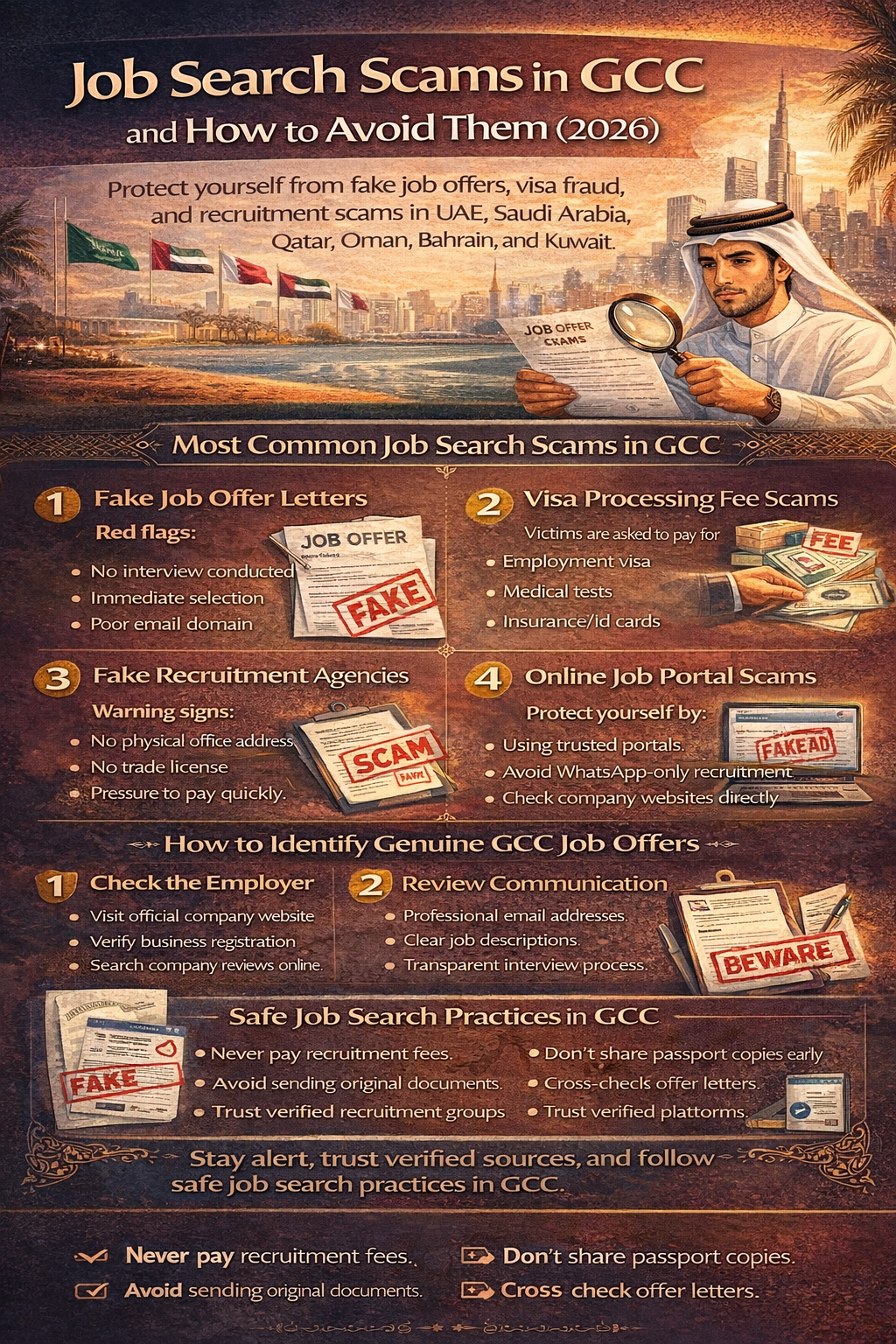
Most Common Job Search Scams in GCC
1. Fake Job Offer Letters
Scammers send professional-looking offer letters claiming to be from well-known companies.
Red flags:
- No interview conducted
- Immediate selection
- Poor email domain (Gmail instead of company email)
Legitimate GCC employers always conduct interviews.
2. Visa Processing Fee Scams
Victims are asked to pay for:
- Employment visa
- Medical tests
- Insurance or ID cards
Important:
In GCC countries, employers pay visa costs, not job seekers.
3. Fake Recruitment Agencies
Fraud agencies promise guaranteed jobs in exchange for registration fees.
Warning signs:
- No physical office address
- No trade license
- Pressure to pay quickly
Always verify agencies before engaging.
4. Online Job Portal Scams
Fake job ads are posted on social media and unofficial websites.
Protect yourself by:
- Using trusted portals
- Avoiding WhatsApp-only recruitment
- Checking company websites directly
5. Contract Replacement Scams
Candidates receive one contract online but are offered different terms after arrival.
How to avoid:
- Verify contracts carefully
- Confirm job details with HR
- Keep written communication records
How to Identify Genuine GCC Job Offers
Check the Employer
- Visit official company website
- Verify business registration
- Search company reviews online
Review Communication
- Professional email addresses
- Clear job descriptions
- Transparent interview process
Verify Salary and Benefits
- Unrealistic salaries are suspicious
- Benefits should align with GCC labor laws
Safe Job Search Practices in GCC
To avoid job search scams in GCC:
- Never pay recruitment fees
- Do not share passport copies early
- Avoid sending original documents
- Cross-check offer letters carefully
- Trust verified recruitment platforms
These steps significantly reduce risk.
What to Do If You Encounter a Job Scam
If you suspect fraud:
- Stop communication immediately
- Do not send money or documents
- Report the listing to the job portal
- Inform local cybercrime authorities
- Warn others in professional groups
Early action prevents further damage.
Legal Protection for Job Seekers in GCC
Most GCC countries have strict cybercrime and labor laws.
Authorities take job fraud seriously, especially:
- Visa scams
- Identity theft
- Fake recruitment agencies
Reporting scams helps protect future job seekers.
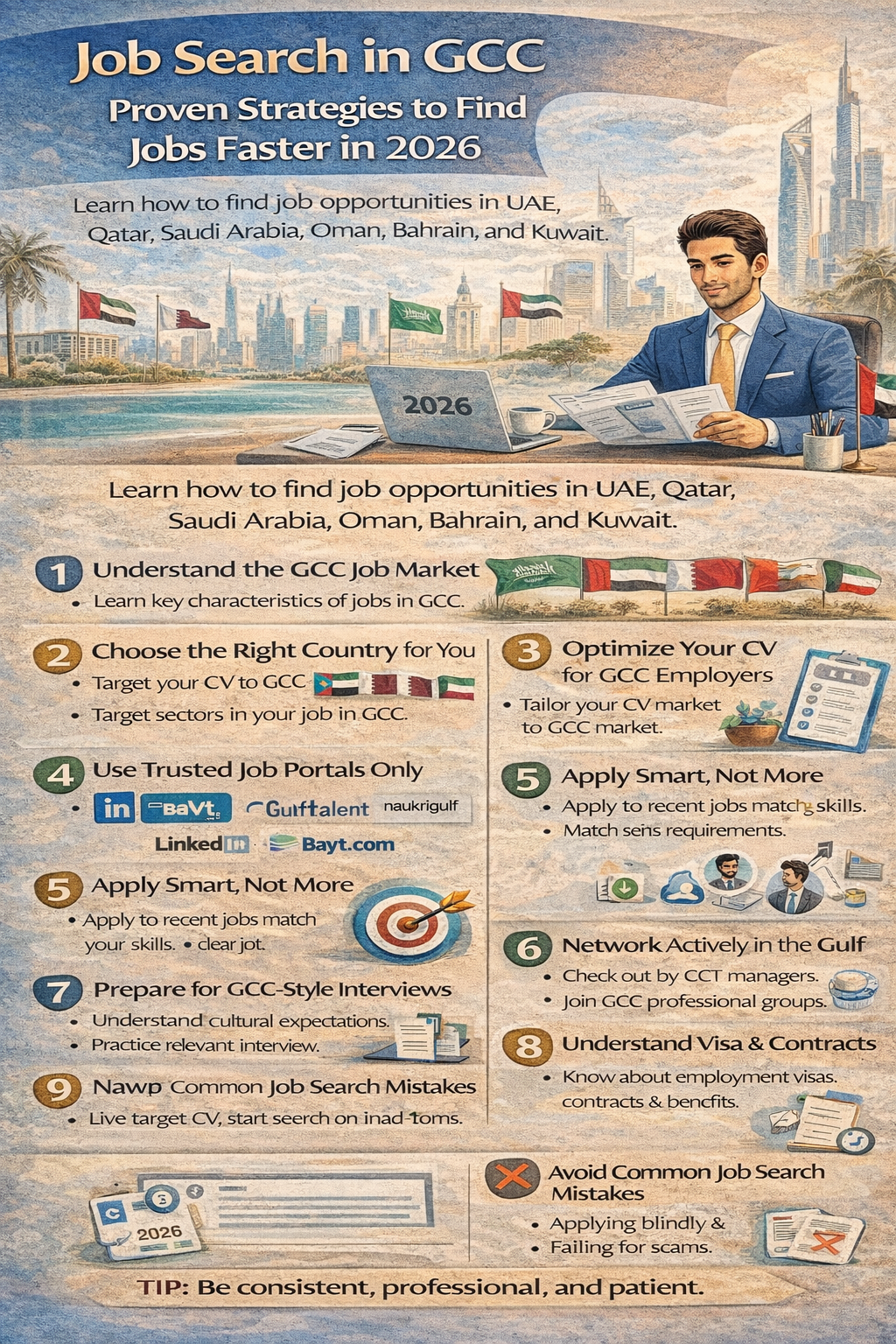
Job Search in GCC Proven Strategies to Find Jobs Faster in 2026
FREQUENTLY ASKED QUESTIONS
Are job search scams common in GCC?
Yes, especially targeting overseas job seekers unfamiliar with local hiring practices.
Do real employers ask for money?
No. Legitimate employers never charge job seekers.
How can I verify a job offer?
Check company credentials, conduct direct communication, and confirm via official channels.
CONCLUSION
Understanding job search scams in GCC is essential for a safe and successful career journey. By staying informed, verifying job offers, and following safe job search practices, you can protect yourself from fraud and focus on real opportunities in 2026.
Stay alert, stay informed, and search smart.