
Introduction: Finding Accommodation in the Gulf as an Expat
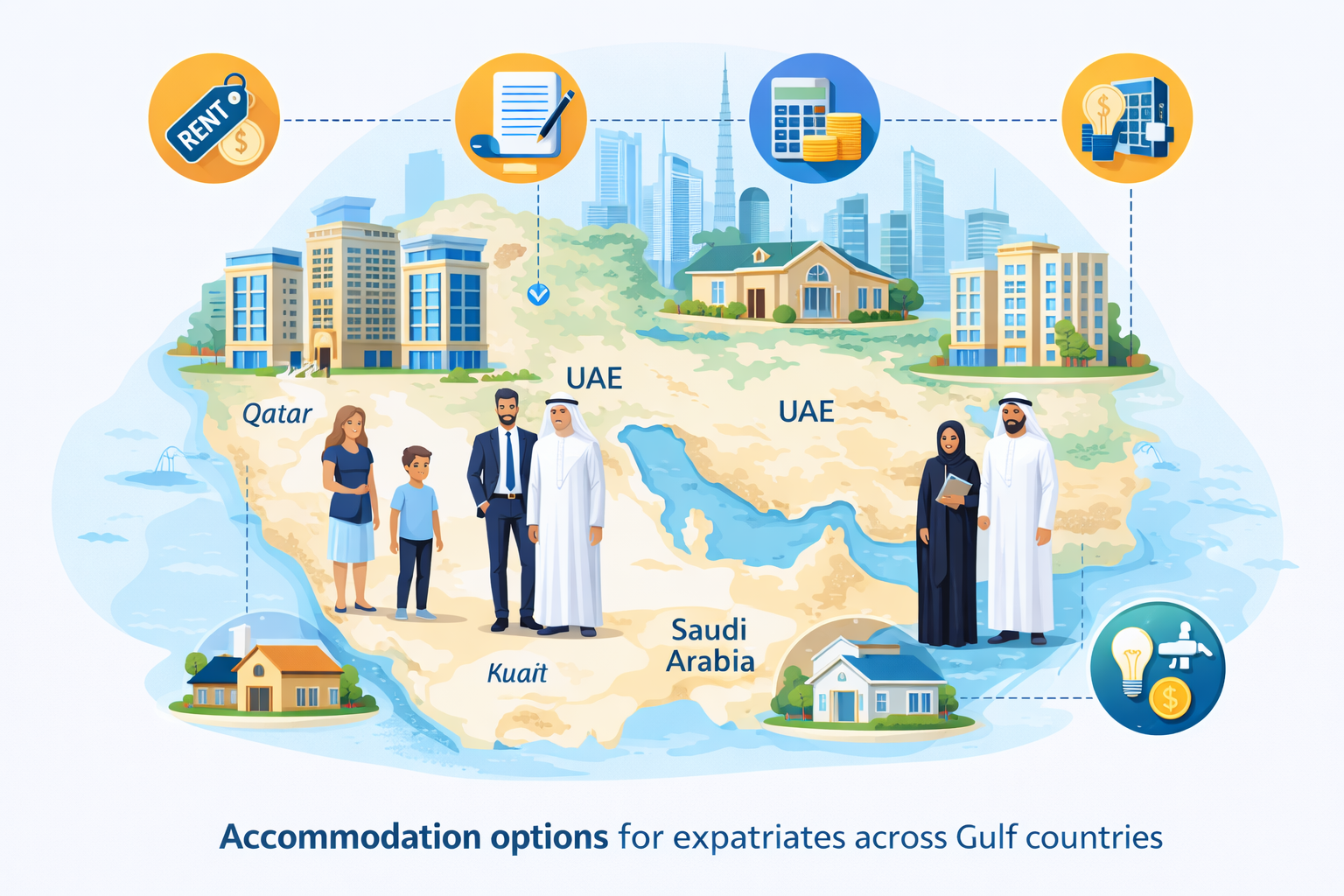
Finding the right accommodation in the Gulf is one of the most important steps for anyone moving to Middle Eastern countries like Qatar, the UAE, Saudi Arabia, Kuwait, or Oman. For many expatriates, housing is also the biggest monthly expense, and making the wrong choice can quickly affect both comfort and finances.
The Gulf offers a wide range of housing options, from shared apartments and family flats to luxury villas and employer-provided accommodation. However, rental systems, payment methods, and legal rules are often very different from what expats are used to in their home countries.
This guide explains everything you need to know about accommodation in the Gulf, including rental costs, housing types, popular expat areas, legal requirements, and smart tips to help you choose the right home with confidence.
Accommodation in the Gulf: Housing Types
Apartments
Apartments are the most common housing option for expats in the Gulf. They are available as studio, one-bedroom, two-bedroom, and family-sized units.
Key features:
- Available furnished or unfurnished
- Located in residential buildings or compounds
- Suitable for singles, couples, and small families
In cities like Doha and Dubai, apartments near business districts and metro lines are more expensive, while suburban areas offer better value.
Villas and Townhouses
Villas are popular among families and senior professionals. These are usually located in gated communities or residential suburbs.
Key features:
- More space and privacy
- Often include parking, gardens, or shared pools
- Higher rent and utility costs
Villas are common in Saudi Arabia and suburban areas of Qatar and the UAE.
Shared Accommodation
Many new expats choose shared accommodation to reduce costs.
Key features:
- Renting a room in a shared apartment
- Lower rent and utility expenses
- Common for single professionals
Always ensure shared housing is legally permitted, as some Gulf countries have strict occupancy rules.
Employer-Provided Housing
Some employers offer accommodation as part of the salary package.
Advantages:
- Lower upfront costs
- Close to workplace
- Less paperwork
Disadvantages:
- Limited choice
- Less flexibility if you change jobs
Rent Costs for Accommodation in the Gulf
Average Rental Costs (Approximate)
Rental costs vary by country, city, and location:
- Qatar (Doha):
Studio: Moderate to high
1–2 bedroom: Mid to high range - UAE (Dubai):
Studio: Medium to expensive
Family apartments: High - Saudi Arabia (Riyadh/Jeddah):
Generally more affordable than UAE and Qatar - Kuwait & Oman:
Moderate rental costs
Luxury locations and city centers always cost more.
Additional Housing Expenses
Apart from rent, expats should budget for:
- Utilities (electricity, water, cooling)
- Internet and TV
- Maintenance (if not included)
- Municipality or housing fees
Tip: Always ask what is included in the rent before signing.
Rental Payment System in the Gulf
One major difference in accommodation in the Gulf is payment structure.
Cheque or Advance Payments
- Rent is often paid yearly or quarterly
- Post-dated cheques are common
- Monthly payments are rare but increasing
This system requires good financial planning, especially for new arrivals.
Legal Rules for Accommodation in the Gulf
Tenancy Agreements
A valid rental contract is mandatory.
Important points to check:
- Rent amount and payment schedule
- Contract duration
- Maintenance responsibility
- Notice period
- Penalties for early termination
In Qatar and the UAE, contracts are often registered with government systems.
Residency and ID
To rent legally, expats usually need:
- Residence permit
- National ID or passport
- Employer letter (sometimes)
Never rent without proper documentation.
Best Expat Areas for Accommodation in the Gulf
Qatar (Doha)
- West Bay
- The Pearl
- Al Wakrah
- Al Sadd
UAE (Dubai)
- Dubai Marina
- JLT
- Business Bay
- Al Barsha
Saudi Arabia
- Diplomatic Quarter
- North Riyadh
- Gated compounds
Choosing the right area depends on work location, budget, and family needs.
Furnished vs Unfurnished Accommodation
Furnished Homes
Pros:
- Move-in ready
- Ideal for short-term stays
Cons:
- Higher rent
- Limited customization
Unfurnished Homes
Pros:
- Lower rent
- Personal customization
Cons:
- Initial setup cost
Long-term expats usually prefer unfurnished housing.
Smart Tips for Finding Accommodation in the Gulf
- Visit the property before signing
- Check commute time
- Ask about maintenance response time
- Avoid paying cash without receipts
- Use licensed real estate agents
- Read reviews of buildings and areas
Internal Link Suggestion:
Link to your blog post: “Cost of Living in the Gulf: A Realistic Breakdown”
External Link Suggestion:
Government housing portals or major real estate platforms in Qatar or UAE.
Common Mistakes New Expats Make
- Renting without a contract
- Choosing location without considering traffic
- Ignoring utility costs
- Not understanding payment terms
- Overpaying due to urgency
Avoiding these mistakes can save thousands over time.
Conclusion: Secure Your Ideal Accommodation in the Gulf
Accommodation in the Gulf plays a major role in your overall expat experience. While the region offers modern housing and excellent facilities, understanding rental systems, legal rules, and cost structures is essential.
By researching well, budgeting smartly, and choosing the right location, expats can enjoy comfortable and secure living while focusing on career growth and personal goals. Whether you are single or moving with family, the Gulf has housing options to suit every lifestyle — if you know how to choose wisely.