


INTRODUCTION
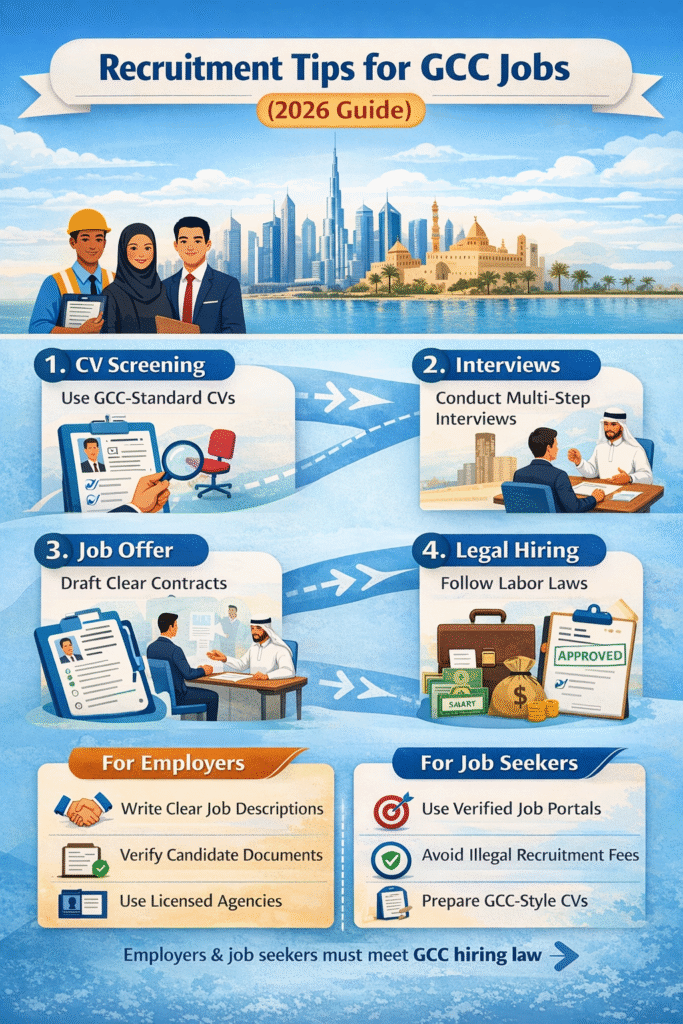
Recruitment tips GCC employers and job seekers follow can make the difference between a successful hire and a costly mistake. Recruitment in GCC countries such as the UAE, Qatar, Saudi Arabia, Kuwait, Bahrain, and Oman follows specific legal, cultural, and professional standards.
Whether you are an employer looking to hire reliable talent or a job seeker aiming to secure a Gulf job, understanding recruitment tips GCC markets demand is essential in 2026.
1. Understanding Recruitment in GCC Countries
Recruitment in the Gulf is heavily influenced by:
- Labor laws
- Visa regulations
- Multinational work environments
- Skill shortages in key sectors
Industries with continuous hiring demand include construction, healthcare, IT, oil and gas, logistics, retail, and hospitality.
Recruitment tips GCC professionals use always start with understanding local hiring rules.
2. Recruitment Tips GCC Employers Should Follow
2.1 Write Clear and Legal Job Descriptions
Job descriptions should clearly mention:
- Job role and responsibilities
- Required qualifications
- Salary range (if possible)
- Visa sponsorship details
Misleading job ads damage employer credibility and may violate labor regulations.
2.2 Use Licensed Recruitment Channels
Employers should hire only through:
- Licensed recruitment agencies
- Verified job portals
- Company career pages
This protects businesses from legal penalties and fake candidate documentation.
External link:
You can verify agencies through the Ministry of Human Resources and Emiratisation (UAE) official website.
2.3 Verify Documents Before Hiring
One of the most important recruitment tips GCC employers often overlook is document verification:
- Educational certificates
- Experience letters
- Passport validity
Skipping verification can result in visa rejection or legal issues.
3. Recruitment Tips GCC Job Seekers Must Know
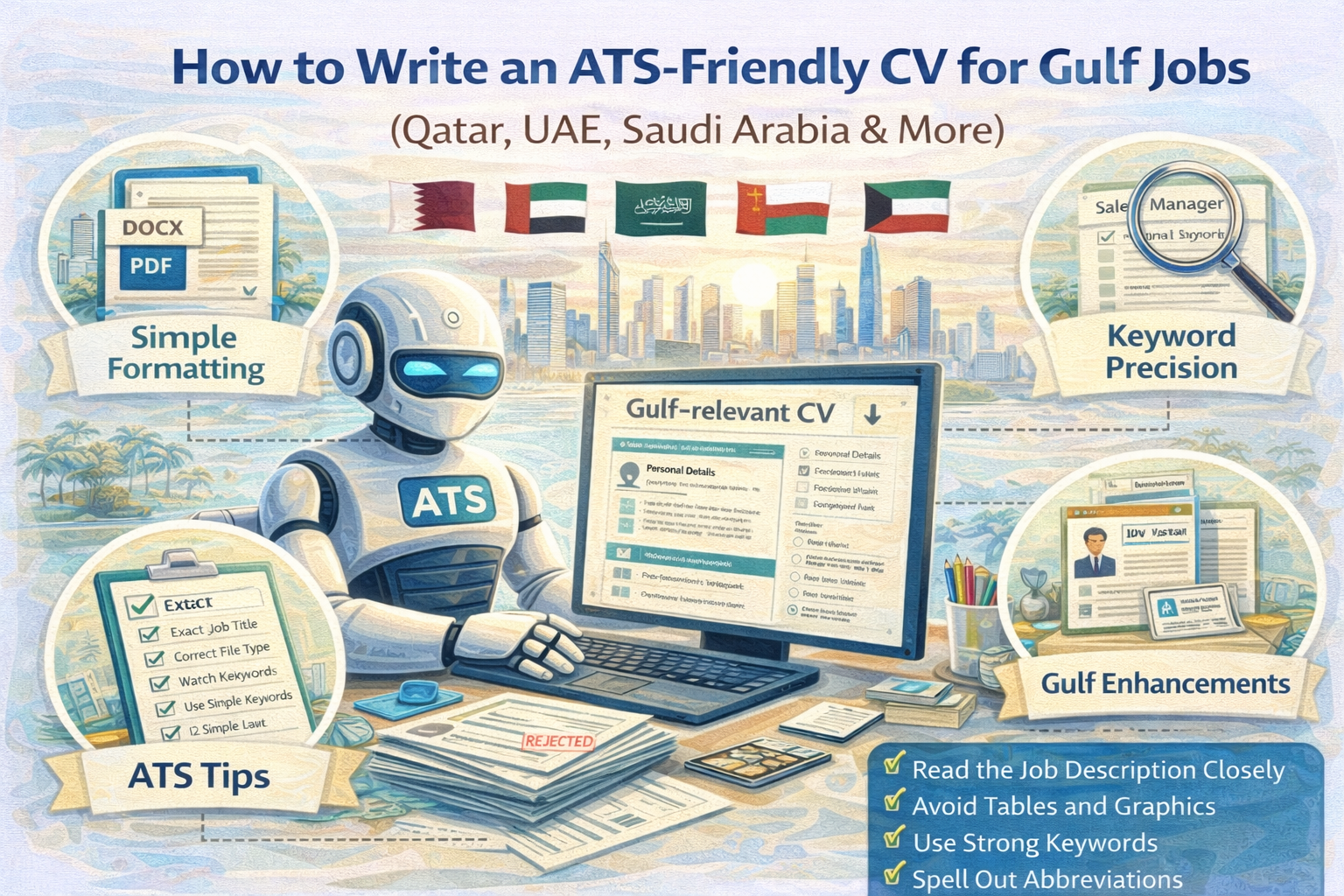
3.1 Use a GCC-Standard CV Format
A Gulf CV should include:
- Passport nationality
- Visa status (if applicable)
- Clear job titles
- Professional photo (optional but common)
Avoid long CVs. Two pages are usually ideal
ATS-Friendly CV Tips for Gulf Jobs
3.2 Apply Through Trusted Job Portals
Safe platforms for GCC job searches include:
- Bayt
- Naukrigulf
- Company career websites
Avoid paying recruitment fees. Charging job seekers is illegal in most GCC countries.
3.3 Prepare for Multi-Stage Interviews
Recruitment tips GCC recruiters expect candidates to follow include strong interview preparation. Interviews often include:
- HR screening
- Technical assessment
- Management approval
Professional communication and cultural awareness are critical.
4. Common Recruitment Mistakes in GCC Jobs
Both employers and job seekers make avoidable mistakes.
Mistakes Employers Make
- Hiring without background checks
- Offering verbal promises without contracts
- Ignoring cultural fit
Mistakes Job Seekers Make
- Accepting jobs on visit visas
- Trusting unofficial WhatsApp offers
- Signing contracts without reading terms
Understanding recruitment tips GCC standards helps avoid these issues.
5. Digital Recruitment Trends in the GCC
Recruitment in 2026 is increasingly digital. Popular tools include:
- LinkedIn recruiter tools
- AI CV screening
- Online interviews
However, final hiring decisions still rely on human judgment and legal compliance.
6. Legal Recruitment Requirements in GCC Countries
Recruitment tips GCC law requires employers to follow include:
- Issuing written employment contracts
- Processing work visas legally
- Registering employees with labor authorities
Failure to follow legal hiring procedures can lead to fines or company bans.
7. Onboarding and Retention Best Practices
Recruitment does not end with hiring. Proper onboarding improves:
- Employee retention
- Productivity
- Workplace morale
Clear job orientation and training reduce early resignations.
8. Recruitment Tips GCC Markets Will Value in the Future
By 2026 and beyond, successful recruitment will focus on:
- Skill-based hiring
- Transparent salary structures
- Employee well-being
- Diversity and inclusion
Companies that adapt early will attract better talent.
FREQUENTLY ASKED QUESTIONS
Is it legal to charge recruitment fees in GCC countries?
No. Charging job seekers is illegal in most GCC countries.
Can employers hire workers on visit visas?
No. Employment requires a valid work visa and contract.
Are online interviews accepted for GCC jobs?
Yes. Many employers now conduct online interviews before issuing offers.
CONCLUSION
Following the right recruitment tips GCC professionals rely on creates safer, faster, and more successful hiring outcomes. Employers reduce legal risks, and job seekers increase their chances of landing genuine Gulf jobs.
Whether you are hiring or applying, knowledge of recruitment practices is your strongest advantage in the GCC job market.