


Introduction
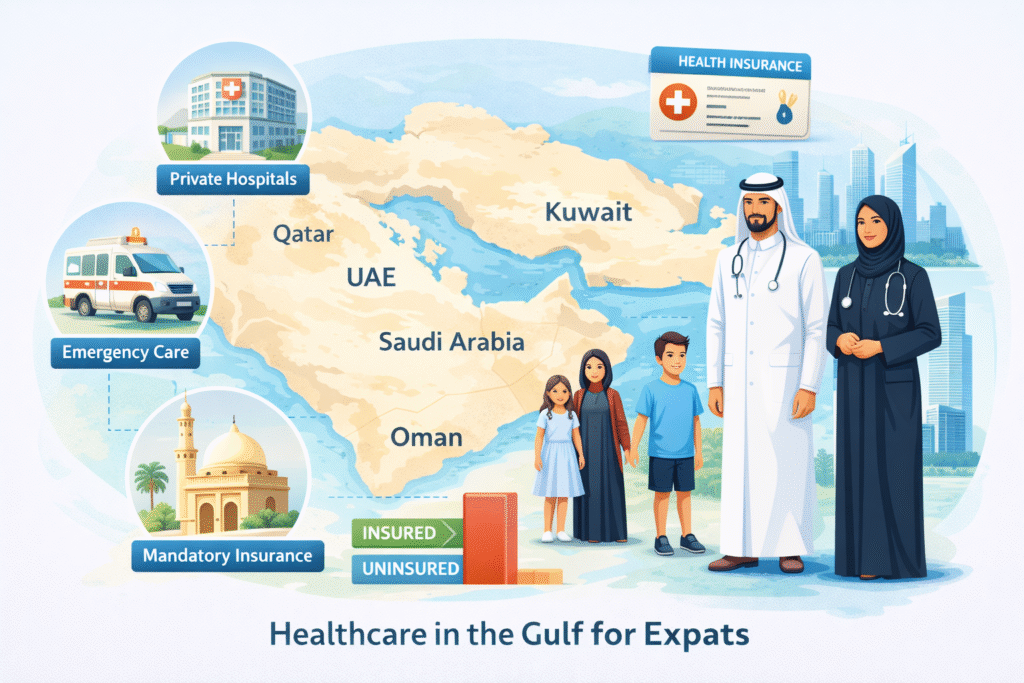
Healthcare in the Gulf is modern and high-quality for expats in UAE, Saudi Arabia, Qatar, Oman, and Kuwait. Private insurance is mandatory, with employer coverage common.
Countries like Qatar, the UAE, Saudi Arabia, Oman, and Kuwait offer modern, well-regulated healthcare systems supported by strong government investment. From internationally accredited hospitals to highly qualified medical professionals, the Gulf provides reliable medical care for residents.
However, healthcare access, costs, and insurance regulations vary by country. This guide explains everything expats need to know about healthcare in the Gulf, helping you prepare confidently before moving.
Overview of Healthcare Systems in the Gulf
Healthcare in the Gulf generally operates through two main sectors: public and private healthcare.
Public Healthcare
- Primarily designed for citizens
- Available to expats with residency permits
- Lower cost but longer waiting times
- Limited access to specialists
Private Healthcare
- Most popular choice among expats
- Short waiting times and advanced facilities
- English-speaking doctors widely available
- Higher costs without insurance
Most expatriates rely on private hospitals, supported by employer provided or personal health insurance.
Health Insurance for Expats in the Gulf
Health insurance is mandatory for expatriates in most Gulf countries.
Employer-Provided Insurance
Employers in Qatar, UAE, and Saudi Arabia are legally required to provide health insurance for employees.
Typical coverage includes:
- Doctor consultations
- Emergency treatment
- Hospitalization
- Diagnostic tests
- Essential medication
Some employers extend coverage to family members, while others offer employee-only plans.
Private Health Insurance
Self-sponsored expats, freelancers, or dependents may need private insurance.
Insurance costs depend on:
- Age
- Medical history
- Coverage level
- Country of residence
- Family size
Tip: Always review exclusions, co-payments, and network hospitals before choosing a plan.
Quality of Hospitals and Medical Facilities
The Gulf is home to internationally accredited hospitals and specialist medical centers.
What to Expect
- Modern equipment and technology
- Highly qualified doctors trained in Europe, Asia, and North America
- Clean and well-organized facilities
- Multilingual staff
Popular healthcare providers include:
- Hamad Medical Corporation (Qatar)
- Cleveland Clinic Abu Dhabi
- King Faisal Specialist Hospital (Saudi Arabia)
- Royal Hospital (Oman)
Cost of Healthcare Without Insurance
Healthcare costs can be high without insurance.
Approximate costs:
- GP consultation: USD 40–120
- Specialist visit: USD 100–300
- Emergency treatment: USD 300+
- Hospital admission: Thousands of dollars
This makes health insurance essential for every expat living in the Gulf.
Emergency and Ambulance Services
Emergency medical services in the Gulf are efficient and well-coordinated.
Key points:
- Ambulance services are available nationwide
- Emergency numbers differ by country
- Government hospitals handle emergencies effectively
- Emergency care is provided regardless of insurance status
Always save local emergency numbers on your phone immediately after arrival.
Healthcare for Families and Children
Healthcare for families is one of the strongest advantages of living in the Gulf.
Pediatric Care
- Specialized children’s hospitals
- Vaccination programs aligned with international standards
- Well-equipped neonatal and maternity units
Maternity Care
- High-quality prenatal and postnatal care
- Private maternity hospitals widely available
- Insurance coverage varies by employer
Parents should confirm maternity and pediatric coverage in advance.
Mental Health and Wellness Services
Mental health awareness is growing rapidly in the Gulf.
Available services include:
- Counseling and therapy
- Psychiatry services
- Stress management programs
- Wellness clinics
While mental health is still a sensitive topic culturally, access to professional support has improved significantly in recent years.
Pharmacies and Medication Access
Pharmacies are easily accessible across the Gulf.
Important notes:
- Prescription medications require doctor approval
- Some medicines available elsewhere may be restricted
- Pharmacies are regulated and professionally managed
- Many operate 24/7
Always carry prescriptions and check regulations before bringing medication from abroad.
Healthcare Regulations and Residency
Healthcare access is linked to residency status.
You will need:
- Valid residency permit
- Health card (in some countries)
- Active insurance policy
Failure to maintain valid insurance can result in fines or visa issues.
Tips for Expats to Navigate Healthcare Smoothly
- Choose housing near quality hospitals
- Keep insurance documents accessible
- Register with a family doctor
- Maintain digital copies of medical records
- Understand coverage limits and exclusions
Preparation reduces stress and unexpected expenses.
Conclusion
Healthcare in the Gulf is modern, reliable, and expat-friendly when approached correctly. With mandatory insurance, world-class hospitals, and skilled medical professionals, the region offers excellent medical care for individuals and families alike.
Success depends on understanding insurance requirements, choosing the right providers, and staying informed about local regulations. For expats who plan ahead, healthcare in the Gulf can be one of the most reassuring aspects of life in the region.