


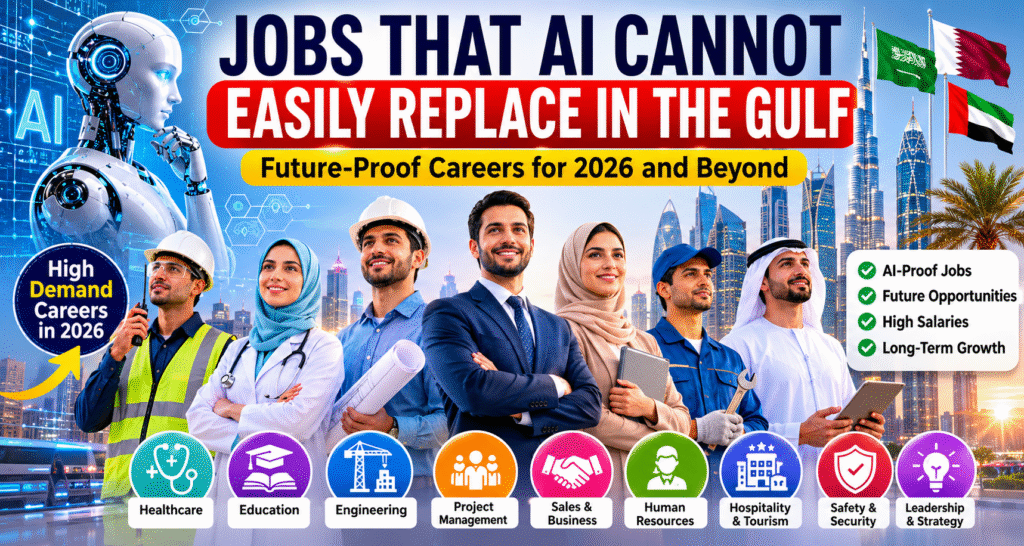
AI-Proof Jobs are becoming a major focus for professionals across Saudi Arabia, Qatar, the UAE, and other Gulf countries. As artificial intelligence continues to transform workplaces, many workers are looking for careers that offer long-term stability. Fortunately, several AI-Proof Jobs still rely on human creativity, emotional intelligence, leadership, and practical expertise. Understanding these AI-Proof Jobs can help job seekers prepare for future opportunities and build successful careers in the evolving Gulf job market.
Why AI Cannot Replace Every Job
Artificial intelligence excels at analyzing large datasets, identifying patterns, and performing routine activities. However, AI struggles with:
- Emotional intelligence
- Human relationships
- Creative thinking
- Leadership
- Ethical decision-making
- Complex problem-solving
- Physical adaptability
These limitations create opportunities for workers who possess uniquely human skills.
In-Demand Skills in Saudi Arabia (2026): What Employers Are Looking For
You can also explore official information about AI development through:
https://www.weforum.org
https://www.oecd.org
https://www.ilo.org
1. Healthcare Professionals
Healthcare remains one of the safest industries from automation. Although AI can assist doctors with diagnosis and medical imaging, it cannot replace human compassion, bedside care, and professional judgment.
In-Demand Healthcare Roles
- Doctors
- Nurses
- Physiotherapists
- Medical Technologists
- Healthcare Administrators
The Gulf region continues to invest heavily in healthcare infrastructure, creating strong demand for qualified professionals.
Why AI Cannot Replace Them
Patients need emotional support and trust. Medical decisions often involve complex ethical considerations that require human judgment.
2. Teachers and Education Professionals
Education is another sector where human interaction remains essential.
AI tools can help with lesson planning and personalized learning, but they cannot replace the mentorship and motivation provided by teachers.
High-Demand Education Careers
- School Teachers
- University Lecturers
- Corporate Trainers
- Educational Consultants
- Special Education Specialists
Countries such as Saudi Arabia and Qatar are investing in education as part of their long-term development strategies.
3. Skilled Trade Workers
One of the most overlooked AI-proof career categories is skilled trades.
Construction sites, industrial facilities, and maintenance operations present unpredictable challenges that machines struggle to manage independently.
Examples
- Electricians
- Plumbers
- Welders
- HVAC Technicians
- Industrial Maintenance Specialists
Major projects such as NEOM, The Red Sea Project, and Qiddiya continue creating demand for skilled technical workers.
4. Project Managers
Project managers coordinate teams, budgets, schedules, and stakeholders.
Although AI can help generate reports and forecasts, successful project delivery requires leadership and decision-making.
Common Roles
- Construction Project Managers
- IT Project Managers
- Engineering Managers
- Operations Managers
Large-scale Gulf development projects require experienced managers who can navigate complex situations.
5. Human Resource Professionals
Recruitment is becoming more automated, but people still hire people.
HR professionals evaluate cultural fit, manage employee relations, and address workplace concerns.
Growing HR Positions
- Talent Acquisition Specialists
- HR Managers
- Learning and Development Officers
- Employee Relations Specialists
AI may assist HR teams, but it cannot replace human understanding and interpersonal skills.
6. Sales and Business Development Professionals
Successful sales depend on trust and relationship-building.
AI can analyze customer data and recommend products, but closing deals often requires human communication and negotiation.
Popular Gulf Sales Careers
- Sales Executives
- Account Managers
- Business Development Managers
- Relationship Managers
Professionals who combine technology knowledge with strong communication skills will remain highly valuable.
7. Creative and Marketing Professionals
Creativity remains one of the hardest human capabilities to automate.
AI can generate content and design concepts, but strategic thinking and brand storytelling still require human expertise.
Creative Careers
- Content Writers
- Digital Marketers
- Graphic Designers
- Brand Managers
- Video Producers
Businesses throughout the Gulf increasingly need creative professionals to compete in digital markets.
8. Hospitality and Tourism Professionals
The Gulf region continues expanding tourism through luxury hotels, entertainment venues, and cultural attractions.
Visitors value personalized experiences that cannot be fully delivered by machines.
Examples
- Hotel Managers
- Guest Relations Officers
- Event Coordinators
- Tourism Consultants
Human interaction remains central to hospitality success.
9. Safety and Security Professionals
Security roles often involve unpredictable situations requiring quick judgment and responsibility.
Key Careers
- Safety Officers
- Security Managers
- Compliance Specialists
- Risk Assessment Professionals
These positions are particularly important in construction, oil and gas, aviation, and manufacturing sectors.
10. Executive Leadership Roles
AI can provide data-driven recommendations, but organizations still need leaders to set direction and make strategic decisions.
Leadership Positions
- CEOs
- Directors
- Department Heads
- Entrepreneurs
Vision, accountability, and leadership remain fundamentally human strengths.
Skills That Will Remain Valuable in the AI Era
Regardless of industry, professionals should focus on developing:
- Communication Skills
- Critical Thinking
- Leadership
- Emotional Intelligence
- Creativity
- Adaptability
- Team Collaboration
- Problem Solving
These abilities will help workers remain competitive in an increasingly automated world.
How Gulf Job Seekers Can Prepare for the Future
Instead of fearing AI, job seekers should learn how to use it effectively.
Practical steps include:
- Learn AI tools relevant to your profession.
- Improve communication and leadership skills.
- Invest in continuous learning.
- Obtain industry certifications.
- Build a strong professional network.
The most successful professionals will be those who combine human expertise with technological knowledge.
Final Thoughts
Artificial intelligence will continue transforming workplaces across Saudi Arabia, Qatar, UAE, and the wider Gulf region. However, many careers remain resistant to automation because they rely on uniquely human abilities.
Healthcare professionals, teachers, skilled trades workers, project managers, HR specialists, sales professionals, creative experts, hospitality staff, safety officers, and business leaders are likely to remain in demand for years to come.
Rather than viewing AI as a threat, workers should see it as a tool that can enhance productivity while allowing them to focus on the skills that machines cannot easily replicate. Those who adapt and continue learning will be best positioned to thrive in the future Gulf job market.